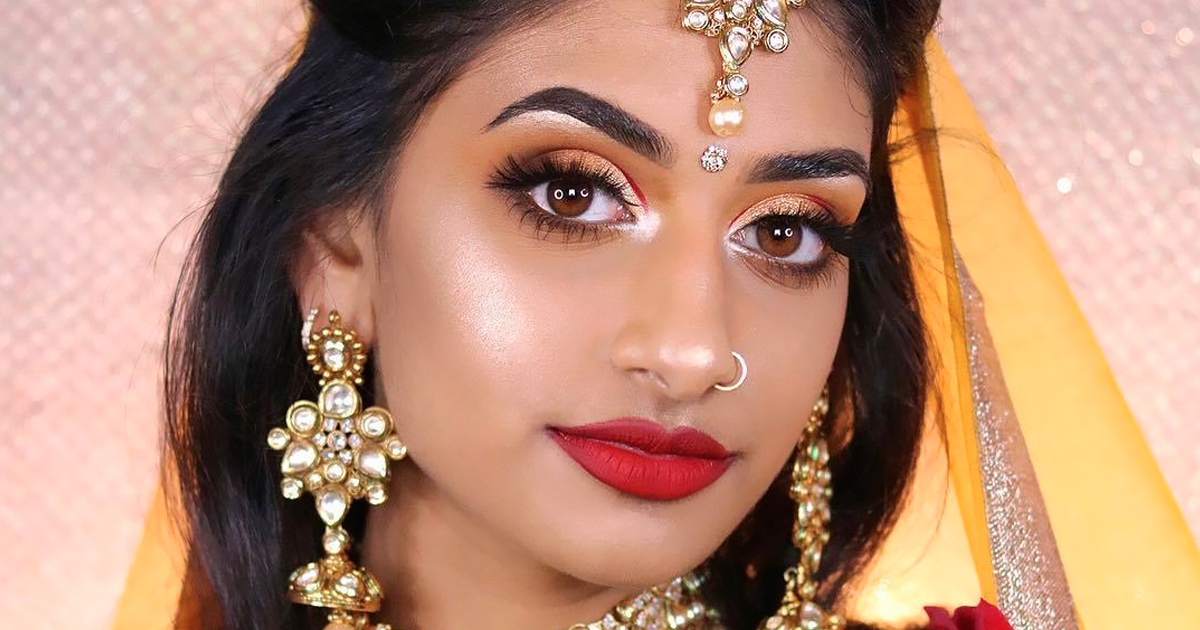
What happens when a Disney princess walks out of a fairy tale and into a closet full of saris, ornate jewelry, bindis, dupattas, and enough sparkle to make a royal chandelier feel underdressed? You get a photo series that feels familiar, fresh, and delightfully magical. Model and makeup artist Hamel Patel reimagined beloved Disney princesses with an Indian twist, transforming characters like Snow White, Cinderella, Ariel, Belle, Jasmine, Pocahontas, Aurora, and Mulan into desi-inspired heroines who look ready for both a palace ball and a Bollywood finale.
The idea is simple, but the result is powerful: classic Disney princesses styled through Indian fashion, beauty, and cultural imagination. Instead of treating the original characters as museum pieces, Patel turned them into living style references. A bindi here, a sari drape there, statement earrings doing the emotional labor of an entire supporting castsuddenly these princesses do not just look different. They feel newly personal.
This is why the series caught so much attention online. It was not merely “Disney, but make it Indian.” It was a reminder that fairy tales travel. They cross borders, pick up new colors, borrow new silhouettes, and still keep the heart of the story intact. In fact, some of these Indian Disney princesses arguably look even better than the originalsnot because the originals failed, but because the reinterpretations add texture, identity, and a little extra royal drama. And honestly, Disney drama plus Indian jewelry? That math was always going to win.
Why Indian Disney Princesses Became an Instant Internet Favorite
Disney princesses have always been more than animated characters. They are fashion templates, childhood icons, Halloween costumes, prom inspiration, birthday themes, and sometimes the reason a five-year-old insists that “glass slippers are practical footwear.” The official Disney Princess lineup includes characters from different stories and eras, from Snow White and Cinderella to Tiana, Moana, Merida, Raya, and others. Yet for many South Asian fans, especially those who grew up in the United States, there has long been a desire to see princess magic reflected through their own cultural lens.
Patel’s project spoke directly to that feeling. As an Indian model and makeup artist, she did not simply dress up as princesses. She translated them. Translation is the key word here. Snow White’s sweetness became bridal-like elegance. Cinderella’s pale blue fantasy became a shimmering desi look with ornate accessories. Ariel’s oceanic curiosity met bold color and playful styling. Belle’s love of books and golden gown energy became a regal Indian look that still said, “Yes, I read, and yes, I am judging your library.”
The appeal also came from the balance between recognition and surprise. Viewers could instantly identify the character, but they were also seeing something new. A prop, a color palette, a hairstyle, or a makeup choice connected each look to the original Disney design. At the same time, Indian clothing and accessories gave the princesses a richer visual language. The result was not cosplay that copied. It was cosplay that conversed.
The Beauty of a Desi Twist
The phrase “desi twist” may sound casual, but in this series it carries a lot of creative weight. “Desi” generally refers to people, cultures, and traditions connected to the Indian subcontinent. In fashion, it can include saris, lehengas, salwar suits, dupattas, embroidered textiles, bangles, nose rings, anklets, bindis, and jewelry styles that vary widely by region, community, religion, and occasion.
That variety matters. Indian fashion is not one single look. A sari can be minimal and modern or heavily embroidered and ceremonial. A bindi can be spiritual, cultural, decorative, fashionable, or deeply personal depending on the wearer and context. Gold jewelry can signal celebration, heritage, family memory, or simply the very understandable human belief that more sparkle improves almost everything.
Patel’s princesses work because they do not flatten Indian style into a costume cliché. Instead, the looks use familiar South Asian elements in a way that feels celebratory and affectionate. The styling makes sense visually: Disney princesses are already associated with drama, gowns, color symbolism, romance, courage, and transformation. Indian formalwear is also built for visual storytelling. Put the two together and you get a natural matchlike Cinderella and a deadline, or Ariel and one extremely questionable contract.
Snow White: The Classic Princess Gets a Royal Upgrade
Snow White is Disney’s original princess, known for her blue bodice, yellow skirt, red bow, gentle spirit, and apple-related workplace hazards. In an Indian-inspired version, her look becomes softer, richer, and more ornate. The red accent can translate beautifully into a bindi, lip color, jewelry, or headpiece, while the blue-and-yellow palette adapts naturally into a sari or lehenga combination.
What makes this version stand out is how the innocence of Snow White’s original design gains a more regal edge. The jewelry adds maturity without losing sweetness. The styling suggests a princess who still talks to birds but now also knows exactly how to pose for a wedding photographer who keeps saying, “One more, just one more,” for forty minutes.
Cinderella: From Glass Slippers to Full Glamour
Cinderella is already the queen of the makeover. Her entire story hinges on the power of one excellent outfit, a transportation upgrade, and a curfew that was honestly too strict for someone having her first night out. Patel’s Indian interpretation leans into that transformation energy.
The pale blue tone associated with Cinderella works beautifully with Indian fabrics, shimmer, and silver-toned accessories. Add a nose ring, earrings, or embellished makeup, and the look becomes less “running down palace stairs” and more “arriving at the reception with perfect lighting.” The Indian Cinderella feels glamorous but still dreamy. She is elegant, hopeful, and probably has backup shoes under the lehenga because she learned from the glass slipper incident.
Ariel: The Mermaid Who Would Absolutely Love Accessories
Ariel is curious, bold, and famously fascinated by human objects. That makes her one of the easiest princesses to reinterpret with playful styling. In the original Disney film, her red hair, seashell palette, and ocean world define her visual identity. In an Indian-inspired look, those elements can become vibrant fabrics, colorful makeup, and jewelry that feels almost aquatic in its shine and movement.
The best part is that Ariel’s personality survives the transformation. A desi Ariel would still collect random objects and call them treasures. She would simply have better accessories while doing it. A fork in the hair, a bright sari, and expressive makeup keep the humor of the original character alive while giving her a fresh visual identity. It is whimsical without being silly, which is exactly where Ariel lives most comfortably.
Belle: Bookish, Golden, and Ready for the Grandest Library
Belle’s defining traits are intelligence, curiosity, compassion, and the ability to make a yellow gown look like an intellectual statement. Her Indian reinterpretation is one of the most natural fits because gold is already central to her Disney look, and Indian formalwear knows what to do with gold. It does not whisper. It enters the room, signs the guestbook, and becomes the main event.
A desi Belle can keep the golden palette while adding embroidery, jewelry, and a more layered silhouette. The result feels royal and thoughtful. She looks like someone who would read ancient poetry, solve the Beast’s emotional problems, and still have time to coordinate bangles with her dupatta. The Indian styling enhances Belle’s elegance because it gives her visual depth equal to her personality.
Jasmine: A Princess Who Already Feels Close to the Concept
Jasmine is often one of the most discussed princesses in conversations about representation because she was one of Disney’s earliest non-European princesses. Her original look is inspired by a fictional Middle Eastern setting, not India, so an Indian Jasmine must be handled with care. Patel’s version works best when understood as a fan reimagining rather than a claim that cultures are interchangeable.
With that distinction clear, the Indian Jasmine can be stunning. Her turquoise color palette, strong jewelry, confident gaze, and royal attitude all translate beautifully into South Asian styling. The character’s independence remains central. She is not just dressed like royalty; she acts like someone who has read the palace rules and found several sections deeply unimpressive.
Pocahontas, Aurora, and Mulan: Reimagining With Respect
Some Disney princesses require more thoughtful interpretation because their original stories are tied to specific cultural or historical contexts. Pocahontas, for example, is connected to Native American history, though Disney’s version has been widely criticized for romanticizing and simplifying real events. Mulan is rooted in Chinese legend and cultural storytelling. Aurora, meanwhile, comes from a European fairy-tale tradition and is more flexible visually, though still strongly associated with medieval fantasy styling.
When reimagining these characters through Indian fashion, the strongest approach is not to erase their origins but to explore how iconic visual cues can be adapted artistically. Mulan’s courage, discipline, and warrior identity can be echoed through structured styling and bold makeup. Aurora’s soft pinks and dreamy mood can become a graceful Indian formal look. Pocahontas requires extra sensitivity, because fan art and cosplay should not blur real Indigenous identity into generalized “exotic” beauty. The best reimaginings are beautiful and responsible.
Why Representation Makes the Series More Than Pretty Pictures
The reason this photo series matters is not only that the images are beautiful. It matters because representation changes how people experience stories. When children see heroes who resemble them, dress like their families, or reflect parts of their culture, they receive a quiet message: you belong in the story, too.
That message is especially meaningful for Indian American and South Asian viewers. The Indian American population in the United States has grown significantly, and South Asian culture is visible across food, fashion, music, film, beauty, technology, business, and entertainment. Yet mainstream princess imagery has not always reflected that presence. Fan creativity often steps into those gaps faster than major studios do.
Disney has made progress in cultural representation over the years, including princesses and heroines from different backgrounds. The company has also created India-inspired children’s programming such as “Mira, Royal Detective,” which introduced many young viewers to an Indian-inspired royal world. Still, there is not yet an official Indian Disney princess in the main lineup. Patel’s project imagines what that kind of visual magic could feel like.
The Art of Cultural Reimagining: Appreciation Versus Appropriation
Whenever fashion crosses cultures, one question appears: is this appreciation or appropriation? The answer depends on context, intention, credit, knowledge, and respect. In Patel’s case, the series feels rooted in personal connection. She is not borrowing Indian elements as random decoration. She is using her own cultural background to reinterpret characters she grew up with.
That difference is important. Cultural appreciation usually involves respect, understanding, and acknowledgment. Appropriation often strips symbols of meaning while treating them as trendy props. A bindi, for example, can be decorative, spiritual, fashionable, or personal depending on context. A sari is not just “pretty fabric”; it is a garment with a long history and many regional forms. When creators understand those layers, the work becomes richer.
The best fan art does not say, “This culture is a costume.” It says, “This culture has beauty, history, and storytelling power.” Patel’s Indian Disney princesses succeed because they feel like love lettersto Disney, to desi fashion, and to every person who ever wondered why their version of royalty was missing from the toy aisle.
Why Some Looks Feel Better Than the Originals
Calling some of these looks “better than the originals” is playful, not disrespectful. Disney’s animated designs are iconic for a reason. Snow White’s bow, Belle’s yellow gown, Ariel’s red hair, and Cinderella’s blue dress are instantly recognizable. But animation often simplifies clothing so it can move cleanly on screen. Real-life Indian fashion, by contrast, thrives on texture: embroidery, layers, jewelry, draping, sparkle, contrast, and movement.
That extra detail gives the reimagined princesses more visual drama. The outfits look lived-in and ceremonial. The accessories add personality. The makeup bridges character recognition and cultural style. It is like upgrading from a sketch to a full festival procession. The original princess is still there, but now she has arrived with cousins, aunties, music, sweets, and a lighting setup.
Another reason the looks feel stronger is emotional. For viewers who rarely saw themselves reflected in fairy-tale media, the Indian versions carry personal meaning. Beauty becomes belonging. A sari is not just a new costume; it is a signal that the fantasy world has expanded enough to include more people.
What Disney Could Learn From This Viral Series
Fan projects like Patel’s show that audiences are not tired of princesses. They are tired of narrow princess possibilities. Viewers want familiar stories, yes, but they also want new textures, new voices, and new cultural perspectives. The popularity of reimagined princess art proves that classic characters can evolve without losing their charm.
Disney could learn several lessons from this. First, cultural specificity makes fantasy stronger, not smaller. A princess inspired by Indian culture would not need to be generic. She could come from a richly imagined kingdom influenced by regional textiles, architecture, music, festivals, food, languages, and storytelling traditions. Second, representation should involve creators from the culture being represented. Authenticity improves when writers, designers, consultants, musicians, and performers bring lived knowledge to the work.
Third, audiences love beauty, but they love meaning more. A gorgeous outfit may grab attention, but a character with courage, humor, flaws, ambition, and emotional depth keeps it. The dream is not simply an Indian princess who looks good in promotional art. The dream is an Indian princess with a story worth rewatching.
Experiences and Reflections: Why This Topic Feels So Personal to Many Fans
One of the most relatable experiences connected to this topic is the childhood habit of choosing “your” princess. Kids do it instinctively. Someone picks Ariel because she is curious. Someone picks Belle because she reads. Someone chooses Mulan because she is brave. Someone chooses Cinderella because they too have been personally victimized by chores. But for many South Asian children, the choice often came with a small compromise. They could love a princess deeply while still knowing that none of the main princesses looked quite like them, dressed like their relatives, or lived in a world that resembled the stories told at home.
That gap may seem small to adults, but children notice details. They notice skin tone. They notice names. They notice food, music, clothing, family dynamics, and accents. They notice when a character’s jewelry looks like something their mother wears to a wedding. They notice when a festival on screen resembles one they celebrate. They also notice when those things are missing. This is why a photo series can feel surprisingly emotional. It gives shape to a wish many viewers did not know how to explain: “What if the fairy tale had room for me?”
For South Asian families, fashion is often tied to memory. A sari may remind someone of a grandmother carefully folding fabric into a closet. A lehenga may bring back the chaos of getting ready for a wedding, where someone is always missing an earring and someone else is yelling about safety pins. Bangles are not just accessories; they are sound effects for celebration. A bindi can be a tiny dot with a large emotional radius. When these elements appear in a Disney-inspired setting, the fantasy becomes intimate.
The series also captures the experience of cultural blending. Many Indian American and South Asian viewers grow up moving between worlds: school and home, English and family languages, jeans and festive clothes, Disney songs and Bollywood songs, peanut butter sandwiches and homemade dal. Patel’s princesses sit beautifully in that in-between space. They do not ask viewers to choose between Disney magic and desi identity. They say both can exist at once, and yes, they can match the earrings.
Another experience tied to the topic is the joy of seeing old stories refreshed. Reimagining does not destroy nostalgia; it often strengthens it. When Snow White becomes desi, viewers are not being asked to throw away the 1937 classic. They are invited to look again. When Cinderella gains Indian jewelry, her transformation scene becomes newly exciting. When Belle’s gold gown becomes a richly styled Indian outfit, her love of stories feels even broader. Reinterpretation keeps classics alive because it lets each generation add its own voice.
There is also a creative lesson here for anyone who writes, designs, photographs, or makes content online. The strongest ideas often come from combining two sincere loves. Patel clearly understood Disney princess imagery, but she also understood the beauty of Indian styling. The magic happened in the overlap. That is a useful reminder for creators: originality does not always mean inventing something from nothing. Sometimes it means bringing your full self to something familiar and letting the combination reveal something new.
Finally, the topic resonates because it turns imagination into visibility. People can argue all day about which version looks better, which princess had the best styling, or whether Ariel would prefer a dupatta or a dramatic hair accessory. But underneath the fun is a serious point: everyone deserves access to fantasy. Everyone deserves to be beautiful, brave, strange, curious, royal, flawed, funny, and heroic in the worlds they love. Indian Disney princesses are not just a visual trend. They are a reminder that fairy tales become more magical when more people can see themselves inside them.
Conclusion
Hamel Patel’s Indian Disney princess series works because it is more than a makeover. It is a creative bridge between childhood nostalgia and cultural pride. By blending iconic Disney princess features with Indian fashion, makeup, jewelry, and styling, the series gives familiar characters a new emotional glow. Snow White becomes more regal, Cinderella more glamorous, Ariel more playful, Belle more radiant, and Jasmine even more commanding. Some looks genuinely do feel better than the originals because they carry extra layers of texture, identity, and joy.
The project also points toward a larger conversation about representation in popular culture. Fans are not only asking for diversity as a checkbox. They are asking for stories, images, and characters that feel specific, respectful, and alive. An official Indian Disney princess may still be a dream, but Patel’s work shows there is already a huge audience ready to welcome her. Until then, fan creativity keeps widening the castle gates.
Note: This article is an original, publication-ready rewrite based on publicly available information about Hamel Patel’s Indian Disney princess photo series, Disney princess culture, South Asian fashion, and representation in children’s media.