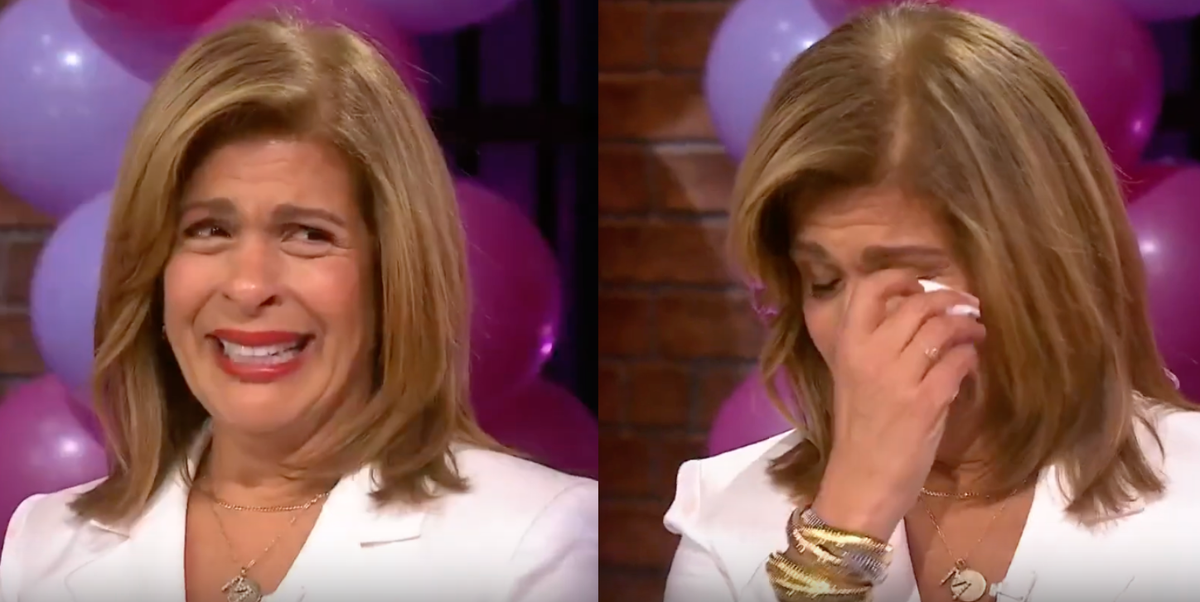
Some TV farewells feel polished. Some feel prepackaged. And then there was Hoda Kotb’s last day on Today, which felt less like a television send-off and more like watching a family try to smile through a group hug that nobody wanted to end. Yes, there were celebrity tributes. Yes, there were surprise guests. Yes, there were enough tears to keep the tissue industry comfortably employed for another fiscal quarter. But what made the moment land was something simpler: this goodbye felt real.
That reality was especially obvious in Hoda’s final on-air moments with Jenna Bush Hager, her warm, funny, deeply bonded fourth-hour partner. If Savannah Guthrie represented Hoda’s steady co-anchor era on the flagship broadcast, Jenna represented the looser, laughier, more confessional part of Hoda’s daytime identity. Together, they built a chemistry that felt like coffee with your funniest friendif your funniest friend also happened to be on national television wearing excellent blazers.
So when Hoda signed off after 17 years on Today, the emotional center of the farewell was not just about leaving a job. It was about stepping away from a rhythm, a friendship, and a daily ritual that millions of viewers had come to treat as part of their own morning routine. That is why her last day hit so hard. It was not merely a media story. It was a relationship story.
A Goodbye Built on History, Not Hype
By the time Hoda reached her final morning on January 10, the show had spent days celebrating her in what became known as a “Hoda-bration.” The title sounded delightfully sillybecause of course it didbut the sentiment behind it was serious. Colleagues, fans, friends, and former guests all turned up to honor a broadcaster who had become one of the defining faces of morning TV.
That long runway mattered. Instead of treating her exit like a quick curtain call, Today allowed the goodbye to breathe. Viewers saw old memories, fan signs, gifts, reunions, and emotional acknowledgments that made it clear Hoda was not being shuffled offstage. She was being celebrated with intention. In television, where everything moves at caffeinated speed, that kind of pause is rare. It said a lot about the esteem she earned inside the building.
Hoda’s departure also carried extra emotional weight because it came at a moment when her career still seemed comfortably intact. She was not leaving because viewers were done with her. She was leaving while still beloved, still effective, and still very much at the center of the show’s identity. That always makes a farewell more complicated. It turns the question from “What happened?” to “How do you say goodbye to something that is still working?”
The answer, at least on this day, was: with honesty, tears, and a lot of love on live TV.
Why Jenna Bush Hager Was the Emotional Heart of the Day
If the title of this story points to Hoda’s “Today” co-host, the most emotionally revealing answer is Jenna Bush Hager. Their partnership never relied on polished newsroom distance. It thrived on openness, affection, and the occasional wonderfully chaotic side-road. They were the rare daytime duo who could move from laughing over nonsense to talking about family, grief, motherhood, or fear without making the shift feel forced.
That is exactly why Jenna’s farewell mattered so much. She was not just saying goodbye to a colleague. She was saying goodbye to the person who helped shape her on-air adulthood. During the final show, Jenna got teary more than once and read a heartfelt letter to Hoda. The message was not drenched in stiff television language. It sounded personal. It sounded earned. It sounded like what happens when someone has shared your mornings, your nerves, your jokes, and your growth for years.
One of the reasons the goodbye worked so well is that Jenna did not pretend endings are tidy. She acknowledged that endings are hard, but can also be beautiful because they mark the beginning of something new. That framing gave the farewell emotional range. It allowed the room to grieve without turning the show into a funeral for joy. Very on-brand for a Hoda send-off, really: emotional, yes, but never hopeless.
The week leading up to the final episode only made that bond more visible. Jenna had already given Hoda a meaningful farewell gift: a custom piece from beloved author and artist Charlie Mackesy that read, “Every step you take is a victory.” It was the kind of present that told viewers this was not generic coworker sentiment. This was someone trying to give her friend courage for the road ahead.
And that was the larger story pulsing underneath the tears: Hoda and Jenna had built a true daytime partnership, one rooted in affection rather than format. On her last day, viewers were not just watching a host leave. They were watching a friendship change shape in public.
The Morning Was Full of Big TV Momentsand Small Human Ones
Of course, this being Today, the farewell came with star power. Celebrity tributes rolled in. Familiar faces paid homage. Surprise guests popped up. The whole production had the sweeping feel of a major television milestone. But the moments people will remember most are the ones that felt wonderfully, vulnerably human.
There was Hoda trying to absorb the applause while clearly feeling overloaded by emotion. There was the cast ribbing each other about how impossible it would be to get through the morning without crying. There was the unmistakable sense that everybody on set knew they were living through one of those rare live-TV mornings that would be replayed for years.
Her daughters, Haley and Hope, made the farewell even more tender. Their presence subtly reminded viewers why this decision mattered so much in the first place. Hoda’s exit was not framed as a dramatic professional collapse or a scandal-born departure. It was presented as a mother choosing a different kind of time. That does not make the choice painless, but it does make the emotion easier to understand.
Then came one of the most unforgettable images of the day: Kermit the Frog singing “Rainbow Connection” while Hoda sat with her daughters and fought back tears. If that sounds like something invented in a sleep-deprived producer’s dream journal, welcome to morning television at its weirdest and most effective. It should not have worked. It absolutely did. The moment was sweet, slightly surreal, and emotionally preciseespecially because the song had personal meaning for Hoda and her children.
That is the thing about a well-produced farewell: spectacle works best when it lands on something intimate. The celebrities were lovely. The surprises were fun. But the emotional punch came from watching Hoda as a mother, friend, and colleague all at once.
Kathie Lee, Savannah, Craig, and the Wider ‘Today’ Family
Even though Jenna carried the emotional core of the fourth hour goodbye, Hoda’s last day also worked because it acknowledged the full map of her Today life. Savannah Guthrie, her longtime co-anchor on the main show, was central to that story. Their years together represented a major era in morning television, one that helped define the modern Today identity. Savannah’s warmth toward Hoda during the farewell underscored just how much trust existed between them.
Al Roker, Carson Daly, Craig Melvin, and other members of the cast also helped turn the day into a full-circle celebration instead of a narrow goodbye. You could feel that Hoda was not simply attached to one slot or one desk. She belonged to the culture of the show.
Then there was Kathie Lee Gifford, whose surprise appearance added another emotional layer. For longtime viewers, Hoda and Kathie Lee represented one of the most distinctive eras in the show’s historywine, laughter, oversharing, and a gleeful refusal to act too polished before noon. Bringing Kathie Lee back for the farewell connected Hoda’s final day to a bigger story about reinvention. Hoda had evolved on the program more than once, and the show wisely honored that journey.
Craig Melvin’s looming move into Hoda’s seat also gave the episode a transitional undertone. Farewells in TV are never just about endings; they are also about succession. The audience is always thinking, consciously or not, “What happens tomorrow?” By naming the next chapter while honoring the current one, Today handled that tension well. It allowed viewers to mourn Hoda’s exit without making the future feel awkwardly off-limits.
What Made the Farewell Feel So Different
Plenty of anchors retire. Plenty of hosts get tribute reels. But Hoda Kotb’s last day felt unusually moving because of the role she has played on screen for so long. Hoda’s public persona was never built on icy detachment. She made emotion part of the brand. She listened closely. She cried openly. She laughed like she actually found things funny, which, in television, is apparently a rebellious act.
That emotional accessibility can sometimes be underestimated because it looks effortless. It is not. In an age when so much media feels ironic, armored, or algorithmically flattened, Hoda’s warmth read as both old-school and strangely radical. She gave viewers permission to care without apology.
That is why Jenna’s tears mattered. That is why the fan signs mattered. That is why the gifts, the bracelet stories, the family presence, and the Kermit serenade all mattered. They were not random sentimental decorations. They were extensions of the same idea: Hoda’s career was built on making people feel seen, and on her last day, people wanted to return that feeling.
There was also something compelling about the lack of cynicism. No one on that set seemed too cool for the moment. Nobody tried to undercut the affection with excessive jokes. Yes, there was humor, because there had to be. But the day did not wink at its own sincerity. It embraced it. That made the emotion stronger, not weaker.
The Real Story Behind the Tears
The easiest version of this story is that Hoda cried because she was leaving. True enough. But the richer version is that Hoda cried because the farewell forced everyone to acknowledge what had been built over time. Morning television is repetitive by design. Same set. Same hours. Same rituals. That repetition can make a host feel like part of the architecture of people’s lives.
When someone like Hoda steps away, viewers are not just reacting to a celebrity moment. They are reacting to habit, memory, and comfort. Maybe she was on while kids were getting ready for school. Maybe she was the soundtrack to rushed breakfasts, sick days, snow days, maternity leave, or ordinary mornings that needed a little human warmth. Her exit touched that daily intimacy.
And for Jenna Bush Hager, the goodbye likely carried an even sharper edge. A co-host is not just a coworker. A co-host is your rhythm section. The person who catches your glance when a segment goes sideways. The person who fills dead air without making it feel dead. The person who knows when you need a joke, when you need a pause, and when you need a hand on your shoulder. That kind of chemistry is hard to fake and harder to replace.
So yes, Hoda’s last day was emotional. But not only because it was televised sadness. It was emotional because it revealed how much trust, familiarity, and affection had been built into the show’s everyday fabric.
Experiences Like This Are Why Live TV Still Matters
In an era of clips, feeds, and endless on-demand content, a goodbye like Hoda Kotb’s is a reminder of what live television still does better than almost anything else: shared feeling in real time. You cannot fully script the tiny catches in someone’s voice. You cannot manufacture the exact look two longtime co-hosts give each other when they are both trying not to cry and both failing magnificently. You can prepare the segment. You cannot fake the heartbeat.
That may be the biggest reason Hoda’s final day felt so memorable. It offered viewers an experience rather than just a recap-friendly event. People were not only watching the farewell; they were participating in it from their living rooms, kitchens, offices, and phones. They brought their own memories of Hoda into the moment. That made the goodbye feel collective.
There is also something universally recognizable in a farewell between close coworkers. Most people know what it feels like when a daily companion leaves a job, a school, a neighborhood, or a routine. Suddenly the ordinary space feels different. The jokes change. The timing changes. Even the silence changes. Watching Hoda and Jenna navigate that reality on live TV gave the moment a wider emotional reach. It was celebrity news, yesbut it also mirrored everyday life.
And then there is the strange grace of public goodbyes. When they are done well, they do not just honor the person leaving; they teach everyone watching how to leave with gratitude. Jenna’s letter did that. Savannah’s steadiness did that. Kathie Lee’s appearance did that. Even the show’s fan-filled plaza did that. The message was not “Please do not go.” The message was “Look how loved you are as you go.” That is a much healthier kind of heartbreak.
For anyone who has ever left a beloved workplace, parted ways with a trusted collaborator, or stood on the edge of a new chapter while still clutching the old one, Hoda Kotb’s final Today morning probably felt familiar. Messy. Beautiful. Funny in spots. Painful in spots. Full of gratitude. Full of nerves. Full of that odd sensation that joy and grief are roommates who never stop stealing each other’s snacks.
In the end, Hoda’s very emotional last day with her Today co-host was not memorable because it was grand. It was memorable because, beneath the applause and celebrity sparkle, it was intimate. A friend read a letter. A family showed up. Old colleagues returned. Current colleagues cracked. A woman who has spent years helping other people process big feelings had to sit in her own. That made the farewell land with unusual force.
And maybe that is the best summary of the day: it was not a perfect television goodbye. It was better. It was a human one.