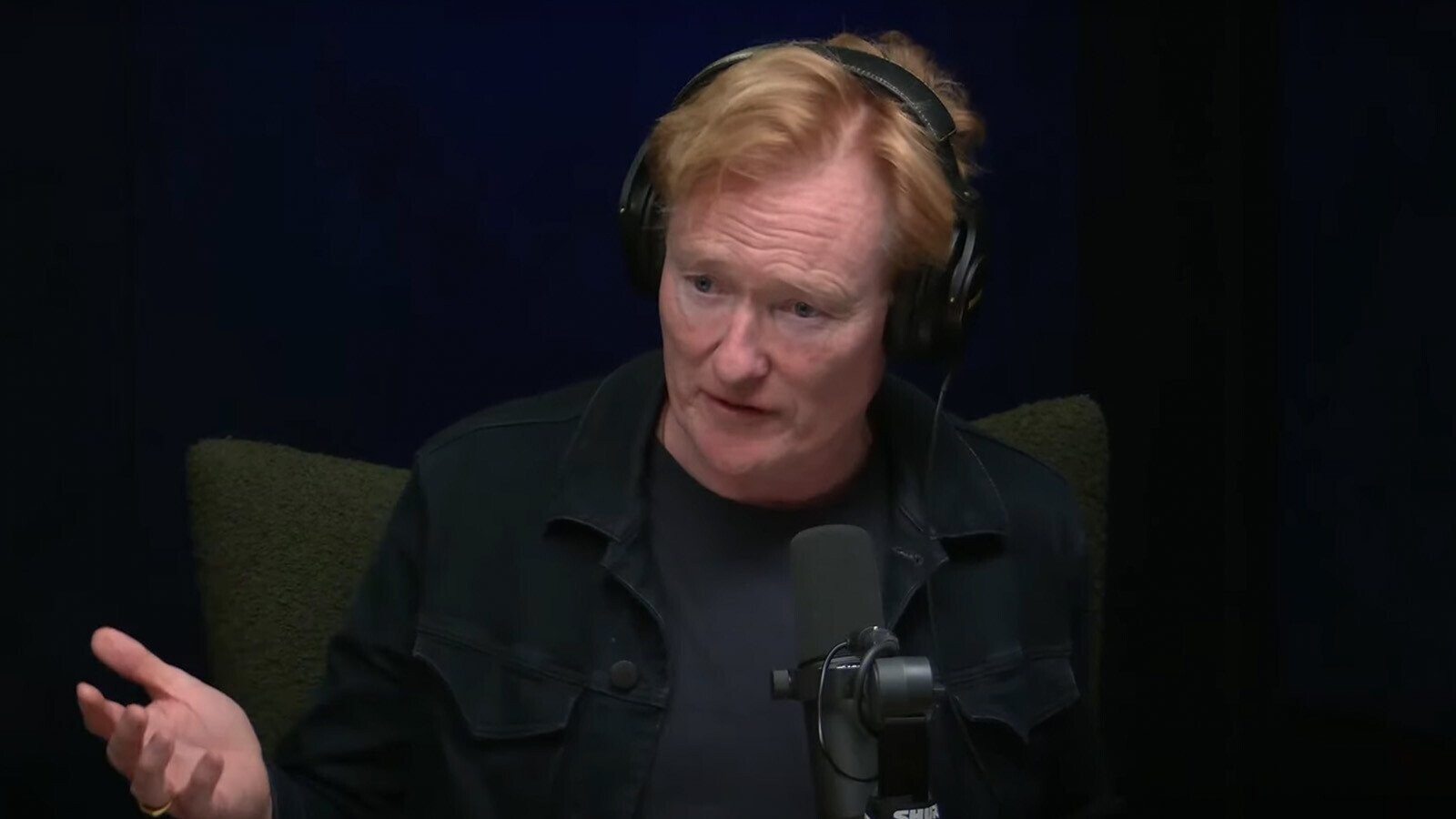
Conan O’Brien hosting the Oscars already sounds like the setup to a very expensive joke: a famously self-deprecating comedian, a room full of people wearing outfits that cost more than starter homes, and a ceremony where the words “and the winner is” can turn an entire table into marble statues. So when the incoming Oscar host described awards shows as “ridiculous,” it did not feel like a scandal. It felt like someone finally said the quiet part into a very well-mixed microphone.
The comment came during a conversation on Conan O’Brien Needs a Friend, where O’Brien discussed the difficulty of judging art as though it were a 100-meter sprint. Sports have scores. Races have clocks. Comedy, acting, directing, and screenwriting have taste, timing, context, politics, emotion, and that one Academy voter who may or may not have watched the screener while folding laundry. In other words, the Oscars are prestigious, glamorous, historicand yes, a little ridiculous.
That is exactly why Conan O’Brien is such an interesting choice for Hollywood’s biggest night. He loves show business, but he has never looked hypnotized by it. He can admire the tuxedo while pointing out that it makes everyone look like a nervous penguin attending a bank merger. His “ridiculous” remark does not weaken the Oscars. It explains why he may be the right person to host them.
Why Conan O’Brien Calling the Oscars “Ridiculous” Makes Perfect Sense
The Academy Awards are built on a beautiful contradiction. They celebrate artistic excellence, yet they must turn that art into a competition. They honor deeply personal creative work, then rank it beside other deeply personal creative work. A small independent drama, a three-hour historical epic, a neon musical, and a sand-filled sci-fi spectacle can all end up in the same Best Picture conversation. Comparing them is like asking whether jazz is better than pizza. People will have opinions, but nobody should be trusted with a calculator.
O’Brien’s point was not that movies do not matter. Quite the opposite. His observation recognized that art is powerful because it resists easy measurement. One viewer may leave a theater transformed by a quiet performance. Another may prefer a blockbuster that made them feel ten years old again, sticky floor and all. Awards can be meaningful, but they are not mathematical proof.
Conan O’Brien and the Art of Loving Hollywood Without Worshiping It
Conan’s comedy has always worked best when it combines affection with absurdity. He is not a destroy-the-room roast comic. He is more like a very tall cartoon character who accidentally wandered into a board meeting and decided to save it through panic, intelligence, and physical comedy. That is a rare skill for an Oscar host.
The Oscars need someone who can tease the industry without sounding bitter. They also need someone who can respect the emotional weight of the night. For many nominees, the ceremony is not just a television event. It is a career milestone, a family memory, a public validation of years spent hearing the word “no.” Conan understands that. His joke is not that the Oscars are worthless. His joke is that humans invented an annual ritual where people in couture clap nervously while waiting to learn whether their subjective dream beat someone else’s subjective dream.
The Bigger Context: The Oscars Are Prestigious, Strange, and Still Relevant
The Academy Awards have been called outdated more times than a DVD player in a streaming household. Ratings have fluctuated, viewing habits have changed, and social media now turns every red carpet glance into a doctoral thesis. Yet the Oscars still matter because they remain one of the few cultural events where movies become a shared national conversation.
Even people who complain about the Oscars often know who won Best Picture. They may claim not to care, then spend twenty minutes arguing about the In Memoriam segment, the host’s monologue, or whether a certain actor was “robbed.” That is the secret power of the ceremony. It is ridiculous, but it is also sticky. It stays in the culture.
Why the “Ridiculous” Label Helps Conan as Oscar Host
A host who believes the Oscars are sacred can become stiff. A host who believes they are meaningless can become smug. Conan sits in the sweet spot: the Oscars are meaningful because they are ridiculous, not despite it. The ceremony is theater. It is suspense. It is pageantry. It is movie stars trying to look calm while seated under lights bright enough to interrogate a moon rock.
By acknowledging the absurdity, Conan gives himself permission to be playful. He can joke about the length of the show, the weirdness of awards campaigning, the emotional whiplash of comedy bits followed by lifetime achievement montages, and the fact that Hollywood treats envelope management like a matter of national security. Viewers appreciate that honesty. Nobody at home believes the Oscars are normal. The best hosts admit it.
Conan’s Hosting Style: Smart, Silly, and Surprisingly Warm
Conan O’Brien’s long career in late-night television prepared him for live chaos. He has interviewed movie stars, rescued awkward segments, performed elaborate sketches, and turned failure into content. A joke bombing onstage does not scare him; it simply gives him another joke. That reflex is priceless at the Oscars, where the room can go from laughter to stone silence faster than a celebrity publicist spotting a risky question.
His comedy also has a physical quality that many modern awards hosts lack. Conan can sell a line with posture, movement, or a facial expression that says, “I know this is not going well, and now we are all trapped together.” That kind of self-awareness makes audiences comfortable. It reminds viewers that the host is not there to dominate the show. He is there to guide the circus while occasionally admitting the elephants have gotten loose.
The Oscars Need Humor That Is Sharp but Not Cruel
Recent awards shows have proven that tone matters. Go too gentle, and the night feels like a corporate retreat with better jewelry. Go too harsh, and the host becomes the story for the wrong reasons. Conan’s best comedy usually avoids pure meanness. He can be pointed, but his default mode is playful embarrassmentoften his own.
That is especially useful for the Academy Awards, where the audience includes living legends, nervous first-time nominees, studio executives, and people who have been awake since 4 a.m. getting their hair engineered. A successful Oscar host must make the room laugh without making the room feel hunted. Conan’s “ridiculous” worldview helps him do that. He can laugh at the machinery of Hollywood while still honoring the artists inside it.
Art, Awards, and the Impossible Question of “Best”
The word “best” is the engine and the problem of the Oscars. Best Actor. Best Actress. Best Director. Best Picture. These categories sound definitive, but they are shaped by campaigns, timing, cultural mood, personal taste, and industry relationships. That does not make them fake. It makes them human.
Consider the challenge of comparing performances. One actor may deliver a quiet, internal performance where every blink carries meaning. Another may transform physically, emotionally, and vocally into a historical figure. A third may carry a comedy, which is often harder than it looks and less rewarded than it should be. Which one is “best”? The answer depends on what voters value that year. Sometimes they reward subtlety. Sometimes transformation. Sometimes momentum. Sometimes a career narrative so strong it arrives with its own marching band.
Conan’s comment cuts to the heart of this issue. Awards are not objective truth. They are cultural snapshots. They tell us what a particular group of voters admired at a particular moment. That can be fascinating, moving, and influential. It can also be ridiculous. Both things can be true.
Why Viewers Respond to Conan’s Kind of Honesty
Modern audiences are allergic to over-polished sincerity. They can smell a scripted “magical night of cinema” line from three streaming platforms away. Conan’s advantage is that he can be sincere without sounding laminated. When he praises movies, it feels earned because he is also willing to poke the ceremony in the ribs.
This balance is essential for SEO-friendly entertainment coverage because readers are not just looking for news; they want interpretation. They want to know why a comment matters, why a host choice feels fresh, and why the Oscars can still generate headlines after nearly a century. Conan gives writers and audiences a perfect angle: a host who understands that Hollywood’s grandest ritual is both noble and absurd.
Conan O’Brien’s Career Prepared Him for This Exact Stage
Before becoming an Oscar host, Conan built a career on reinvention. He wrote for Saturday Night Live and The Simpsons, then became a late-night host with a strange, inventive style that did not immediately fit the traditional mold. Over time, that oddness became his signature. The pale hair, the self-mockery, the surreal remotes, the willingness to look foolishthese were not side effects. They were the product.
That history matters because the Oscars are not easy terrain. The host must be funny for the theater, the television audience, the internet audience, and the next morning’s headline writers. Conan has spent decades learning how to survive fragmented attention. He can do highbrow, lowbrow, and “why is this man bothering a wax figure?” sometimes in the same segment.
The Oscars as a Ridiculous Ritual We Still Need
Calling the Oscars ridiculous does not mean calling them useless. Many beloved traditions are ridiculous. Birthday candles are ridiculous. Wedding bouquets are ridiculous. Singing “Take Me Out to the Ball Game” with thousands of strangers is ridiculous. The point of ritual is not that it makes perfect sense. The point is that people agree, for a little while, to care together.
The Oscars give cinema that shared stage. They remind casual viewers of films they missed. They elevate crafts that rarely receive mainstream attention. They create moments that become history: speeches, surprises, upsets, reunions, tributes, mistakes, and memes. The ceremony may be too long, too self-serious, and occasionally allergic to common sense. But it still gives movies a spotlight no algorithm can fully replace.
What Conan’s Comment Reveals About the Future of Awards Shows
Conan O’Brien’s “ridiculous” comment points toward a smarter future for awards-show hosting. The old model asked hosts to pretend the ceremony was flawless. The newer model works better when the host admits the weirdness and invites viewers to enjoy it anyway. That is not disrespect. It is hospitality.
Audiences want glamour, but they also want a wink. They want emotional speeches, but they also want someone to acknowledge that the orchestra play-off music can turn a heartfelt thank-you into a hostage negotiation. They want movie magic, but they know the magic comes with seating charts, advertisers, publicists, and envelopes guarded like ancient treasure maps.
Experience Section: Watching the Oscars Through Conan’s “Ridiculous” Lens
There is a special experience in watching the Oscars once you accept Conan’s premise: the whole thing is ridiculous, and that is why it works. The night becomes more enjoyable when you stop demanding perfect logic from it. You are watching an industry throw itself a prom, a museum gala, a talent show, and a family reunion all at once. Of course it is weird. It would be disappointing if it were not.
For viewers at home, Conan’s attitude offers a better way to watch. Instead of treating every award as a courtroom verdict, you can treat the show as a conversation starter. Maybe your favorite film loses. Maybe a speech runs long. Maybe a presenter reads the teleprompter with the energy of a substitute teacher discovering the lesson plan in real time. These moments are part of the charm. The Oscars are not only about who wins; they are about how Hollywood reveals itself under pressure.
Conan’s comedy also helps viewers feel included. The Oscars can sometimes seem distant, as if they are happening inside a snow globe filled with diamonds and agents. A host who points out the absurdity cracks the glass a little. Suddenly the audience at home is not just watching famous people congratulate other famous people. They are in on the joke. They understand the beauty and the nonsense at the same time.
This is why Conan’s “ridiculous” comment feels less like criticism and more like a viewing guide. It says: enjoy the gowns, the speeches, the music, the surprise wins, and the emotional montagesbut do not forget that this is a human-made spectacle full of arbitrary choices. A movie can lose Best Picture and still change your life. An actor can miss a nomination and still deliver the performance you remember most. Awards are meaningful, but they are not the final measurement of art.
That perspective is healthy for fans, creators, and even the Academy. It lowers the temperature without lowering the stakes. It allows people to celebrate winners without pretending the winners are the only artists who mattered. It makes room for humor, humility, and a little chaosthe three ingredients every live broadcast secretly needs.
In the end, the Oscars survive because they are both serious and silly. They ask us to believe in cinema, glamour, legacy, and golden statues. Then they ask us to sit through jokes, dance numbers, emotional speeches, and occasional technical confusion. Conan O’Brien understands that contradiction better than most. By calling the Oscars ridiculous, he did not insult Hollywood’s biggest night. He described its personality.
Conclusion
Incoming Oscar host Conan O’Brien calling the Oscars “ridiculous” is not a threat to the Academy Awards. It is the most accurate promotional slogan the show could ask for. The Oscars are ridiculous because art cannot be measured cleanly, because glamour is inherently theatrical, and because Hollywood has turned subjective taste into a global television event. But they are also meaningful because movies matter, artists deserve recognition, and audiences still crave shared cultural moments.
Conan’s genius is that he can hold both ideas at once. He can laugh at the ceremony while respecting the work. He can puncture Hollywood’s ego without draining its magic. That makes him a strong fit for an awards show trying to remain relevant in a changing entertainment world. The Oscars may be ridiculous, but with Conan O’Brien at the microphone, at least they are ridiculous on purpose.