Choosing a television show for the family should be simple: check the rating, press play, and distribute snacks before anyone starts negotiating for the good spot on the couch. Yet the small box marked TV-PG, TV-14, or TV-MA can raise more questions than it answers. What do the letters after the rating mean? Is TV-G automatically made for children? Why does one episode receive a different rating from another episode of the same series?
The American TV rating system is intended to provide quick information about a program’s age suitability and potentially sensitive content. It is useful, but it is not a flawless substitute for knowing your child, reading detailed content information, or watching together. This complete guide explains every major television rating, decodes content descriptors, compares TV and movie ratings, and shows how to use parental controls without turning family movie night into an information-technology emergency.
What Is the TV Rating System?
The U.S. television content rating system is officially called the TV Parental Guidelines. It uses six main age-based categories: TV-Y, TV-Y7, TV-G, TV-PG, TV-14, and TV-MA. Certain ratings may also include letters that identify specific types of content, such as violence, strong language, sexual situations, or suggestive dialogue.
The guidelines were developed by the television industry to help parents evaluate the content and age-appropriateness of programs. The revised age-and-content system was submitted to the Federal Communications Commission in 1997, and the FCC accepted it in 1998 for use with V-chip blocking technology.
The system is voluntary. Broadcast networks, cable networks, distributors, or program producers generally assign the ratings rather than the FCC rating each episode. A monitoring board promotes consistency and reviews complaints, but ratings still involve judgment. In other words, the label is a guide, not a mathematical equation created by a giant government calculator.
Where the Rating Appears
On traditional television, the rating icon normally appears in the upper-left corner during the first 15 seconds of a program. Programs longer than one hour may display it again at the beginning of the second hour. Ratings may also appear in electronic program guides, streaming detail pages, cable menus, or episode descriptions.
Complete Breakdown of TV Ratings
The easiest way to understand television ratings is to treat the main label as an age-and-maturity signal. The additional letters tell you which types of content helped produce that rating.
| Rating | General Meaning | What Viewers May Encounter |
|---|---|---|
| TV-Y | Appropriate for all children | Content designed for a young audience and not expected to frighten most young children |
| TV-Y7 | Designed for children age 7 and older | Mild fantasy, comedy, action, or themes that younger children may not understand |
| TV-Y7-FV | Age 7 and older with fantasy violence | More intense or combative fantasy action than an ordinary TV-Y7 program |
| TV-G | Suitable for a general audience | Little or no violence, strong language, or sexual material |
| TV-PG | Parental guidance suggested | Moderate violence, some sexual situations, infrequent coarse language, or suggestive dialogue |
| TV-14 | Parents strongly cautioned | More intense violence, sexual content, strong language, or mature themes |
| TV-MA | Designed for mature audiences | Graphic violence, explicit sexual content, or crude and indecent language |
These categories combine age guidance with broad content expectations. However, two programs with the same rating can still feel very different. One TV-14 episode might earn its rating because of repeated strong language, while another might contain frightening violence without much profanity. That is why the content letters matter.
TV-Y: Appropriate for All Children
TV-Y programming is intended to be appropriate for children of all ages. It is commonly associated with simple stories, friendly characters, educational concepts, music, imagination, and gentle humor.
However, “appropriate for all children” does not guarantee that every child will enjoy or understand the program. A toddler may still become upset by a loud character, an argument, or a scene involving separation from a parent. Children are impressively creative when finding unexpected things to fear; sometimes the villain is harmless, but the talking vacuum cleaner is apparently unacceptable.
TV-Y7: Directed to Older Children
TV-Y7 programming is generally designed for children age 7 and older. It may include more complicated stories, mild peril, comic conflict, fantasy action, or situations that could confuse or frighten younger viewers.
The age of 7 is a guideline rather than a pass-fail checkpoint. A sensitive 9-year-old may dislike a particular TV-Y7 adventure, while a media-savvy 6-year-old may recognize that an exaggerated cartoon battle is make-believe.
TV-Y7-FV: Fantasy Violence
The letters FV mean fantasy violence. This descriptor is used specifically with TV-Y7 programs and indicates that the fantasy action may be more intense or combative than the violence found in other programming for the same age group.
Examples may include heroes fighting monsters, animated characters using imaginary weapons, magical battles, or repeated action sequences in which realistic injury is limited. Parents should consider the tone as well as the number of battles. Brightly colored lasers can still produce bedtime negotiations worthy of a United Nations summit.
TV-G: General Audience
TV-G means that most parents may consider the program suitable for viewers of all ages. It generally contains little or no violence, no strong language, and little or no sexual dialogue or sexual situations.
A common misunderstanding is that TV-G means “made for little kids.” It does not. A calm travel program, cooking competition, historical documentary, or family-friendly game show may receive a TV-G rating even though preschoolers would rather watch paint dryand then ask whether the paint has its own channel.
TV-PG: Parental Guidance Suggested
TV-PG indicates that parents may find some material unsuitable for younger children. The program might include moderate violence, sexual situations, infrequent coarse language, suggestive dialogue, or mature themes that need explanation.
This is a broad category. A TV-PG comedy may contain innuendo that sails comfortably over a child’s head, while a TV-PG adventure may include peril that feels intense to a sensitive viewer. Look beyond the main label and check whether the rating includes D, L, S, or V.
TV-14: Parents Strongly Cautioned
TV-14 indicates that a program may be unsuitable for children younger than 14. It may include intense violence, strong coarse language, intense sexual situations, highly suggestive dialogue, substance use, disturbing themes, or combinations of those elements.
TV-14 is especially important to examine episode by episode. A long-running drama might have relatively mild installments followed by one episode involving a violent death, sexual assault, suicide, or another difficult subject. Because episodes are individually rated, the label for a series can change from week to week.
TV-MA: Mature Audience Only
TV-MA is used for programming designed for mature audiences and may be unsuitable for viewers younger than 17. It can include graphic violence, explicit sexual activity, crude language, disturbing imagery, or particularly mature subject matter.
Unlike an age restriction at a movie theater, TV-MA is not a legal command preventing a minor from watching at home. It is an advisory label that households can use when setting rules or activating parental controls.
What Do D, L, S, V, and FV Mean?
Content descriptors provide a quick explanation of why a program received its rating:
- D Suggestive dialogue: Sexual references, innuendo, or conversations containing mature implications.
- L Coarse or crude language: Profanity, insults, slurs, or other strong language.
- S Sexual content or situations: Sexual behavior, nudity, implied sexual activity, or sexual themes.
- V Violence: Fighting, weapons, injury, blood, death, threats, or frightening physical conflict.
- FV Fantasy violence: Stylized or imaginary combat used only with the TV-Y7 category.
A label such as TV-PG-LV means that the program is rated TV-PG and contains language and violence. A label such as TV-14-DLSV warns of suggestive dialogue, language, sexual content, and violencethe television equivalent of saying, “This episode brought the entire spice rack.”
Why the Descriptors Are Often More Useful Than the Number
Families do not all have the same concerns. One parent may be comfortable with fantasy battles but avoid sexual content. Another may permit mild profanity but avoid realistic violence. The descriptors make it possible to focus on the content that matters most in your household instead of treating every program with the same age rating as identical.
TV Ratings vs. Movie Ratings
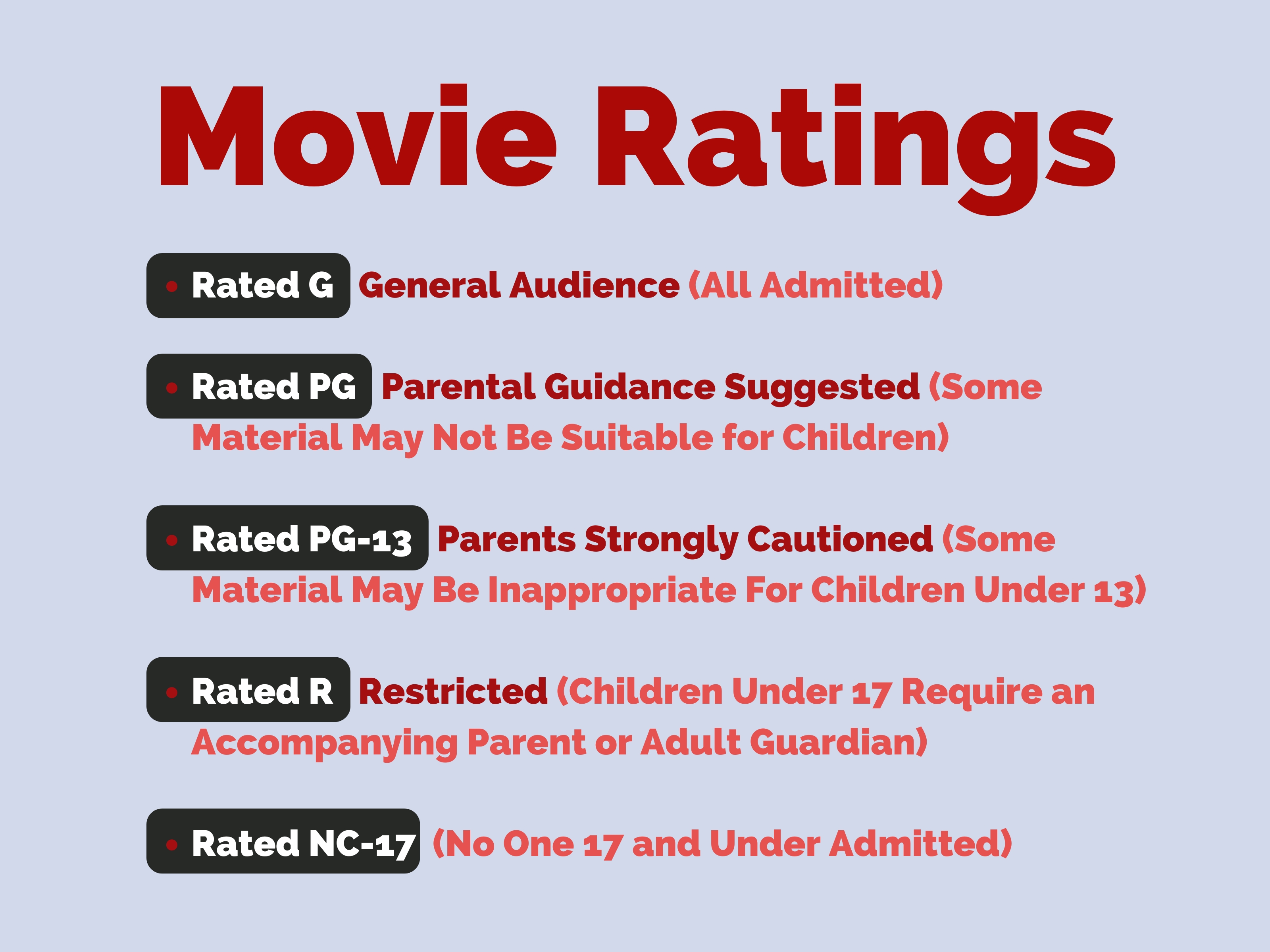
Television and theatrical movies use different systems. TV programs generally use TV-Y through TV-MA, while films rated through the Motion Picture Association use G, PG, PG-13, R, or NC-17. Movie ratings also include written descriptors explaining which elements contributed to the classification.
| Television Rating | Rough Movie Comparison | Important Warning |
|---|---|---|
| TV-Y or TV-Y7 | Often compared with child-focused G programming | The systems use different criteria and are not exact equivalents |
| TV-G | Broadly similar to G | TV-G can be intended for adults while remaining suitable for all ages |
| TV-PG | May resemble PG | Some TV-PG episodes can feel more mature than certain PG movies |
| TV-14 | Often compared with PG-13 | TV-14 can cover a wide range of language, violence, and sexual material |
| TV-MA | May overlap with R or stronger material | TV-MA is an advisory rating, not a theater admission rule |
A theatrical movie shown on broadcast or basic cable may be edited and assigned a TV rating based on the version being aired. An uncut movie on a premium service may retain its original film rating and include additional content information. The same movie can therefore arrive in your living room wearing different labels, depending on the edit and distributor.
Are All Television Programs Rated?
No. News and sports are exempt from the TV Parental Guidelines. Religious programs and home-shopping content also may not carry ratings, while commercials themselves are not rated and cannot be blocked through the rating system.
This limitation matters because an unrated program is not automatically harmless. Live news may show graphic disaster footage, sports broadcasts may include violent collisions or unpredictable crowd behavior, and commercials can promote material that does not match the tone of the program surrounding them.
Why “Not Rated” Does Not Mean “Suitable for Everyone”
“Not rated” usually means that the title was not classified under the relevant system. It does not mean that experts examined every second and discovered nothing remotely upsetting. When a title lacks a rating, read its description, check an independent review, preview it, or watch the opening portion with your child before handing over the remote.
How Streaming Services Use TV Ratings
Streaming platforms commonly display familiar U.S. ratings, but their control systems differ. Netflix allows account holders to manage individual profiles, set maturity limits, block specific titles, lock profiles with a PIN, and review viewing history. Disney+ provides profile-based content ratings, Junior Mode, and profile PINs. Hulu offers kids profiles and PIN-related controls, while YouTube Kids uses broader content levels and parent-approved selections rather than relying only on conventional television labels.
Do not assume that a setting applied on one service, profile, television, or streaming device automatically transfers everywhere. DIRECTV STREAM, for example, advises users that parental-control settings may need to be configured separately on each device. Third-party apps can also have their own independent settings.
A Simple Streaming Safety Checklist
- Create a separate profile for each child or age group.
- Set the maximum maturity level appropriate for that viewer.
- Add a PIN to adult profiles and account settings.
- Block specific titles when a general rating limit is not enough.
- Review watch history and recommendations occasionally.
- Disable autoplay when endless viewing creates problems.
- Repeat the setup on every television, phone, tablet, browser, and streaming stick used by the family.
How to Use the V-Chip and Parental Controls
The V-chip reads rating information transmitted with eligible television programming and allows viewers to block categories or particular content labels. Television sets measuring 13 inches or larger and manufactured after January 2000 generally include this technology. Cable boxes, satellite receivers, smart televisions, and streaming apps may offer additional controls.
Typical Setup Process
- Open the television, receiver, or app settings.
- Select Parental Controls, Restrictions, Family, or a similarly named option.
- Create a PIN that children cannot easily guess. “1234” is less a security measure and more a polite invitation.
- Select the highest allowed television rating.
- Choose whether to block individual descriptors such as V, S, or L.
- Restrict unrated programming if the device offers that option.
- Test the settings with a blocked title before declaring victory.
On many systems, blocking an age category also blocks higher categories. Blocking TV-14 may therefore block TV-MA automatically. Some systems permit more precise restrictions, such as blocking TV-14-V while allowing certain TV-14 programs without the violence descriptor.
Why TV Ratings Are Helpful but Imperfect
Ratings compress a complicated program into a tiny label. They cannot fully measure tone, realism, emotional intensity, personal triggers, family values, or a child’s developmental readiness. A brief realistic scene may upset a child more than 20 minutes of obviously imaginary superhero combat.
The American Academy of Pediatrics describes ratings as one useful tool, not a replacement for examining detailed content information, previewing media, consulting independent reviews, or co-viewing. Common Sense Media adds age recommendations and category-by-category evaluations, while the American Psychological Association emphasizes thoughtful conversations and media-literacy skills rather than relying only on restrictions.
Questions to Ask Before Pressing Play
- Why did the program receive this rating?
- Which content descriptors are present?
- Is the violence realistic, graphic, humorous, or fantastical?
- Does the story include grief, bullying, abuse, discrimination, or self-harm?
- Is my child especially sensitive to suspense, separation, medical scenes, or animals in danger?
- Can we watch together and discuss difficult moments?
Practical Examples of Reading TV Ratings
Example 1: TV-Y7-FV Animated Adventure
An animated series is marked TV-Y7-FV. The rating suggests that it is designed for viewers age 7 and older and includes fantasy combat. A parent of an 8-year-old who enjoys superhero action may approve it, while a parent of a 9-year-old who has nightmares after monster scenes may preview it first.
Example 2: TV-PG-L Family Comedy
A sitcom is rated TV-PG-L. There may be infrequent coarse language, but violence or sexual content is not identified in the label. A family that avoids profanity may skip the episode, while another may watch it and use the dialogue as a brief lesson in words that are not welcome at the dinner table.
Example 3: TV-14-SV Crime Drama
A crime episode marked TV-14-SV contains sexual situations and violence. Even if a 14-year-old technically fits the age guidance, the combination could be inappropriate for that particular teen. The parent may read a detailed review, watch the episode first, or co-view it and discuss consent, safety, and fictional portrayals of crime.
Example 4: Unrated Live News
A breaking-news broadcast has no TV rating. Because live coverage can include disturbing images without warning, a parent may choose a recorded summary, a child-focused news source, or co-viewing instead of allowing a young child to watch continuous coverage.
Experience-Based Lessons for Understanding TV Ratings
In everyday family viewing, the most useful lesson is that the rating starts the decision; it does not finish it. Consider a household with two children, ages 8 and 12. A parent might initially allow every TV-PG program for both children. That rule sounds efficient until a suspenseful TV-PG episode frightens the 8-year-old, while a different TV-PG comedy contains jokes the 12-year-old understands and the younger child ignores completely. The shared label did not produce a shared experience.
A better approach is to combine the rating with the child’s personality. One child may tolerate animated battles but become distressed whenever a pet is lost. Another may laugh through a spooky fantasy and then repeat every impolite word heard during the credits. No universal label can predict those reactions perfectly.
Another common experience involves episode-level differences. Parents may approve a series after watching several mild episodes and assume the entire season is equally suitable. Then a later episode introduces a violent death, intense romantic storyline, or disturbing flashback. Checking the episode ratingnot merely the series pagehelps prevent surprises. It takes a few seconds and can save a much longer conversation at 11:30 p.m. about why fictional ghosts cannot access the bedroom.
Parental controls also work best when treated as a backup rather than the entire family media strategy. A PIN can stop accidental access, but it cannot explain why a rule exists. Children are more likely to cooperate when adults describe the concern clearly: “This show includes realistic violence that may be upsetting,” is more informative than, “Because the television said no.”
Co-viewing often turns questionable material into a useful discussion. Pediatric and child-development resources note that watching together can help adults understand a child’s media world, discuss difficult subjects, and build trust. With teens, fictional stories may provide a less awkward opening for conversations about relationships, prejudice, peer pressure, substance use, or online behavior.
Practical experience also shows why families should review settings after buying a new device, changing subscriptions, or adding an app. The living-room television may block TV-MA content while the tablet profile remains unrestricted. A cable receiver’s PIN may not affect a streaming application installed on the same screen. Test each profile as though you were the child using it; otherwise, the settings may offer the emotional comfort of a locked door whose key is still sitting in the lock.
Finally, family standards can evolve. A program that was inappropriate last year may become manageable after a child matures, learns more about the subject, or agrees to watch with an adult. Conversely, a child going through anxiety, grief, bullying, or another stressful period may temporarily need gentler content. Revisiting the rules is not inconsistency. It is responsive parenting.
Frequently Asked Questions
Is TV-G the same as a children’s program?
No. TV-G means that the content is generally suitable for all ages, but the intended audience may still be adults. Educational documentaries, competitions, or lifestyle programs can be TV-G without being created specifically for children.
Is TV-14 appropriate for every 14-year-old?
No. TV-14 means parents are strongly cautioned about material that may be unsuitable for viewers younger than 14. It does not guarantee that every teenager age 14 or older is ready for every TV-14 program.
Does TV-MA mean nobody under 17 can watch?
No. TV-MA is an advisory classification for mature programming, not a legal home-viewing restriction. Parents and caregivers decide what is permitted in their household.
Can two episodes of the same show have different ratings?
Yes. Episodes are rated based on their individual content, so one episode might be TV-PG and another TV-14.
Why does the same show have different ratings on different services?
The version may have been edited, the distributor may be applying a different regional system, or platforms may evaluate content differently. Check the rating and descriptors shown on the service you are actually using.
Are commercials included in the program rating?
No. Television advertisements are not rated under the TV Parental Guidelines and cannot be blocked using program-rating controls.
Conclusion
Understanding the TV rating system becomes much easier once you separate its two parts. The main categoryTV-Y through TV-MAoffers broad age and maturity guidance. The descriptorsD, L, S, V, and FVidentify the kinds of content that deserve a closer look.
Use these labels as a first filter, then consider the individual episode, the intensity and context of its content, your family’s standards, and the temperament of the person watching. Configure parental controls on every device, protect adult profiles with a strong PIN, and consult detailed reviews when a simple label does not provide enough information.
The best television guide is not a mysterious symbol in the corner of the screen. It is an informed adult who knows how to read that symbol, ask a few sensible questions, and occasionally join the viewingpreferably before someone finishes all the popcorn.