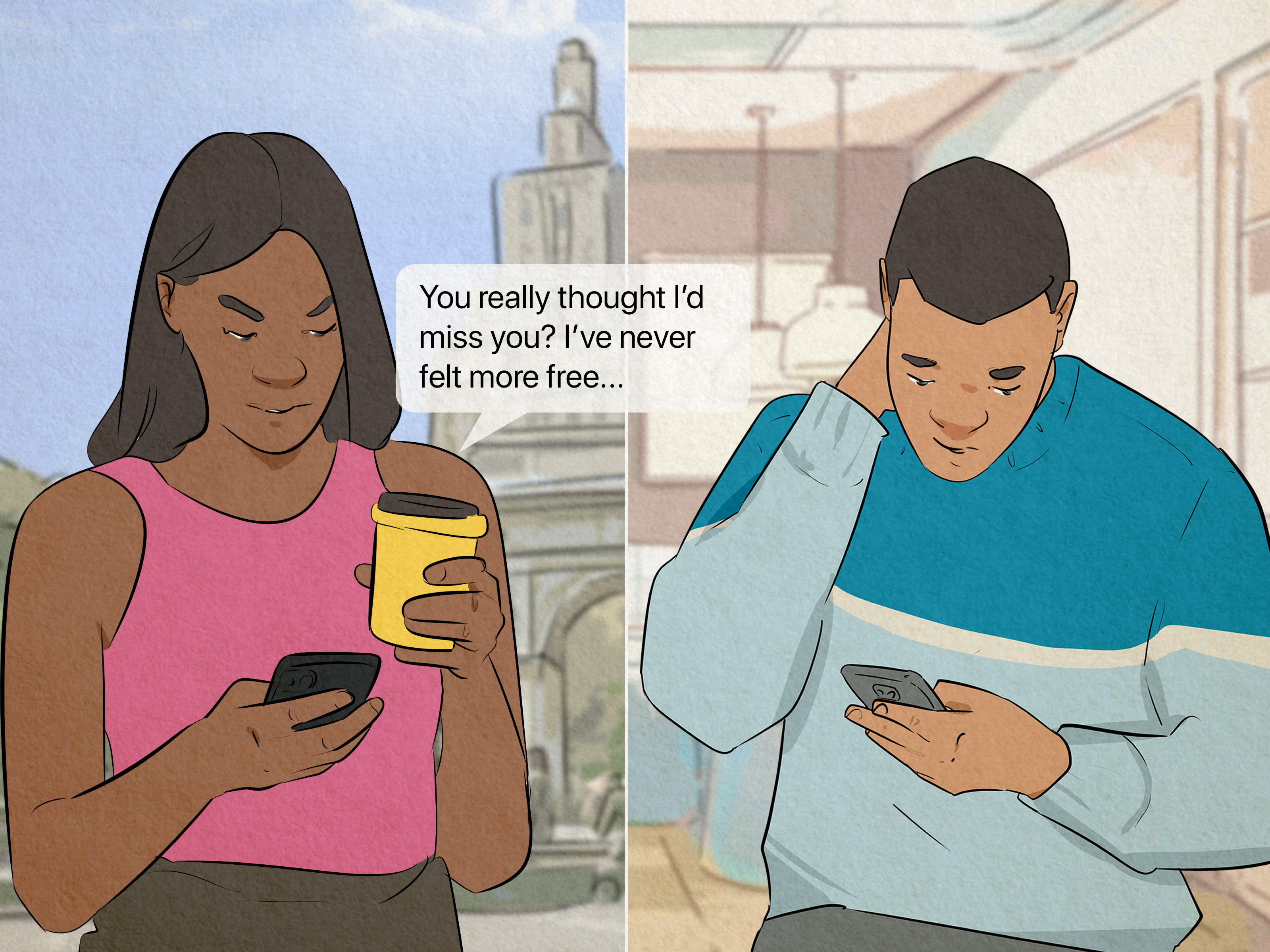
Few things can make your phone feel heavier than a text from an ex you are no longer emotionally available to answer. One buzz, and suddenly your calm afternoon has turned into a tiny courtroom drama starring nostalgia, guilt, unfinished conversations, and the suspicious urge to throw your phone into a decorative fountain.
If your ex keeps texting and you want it to stop, the goal is simple: be kind, be clear, and be done. You do not need to write a breakup sequel. You do not need to explain your healing process in twelve paragraphs. And you definitely do not need to reply just because they used a sad emoji with professional-level emotional aim.
This guide explains how to tell your ex to stop texting you nicely, what to say in different situations, when to stop being “nice” and become firm, and how to protect your peace if the texting turns uncomfortable, manipulative, or unsafe.
Why It Is Okay to Ask Your Ex to Stop Texting You
After a breakup, many people feel pressure to be “mature,” “cool,” or “friendly.” In theory, that sounds lovely. In real life, staying in constant contact with an ex can keep emotional doors cracked open when you are trying to close them with both hands and maybe a chair against the handle.
Healthy boundaries are not punishments. They are limits that protect your emotional energy, privacy, time, and ability to move forward. If a text exchange leaves you anxious, guilty, confused, hopeful in a way you do not want to be, or simply exhausted, that is enough reason to step back.
You are allowed to choose no contact. You are allowed to choose limited contact. You are allowed to say, “Please stop texting me,” even if your ex is lonely, apologetic, charming, or suddenly very interested in returning your old hoodie from 2019.
Before You Text Back: Decide What Boundary You Actually Want
Before sending anything, pause and ask yourself one practical question: “What do I want to happen after this message?” Your answer will shape the wording.
If You Want No Contact
No contact means no texting, calling, social media messages, check-ins, memes, “accidental” photos, or late-night emotional weather reports. This is often best when the relationship was painful, confusing, or hard to move on from.
If You Need Limited Contact
Some exes cannot fully disappear from your life. Maybe you share children, a pet, a lease, a workplace, a friend group, or the world’s most complicated Netflix password situation. In that case, set a narrow communication rule: only logistics, only email, only during certain hours, or only through a co-parenting app.
If You Are Unsure
If you are tempted to keep the conversation open “just in case,” be honest with yourself. Are you being kind, or are you avoiding discomfort? A boundary does not need to feel easy to be right.
How to Tell Your Ex to Stop Texting You Nicely
The best message is short, calm, and direct. Think “polite stop sign,” not “emotional TED Talk.” You can be warm without inviting debate.
The Simple and Kind Version
Text example: “Hey, I hope you’re doing well. I need some space to move forward, so I’m asking you not to text me anymore. I wish you the best.”
This works because it acknowledges them without overexplaining. It also clearly states the request: do not text me anymore.
The Firm but Still Respectful Version
Text example: “I’ve decided that continued contact is not healthy for me. Please stop texting me. I won’t be responding after this.”
This version is useful when your ex has ignored softer hints. It is still respectful, but it removes the wiggle room. No “maybe later.” No “we’ll see.” No emotional buffet.
The “We Share Responsibilities” Version
Text example: “Please only contact me about necessary logistics regarding [the kids/the apartment/the bills/the dog]. For anything else, I need no personal texting.”
When shared responsibilities exist, the goal is not emotional closeness. The goal is clean communication. Keep it specific and boring. Boring is beautiful here. Boring is a spa day for your nervous system.
The “Please Stop Flirting” Version
Text example: “I’m not comfortable with flirty or personal messages anymore. Please keep communication respectful and limited, or don’t contact me.”
This is helpful when your ex sends compliments, inside jokes, heart emojis, or “remember when” messages that tug at the old relationship. You are not required to entertain romantic leftovers.
The “I Am Seeing Someone New” Version
Text example: “Out of respect for my current relationship and my own boundaries, I need you to stop texting me. I wish you well, but I’m moving forward.”
You do not owe your ex details about your dating life, but if mentioning your current relationship helps set a clean boundary, this wording keeps it mature and simple.
What Not to Say When Asking Your Ex to Stop Texting
Sometimes the problem is not what you say, but how many doors your message accidentally leaves open. Avoid wording that creates a negotiation.
Avoid “Maybe Later” If You Mean No
Do not write, “Maybe we can talk in a few months,” unless you truly want that. Your ex may treat that phrase like a calendar invitation.
Avoid Long Emotional Explanations
A long message may feel compassionate, but it can give your ex more material to argue with. If they are looking for a debate, a five-paragraph explanation is basically a buffet.
Avoid Blame If Safety Is Not an Issue
If your ex is not dangerous and you simply want space, keep the tone centered on your needs. “I need space” lands better than “You always ruin my peace,” even if your group chat would strongly agree.
Use the “One Clear Message” Rule
Send one clear boundary message, then follow your own boundary. This is the part people underestimate. The message is not the boundary. Your behavior afterward is the boundary.
If you say, “I won’t respond after this,” and then respond six more times, your ex learns that persistence works. That does not make you weak; it makes you human. But it also means the pattern will probably continue.
Once you send the boundary text, mute, block, or archive the conversation if you need to. If you must keep records for safety or legal reasons, save screenshots before deleting anything.
What If Your Ex Responds Badly?
Your ex may apologize. They may guilt-trip you. They may send a dramatic “Wow, okay, I guess I never mattered” message. They may suddenly remember an urgent question about a kitchen spatula. Stay steady.
If They Apologize
Optional response: “Thank you for understanding. I still need no contact going forward.”
If They Guilt-Trip You
Optional response: “I understand this may be hard, but my decision is final. Please respect it.”
If They Keep Asking Why
Optional response: “I’m not going to discuss this further. Please stop contacting me.”
If They Ignore the Boundary
At that point, being “nice” can become less important than being consistent. You can stop replying. You can block. You can move the conversation to a safer platform if logistics are required. You can ask a trusted friend, counselor, advocate, or attorney for help if the contact feels harassing or threatening.
When Blocking Is the Right Move
Blocking can feel harsh, especially if you are a considerate person who still cares about your ex’s feelings. But blocking is not a moral failure. It is a phone setting. A very helpful little phone setting.
Consider blocking your ex if they repeatedly ignore your request, send emotional bait, contact you late at night, insult you, threaten you, monitor your activity, or use multiple platforms to reach you. You can also block them temporarily while you heal.
If the relationship involved control, intimidation, stalking, or abuse, think carefully before blocking without a safety plan. In some situations, blocking can reduce contact. In others, it may cause the person to escalate through new numbers, social media accounts, friends, or in-person visits. If you are worried about escalation, contact a domestic violence hotline, stalking resource, local advocate, or law enforcement for guidance tailored to your situation.
How to Protect Yourself If the Texting Becomes Harassment
Unwanted texting is not always just annoying. Repeated unwanted contact, threats, monitoring, or messages that make you feel afraid can become a safety issue. Take your instincts seriously.
Document the Messages
Save screenshots, call logs, voicemails, emails, social media messages, and dates. If your phone may not be safe, store copies somewhere secure, such as a trusted cloud account or with a person you trust.
Do Not Engage With Threats
If your ex sends threats or frightening messages, avoid arguing. Responding can sometimes fuel the situation. Prioritize safety and documentation.
Tell Someone You Trust
Let a close friend, family member, roommate, coworker, or neighbor know what is happening. You do not have to handle an escalating ex like it is a solo wilderness survival challenge.
Review Your Digital Privacy
Change passwords, turn off location sharing, check shared devices, review social media privacy settings, and avoid posting real-time location updates. If your ex had access to your phone, accounts, car apps, smart-home devices, or shared subscriptions, update those settings.
Seek Help If You Feel Unsafe
If you feel in immediate danger, contact emergency services. If you are not in immediate danger but feel harassed, stalked, or controlled, reach out to a domestic violence hotline, legal advocate, victim services organization, or local law enforcement to understand your options.
Copy-and-Paste Messages for Different Situations
Use these scripts as starting points. Adjust the tone so it sounds like you, not like you hired a tiny HR department to live in your phone.
Polite No-Contact Message
“I’ve thought about it, and I need space to move on. Please don’t text me anymore. I wish you well.”
Short and Direct Message
“Please stop texting me. I’m not interested in continuing contact.”
Warm but Final Message
“I appreciate the good parts of what we had, but I need to close this chapter. Please don’t contact me again.”
Message After They Keep Reaching Out
“I’ve already asked for no contact. Please respect that. I won’t respond to more messages.”
Message for Shared Responsibilities
“Please only contact me about necessary logistics. I’m not available for personal conversations.”
Message for Late-Night Texts
“Late-night messages are not okay with me. Please stop contacting me unless it is necessary and practical.”
Message Before Blocking
“You have continued texting after I asked you to stop. I’m blocking this number now.”
How to Stay Nice Without Being Too Nice
Being nice does not mean cushioning every sentence until your boundary sounds like a suggestion. “Please stop texting me” is not rude. “I need space” is not cruel. “I won’t respond anymore” is not dramatic. It is clear communication.
Too nice sounds like: “I’m so sorry, I hope this doesn’t hurt you, maybe I’m being unfair, I just need a little time, but maybe we can still talk, I don’t know.” That message is emotionally generous, but structurally wobbly. Your ex may hear possibility instead of finality.
Nicely firm sounds like: “I need no contact so I can move forward. Please don’t text me anymore. I wish you well.” It is kind. It is calm. It has a spine.
What If You Still Care About Your Ex?
You can care about someone and still not be available to them. This is one of the hardest post-breakup truths. You may worry that setting a boundary will hurt them. It might. But continuing a texting pattern that confuses both of you may hurt more.
If your ex is struggling emotionally, you can encourage them once to lean on friends, family, a counselor, or crisis support. But you cannot become their therapist, emergency contact, nostalgia partner, and emotional support human after the relationship ends. That job has terrible hours and no dental plan.
A compassionate message might be: “I’m sorry you’re hurting, but I can’t be the person you process this with. Please reach out to someone you trust. I need no contact going forward.”
Experience-Based Advice: What This Feels Like in Real Life
In real life, telling an ex to stop texting rarely feels as clean as it looks in a script. The message may take thirty seconds to type and three business days of emotional pacing to send. That is normal. Boundaries often feel uncomfortable at first because they ask you to tolerate someone else’s disappointment without rushing in to fix it.
One common experience is the “polite reply trap.” Your ex texts something harmless, like “Hope you’re okay,” and you think, “Well, it would be rude not to answer.” So you reply, “Thanks, you too.” Then they respond with a memory. Then you answer because now it feels mean to stop. Suddenly, you are discussing the emotional symbolism of your first date and wondering how a two-word reply became a reunion episode.
Another common experience is guilt. You may think, “They are not a bad person, so do I have the right to ask them to stop?” Yes. Someone does not have to be terrible for a boundary to be valid. You can end contact because you are healing. You can end contact because the conversation keeps reopening old feelings. You can end contact because every notification makes your stomach drop. Your comfort matters even when nobody is technically the villain.
Some people also experience “boundary bargaining.” Your ex may say they only want closure, only need one final call, only want to explain, only want to check that you are okay. Sometimes that is sincere. Sometimes it is a way to keep access. Either way, you get to decide whether more contact helps or harms you. Closure is not always a conversation. Sometimes closure is choosing not to keep rereading the same emotional page.
If you have tried to be nice before and it did not work, do not assume you failed. Many people send a soft message first because they hope the other person will understand the hint. But hints are not boundaries. A firmer second message may be necessary: “I’ve tried to be respectful, but I need to be clear. Please stop texting me.” You are not escalating drama. You are clarifying the limit.
It also helps to prepare for the silence afterward. Even if you asked for no contact, the quiet can feel strange. Your brain may reach for the old rhythm: checking your phone, wondering what they think, imagining their reaction. Fill that space intentionally. Make plans with friends, go for a walk, clean one chaotic drawer, start a new show, mute old photo memories, or write down the reasons you asked for space. Do not let loneliness trick you into reopening a door you worked hard to close.
Finally, remember that a kind boundary is still kind if the other person dislikes it. You are not responsible for making your ex feel delighted about losing access to you. You are responsible for communicating honestly, protecting your well-being, and following through. That is not cold. That is grown-up. Slightly awkward, yes. But grown-up.
Conclusion
Learning how to tell your ex to stop texting you nicely is really about learning how to protect your peace without abandoning your values. You can be respectful without being reachable. You can be compassionate without becoming emotionally available. You can wish your ex well from a distance so healthy it requires binoculars.
Keep your message short, clear, and final. Say what you need, avoid overexplaining, and follow through. If your ex respects the boundary, wonderful. If they do not, you have every right to stop responding, block, document, and seek help if the behavior becomes harassing or unsafe.
Your phone should not feel like a trapdoor to your past. It should be a tool for your life now: your friends, your plans, your peace, your memes, and your suspiciously large collection of food delivery coupons. Set the boundary. Mean it. Then let yourself move forward.