Running can strengthen your heart, clear your mind, and give you an excellent excuse to own more shoes than a small sporting-goods store. Unfortunately, it can also leave your toenails bruised, tender, black, loose, or missing altogether.
Painful toenails after running are usually caused by repeated pressure. Your foot slides forward, your toe bumps the inside of the shoe, and the nail absorbs thousands of tiny impacts. Long runs, steep descents, swollen feet, tight socks, poorly fitted shoes, and overgrown nails can turn that small irritation into a throbbing problem known as runner’s toe.
The good news is that damaged toenails are not an unavoidable membership fee for becoming a runner. Better footwear, smarter lacing, proper nail care, and early treatment can protect your toes without forcing you to retire your running shoes. The following 12 tips explain how to prevent toenail damage, reduce pain, and recognize when a suspicious nail needs professional care.
Medical note: This article provides general information and is not a substitute for diagnosis or treatment from a physician, podiatrist, or dermatologist.
Why Do Toenails Hurt After Running?
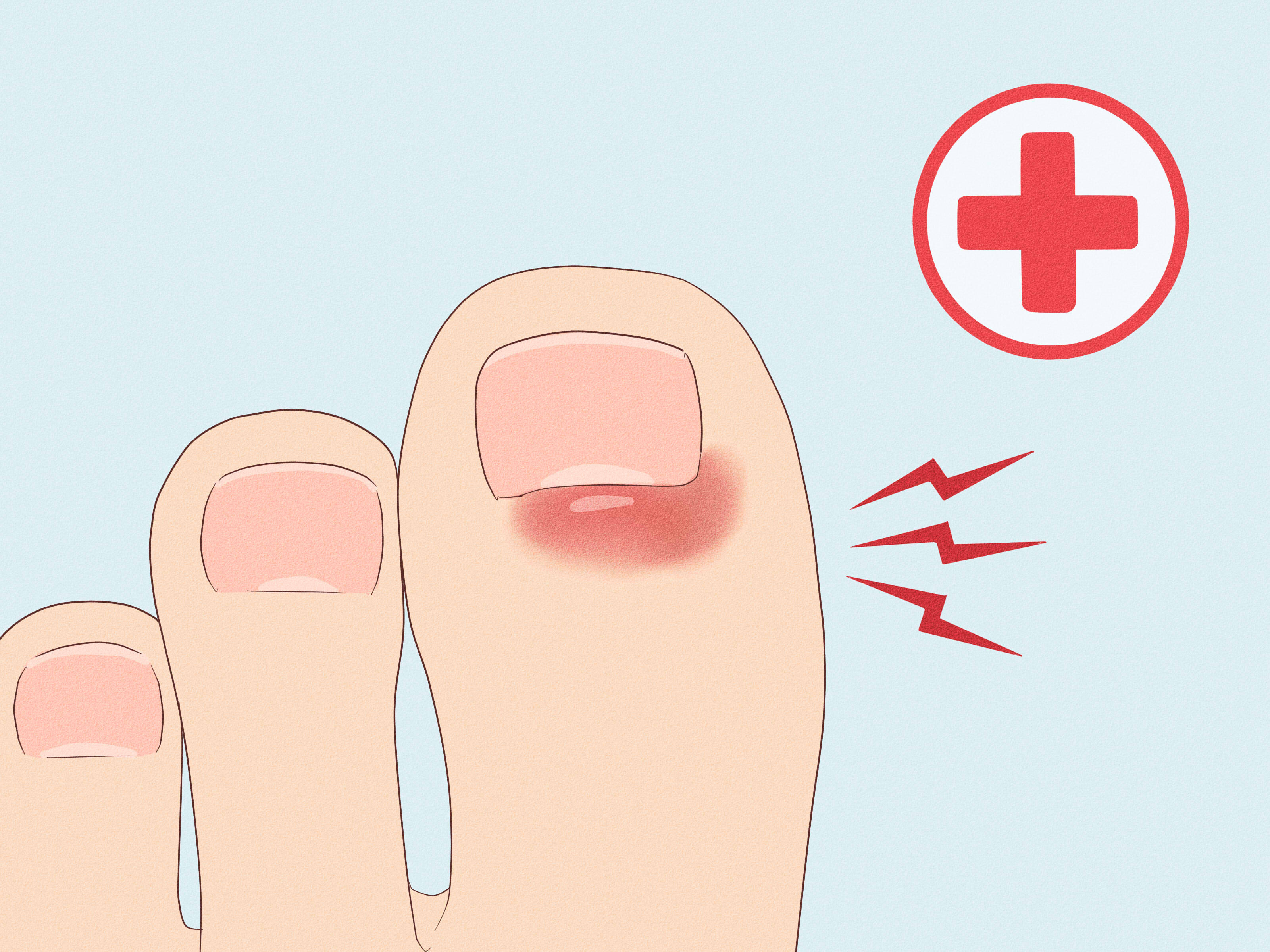
The most common culprit is repetitive trauma. When a toe repeatedly strikes the front or top of a running shoe, small blood vessels beneath the nail can break. Blood then collects between the nail and nail bed, creating a bruise called a subungual hematoma. The nail may look red, purple, blue, brown, or black.
A mild bruise may be painless and simply grow out with the nail. A larger collection of blood can produce pressure, swelling, and a heartbeat-like throbbing sensation. In some cases, the nail separates from its bed and eventually falls off.
Running may also aggravate an ingrown toenail, blister, fungal infection, thickened nail, or toe deformity. That is why every dark or painful nail should not automatically be blamed on Sunday’s long run. The timing, appearance, and progression of the problem matter.
12 Tips to Protect Toenails and Relieve Running-Related Pain
1. Give Your Longest Toe Enough Space
The number on the shoe box matters less than the space around your actual foot. A running shoe should generally provide approximately a thumb’s width of room between your longest toe and the front of the shoe. Remember that the second toe is longer than the big toe for many people, so check the entire lineup rather than measuring from the big toe alone.
Your toes should be able to wiggle without rubbing against the front, sides, or upper material. Look for a toe box that follows your natural foot shape instead of squeezing your toes into a fashionable little triangle.
Try shoes on later in the day, when feet are more likely to be slightly swollen, and wear the socks you normally use for running. A shoe that feels “exactly snug enough” while you are sitting in an air-conditioned store may become a tiny pressure cooker at mile 10.
2. Secure the Heel Without Crushing the Forefoot
Extra space in front of your toes will not help if your entire foot slides forward with every downhill step. Your heel and midfoot should feel secure, but the laces should not create numbness, tingling, or painful pressure across the top of your foot.
A runner’s loop, also called heel-lock lacing, can reduce forward movement. Lace the shoes normally until you reach the final two eyelets. Use the last eyelets to create small loops on each side, cross the laces through those loops, tighten them gently, and tie the shoe as usual.
The technique helps hold the heel in place while preserving toe-box room. However, lacing tricks cannot rescue a shoe that is fundamentally too short or narrow. Sometimes the heroic solution is not another knot. It is another pair of shoes.
3. Trim Toenails Straight Across
Long toenails are more likely to hit the inside of a shoe, while nails cut extremely short are more vulnerable to irritation and ingrown edges. Aim for the uneventful middle ground.
Cut toenails straight across and keep them approximately even with the tips of your toes. Avoid digging deeply into the corners or dramatically rounding the edges. After trimming, use a clean nail file to smooth sharp or jagged areas that might catch on a sock.
Trim nails several days before a race or major long run rather than performing aggressive last-minute maintenance the night before. Freshly irritated skin and 26.2 miles are not an ideal team-building exercise.
If your nails are unusually thick, curved, brittle, or difficult to cut, ask a podiatrist for help instead of forcing the clippers through them.
4. Stop and Inspect a Toe That Suddenly Hurts
Do not automatically finish a workout just because your training plan says you owe the internet another three miles. Sudden, sharp, or worsening toenail pain is a signal to stop and inspect your foot.
Remove the shoe and sock. Look for blood, swelling, a blister, torn skin, a folded sock seam, or a nail that is lifting away from the nail bed. Check whether a pebble, wrinkle, or damaged insole is pressing on the toe.
Minor pressure discomfort may improve after loosening the laces or changing socks. Persistent pain, increasing swelling, or an unstable nail usually deserves rest and medical evaluation. Continuing to pound an already injured nail can turn a manageable bruise into a lost nail or infected wound.
5. Use Cold Therapy for a Newly Bruised Toe
A wrapped cold pack may help reduce discomfort and swelling after a recent running-related toe injury. Apply it for about 15 to 20 minutes at a time, and place fabric between the cold source and your skin. Do not apply ice directly or leave it on until the toe becomes numb.
Elevating the foot may also reduce throbbing. For the rest of the day, switch to roomy shoes, sandals, or other footwear that does not press against the nail.
Cold therapy may make a mild injury more comfortable, but it does not drain blood trapped beneath the nail or repair a fracture. Severe pain after a hard impact, visible deformity, inability to bear weight, or significant swelling requires professional assessment.
6. Choose Pain Medication Carefully
For mild pain, an over-the-counter medication such as acetaminophen may help. Nonsteroidal anti-inflammatory drugs, including ibuprofen or naproxen, may reduce pain and inflammation for some people.
Follow the product label and avoid taking more than directed. NSAIDs are not appropriate for everyone, particularly people with certain kidney, stomach, bleeding, cardiovascular, or medication-related risks. Acetaminophen also requires caution in people with liver disease or substantial alcohol use.
Medication should make a minor injury easier to manage, not help you hide serious pain so you can continue running. If you need repeated doses simply to walk normally, the toe deserves more attention than a painkiller and an inspirational playlist.
7. Do Not Drain a Black Toenail at Home
A painful collection of blood beneath the nail can create intense pressure. A healthcare professional may relieve that pressure by making a small opening in the nail, a procedure commonly called nail trephination.
Do not attempt to burn, drill, puncture, or cut the nail yourself. Household needles, paper clips, and other improvised tools can cause infection, burns, nail-bed damage, or an impressively awkward urgent-care conversation.
Professional drainage is most useful when the hematoma is recent and causing substantial throbbing pain. A clinician can also determine whether the toe is fractured or the nail bed has been seriously injured.
A painless black nail generally does not need to be drained. Protect it, monitor it, and allow the discoloration to move outward as the nail grows.
8. Protect a Loose or Damaged Nail
If the nail begins to lift, do not pull it off. The attached portion may still protect sensitive tissue underneath. Wash the toe gently with soap and water, dry it carefully, and cover it with a clean, nonstick bandage if it rubs against your footwear.
A loose outer edge that is clearly detached may be carefully trimmed with clean clippers, but never cut into living tissue or forcefully remove an attached section. A podiatrist can safely manage a nail that is badly split, unstable, or repeatedly catching on socks.
Change the bandage whenever it becomes wet or dirty. Seek care if you notice spreading redness, warmth, pus, a foul odor, increasing tenderness, fever, or red streaking from the toe.
9. Wear Socks That Manage Moisture and Friction
Socks are not merely decorative tubes standing between you and an emergency load of laundry. They influence friction, moisture, temperature, and shoe fit.
Choose running socks made from moisture-managing synthetic fibers or wool blends. Avoid bulky seams directly over tender toes. A lightly cushioned sock may reduce pressure, while double-layer designs can decrease skin-on-fabric friction for some runners.
However, thicker is not automatically better. A heavily padded sock inside an already tight shoe can reduce toe space and increase nail pressure. Test the entire shoe-and-sock combination during shorter runs before using it in a race.
Change out of wet socks soon after running. Persistent moisture softens skin, promotes friction, and creates a friendly environment for athlete’s foot and fungal nail infections.
10. Consider a Silicone Toe Cap or Protective Padding
A soft silicone or gel toe cap can cushion a toe that repeatedly contacts the shoe. These products may be useful for runners with a long second toe, a curved nail, hammertoe, or a history of recurring nail bruises.
The protector should fit comfortably without cutting off circulation or creating additional crowding. Test it during a short, easy run. Remove it if you experience numbness, tingling, discoloration, or increased pressure.
Protective padding treats contact, not the underlying cause. If your toe keeps slamming into the front of the shoe, reassess shoe length, toe-box depth, lacing, foot swelling, and downhill technique. Adding padding to an undersized shoe is like adding another passenger to an overcrowded elevator and hoping everyone becomes more comfortable.
11. Reduce Downhill Trauma and Sudden Mileage Increases
Toenail problems often appear after long descents because gravity encourages the foot to slide forward. Shorten your stride slightly on steep downhills, maintain controlled steps, and make sure your heel is secure before beginning the descent.
Training errors can also contribute. A shoe-and-sock system that works for three miles may fail when you suddenly run 12 because feet swell and repetitive impacts accumulate. Increase weekly mileage and long-run distance gradually, allowing your skin, nails, muscles, and footwear strategy to adapt.
When a nail is sore, temporarily replace running with cycling, swimming, or another activity that does not reproduce the pain. Resume running when you can walk briskly, wear your running shoes, and push off through the affected toe without significant discomfort.
12. Know When Toenail Pain Is Not “Just Running”
See a healthcare professional when pain is severe, throbbing, worsening, or accompanied by major swelling. Medical evaluation is also appropriate when the toe appears deformed, you cannot bear weight, the nail is deeply torn, bleeding will not stop, or signs of infection develop.
People with diabetes, poor circulation, peripheral neuropathy, immune suppression, or a history of serious foot problems should seek care early rather than attempting home treatment.
A dark spot that does not move toward the nail tip as the nail grows deserves attention. So does a new or changing brown or black vertical streak, pigmentation extending onto surrounding skin, or discoloration that appeared without a clear injury. Although trauma is common, fungal infection and, rarely, melanoma can also change a nail’s color.
Can You Keep Running With a Black Toenail?
A painless, stable black toenail does not automatically require complete rest. You may be able to continue with shorter, easier runs if the shoe does not press on the nail and your stride remains normal.
Stop running if the pain increases, the nail lifts, the toe becomes more swollen, or you alter your gait to protect it. Limping can shift stress to the ankle, knee, hip, or opposite leg. There is no trophy for converting a toe problem into a full lower-body collection.
Return gradually after a painful injury. Begin with walking, progress to a short easy run, and check the toe afterward. If symptoms return, reduce the load and reassess your footwear before trying again.
What Happens If the Toenail Falls Off?
A badly bruised nail may loosen over several weeks and eventually detach. Keep the area clean and protected while the new nail grows underneath. Do not tear away attached nail tissue, and avoid squeezing the exposed nail bed into tight shoes.
Toenails grow slowly, so complete replacement can take many months. The new nail may initially look thin, ridged, or uneven. Repeated trauma can disrupt its growth again, making prevention especially important during recovery.
Seek medical care if the exposed area remains very painful, repeatedly bleeds, develops drainage, or shows other signs of infection.
Practical Experiences: What Runners Commonly Learn the Hard Way
The following situations reflect common lessons reported by recreational runners, distance runners, and clinicians who regularly see running-related foot problems.
The Shoe Size Lesson
A runner may wear the same size in casual shoes and running shoes for years without a problem. Then marathon training begins, the long run reaches double digits, and the second toenail turns purple. The shoe did not suddenly shrink. The runner’s feet swelled during the longer effort, and the longest toe used every downhill as an opportunity to knock on the front door.
The practical lesson is to judge footwear under realistic conditions. A shoe should be tested with running socks, later in the day, and during progressively longer outings. Brand labels are inconsistent, so a size 10 in one model may fit like a 9.5 or 10.5 in another. The correct size is the one that protects the foot, not the one that protects the ego.
The Lacing Lesson
Another runner may already have plenty of space in the toe box but still develop bruised nails after hilly races. The hidden problem is heel slippage. Each descent sends the foot forward, even though the shoe feels roomy while standing still.
Adding a runner’s loop can improve heel security immediately. The important detail is to tighten the upper laces without strangling the midfoot. Afterward, the runner should test the adjustment on a short route with a few gentle hills. Small equipment changes belong in training, not at the starting line of an important race.
The “I Can Finish Anyway” Lesson
During a long run, a toe begins to throb at mile eight. The runner decides that checking it would interrupt the workout and continues for another hour. At home, the nail is raised, the sock is bloody, and the original irritation has become a more serious injury.
Stopping for two minutes could have revealed a folded sock, loose laces, or early swelling. Experienced runners gradually learn that responding to a warning sign is not weakness. It is maintenance. Race cars make pit stops, and they do not even have toenails.
The Nail-Trimming Lesson
Pre-race grooming can also backfire. Cutting nails extremely short the night before an event may leave tender skin exposed or encourage an edge to grow inward. Leaving them too long creates another problem: the nails repeatedly strike the shoe.
A more reliable routine is to trim straight across several days before a long race, smooth the edges, and then leave the nails alone. Runners with thick or curved nails often benefit from professional foot care rather than increasingly creative bathroom surgery.
The Recovery Lesson
A runner who loses a nail may expect the new one to look normal within a few weeks. Toenails, however, operate on a schedule best described as “geological.” The new nail can take months to replace the damaged one.
During that time, roomy footwear, clean socks, protective bandaging when needed, and careful monitoring matter more than cosmetic appearance. Nail polish can hide discoloration, but it can also make changes harder to observe. Photographing the nail periodically may help track whether a bruise is moving outward with growth.
The broad lesson is that runner’s toe is usually preventable. When it keeps returning, the answer is rarely to become more tolerant of pain. The answer is to identify the repeated source of pressure.
Conclusion
Protecting your toenails while running begins before the first step. Choose shoes with sufficient length and toe-box depth, secure the heel, wear suitable socks, and keep nails neatly trimmed without cutting them excessively short.
If pain develops, stop and inspect the toe. Reduce pressure, use cold therapy for a recent minor injury, protect damaged tissue, and take a temporary break from activities that worsen symptoms. Never puncture a black toenail at home, and do not ignore severe pain, infection signs, unexplained discoloration, or a changing dark streak.
Your toenails may not earn medals or appear in finish-line photographs, but they perform thousands of small acts of service during every run. Give them enough room, and they are much more likely to cross the finish line with you.
Note: Seek personalized advice from a physician, podiatrist, or dermatologist when symptoms are persistent, recurrent, severe, or difficult to identify.
{

  "meta_title": "Protect Toenails While Running: 12 Pain Relief Tips",

  "meta_description": "Prevent bruised and painful toenails with shoe-fit fixes, nail-care advice, recovery steps, and 12 practical running pain relief tips.",

  "sapo": "Painful, bruised, or black toenails do not have to be an unavoidable part of running. Learn why runner’s toe develops and how better shoe fit, heel-lock lacing, moisture-managing socks, careful nail trimming, protective padding, and smart recovery can reduce pressure and pain. This guide presents 12 practical tips, explains when a black toenail can be monitored at home, and identifies warning signs that require care from a physician, podiatrist, or dermatologist.",

  "keywords": [

    "protect toenails while running",

    "runner's toe treatment",

    "black toenail from running",

    "toenail pain relief",

    "running shoe toe box",

    "prevent bruised toenails"

  ]

}