Outdoor games are the magical cure for three modern household problems: bored teenagers, energetic toddlers, and adults who have heard the phrase “I’m bored” roughly 900 times before lunch. The good news? You do not need a professional playground, a luxury backyard, or a bank account with its own theme song. With cardboard boxes, pool noodles, chalk, buckets, rope, beanbags, and a little imagination, you can create fun and affordable outdoor games for teenagers and toddlers that keep everyone moving, laughing, and occasionally arguing over whether a laundry basket counts as a goal. Spoiler: it does.
The trick is designing games that work for different ages at the same time. Teenagers usually want challenge, competition, speed, creativity, or a chance to pretend they are not having fun while absolutely having fun. Toddlers need simple rules, safe materials, short rounds, sensory play, and lots of chances to run, toss, crawl, pour, stack, and proudly shout, “I did it!” When you combine both, the best outdoor games become flexible: one version for little legs, another version for long legs, and a family version where nobody gets tackled into the tomato plants.
This guide shows how to build backyard games, driveway games, park games, and patio activities that are cheap, reusable, and easy to customize. You will find safety tips, material lists, DIY instructions, toddler-friendly modifications, teen upgrades, and real-life experience from setting up outdoor play without turning the yard into a disaster documentary.
Why Outdoor Games Matter for Teenagers and Toddlers
Outdoor play is more than a way to burn energy. For toddlers, it supports gross motor development, balance, coordination, language, curiosity, and social learning. When a toddler chases bubbles, throws a soft ball, jumps over chalk lines, or carries water from one bucket to another, they are building real physical and thinking skills. It may look like chaos, but it is high-quality chaos.
For teenagers, outdoor games help reduce screen fatigue, encourage movement, support teamwork, and give them a low-pressure way to connect with friends or younger siblings. Teens may not always ask for “family bonding time,” because apparently that phrase is illegal after age thirteen, but they often enjoy games that include strategy, speed, humor, or a little harmless competition.
Affordable outdoor games also solve a practical problem for families: entertainment costs. Amusement parks, trampoline centers, arcades, and activity clubs can be fun, but they are not always budget-friendly. A DIY backyard tournament made from chalk, recycled bottles, beanbags, and homemade scorecards can fill an afternoon for less than the cost of one restaurant appetizer that everyone pretends to share politely.
Start With a Simple Outdoor Game Plan
Before making any game, think about three things: space, age, and energy level. A small patio can handle ring toss, beanbag target games, water painting, and chalk obstacle paths. A driveway works well for scooter races, hopscotch challenges, bottle bowling, and mini golf. A backyard or park can handle relay races, capture-the-flag variations, scavenger hunts, and giant board games.
Use the “Three-Level Rule”
Any great outdoor game for mixed ages should have three levels:
- Toddler level: simple actions like toss, find, match, stack, crawl, jump, or splash.
- Teen level: added challenges such as speed, strategy, blindfolded turns, distance, scoring, or teamwork.
- Family level: silly rules that make everyone laugh, like walking backward, using the non-dominant hand, or announcing every move in a dramatic sports-commentator voice.
This keeps toddlers from feeling left out and teens from feeling trapped in a game designed entirely around “put the ball in the bucket, hooray!” Everyone gets a version that feels right for them.
Safety First, Because Nobody Wants a DIY Emergency Room Game
Fun outdoor games should be active, not reckless. Check the play area before starting. Remove sharp sticks, broken toys, loose tools, slippery hoses, and anything that could cause trips or falls. Use soft balls for toddlers, avoid small parts that can become choking hazards, and keep water games shallow and closely supervised. Toddlers should never be left alone near buckets, tubs, pools, or even small amounts of standing water.
For teenagers, set boundaries clearly. If a game involves running, mark the play zone away from streets, grills, glass doors, garden stakes, and parked cars. If the game uses homemade equipment, inspect it before play. Sand rough wooden edges, tape cardboard seams, avoid exposed nails or staples, and skip anything that swings, hangs, or climbs unless it is designed and installed for safe use.
Sun protection matters too. Choose shaded areas when possible, schedule active games for morning or late afternoon in hot weather, offer water breaks, and encourage hats, sunscreen, and lightweight clothing. Outdoor fun loses its sparkle when everyone turns into a sweaty raisin.
Affordable Materials for DIY Outdoor Games
You probably already own many game-building supplies. Start by raiding the garage, recycling bin, craft drawer, and kitchenpolitely, of course. The best low-cost outdoor game materials include sidewalk chalk, painter’s tape, pool noodles, cardboard boxes, paper plates, plastic bottles, laundry baskets, buckets, hula hoops, rope, sponges, balloons, tennis balls, beanbags, wooden spoons, cups, cones, old sheets, and washable paint.
Dollar stores, thrift shops, yard sales, and discount bins are excellent places to find extra supplies. Look for plastic buckets, foam balls, jump ropes, pool toys, baskets, and large dice. Do not worry about matching colors or perfect equipment. Kids do not need a Pinterest-level backyard. They need space, permission to move, and adults willing to say, “Sure, the cardboard dragon can be part of the obstacle course.”
Game 1: Backyard Obstacle Course
A backyard obstacle course is one of the easiest outdoor games to make because it can be rebuilt every time. Use cones, chairs, pool noodles, boxes, chalk arrows, hoops, blankets, buckets, and ropes to create stations.
How to Make It
Set up five to eight simple challenges. For example: crawl under a pool noodle bridge, jump over chalk rivers, toss a beanbag into a bucket, zigzag around cones, balance on a rope line, spin three times, and race to the finish. Keep toddler obstacles low and soft. For teens, increase the distance, add a timer, require teamwork, or make them complete the course while carrying a cup of water.
Toddler version: “Can you crawl, jump, toss, and clap?” No timer needed.
Teen version: Fastest clean run wins. Add penalties for missed targets.
Budget tip: Use chalk instead of cones and rolled towels instead of fancy agility equipment.
Game 2: DIY Beanbag Toss
Beanbag toss is perfect for mixed ages because the rules can be as simple or competitive as needed. You can make beanbags from old socks filled with rice or dry beans, then tie or sew them shut securely. For targets, use buckets, cardboard boxes, hula hoops, or paper plates taped to the ground.
How to Make It
Place targets at different distances and assign point values. Toddlers stand close and toss into large baskets. Teenagers stand farther back and aim for smaller targets. To make it funny, label targets with silly rewards or challenges: “Do a victory dance,” “Roar like a dinosaur,” or “Tell your best dad joke.” Warning: the dad joke square may cause emotional damage.
Toddler version: Toss soft beanbags into a laundry basket.
Teen version: Play tournament-style with scorecards and trick shots.
Budget tip: Reuse shipping boxes and decorate them with markers.
Game 3: Pool Noodle Ring Toss
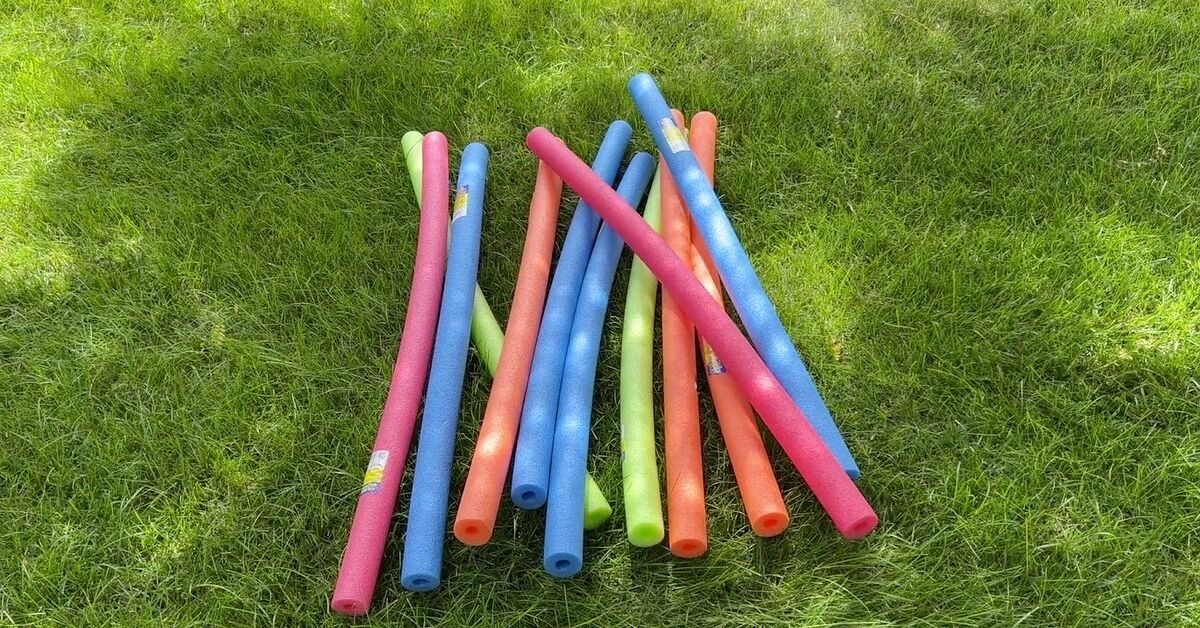
Pool noodles are the royalty of cheap outdoor play. They are soft, colorful, lightweight, and oddly powerful at making everyone act goofy. To make ring toss, cut pool noodles into short posts and tape them upright to weighted containers, or push them into the ground if the surface allows. Make rings from rope, glow sticks, or pool noodle circles taped together.
How to Make It
Create three to five targets. Toddlers toss from a short distance, while teens compete from farther away. Add point values or require players to call their shot before tossing. For a nighttime version, use glow bracelets as rings and place the game in a safe, well-lit area.
Toddler version: Big rings, close targets, unlimited cheering.
Teen version: Long-distance tosses, angled throws, and team scoring.
Budget tip: Buy pool noodles at the end of summer when they are often discounted.
Game 4: Sidewalk Chalk Challenge Course
Sidewalk chalk is basically outdoor game software. You can update it instantly, erase it with water, and nobody has to download an app. Draw a path with instructions: jump five times, spin, hop on one foot, touch something green, walk like a crab, roar like a lion, or follow the squiggly line.
How to Make It
For toddlers, use shapes, colors, and simple movements. Ask them to jump on the blue circle, stomp on the triangle, or follow the yellow road. For teenagers, turn it into a fitness challenge with timed rounds, memory patterns, or team relays.
Toddler version: Color matching and animal walks.
Teen version: Timed chalk maze with physical challenges.
Budget tip: One box of chalk can create dozens of games.
Game 5: Recycled Bottle Bowling
Save empty plastic bottles, rinse them, and turn them into bowling pins. Add a little sand, rice, or water to the bottom so they stand up without becoming impossible to knock down. Use a soft ball for toddlers and a larger playground ball for older kids.
How to Make It
Arrange six to ten bottles in a triangle. Mark a starting line with chalk or tape. Toddlers can roll from close range. Teenagers can bowl from farther away, use spin shots, or create obstacle bowling with ramps made from cardboard.
Toddler version: Roll, knock down, celebrate wildly.
Teen version: Keep score like real bowling or invent power-up rules.
Budget tip: Decorate bottles with washable paint or colored tape.
Game 6: Nature Scavenger Hunt
A scavenger hunt works in a backyard, park, campground, or neighborhood walk. It encourages movement, observation, teamwork, and curiosity. Best of all, nature provides most of the supplies and rarely sends an invoice.
How to Make It
Create a list of things to find: something round, something soft, a leaf bigger than your hand, a bird sound, a smooth rock, a yellow flower, a shadow, a pinecone, or something that smells nice. For toddlers, use pictures or simple colors. For teenagers, add riddles, photo challenges, or a time limit.
Toddler version: Find colors, textures, and safe natural objects.
Teen version: Photo scavenger hunt with creative categories.
Budget tip: Use paper bags, clipboards, or phone cameras if appropriate.
Game 7: Sponge Water Relay
This is a low-cost water game that feels exciting without requiring a pool. You need two buckets per team and a few large sponges. Fill one bucket with water and place an empty bucket several feet away. Players soak the sponge, run or walk to the empty bucket, squeeze the water out, and race back.
How to Make It
Toddlers can carry sponges slowly and squeeze them with both hands, which builds hand strength and coordination. Teenagers can race in teams, add obstacles, or compete to see who transfers the most water in two minutes.
Toddler version: No racing, just squeezing and pouring.
Teen version: Relay race with timed rounds.
Budget tip: Kitchen sponges work, but larger car-wash sponges are more dramatic.
Game 8: Giant Tic-Tac-Toe
Giant tic-tac-toe is easy to make and surprisingly fun for all ages. Draw a large grid with chalk, sticks, or rope. Use painted rocks, beanbags, paper plates, or frisbees as game pieces.
How to Make It
For toddlers, focus on placing pieces and naming colors or shapes. For teenagers, turn it into a relay: players must run to the board one at a time to place or move a piece. This adds speed and strategy to a simple game.
Toddler version: Match colors and place pieces.
Teen version: Relay tic-tac-toe with team strategy.
Budget tip: Use rocks from the yard and paint Xs and Os on them.
Game 9: DIY Mini Golf
Mini golf can be made from cardboard, pool noodles, cups, blocks, books, boxes, and plastic cups turned sideways as holes. Use toy golf clubs, broom handles, or pool noodles as putters. Soft balls are best for young children.
How to Make It
Create three to six holes with ramps, tunnels, curves, and obstacles. Toddlers can push balls through tunnels and into large targets. Teenagers can design the course themselves, then compete for the lowest score. If the course looks ridiculous, congratulationsyou have made real mini golf.
Toddler version: Push the ball into a big box or cup.
Teen version: Design difficult holes and track strokes.
Budget tip: Cardboard boxes make excellent ramps and tunnels.
Game 10: Capture the Flag, Toddler-Safe Edition
Traditional capture the flag can be too intense for toddlers, but a modified version works beautifully. Instead of tagging aggressively, use “freeze zones” or walking-only rounds. Flags can be bandanas, socks, or small towels.
How to Make It
Divide the yard into two areas. Each team hides a flag in an easy-to-see place. Toddlers can be “flag helpers” who retrieve flags from obvious spots. Teenagers handle strategy, defense, and rescue missions. Keep the rules gentle and avoid rough contact.
Toddler version: Find the flag and bring it home.
Teen version: Strategy round with boundaries and timed play.
Budget tip: Old T-shirts or dish towels make perfect flags.
How to Keep Teenagers Interested
Teenagers are more likely to join outdoor games when they have ownership. Let them design the rules, build the course, keep score, create teams, choose music, or invent bonus challenges. They may roll their eyes at first. This is normal teen weather. Wait five minutes. The forecast often improves.
Make games social and slightly competitive. Add tournaments, brackets, team names, leaderboards, and ridiculous trophies. A spray-painted plastic cup labeled “Champion of the Backyard Universe” can become surprisingly powerful. Teens also enjoy games that allow creativity, such as photo scavenger hunts, obstacle-course design, mini golf construction, and trick-shot challenges.
How to Keep Toddlers Included
Toddlers do best with short instructions and immediate success. Instead of explaining every rule, demonstrate the action: “Throw it here,” “Jump on blue,” “Find a leaf,” or “Pour water in this bucket.” Keep rounds short and repeat favorite actions. Toddlers love repetition because it helps them learn. Adults love repetition becauseactually, adults are still working on that.
Use larger targets, softer materials, shorter distances, and more flexible scoring. For toddlers, participation is the win. If they toss the beanbag, clap. If they put it in the wrong bucket, clap. If they wander off to inspect an ant, congratulations, the game has become science class.
Budget-Friendly Outdoor Game Party Plan
If you want to host a low-cost outdoor game day, choose four stations: one running game, one tossing game, one creative game, and one water or sensory game. For example, set up a chalk obstacle course, beanbag toss, nature scavenger hunt, and sponge relay. Rotate groups every ten to fifteen minutes. This prevents boredom and keeps toddlers from melting down over waiting too long.
Create simple scorecards for teenagers and sticker cards for toddlers. Offer water, fruit, pretzels, or simple snacks. Use a shaded rest area with blankets or folding chairs. Keep a first-aid kit nearby, not because disaster is expected, but because children can somehow get a dramatic injury while standing still.
Real Experience: What Actually Works When Making Outdoor Games
The best outdoor games I have seen are rarely the most expensive ones. In fact, the games that get replayed the most are usually the ones made in ten minutes from household items. A cardboard box becomes a castle, then a target, then a tunnel, then a mysterious “store” where toddlers sell leaves for imaginary money. Teenagers may begin by pretending the activity is beneath them, but hand them a stopwatch, a roll of tape, and the power to create “official rules,” and suddenly they are event managers with very strong opinions about cone placement.
One of the biggest lessons is that mixed-age games need flexibility more than perfection. A toddler may not follow the obstacle course in the correct order. That is fine. A teenager may want to make the same obstacle course harder by adding a backward run, a beanbag toss, and a final dramatic slide across the grass like a movie hero. Also fine, provided the grass is safe and nobody is aiming for the rose bushes. The goal is not to force everyone into the same version of play. The goal is to build a game system where each age group can participate at its own level.
Another practical experience: water games are almost always popular, but they need boundaries. A sponge relay starts as a charming activity and can become a full backyard ocean if nobody explains the rules. Set a water zone. Use small buckets. Keep towels nearby. Tell teenagers that “no soaking toddlers” is not a suggestion but a law of civilization. For toddlers, water play should stay shallow, supervised, and simple. They are often happiest squeezing sponges, painting the fence with water, or pouring from cup to cup.
Chalk games are the quiet champions of affordable outdoor play. They are cheap, creative, and easy to change. A chalk path can become a racecourse, alphabet hunt, dinosaur trail, color-matching game, or fitness challenge. Toddlers enjoy jumping from shape to shape, while teenagers can turn the same path into a timed challenge. The cleanup is usually handled by rain, which is the rare household cleaner that works for free.
Scavenger hunts also work beautifully because they do not require much equipment. For toddlers, the list should be visual and simple: find something green, something soft, something round. For teenagers, make it more creative: photograph something that looks like a face, find the weirdest shadow, create a nature alphabet, or make a thirty-second outdoor commercial for a pinecone. The more teens can use humor and creativity, the more likely they are to participate.
The final lesson is to let children help build the games. Toddlers can carry beanbags, choose chalk colors, or place soft balls in baskets. Teenagers can measure distances, create brackets, design logos, and test the difficulty level. When kids help create the game, they care more about playing it. And when a homemade game falls apart, that is not failure. That is version one. Add tape, rename it “Extreme Edition,” and keep going.
Conclusion
Making fun and affordable outdoor games for teenagers and toddler is really about combining movement, imagination, safety, and flexibility. You do not need expensive gear or a picture-perfect backyard. You need simple materials, clear boundaries, age-friendly rules, and a willingness to let play get a little silly. From chalk courses and bottle bowling to sponge relays and DIY mini golf, homemade outdoor games can help toddlers build skills, give teenagers a reason to move, and turn ordinary afternoons into memorable family adventures.
Start small. Pick one game, use what you already have, and adjust it after the first round. The best backyard games are not flawless; they are replayable. And if everyone ends the day tired, laughing, slightly damp, and asking to play again tomorrow, you have officially won the outdoor game championship.
Note: This article is based on real child-development, physical activity, playground safety, and DIY outdoor play guidance from reputable U.S. health, education, safety, and family activity resources.