Note: Astrology is best used as a reflective, symbolic toolnot a scientific diagnosis, life commandment, or excuse to text your ex “because Mercury made me do it.”
At some point, someone will ask, “What’s your sign?” and you may confidently answer, “I’m a Leo,” only to be met with, “But what’s your Moon? And your Rising?” Suddenly, astrology feels less like a fun personality quiz and more like you accidentally enrolled in celestial algebra.
The good news: finding your astrological Sun, Moon, and Rising sign is easier than it sounds. These three placementsoften called the “Big Three” in astrologycome from your birth chart, also known as a natal chart. Your birth chart is a snapshot of where the Sun, Moon, planets, and key chart points were located at the exact time and place you were born.
Your Sun sign explains your core identity. Your Moon sign describes your emotional world. Your Rising sign, also called the Ascendant, shows how you move through life and how others may first experience your energy. Together, they create a much richer picture than your Sun sign alone. Think of the Sun as the main character, the Moon as the private journal, and the Rising sign as the outfit your soul wears to the party.
What Are the Sun, Moon, and Rising Signs?
Sun Sign: Your Core Self
Your Sun sign is the zodiac sign most people already know. It is based on the position of the Sun on the day you were born. If you say, “I’m a Virgo,” you are probably talking about your Sun sign.
In astrology, the Sun represents identity, life direction, confidence, purpose, and the basic energy you are learning to express. It is not your entire personality, but it is a major anchor in your chart. A Taurus Sun may seek stability and comfort, while a Sagittarius Sun may feel pulled toward freedom, discovery, and adventure. Of course, real people are more complicated than one sign. That is where the Moon and Rising sign enter the chat, wearing dramatic capes.
Moon Sign: Your Emotional Inner World
Your Moon sign is based on the zodiac sign the Moon occupied when you were born. The Moon moves quickly, changing signs about every two and a half days, so your birth date alone may not always be enough. In many cases, your birth time and birth location help confirm the correct Moon sign.
Astrologically, the Moon is connected with emotions, instincts, comfort, habits, memory, and private reactions. Your Moon sign may describe what makes you feel safe, how you handle stress, and what you need when life gets messy. For example, an Aries Moon may process feelings quickly and directly, while a Cancer Moon may need emotional security, closeness, and a cozy blanket that has seen some things.
Rising Sign: Your First Impression and Life Approach
Your Rising sign, or Ascendant, is the zodiac sign that was rising on the eastern horizon at your exact time and place of birth. This is why the Rising sign is the pickiest of the Big Three. It depends heavily on accurate birth time. Even a difference of 10 or 15 minutes can matter, especially if you were born close to the moment one Rising sign changed to another.
The Rising sign shapes the layout of your birth chart and begins the first house, which is associated with appearance, self-presentation, first impressions, and how you approach new experiences. It is often described as the doorway into your chart. If the Sun is the engine and the Moon is the emotional weather, the Rising sign is the front porch light people see before they knock.
What Information Do You Need to Find Your Big Three?
To find your Sun, Moon, and Rising sign accurately, you need three pieces of birth information:
- Your birth date: Month, day, and year.
- Your birth time: As exact as possible, preferably from a birth certificate or hospital record.
- Your birth location: City, state, and country.
Your Sun sign can usually be found with only your birth date, although people born near the date when the Sun changes signs may need the exact time and location to confirm. Your Moon sign often requires more precision because the Moon changes signs quickly. Your Rising sign absolutely requires birth time and place because the Ascendant changes roughly every two hours.
How to Find Your Sun Sign
The simplest way to find your Sun sign is to check which zodiac season your birthday falls under. Here are the commonly used tropical astrology date ranges:
- Aries: March 21–April 19
- Taurus: April 20–May 20
- Gemini: May 21–June 20
- Cancer: June 21–July 22
- Leo: July 23–August 22
- Virgo: August 23–September 22
- Libra: September 23–October 22
- Scorpio: October 23–November 21
- Sagittarius: November 22–December 21
- Capricorn: December 22–January 19
- Aquarius: January 20–February 18
- Pisces: February 19–March 20
These dates are a helpful starting point, but they are not perfect for every year. The Sun does not enter each sign at the exact same clock time annually. If you were born on a cusp date, such as March 20, April 19, May 20, or August 22, use a birth chart calculator instead of guessing. Astrology loves symbolism, but it also loves exact degrees. Very picky, very dramatic.
How to Find Your Moon Sign
To find your Moon sign, use a natal chart calculator and enter your birth date, birth time, and birth location. The calculator will show the Moon’s zodiac sign at the moment you were born.
If you do not know your birth time, you may still be able to estimate your Moon sign if the Moon stayed in the same sign all day on your birthday. However, if the Moon changed signs that day, you will need a more accurate birth time to know for sure. This is why two people born on the same date can have different Moon signs, especially if they were born in different time zones or at opposite ends of the day.
For example, imagine someone born on a day when the Moon moved from Libra into Scorpio. A morning birth might show Libra Moon, while a late-night birth might show Scorpio Moon. Those are very different emotional flavors. Libra Moon may seek harmony and fairness, while Scorpio Moon may feel things intensely and privately. Same birthday, different emotional operating system.
How to Find Your Rising Sign
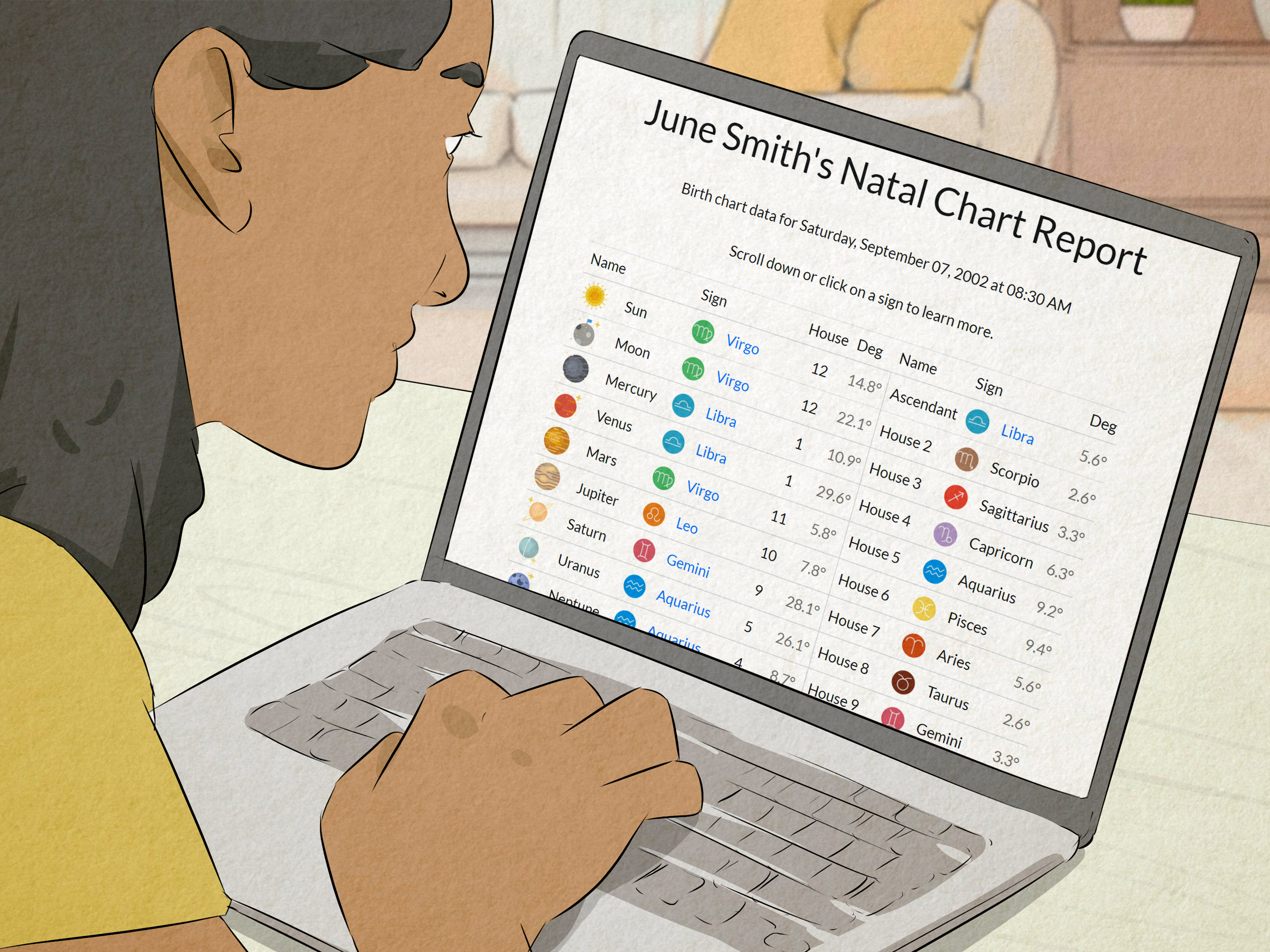
To find your Rising sign, you need your exact birth time and birth location. Enter those details into a reliable birth chart calculator. Look for labels such as “Ascendant,” “ASC,” or “Rising.” The sign listed there is your Rising sign.
The Rising sign changes much faster than the Sun or Moon, which is why accuracy matters. A person born at 7:05 a.m. and another born at 9:10 a.m. in the same city on the same day may have different Rising signs. This changes not only the Ascendant but also the house layout of the entire chart.
If you do not know your birth time, try these options:
- Check your long-form birth certificate.
- Ask a parent, guardian, or older relative.
- Contact the hospital or county records office where you were born.
- Use “unknown birth time” in a chart calculator, but understand that your Rising sign may not be accurate.
- Consider a professional chart rectification if you are deeply interested in astrology.
Chart rectification is the process astrologers use to estimate a birth time by comparing major life events with possible chart angles. It is not necessary for beginners, but it can be helpful for people who cannot access official records.
Best Way to Calculate Your Full Birth Chart
The easiest method is to use a free online birth chart calculator. Choose one that asks for your birth date, exact birth time, and birth city. After submitting your information, the chart should list your Sun, Moon, and Ascendant clearly.
When reading the results, do not panic if the chart looks like a pizza designed by an astronomer with a ruler addiction. Focus first on the basic placements:
- Sun in sign: Your central identity and vitality.
- Moon in sign: Your emotional needs and instinctive responses.
- Ascendant/Rising sign: Your outer style, first impression, and chart starting point.
Once you understand those, you can explore houses, aspects, planetary rulers, elements, and modalities. But you do not need to learn everything in one sitting. Astrology is a language, not a microwave burrito. It takes time to heat evenly.
What If Your Sun, Moon, and Rising Signs Are Different?
Most people have different Sun, Moon, and Rising signs. This is completely normal. In fact, it is one reason astrology feels more nuanced than a single horoscope column.
For example, someone might have a Capricorn Sun, Gemini Moon, and Libra Rising. On the outside, Libra Rising may appear friendly, polished, and socially graceful. Emotionally, Gemini Moon may need conversation, humor, and mental stimulation. At the core, Capricorn Sun may be ambitious, practical, and serious about long-term goals. This person may look charming, feel restless, and secretly maintain a five-year plan in a spreadsheet. Respectfully: iconic.
Another example: a Pisces Sun, Aries Moon, and Virgo Rising may seem organized and thoughtful at first. Inside, Aries Moon reacts quickly and passionately. At the core, Pisces Sun is imaginative, sensitive, and intuitive. That combination can create someone who looks calm, feels fiery, and dreams in watercolor.
How to Interpret Your Big Three Together
To understand your Big Three, avoid reading each sign as a separate personality label. Instead, ask how the placements work together.
Start With the Sun
Your Sun sign shows what you are growing into. It can describe your confidence style, creative spark, and sense of purpose. Ask yourself: What qualities do I naturally want to express? What makes me feel alive?
Then Read the Moon
Your Moon sign shows what you need to feel emotionally grounded. Ask yourself: What comforts me? How do I react when I am overwhelmed? What kind of emotional environment helps me feel safe?
Finally, Add the Rising Sign
Your Rising sign shows how you enter situations and how life tends to meet you. Ask yourself: What impression do people often get from me? How do I approach new beginnings? What style or attitude do I naturally lead with?
When you blend the three, you get a more complete picture. Your Sun may want recognition, your Moon may want peace, and your Rising may try to keep everything polite. That combination can explain why you crave the spotlight but still leave parties early because the room got too loud.
Common Mistakes When Finding Your Sun, Moon, and Rising Sign
Using Only Your Birthday
Your birthday is usually enough for your Sun sign, but not always for your Moon or Rising sign. For the Big Three, use full birth data whenever possible.
Ignoring Time Zones
Birth location matters because time zones affect chart calculation. A birth at 11:30 p.m. in California is not the same as 11:30 p.m. in New York. Astrology calculators usually handle this automatically when you enter the correct city.
Guessing Your Birth Time
A guessed birth time can produce the wrong Rising sign. If you only know “morning” or “around dinner,” treat your Rising sign as uncertain.
Confusing Astrology with Astronomy
Astronomy is the scientific study of celestial objects and space. Astrology is a symbolic system that interprets celestial positions as meaningful patterns. You can enjoy astrology without pretending it is a lab report. The stars will survive your critical thinking.
Why Your Big Three May Feel Surprisingly Accurate
Many people find their Sun, Moon, and Rising sign useful because the combination offers several layers of self-reflection. A Sun sign alone can feel too broad. Add the Moon and Rising sign, and the picture becomes more personal.
Your Sun may describe your motivation, but your Moon explains why certain situations affect you deeply. Your Rising sign may explain why people describe you differently than you describe yourself. For instance, you may feel like a deeply emotional Pisces Moon, but your Aquarius Rising may make you appear detached, quirky, or hard to read at first. Inside, you are an ocean. Outside, you are a cool science museum with unusual lighting.
This is why the Big Three are popular among beginners. They provide a simple entry point into the birth chart without requiring you to memorize every asteroid, house system, and planetary aspect before breakfast.
Experience Section: What It Feels Like to Discover Your Big Three
Finding your Sun, Moon, and Rising sign can feel a little like opening a personal user manual you did not know came with your existence. At first, many people look up their Sun sign and think, “Sure, some of this fits.” Then they find their Moon sign and suddenly feel personally attacked by a paragraph on the internet. The Moon sign often hits differently because it describes private needs, emotional habits, and reactions that may not be obvious to everyone else.
For example, someone with a confident Leo Sun may assume they are simply outgoing and expressive. But if they discover a Capricorn Moon, they may realize they are much more emotionally reserved than others expect. They may love attention in public but still process feelings privately, carefully, and with the emotional security system of a bank vault. That contrast can be validating. It explains why a person can enjoy being seen while still needing control, structure, and solitude.
The Rising sign can be equally eye-opening because it often matches how strangers or casual acquaintances describe you. A person with Scorpio Rising may hear that they seem intense, mysterious, or intimidating, even if they feel goofy inside and own socks with cartoon frogs on them. A Gemini Rising may come across as talkative and curious, even when their Taurus Sun wants peace, snacks, and a stable plan. The Rising sign can help explain the gap between “how I feel” and “how people read me.”
Many beginners also experience an “aha” moment when they compare charts with friends. Two people may both be Cancer Suns, but one has an Aries Moon and Sagittarius Rising, while the other has a Pisces Moon and Virgo Rising. The first may seem bold, restless, and adventurous. The second may seem gentle, thoughtful, and careful. Same Sun sign, totally different delivery. This is where astrology becomes more interesting than the classic “all Geminis are chaotic” jokes, although, to be fair, Geminis do keep the group chat alive.
Another common experience is realizing that your chart does not lock you into one personality. Instead, it gives you language for patterns. A Virgo Moon might learn that their need to organize everything is not just “being picky,” but a way of feeling safe. A Libra Rising might notice they often smooth over conflict before admitting what they want. A Sagittarius Sun might understand why routine can feel like a sweater that shrank in the dryer.
The best part of discovering your Big Three is not using it to label yourself forever. It is using it to ask better questions. What helps you feel grounded? How do you show up when you are nervous? What part of yourself are you learning to express more honestly? When used well, astrology becomes less about predicting your fate and more about noticing your patternswith a little cosmic glitter sprinkled on top.
Conclusion
Learning how to find your astrological Sun and Moon, plus your Rising sign, is one of the easiest ways to move beyond basic horoscope reading. Your Sun sign shows your core identity and direction. Your Moon sign reveals your emotional needs and inner reactions. Your Rising sign describes your first impression, personal style, and the starting point of your birth chart.
To calculate all three accurately, gather your birth date, exact birth time, and birth location. Use a reliable birth chart calculator, then look for your Sun, Moon, and Ascendant placements. If you do not know your birth time, you can still find your Sun sign and possibly your Moon sign, but your Rising sign may remain uncertain.
Most importantly, keep astrology fun, thoughtful, and flexible. Your Big Three can offer insight, but they do not replace your choices, growth, or common sense. The sky may have a lot to say, but you still get the steering wheel.