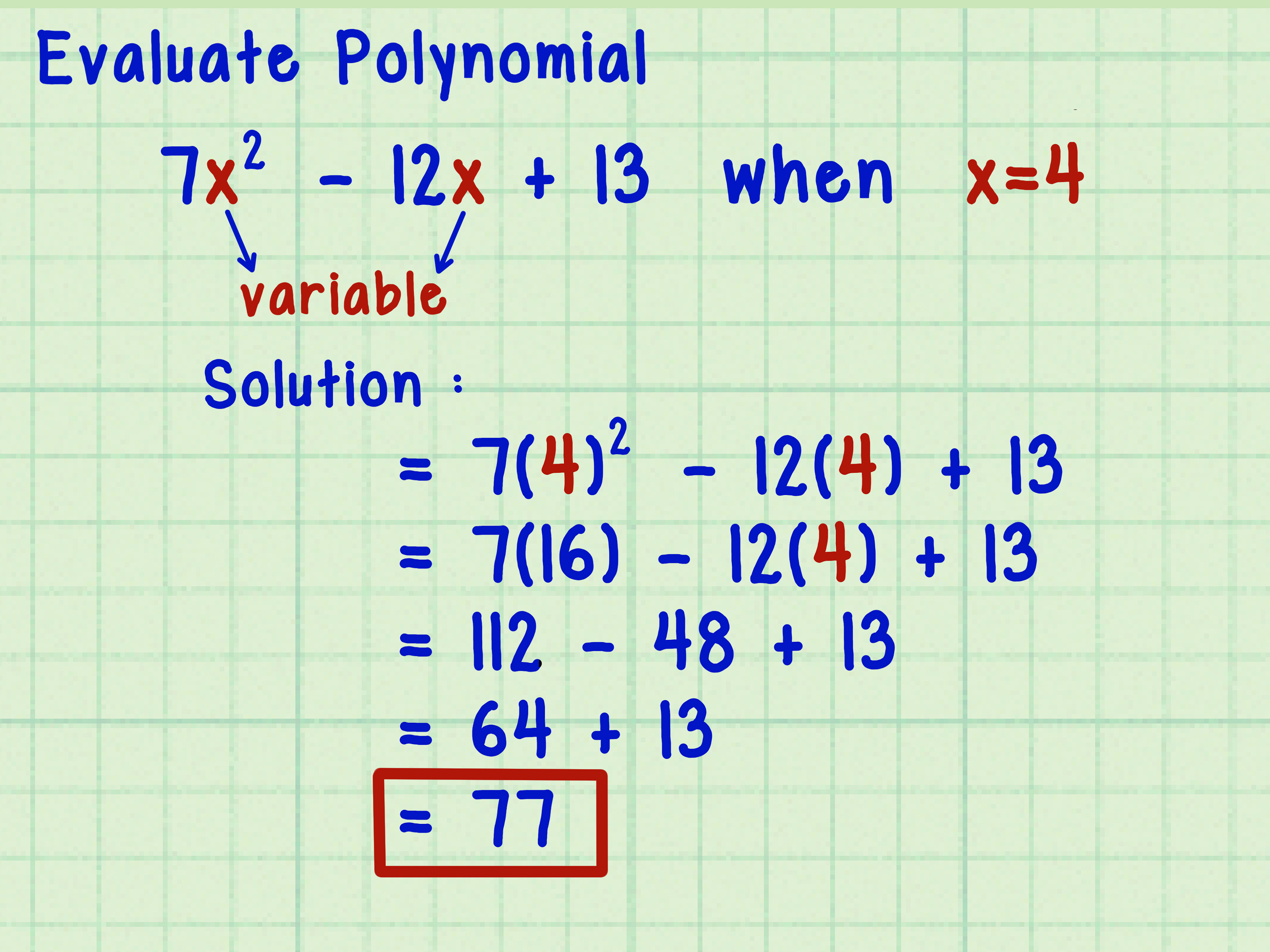
Evaluating an algebraic expression sounds like something that should require a lab coat, a dramatic chalkboard, and possibly thunder in the background. Thankfully, it is much less dramatic. To evaluate an algebraic expression means to replace the variable or variables with given numbers, then simplify the expression until you get one final value. That is it. No secret handshake. No ancient math spell. Just substitution, order of operations, and a little patience.
Still, many students make small mistakes because algebra likes to hide banana peels in simple places: negative numbers, exponents, missing multiplication signs, and parentheses that seem innocent until they ruin your afternoon. This guide walks you through how to evaluate an algebraic expression in 10 steps, using clear explanations, practical examples, and a few friendly warnings from the land of “Oops, I forgot PEMDAS.”
Whether you are working on pre-algebra, Algebra 1, homework review, test prep, or helping someone else survive variables without panic, these steps will help you evaluate expressions accurately and confidently.
What Does It Mean to Evaluate an Algebraic Expression?
An algebraic expression is a math phrase that can include numbers, variables, and operation symbols. For example, 3x + 5, 2a2 - 4b, and (m + 6) / 3 are algebraic expressions. They are not equations because they do not contain an equals sign asking you to solve for something. Instead, expressions are waiting to be simplified or evaluated.
To evaluate an algebraic expression, you replace each variable with its assigned value. Then you use the order of operations to simplify the new numerical expression. For example, if x = 4, then 3x + 5 becomes 3(4) + 5, which simplifies to 12 + 5 = 17. The value of the expression is 17.
Think of a variable like a reusable lunchbox. The letter itself is not the meal; it is the container. When the problem tells you x = 4, it is telling you what to pack inside the box. Your job is to put that number everywhere the variable appears and then do the math in the correct order.
Key Vocabulary Before You Start
Variable
A variable is a letter or symbol that represents a number. Common variables include x, y, a, b, and n. Variables can change value depending on the problem.
Coefficient
A coefficient is the number multiplied by a variable. In 7x, the coefficient is 7. The expression 7x means 7 × x, even though the multiplication sign is hiding like it owes rent.
Constant
A constant is a number that does not change. In 5x + 9, the number 9 is a constant.
Order of Operations
The order of operations is the rule system for simplifying expressions. In the United States, students often remember it with PEMDAS: Parentheses, Exponents, Multiplication and Division, Addition and Subtraction. Multiplication and division are handled from left to right, and addition and subtraction are also handled from left to right.
How to Evaluate an Algebraic Expression in 10 Steps
Step 1: Read the Entire Problem Carefully
Before touching a pencil, read the whole expression and the given variable values. This sounds obvious, but algebra problems are very good at punishing speed reading. A problem may give you multiple variables, such as a = -2, b = 5, and c = 3. Missing one value can send the whole answer off course faster than a shopping cart with one bad wheel.
For example, suppose the problem says:
Evaluate 4a - 2b + c when a = 3, b = -1, and c = 6.
You need all three values. Do not start simplifying until you know exactly what each variable represents.
Step 2: Identify Every Variable in the Expression
Circle, underline, or mentally highlight each variable. If the expression is 5x2 - 3xy + 8y, the variables are x and y. If you only substitute one of them, the expression will not be fully evaluated.
This step is especially helpful when the same variable appears more than once. In 2n + 7 - n, the variable n appears twice. If n = 4, you must replace both copies of n, not just the first one that waves at you politely.
Step 3: Write Down the Given Values
Make a small list of the variable values before substituting. For example:
x = 6y = -2z = 10
This keeps your work organized and reduces careless errors. It also helps when the expression has several variables or negative numbers. Algebra is not just about being smart; it is also about being tidy enough that your future self can understand what your past self was doing.
Step 4: Rewrite the Expression Before Substituting
Copy the original expression exactly. This gives you a clean starting point and prevents you from accidentally changing the problem. If the expression is:
3x2 - 4y + 2
write it again before plugging in numbers. Then substitute carefully. If x = 5 and y = 3, the expression becomes:
3(5)2 - 4(3) + 2
Notice the parentheses around the substituted values. Parentheses make your work clearer and protect you from sign errors.
Step 5: Substitute Values Using Parentheses
When you replace a variable, put the number in parentheses, especially if the value is negative. This is one of the best habits in algebra. If x = -4, then 2x2 should become:
2(-4)2
Now simplify carefully:
2(-4)2 = 2(16) = 32
Without parentheses, negative numbers can become confusing. Parentheses act like seat belts for your numbers. They may not look exciting, but they prevent crashes.
Step 6: Simplify Inside Parentheses First
After substitution, use the order of operations. Start with parentheses or grouping symbols. For example:
Evaluate 2(x + 3) when x = 5.
Substitute first:
2(5 + 3)
Simplify inside the parentheses:
2(8)
Then multiply:
16
If an expression has brackets or braces, work from the innermost grouping outward. Math expressions are like onions: layers matter, and sometimes they make people cry.
Step 7: Evaluate Exponents Next
After parentheses, handle exponents. For example:
Evaluate 4x2 - 1 when x = 3.
Substitute:
4(3)2 - 1
Evaluate the exponent:
4(9) - 1
Then multiply and subtract:
36 - 1 = 35
A common mistake is multiplying before applying the exponent. In 4(3)2, square the 3 first, then multiply by 4. Do not turn it into 122. That is a different expression wearing the wrong mustache.
Step 8: Multiply and Divide from Left to Right
Once parentheses and exponents are finished, complete multiplication and division from left to right. This is important because multiplication does not always come before division. They have equal priority, so you move left to right.
For example:
24 ÷ 3 × 2
Work left to right:
24 ÷ 3 = 8
8 × 2 = 16
The answer is 16, not 4. When evaluating algebraic expressions, the same rule applies after you substitute values.
Step 9: Add and Subtract from Left to Right
After multiplication and division, finish with addition and subtraction from left to right. Like multiplication and division, addition and subtraction have equal priority.
Consider this expression:
10 - 4 + 2
Work left to right:
10 - 4 = 6
6 + 2 = 8
The answer is 8. If you add 4 + 2 first, you are changing the expression. Algebra does not enjoy being misquoted.
Step 10: Check Your Answer
Once you get a final value, check your work. You do not need to redo the entire problem every time, but you should scan for the most common mistakes:
- Did you substitute every variable?
- Did you use parentheses for negative values?
- Did you apply exponents before multiplying?
- Did you multiply and divide from left to right?
- Did you add and subtract from left to right?
If your answer seems wildly unreasonable, review the substitution step first. Most algebra evaluation errors begin there. A tiny missing negative sign can turn a perfectly good answer into math soup.
Full Example: Evaluating an Algebraic Expression Step by Step
Let’s evaluate:
2a2 - 3b + 5
when a = -4 and b = 6.
Substitute the Values
2(-4)2 - 3(6) + 5
Evaluate the Exponent
(-4)2 = 16
So the expression becomes:
2(16) - 3(6) + 5
Multiply
2(16) = 32
3(6) = 18
Now the expression is:
32 - 18 + 5
Add and Subtract from Left to Right
32 - 18 = 14
14 + 5 = 19
The value of the expression is 19.
Common Mistakes When Evaluating Algebraic Expressions
Mistake 1: Forgetting Hidden Multiplication
In algebra, 6x means 6 × x. Likewise, 3(a + 2) means 3 × (a + 2). The multiplication symbol may be invisible, but it is definitely working behind the scenes.
Mistake 2: Losing Negative Signs
If x = -3, then 5x becomes 5(-3), which equals -15. Negative signs are small but powerful. Treat them like tiny math dragons.
Mistake 3: Squaring Incorrectly
If x = -2, then x2 becomes (-2)2 = 4. But -x2 can mean the opposite of x2, depending on the expression. Parentheses help show exactly what is being squared.
Mistake 4: Ignoring Left-to-Right Rules
Multiplication and division are completed from left to right. Addition and subtraction are also completed from left to right. PEMDAS is useful, but it should not be read as “all multiplication before all division” or “all addition before all subtraction.”
Practice Problems
Try these before looking at the answers. Your brain deserves a chance to lift the tiny algebra dumbbells.
Problem 1
Evaluate 7x - 4 when x = 3.
Solution: 7(3) - 4 = 21 - 4 = 17
Problem 2
Evaluate 5n2 + 2 when n = -2.
Solution: 5(-2)2 + 2 = 5(4) + 2 = 22
Problem 3
Evaluate 3a + 4b when a = 6 and b = -1.
Solution: 3(6) + 4(-1) = 18 - 4 = 14
Problem 4
Evaluate (x + 8) ÷ 2 when x = 10.
Solution: (10 + 8) ÷ 2 = 18 ÷ 2 = 9
Problem 5
Evaluate 2p2 - q when p = 5 and q = 7.
Solution: 2(5)2 - 7 = 2(25) - 7 = 43
Why Evaluating Expressions Matters
Evaluating algebraic expressions is not just a school skill that lives in a textbook and eats pencil shavings. It shows up in real life whenever a rule depends on changing numbers. A delivery fee might be represented by 3m + 5, where m is the number of miles. A simple savings plan might use 20w + 50, where w is the number of weeks. A science formula, sports statistic, or budgeting calculation may all require the same basic process: substitute values and simplify.
Once you understand how to evaluate expressions, you are better prepared for equations, functions, formulas, graphing, and word problems. It is one of those skills that quietly supports a lot of future math. In other words, evaluating expressions is not the whole algebra sandwich, but it is definitely the bread.
Experience-Based Tips for Learning How to Evaluate Algebraic Expressions
Students often understand the idea of evaluating expressions before they can do it consistently. That gap is normal. The concept is simple: plug in the number and simplify. The challenge is managing the details without letting one small mistake hijack the answer. In practice, the students who improve fastest usually do not rush. They slow down at the exact places where errors like to hide.
One helpful habit is to write the substituted version of the expression before simplifying anything. Many learners want to jump straight from 4x + 9 with x = 8 to the answer, and sometimes that works. But when expressions get longer, skipping the substitution line is like trying to carry ten grocery bags in one trip. Impressive? Maybe. Risky? Absolutely. Writing 4(8) + 9 creates a visible checkpoint. If the answer is wrong, you can see whether the error happened during substitution or arithmetic.
Another useful experience-based strategy is to treat negative numbers with extra respect. Negative values are responsible for a shocking number of algebra mistakes. When substituting a negative number, always use parentheses. For example, if n = -5, then n2 should become (-5)2. That small pair of parentheses can be the difference between a correct answer and a dramatic sigh at the kitchen table.
It also helps to say the operations out loud while practicing. For 3x2 + 4 when x = 2, say, “First square 2, then multiply by 3, then add 4.” This turns PEMDAS from a memorized chant into an actual plan. Students sometimes know the acronym but still apply it incorrectly. Speaking the steps forces the brain to slow down and follow the order.
For longer expressions, use vertical spacing. Put each simplification on its own line. Algebra becomes much easier to check when each line changes only one or two things. A messy one-line solution may feel faster, but it often creates more work later. Clean work is not just for teachers; it is a favor to yourself.
Finally, practice with variety. Do not only solve expressions with positive whole numbers. Mix in negative numbers, decimals, fractions, exponents, and multiple variables. Real algebra practice should include a few friendly curveballs. Start easy, build confidence, and then add complexity one feature at a time. Before long, evaluating expressions will feel less like decoding alien symbols and more like following a recipe: substitute carefully, simplify in order, check the final value, and enjoy the satisfying little click when everything works.
Conclusion
Learning how to evaluate an algebraic expression is one of the most important early algebra skills. The process is reliable: identify the variables, substitute the given values, use parentheses for clarity, and simplify with the order of operations. Once you can do that, expressions with one variable, multiple variables, exponents, and parentheses become much less intimidating.
The best part is that evaluating expressions is not about guessing. It is a step-by-step method. If you follow the process carefully, your answer has a clear path from beginning to end. Algebra may still wear a serious face, but now you know it is mostly asking you to replace, simplify, and stay organized.