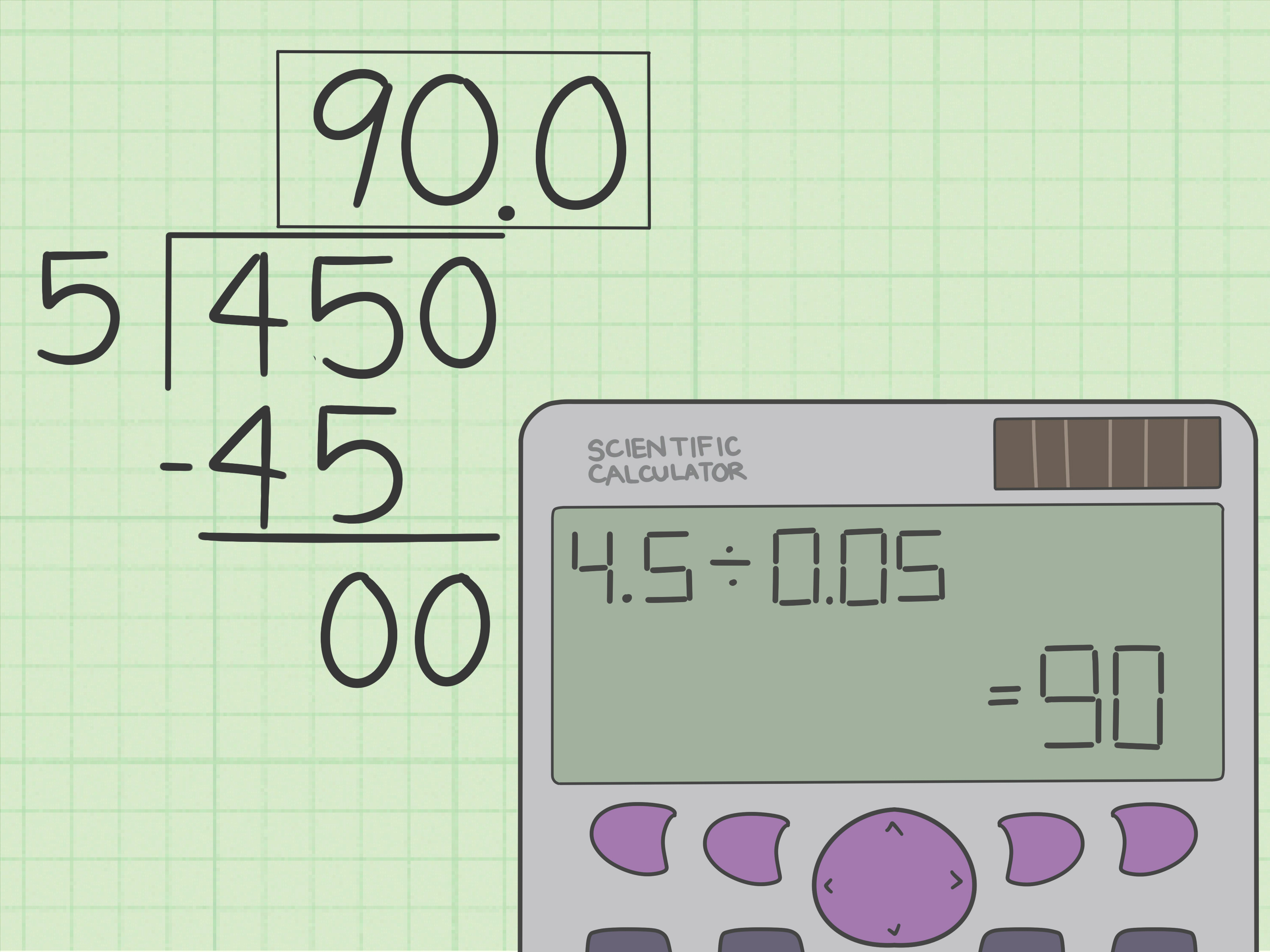
Dividing decimals can feel like trying to park a shopping cart with one wobbly wheel: possible, but weirdly dramatic. The good news? Decimal division is not a new kind of math monster. It is mostly regular long division wearing a tiny dot costume.
Once you understand where the decimal point goes, how to move it correctly, and how to check your answer, dividing decimals becomes much easier. Whether you are solving homework, calculating prices, adjusting a recipe, comparing measurements, or trying to figure out how many miles your car traveled per gallon, decimal division shows up everywhere.
This guide explains how to divide decimals in 8 steps using simple language, clear examples, and practical tips. By the end, you will know how to divide a decimal by a whole number, a whole number by a decimal, and a decimal by another decimal without staring at the page like it just insulted your calculator.
What Does It Mean to Divide Decimals?
To divide means to split something into equal groups or find how many equal groups fit into a number. When decimals are involved, the idea stays the same. The only extra job is handling place value correctly.
For example, 6.4 ÷ 2 asks: “If 6.4 is split into 2 equal parts, what is each part?” The answer is 3.2. That is simple because the divisor, 2, is already a whole number.
But 6.4 ÷ 0.2 asks something different: “How many groups of 0.2 fit into 6.4?” The answer is 32. Since 0.2 is smaller than 1, more groups fit inside 6.4. This is why dividing by a decimal can sometimes make the answer larger, which surprises many students at first.
Key Vocabulary Before You Start
Before we roll up our sleeves and start dividing, let’s name the players on the field.
Dividend
The dividend is the number being divided. In 12.6 ÷ 3, the dividend is 12.6.
Divisor
The divisor is the number you divide by. In 12.6 ÷ 3, the divisor is 3.
Quotient
The quotient is the answer. In 12.6 ÷ 3 = 4.2, the quotient is 4.2.
Keeping these terms straight helps you avoid one of the biggest decimal division mistakes: moving the wrong decimal point or moving only one number when both must move.
How to Divide Decimals: 8 Steps
Step 1: Identify the Dividend and Divisor
First, look at the division problem and identify which number is being divided and which number you are dividing by.
Example:
15.75 ÷ 2.5
Here, 15.75 is the dividend, and 2.5 is the divisor. This matters because your main goal is to turn the divisor into a whole number. The divisor is the boss of the decimal-moving operation. The dividend follows along like a polite math sidekick.
Step 2: Check Whether the Divisor Is a Whole Number
If the divisor is already a whole number, you can use long division right away. Place the decimal point in the quotient directly above the decimal point in the dividend, then divide as usual.
Example:
8.4 ÷ 4
Set it up as long division. Since 4 is a whole number, you do not need to move any decimal points. Divide 84 by 4, but keep the decimal point aligned. The answer is:
8.4 ÷ 4 = 2.1
This is the easiest type of decimal division. The divisor behaves nicely, everyone stays calm, and the decimal point goes straight up into the answer.
Step 3: If the Divisor Is a Decimal, Move Its Decimal Point to the Right
When the divisor is a decimal, move its decimal point to the right until the divisor becomes a whole number.
Example:
15.75 ÷ 2.5
The divisor is 2.5. Move the decimal point one place to the right:
2.5 becomes 25
You moved the decimal point one place. This is the key move. In decimal division, you want the divisor to become a whole number because long division works much more cleanly with whole-number divisors.
Step 4: Move the Dividend’s Decimal Point the Same Number of Places
Whatever you do to the divisor, you must also do to the dividend. This keeps the value of the division problem equal. Think of it like balancing a seesaw. Move one side, and the other side needs the same treatment.
In our example:
15.75 ÷ 2.5
You moved the divisor’s decimal point one place to the right, so move the dividend’s decimal point one place to the right too:
15.75 becomes 157.5
Now the problem becomes:
157.5 ÷ 25
This problem has the same quotient as the original problem, but it is easier to divide because the divisor is now a whole number.
Step 5: Set Up Long Division
Now write the adjusted problem using long division:
157.5 ÷ 25
The number outside the division bracket is the divisor, 25. The number inside is the dividend, 157.5. Place the decimal point in the quotient directly above the decimal point in the dividend.
This step is small but powerful. Many wrong answers happen because the division is correct but the decimal point is dropped into the answer like confetti at the wrong party.
Step 6: Divide as You Would With Whole Numbers
Now divide normally. Ignore the decimal temporarily while you work through the digits, but keep track of where it belongs in the quotient.
Example:
157.5 ÷ 25
25 goes into 157 six times because 25 × 6 = 150. Subtract:
157 – 150 = 7
Bring down the next digit, 5, making 75. Then:
25 goes into 75 three times
So the quotient is:
6.3
Therefore:
15.75 ÷ 2.5 = 6.3
Step 7: Add Zeros If You Need to Keep Dividing
Sometimes the division does not end neatly after the last digit. In that case, you can add zeros after the decimal point in the dividend. Adding zeros after a decimal does not change the value of the number.
For example:
5.2 = 5.20 = 5.200
These numbers all have the same value. The extra zeros simply give you more digits to bring down during long division.
Example:
4.5 ÷ 8
Set it up as 4.500 ÷ 8. Then divide:
8 goes into 45 five times, with a remainder of 5. Bring down a zero to make 50. 8 goes into 50 six times, with a remainder of 2. Bring down another zero to make 20. 8 goes into 20 two times, with a remainder of 4. Bring down another zero to make 40. 8 goes into 40 five times.
The answer is:
4.5 ÷ 8 = 0.5625
Zeros are not decoration. They are useful tools. Tiny, round, extremely helpful tools.
Step 8: Check Your Answer by Multiplying
The best way to check decimal division is to multiply the quotient by the divisor. If you get the original dividend, your answer is correct.
Let’s check our earlier example:
15.75 ÷ 2.5 = 6.3
Now multiply:
6.3 × 2.5 = 15.75
Since the product matches the original dividend, the answer is correct. Checking your work is especially helpful with decimals because one misplaced decimal point can turn a solid answer into mathematical soup.
Example 1: Dividing a Decimal by a Whole Number
Problem:
9.6 ÷ 3
The divisor is already a whole number, so divide normally. Place the decimal point in the quotient directly above the decimal point in the dividend.
96 ÷ 3 = 32, so:
9.6 ÷ 3 = 3.2
Check:
3.2 × 3 = 9.6
Correct.
Example 2: Dividing a Whole Number by a Decimal
Problem:
12 ÷ 0.4
The divisor is 0.4. Move the decimal one place to the right to make it 4. Move the dividend’s decimal point one place to the right too. Since 12 is the same as 12.0, it becomes 120.
Now divide:
120 ÷ 4 = 30
So:
12 ÷ 0.4 = 30
This answer is larger than 12 because you are asking how many groups of 0.4 fit into 12. Since 0.4 is less than 1, many groups fit.
Example 3: Dividing a Decimal by a Decimal
Problem:
7.56 ÷ 1.2
Move the decimal point in 1.2 one place to the right, making it 12. Move the decimal point in 7.56 one place to the right, making it 75.6.
Now divide:
75.6 ÷ 12 = 6.3
So:
7.56 ÷ 1.2 = 6.3
Check:
6.3 × 1.2 = 7.56
Correct again. Decimal division is starting to look less scary already.
Common Mistakes When Dividing Decimals
Mistake 1: Moving Only One Decimal Point
If you move the decimal point in the divisor, you must move the decimal point in the dividend the same number of places. Moving only one number changes the problem and gives the wrong answer.
Mistake 2: Placing the Decimal Point Incorrectly
The decimal point in the quotient should line up with the adjusted decimal point in the dividend. Do not guess. The decimal point is not a dartboard.
Mistake 3: Forgetting Placeholder Zeros
If you move a decimal point and run out of digits, add zeros. For example, when changing 6 ÷ 0.03, think of 6 as 6.00. Moving both decimals two places gives:
600 ÷ 3 = 200
Mistake 4: Assuming Division Always Makes Numbers Smaller
Dividing by a decimal less than 1 can make the quotient larger. For example:
10 ÷ 0.5 = 20
That is because there are twenty halves in 10.
Helpful Tips for Mastering Decimal Division
Estimate Before You Divide
Estimation helps you know whether your answer makes sense. If you are solving 19.8 ÷ 4.9, you can estimate it as 20 ÷ 5 = 4. Your final answer should be close to 4.
Use Money as a Mental Model
Decimals are easier when you connect them to dollars and cents. For example, 4.50 ÷ 3 is like splitting $4.50 among 3 people. Each person gets $1.50. So:
4.50 ÷ 3 = 1.50
Practice With Real-Life Problems
Decimal division is not just a classroom skill. You use it when calculating unit price, gas mileage, recipe portions, speed, distance, and averages.
Example:
If 3.6 pounds of apples cost $9.00, the price per pound is:
9.00 ÷ 3.6
Move the decimal one place in both numbers:
90 ÷ 36 = 2.5
The apples cost $2.50 per pound.
Why Moving the Decimal Works
When you move the decimal point in both the divisor and dividend the same number of places, you are multiplying both numbers by the same power of 10. This does not change the quotient.
For example:
15.75 ÷ 2.5
Multiply both numbers by 10:
157.5 ÷ 25
The relationship stays equal because both numbers were scaled by the same amount. It is like zooming in on a map. The streets look bigger, but the route is still the same.
Practice Problems
Try these decimal division problems on your own:
- 6.3 ÷ 3
- 12.8 ÷ 4
- 5.6 ÷ 0.7
- 18 ÷ 0.6
- 9.45 ÷ 1.5
Answers
- 6.3 ÷ 3 = 2.1
- 12.8 ÷ 4 = 3.2
- 5.6 ÷ 0.7 = 8
- 18 ÷ 0.6 = 30
- 9.45 ÷ 1.5 = 6.3
Experiences and Practical Advice for Learning How to Divide Decimals
One of the most useful experiences students can have with decimal division is realizing that the process is not about memorizing a mysterious trick. It is about making the problem easier to read. Many learners struggle because they see a decimal divisor, such as 0.25 or 1.6, and immediately feel like the problem has become more advanced than it really is. In practice, the goal is simple: turn the divisor into a whole number, adjust the dividend the same way, and then use long division skills you already know.
A helpful classroom-style strategy is to begin with money. Money makes decimals feel familiar because most people already understand dollars and cents. If a student sees $7.50 ÷ 3, they can picture splitting money among three people. The answer, $2.50, feels natural. From there, it becomes easier to understand why 7.5 ÷ 3 = 2.5. This connection removes some of the fear around decimal points because the numbers now represent something concrete.
Another strong learning experience is using measurement. Suppose a board is 4.8 feet long and must be cut into 6 equal pieces. The division problem is 4.8 ÷ 6. The answer is 0.8, meaning each piece is 0.8 feet long. This kind of example helps students see that decimal division is not just for worksheets. It is part of cooking, construction, science labs, shopping, travel, and budgeting. Decimals are everywhere, quietly doing their job without asking for applause.
When practicing, it helps to say the steps out loud. For example: “Make the divisor whole. Move the dividend the same number of places. Place the decimal. Divide. Check.” This short routine builds confidence. It also catches mistakes before they become permanent. If a student solves 3.6 ÷ 0.6 and gets 0.6, saying the steps aloud may reveal the problem. Moving both decimals one place gives 36 ÷ 6, which equals 6, not 0.6.
Estimation is another experience-based habit that makes decimal division much easier. Before doing long division, round the numbers and predict the approximate answer. If the problem is 10.2 ÷ 2.1, estimate it as 10 ÷ 2, which is about 5. If your final answer is 48.57 or 0.048, something probably went off the rails. Estimation acts like a math smoke alarm. It does not solve the problem for you, but it warns you when something smells suspicious.
It is also important to practice different types of decimal division. Many students become comfortable dividing a decimal by a whole number but freeze when the divisor is a decimal. A balanced practice routine should include all three cases: decimal divided by whole number, whole number divided by decimal, and decimal divided by decimal. This variety trains the brain to recognize the pattern instead of relying on one memorized example.
Finally, remember that mistakes are part of the learning process. Misplacing a decimal point is common. Forgetting to add a placeholder zero is common. Dividing correctly but writing the decimal in the wrong spot is also common. These mistakes do not mean you are “bad at math.” They mean you are learning a skill that requires careful attention to place value. With repeated practice, decimal division becomes less like a puzzle and more like a recipe: follow the steps, check the result, and try not to let the decimal point escape.
Conclusion
Learning how to divide decimals becomes much easier when you follow a clear process. First, identify the divisor and dividend. If the divisor is a decimal, move its decimal point to the right until it becomes a whole number. Then move the dividend’s decimal point the same number of places. After that, divide as usual, place the decimal point carefully in the quotient, add zeros if needed, and check your answer by multiplying.
The secret is not speed. The secret is accuracy. Decimal division rewards careful setup, neat alignment, and a quick reasonableness check. Once you practice the 8 steps a few times, the decimal point stops looking like a tiny troublemaker and starts acting like a helpful place-value guide.