Note: This publish-ready article is based on real scientific concepts from chemistry, physiology, psychology, and the history of thermochromic jewelry, rewritten in original language without source links or citation placeholders.
Mood rings are tiny pieces of jewelry with enormous confidence. Slip one onto your finger, and suddenly it seems ready to announce whether you are calm, romantic, stressed, mysterious, or simply wondering what is for dinner. But here is the sparkling truth: mood rings do not actually read your mind. They read temperature.
That may sound less magical, but it is still pretty fascinating. A mood ring works because it contains heat-sensitive material called thermochromic liquid crystals. These crystals change color when their temperature changes. Since your finger temperature can shift slightly depending on blood flow, environment, stress, movement, and body heat, the ring may appear to “predict” your emotional state. In reality, it is giving you a colorful clue about your skin temperature, not a certified emotional diagnosis from a tiny jewelry therapist.
Still, mood rings are not complete nonsense. Emotions can affect the body. Stress may make your hands colder. Excitement may warm them. Relaxation can change circulation. So, while a mood ring cannot say, “You are feeling nostalgic because your playlist just attacked you emotionally,” it can respond to physical changes that sometimes accompany mood. That is where the science gets fun.
What Is a Mood Ring?
A mood ring is a ring with a temperature-sensitive “stone” that changes color based on heat. The classic version became wildly popular in the 1970s, when color-changing jewelry felt like a perfect blend of fashion, mystery, and slightly questionable fortune-telling. People loved the idea that a ring could reveal hidden emotions. It was wearable drama, but smaller than bell-bottoms.
The “stone” in a mood ring is usually not a gemstone in the traditional sense. It is often a glass or quartz shell, or a coated surface, containing thermochromic liquid crystals. These crystals respond to temperature changes by altering how they reflect light. The result is a visible shift in color.
Modern mood jewelry can come in rings, necklaces, bracelets, nail polish, stickers, phone grips, mugs, and even novelty toys. The technology is also related to more practical thermochromic materials used in temperature indicators, medical forehead strips, packaging, and heat-sensitive labels.
How Do Mood Rings Work?
The short answer: mood rings work through thermochromism. Thermochromism is the ability of a material to change color when its temperature changes. In mood rings, this color change usually comes from liquid crystals that are sensitive to small temperature differences.
The Role of Thermochromic Liquid Crystals
Liquid crystals are unusual materials because they behave partly like liquids and partly like solids. Their molecules can flow, but they also maintain a certain organized structure. In mood rings, these molecules are arranged in layers. When temperature changes, the spacing and orientation of those layers changes too.
That microscopic rearrangement affects how light interacts with the material. Different wavelengths of light are reflected at different temperatures. Since the human eye sees different wavelengths as different colors, the ring appears to shift from black to brown, amber, green, blue, purple, or other shades.
Think of the liquid crystals like a tiny marching band inside the ring. When the temperature changes, the band rearranges its formation. Instead of spelling “Go Team,” it reflects a new color. Science: still dramatic, but with better choreography.
Why Skin Temperature Matters
Your skin temperature is not fixed. It changes throughout the day because of blood flow, room temperature, exercise, stress, hydration, hormones, and even whether you are holding an iced coffee like it personally offended you.
Fingers are especially sensitive to temperature changes because they are at the edges of the body. When your body wants to conserve heat, blood vessels in the hands may narrow, reducing blood flow and cooling the fingers. When blood flow increases, your fingers may feel warmer. A mood ring responds to these shifts.
This is why the same ring may look blue on one person, green on another, and black on someone standing in a freezing grocery store aisle trying to choose yogurt. The ring is not judging anyone’s personality. It is reacting to heat.
Can Mood Rings Really Predict Emotions?
Mood rings can loosely reflect physical changes that may be connected to emotions, but they cannot accurately identify specific feelings. They are better described as temperature indicators with a fun emotional legend attached.
Emotions involve psychological and physiological responses. When you feel nervous, excited, embarrassed, peaceful, or angry, your body may respond with changes in heart rate, sweating, breathing, muscle tension, and blood flow. Some of these changes can influence skin temperature. A mood ring may detect the temperature part of that response.
But here is the catch: many non-emotional factors also affect finger temperature. A warm room, cold weather, exercise, fever, holding a hot mug, washing your hands, or sitting near an air conditioner can all change the ring’s color. So if your mood ring turns black during winter, it probably does not mean you have become a mysterious villain. It may just mean your fingers are cold.
What Do Mood Ring Colors Mean?
Most mood rings come with a color chart, but these charts are not universal scientific standards. Different manufacturers use different materials, coatings, temperature ranges, and color meanings. Still, many charts follow a similar pattern.
Common Mood Ring Color Meanings
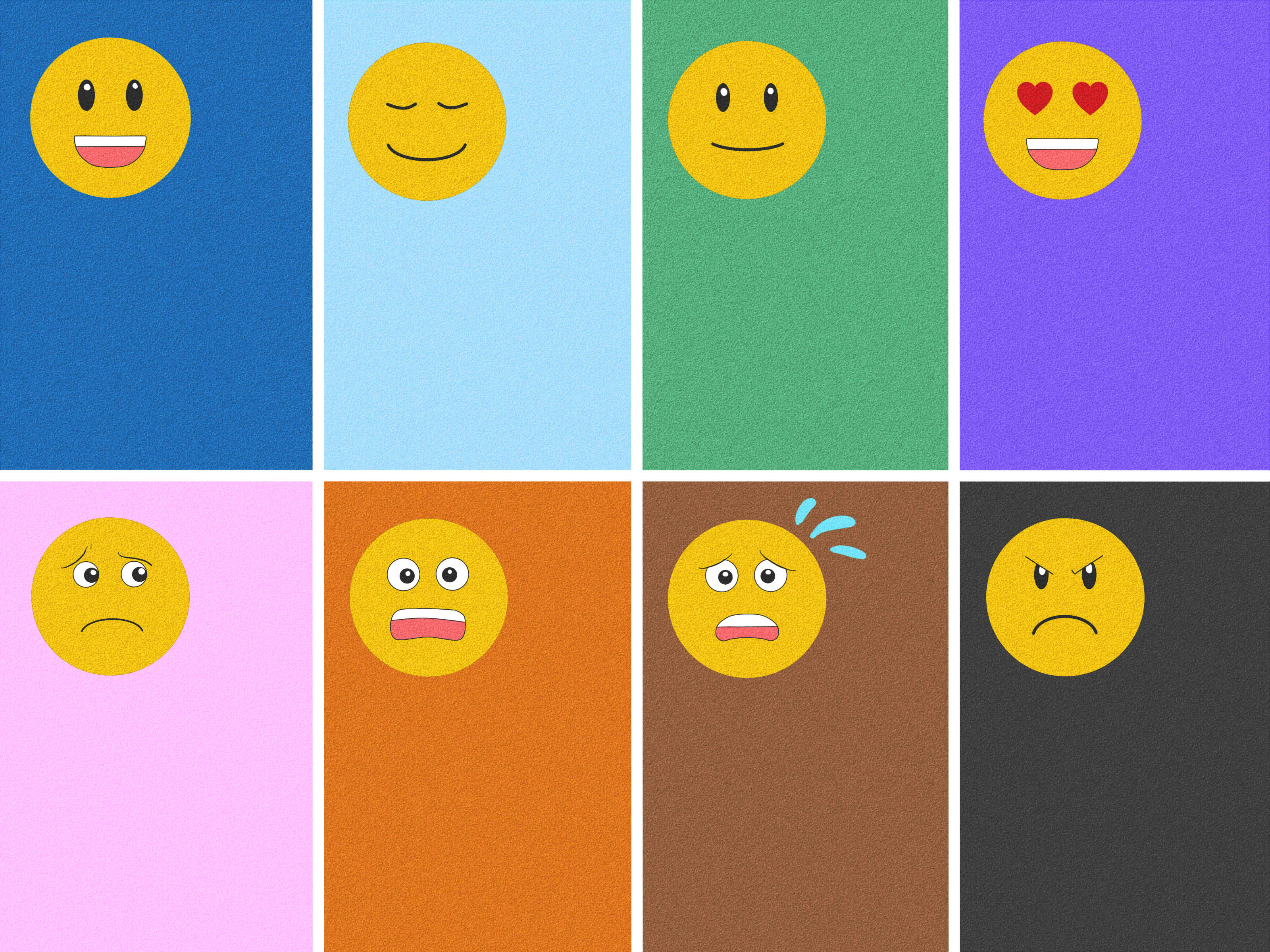
Black: Often listed as stressed, tense, cold, or anxious. Scientifically, it usually means the ring is cool or below its active temperature range.
Brown or Amber: Often connected with nervousness, mixed feelings, or restlessness. In temperature terms, this can indicate slightly cooler skin.
Yellow: Sometimes interpreted as unsettled, curious, or energetic. It may simply represent a middle-low temperature range.
Green: Commonly labeled as normal, calm, balanced, or relaxed. Many mood rings are calibrated so green appears around average finger temperature.
Blue: Often described as happy, peaceful, affectionate, or comfortable. It usually suggests warmer skin temperature.
Purple or Violet: Frequently associated with excitement, passion, creativity, or intense emotion. It may indicate the ring is at a warmer point in its color range.
Gray: Sometimes listed as worried, uncertain, or tired. Practically, it may mean the temperature is between active color zones or the ring is not responding strongly.
The color meanings are entertaining, but they should be treated as playful interpretations rather than emotional facts. A mood ring color chart is closer to a party conversation starter than a psychology textbook.
The Science Behind the Color Change
The most interesting part of a mood ring is not the color chart. It is the physics and chemistry happening beneath the surface.
Thermochromic liquid crystals reflect specific wavelengths of light depending on their molecular arrangement. When the temperature rises or falls, the structure changes. That changes which wavelengths are reflected back to your eye. A cooler temperature may reflect longer wavelengths, which can look red, orange, or brown. A warmer temperature may reflect shorter wavelengths, which can look blue or violet.
Not every mood ring follows the exact same sequence, because the material blend matters. Manufacturers can design liquid crystal mixtures to respond within specific temperature ranges. For jewelry, the active range is usually chosen to match normal skin temperatures, so the ring changes colors while worn.
This is why mood rings often stop working if they get damaged. Water, extreme heat, scratches, age, or separation of the liquid crystal layer can ruin the color-changing effect. If your mood ring stays permanently black, cloudy, or one color forever, it may not be emotionally disappointed in you. It may simply be broken.
Why Mood Rings Seem Accurate Sometimes
Many people have had the spooky experience of looking down and seeing a mood ring color that seems weirdly accurate. You feel calm, and the ring turns blue. You feel stressed, and it darkens. Is the ring secretly brilliant?
Not exactly. The apparent accuracy comes from a few overlapping factors.
1. Emotions Can Change Circulation
Strong emotions can activate the autonomic nervous system, which controls involuntary functions like heart rate, sweating, and blood vessel changes. Stress may reduce blood flow to the fingers as the body prepares for action. Calm or warmth may allow more blood flow near the skin. The ring can respond to those temperature shifts.
2. People Interpret Colors Flexibly
Mood ring meanings are broad. Blue can mean calm, happy, romantic, or relaxed. Green can mean balanced, peaceful, average, or comfortable. With meanings that flexible, it is easy to find a connection. Humans are excellent pattern-finders. Sometimes too excellent. We see emotional meaning in jewelry, clouds, song lyrics, and the way a dog sighs dramatically.
3. Environment Changes Everything
A mood ring may seem to track emotions when it is actually tracking the room. Warm sunlight, cold air, humidity, exercise, or holding a drink can change the result. If your ring says you are “passionate” after you hold a hot bowl of soup, the soup deserves at least partial credit.
Are Mood Rings Scientifically Reliable?
Mood rings are scientifically real as temperature-reactive objects. They are not scientifically reliable as emotional measurement tools.
A professional device designed to study emotion or stress would measure more than finger temperature. Researchers may examine heart rate variability, skin conductance, hormone levels, facial temperature patterns, breathing, brain activity, behavior, and self-reported feelings. Even then, emotions are complex. No single measurement can perfectly decode what someone feels.
Mood rings measure one thing indirectly: temperature at the ring surface. That temperature may be influenced by emotion, but it may also be influenced by dozens of unrelated factors. Therefore, a mood ring can suggest, entertain, and start conversations, but it cannot diagnose anxiety, detect love, reveal secrets, or settle arguments. Please do not walk into a disagreement and say, “My ring says I am right.” That is not science. That is jewelry-based chaos.
Mood Rings vs. Real Emotion-Tracking Technology
Today, wearable technology has moved far beyond mood rings. Smartwatches and fitness trackers can monitor heart rate, sleep patterns, activity levels, and sometimes skin temperature or stress indicators. Some devices use electrodermal activity, which measures changes in skin conductance related to sweating and physiological arousal.
Even advanced wearables do not directly read emotions. They estimate patterns. For example, a tracker may detect elevated heart rate and low sleep quality, then suggest that the body may be under stress. That is more sophisticated than a mood ring, but it is still an interpretation, not a mind-reading machine.
The difference is that modern devices collect more data points and use algorithms. Mood rings use one simple input: heat. In a way, that simplicity is part of their charm. They are low-tech, silent, battery-free, and never ask you to update firmware.
Why Mood Rings Became So Popular
Mood rings became famous because they arrived at the perfect cultural moment. The 1970s embraced self-expression, alternative spirituality, bold fashion, and personal discovery. A ring that claimed to reveal your emotions fit right in. It was fashionable, mysterious, affordable, and easy to explain at parties.
The idea also taps into something timeless: people want to understand themselves. We want clues about our feelings, our bodies, and how others perceive us. Mood rings turned that curiosity into a colorful accessory. Even when people knew the science was simple, the fantasy was fun.
That is why mood rings continue to appear in gift shops, science kits, nostalgic fashion collections, and online stores. They combine chemistry, psychology, retro style, and a tiny bit of theatrical nonsense. Honestly, that is a strong résumé for a ring.
How to Test a Mood Ring at Home
You can test how a mood ring works with a simple experiment. First, place the ring in a cool area for a few minutes and observe the color. Then hold it gently in your warm hand and watch it change. Next, place it near a safe mild heat source, such as a warm cloth, and compare the colors. Finally, cool it again and see whether the colors reverse.
This experiment shows that the ring responds to temperature rather than emotion. You do not need to feel six dramatic feelings in five minutes. You just need heat transfer. Much easier, and much less exhausting.
For a classroom or family science activity, mood rings can help explain thermochromism, light reflection, body temperature, and the difference between correlation and causation. The ring may correlate loosely with emotional states because emotions can affect the body. But temperature is the direct cause of the color change.
Common Myths About Mood Rings
Myth 1: Mood Rings Read Your Thoughts
No. Mood rings do not detect thoughts, memories, intentions, or secrets. They respond to temperature.
Myth 2: Every Color Has One Exact Meaning
No. Color meanings vary by brand and chart. A blue ring from one manufacturer may not mean exactly the same thing as a blue ring from another.
Myth 3: A Broken Mood Ring Means Bad Energy
No. It usually means the liquid crystals or protective layer were damaged by water, heat, age, or impact.
Myth 4: Mood Rings Are Totally Fake
Not quite. The emotional claims are exaggerated, but the temperature-sensitive science is real.
Practical Tips for Keeping a Mood Ring Working
Keep mood rings away from water, especially while washing hands, showering, or swimming. Moisture can seep into the ring and damage the thermochromic material. Avoid extreme heat, such as leaving the ring in a hot car or near a heater. Store it in a dry place and remove it during activities that could scratch or crack the surface.
If the ring becomes cloudy, stuck on black, or permanently one color, it may be damaged. Some inexpensive mood rings are not built to last forever. They are novelty jewelry, not heirloom diamonds. Treat them kindly, and they will continue performing their tiny color show for longer.
Experiences Related to Mood Rings: What They Teach Us About Science and Self-Awareness
Many people first encounter mood rings as children, usually at a gift shop, school fair, birthday party, or the kind of store that sells glitter pencils, keychains shaped like dolphins, and at least one suspiciously powerful scented candle. The first experience is often magical. You put the ring on, wait a few seconds, and watch the color bloom across the stone. Suddenly, you are not just wearing jewelry. You are wearing a secret emotional dashboard.
One common experience is the “group test.” Everyone tries on the same mood ring and compares colors. One person gets blue and proudly announces they are calm and spiritually advanced. Another gets green and accepts being “balanced.” Someone else gets black and immediately protests, “I am not stressed!” Meanwhile, their hands are cold because the room’s air conditioning is set to “penguin habitat.” This moment is funny, but it is also educational. It shows how easily people connect meaning to results, even when the cause may be environmental.
Another memorable experience happens when a mood ring seems accurate. Imagine someone wearing one before a school presentation, job interview, first date, or difficult conversation. Their hands feel cold, and the ring darkens. The color chart says “nervous” or “tense.” In that case, the ring may feel surprisingly insightful. But the reason is physical: stress can affect circulation, and cooler fingers can change the ring’s color. The ring is not identifying the story behind the stress. It does not know whether the person is afraid of public speaking or just realized they left their phone at home. It only detects the thermal result.
Mood rings can also create moments of self-reflection. A person may look at the color and pause to ask, “How am I actually feeling?” That question can be more valuable than the ring’s answer. The jewelry becomes a reminder to check in with the body. Are your hands cold? Are your shoulders tense? Are you breathing quickly? Are you relaxed, tired, excited, or overwhelmed? In this way, a mood ring can be useful not because it provides a perfect emotional reading, but because it encourages awareness.
There is also a wonderful science lesson hidden in the experience. Mood rings demonstrate that the body and mind are connected, but not in a cartoonish way. Emotions are not floating ghosts inside the brain. They involve the nervous system, hormones, muscles, breathing, circulation, and behavior. When people learn that a mood ring reacts to temperature, they often become curious about why emotions can change body temperature at all. That curiosity leads naturally into topics like the autonomic nervous system, fight-or-flight responses, blood vessels, and thermoregulation.
At the same time, mood rings teach skepticism. They remind us that a real scientific mechanism can be packaged with exaggerated claims. The color change is real. The emotional interpretation is simplified. This distinction is important in everyday life, especially in an age full of apps, gadgets, quizzes, and algorithms claiming to know us better than we know ourselves. A mood ring is a tiny lesson in asking better questions: What is being measured? How accurate is it? What else could explain the result?
People also enjoy mood rings because they make science feel personal. A textbook explanation of thermochromic liquid crystals may sound technical, but a ring changing color on your own finger feels immediate. You can see the effect happen. You can test it with warm and cold conditions. You can compare results. That hands-on experience turns abstract chemistry into something memorable.
In the end, the best way to experience a mood ring is with curiosity and humor. Let it be fun. Let it start conversations. Let it inspire small experiments. Just do not let it make major life decisions. If your ring turns purple, enjoy the mystery. If it turns black, warm your hands. And if it claims you are calm while you are clearly panicking over a missing assignment, trust your actual feelings over the jewelry. The ring may be charming, but you are still the expert on you.
Conclusion: Mood Rings Are Science Wearing a Costume
So, how do mood rings work? They use thermochromic liquid crystals that change color in response to temperature. Since your finger temperature can shift with blood flow, stress, relaxation, room conditions, and physical activity, the ring may seem to reflect your emotions. But it does not truly predict feelings. It measures heat and lets a color chart do the storytelling.
That does not make mood rings boring. In fact, it makes them better. They are a playful example of chemistry, physics, physiology, and psychology meeting in one tiny accessory. They remind us that our bodies respond to emotions in real ways, but also that science requires careful interpretation. A mood ring is not a mind reader. It is a miniature thermometer with excellent marketing.
Wear one for fun, use it as a science conversation starter, and enjoy the colors. Just remember: if your mood ring says you are relaxed while your coffee spills, your inbox explodes, and your dog steals a sandwich, the ring may need more data.