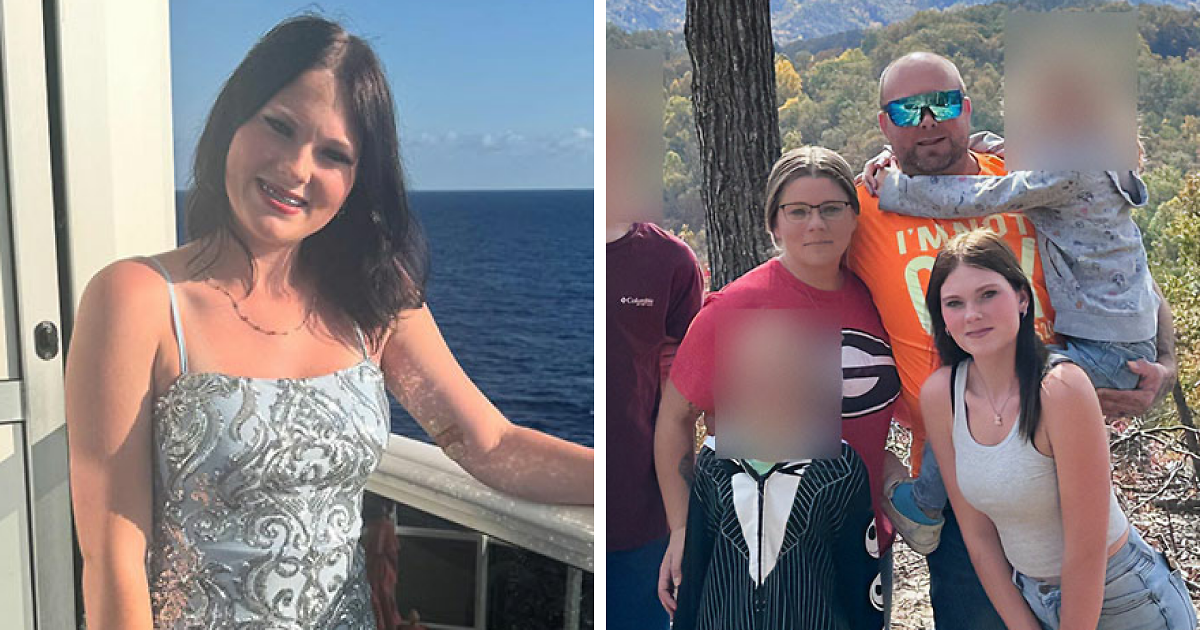
Note: This article is based on publicly reported information, official federal statements, court-related reporting, and law-enforcement updates available as of May 31, 2026. Because the case involves criminal allegations, all references to the accused are written with the presumption of innocence in mind.
A family cruise is supposed to produce vacation photos, sunburn jokes, and at least one person dramatically declaring they will “never eat buffet shrimp again.” It is not supposed to become the center of a federal homicide investigation. Yet the death of 18-year-old Anna Kepner aboard the Carnival Horizon turned what began as a Caribbean family trip into one of the most disturbing teen homicide investigations in recent memory.
The case first drew national attention when Kepner, a Florida high school student and cheerleader from Titusville, was found dead aboard the ship in November 2025. Early details were limited, partly because the investigation involved a minor and federal jurisdiction. Then came the horrifying twist: court documents in an unrelated custody case cited social media from the Kepner family suggesting that her teenage stepbrother had been charged in connection with her death.
At first, the public record was foggy. The alleged social media post raised questions before authorities had publicly released much information. Was the stepbrother merely a suspect? Had charges actually been filed? Why was the case sealed? Those questions fueled online speculation, and in true internet fashion, the rumor mill warmed up faster than a cruise ship buffet toaster. But over the following months, official developments brought the case into sharper focus.
In April 2026, federal prosecutors announced that a 16-year-old from Titusville had been indicted as an adult by a federal grand jury on charges of first-degree murder and aggravated sexual abuse in the killing of his stepsister. Prosecutors said the alleged crimes occurred aboard the Carnival Horizon while the vessel was in international waters en route to Miami. The Miami-Dade Medical Examiner’s Office determined Kepner’s cause of death to be mechanical asphyxiation.
Who Was Anna Kepner?
Anna Kepner was widely described by her family as bright, outgoing, and full of plans. She was an 18-year-old high school student from Titusville, Florida, remembered as a cheerleader, a strong student, and someone who hoped to graduate and pursue a future that included military service and work with animals or law enforcement. The details shared publicly by family members painted a picture of a young woman with ordinary teenage dreams: school, friends, family milestones, and the big, slightly terrifying jump into adulthood.
That is part of why the case resonated so strongly. It was not only the settinga cruise ship, an enclosed vacation world floating between countriesthat captured attention. It was also the jarring contrast between the normalcy of the trip and the violence alleged by prosecutors. One moment, a blended family was traveling together. The next, investigators were examining a death that would later be ruled a homicide.
Public reports state that Kepner was traveling with her father, stepmother, grandparents, siblings, and stepsiblings. The cruise was supposed to be a family getaway. According to reporting from the early investigation, she returned to her room after saying she did not feel well. When she did not appear the next morning, family members searched for her. Her body was later found concealed under a bed in a stateroom, reportedly wrapped in a blanket and covered with life vests.
The Social Media Post That Changed The Public Conversation
The phrase “social media post points to stepsibling” sounds like something pulled from a fictional crime drama, but it became a real turning point in how the public understood the case. In February 2026, a court filing connected to a custody dispute cited social media from the Kepner family and stated that, on February 3, the father’s sonidentified in early filings by initials because he was a minorhad been charged by federal prosecutors in connection with Anna Kepner’s homicide.
That was a startling claim because the federal case was sealed at the time. News organizations reported that the FBI and U.S. Attorney’s Office had not publicly confirmed the details. Local reporting also noted that the original source of the social media claim could not be independently verified at that moment. In other words, the internet appeared to know something before the court system was ready to explain it.
That tension is one of the defining features of modern criminal investigations. A single post can trigger national attention before officials release a statement. Family members may share grief, anger, or partial updates in real time. Reporters may obtain court documents that refer to those posts. Then millions of strangers try to assemble a puzzle while several pieces are still locked in a federal evidence room.
In this case, the social media-related court filing did not remain the only clue for long. By April 2026, the U.S. Attorney’s Office for the Southern District of Florida announced that the teen stepbrother had been indicted as an adult. The defendant, later publicly identified in major news reporting as Timothy Hudson, pleaded not guilty to charges of first-degree murder and aggravated sexual abuse. Prosecutors have emphasized that the indictment is an allegation and that the defendant is presumed innocent unless proven guilty beyond a reasonable doubt.
Why Federal Authorities Are Handling The Case
One of the more complicated parts of the Anna Kepner case is jurisdiction. Crimes aboard cruise ships can create legal questions that are not always obvious to the average traveler. If an incident happens at a hotel in Orlando, local police and state prosecutors are usually front and center. If it happens aboard a ship in international waters, the legal map gets trickier.
Federal authorities became involved because Kepner’s death allegedly occurred while the Carnival Horizon was in international waters and traveling toward Miami. That placed the investigation under federal jurisdiction rather than a typical state-level homicide case. The FBI’s Miami Field Office has been involved, and the U.S. Attorney’s Office for the Southern District of Florida is prosecuting the case.
For readers following the case, this helps explain why updates sometimes seemed slow or incomplete. Juvenile proceedings are often sealed. Federal investigations can move quietly. Cruise ship cases involve ship security footage, room access records, witness statements, medical findings, and coordination between ship personnel and law enforcement. It is not the kind of case where everything is neatly wrapped up by the second commercial break.
What Prosecutors Allege Happened
Federal prosecutors allege that the teen stepbrother sexually assaulted and intentionally killed Anna Kepner aboard the Carnival Horizon on or about November 6 and 7, 2025. The official federal announcement states that the Miami-Dade Medical Examiner’s Office determined the cause of death to be mechanical asphyxiation. Mechanical asphyxiation generally refers to a physical force or obstruction preventing a person from breathing.
During later court proceedings, prosecutors described disturbing evidence they said tied the accused to Kepner’s death. Public reporting from a detention-related hearing included allegations that DNA evidence linked him to the crime and that surveillance footage showed movements around the cabin after the alleged killing. Prosecutors also argued that the seriousness of the allegations and the possibility of a life sentence made detention appropriate.
The defense, according to public reporting, has argued that the defendant complied with release conditions while the case was pending and did not pose a flight risk. In May 2026, a federal judge allowed him to remain free under electronic monitoring while the court considered questions about custody and pretrial detention logistics. His trial date was later reported as set for September 2026.
Because this remains an active criminal case, it is important not to confuse allegations with proven facts. Prosecutors will have to present evidence in court. The defense will have the opportunity to challenge that evidence. A jury, not social media, is responsible for determining guilt.
The Role Of Blended Family Dynamics In The Case
The case has also drawn attention because the accused and the victim were stepsiblings in a blended family. Public reporting indicates that the family group included parents, grandparents, siblings, and stepsiblings traveling together. After Kepner’s death, an unrelated custody dispute between the accused teen’s biological parents became a source of public information because filings referenced the criminal investigation.
That custody case raised questions about supervision, sleeping arrangements, and the safety of other children in the family home. Some filings and statements made allegations about whether the teens were allowed to share a stateroom and whether adults had enough oversight during the trip. Other family members denied or disputed parts of those claims. As with many emotionally charged court battles, the filings became both legal documents and public flashpoints.
Blended families are common, and most are built on care, patience, and a lot of calendar juggling. But this case shows how quickly private family arrangements can become legal issues after a tragedy. Sleeping arrangements, prior warning signs, custody history, supervision, and family communication can all become evidence or context in a criminal investigation.
How Social Media Complicates True Crime Cases
Social media can help families raise awareness, locate witnesses, and keep public attention on a case. It can also turn grief into a crowded digital courtroom where everyone has a theory, a timeline, and the confidence of a detective who watched three episodes of a crime documentary and now owns a magnifying glass.
In the Anna Kepner case, the reported social media post became significant because it was referenced in a court filing before the public had full official confirmation. That does not mean social media solved the case. It means social media became part of the information ecosystem around the case. A post, a court document, a sealed proceeding, and later an official indictment all overlapped.
For readers, this is a reminder to slow down. A family member’s post may reflect real information, grief, confusion, or a mix of all three. A court filing may repeat a claim without independently proving every detail. A headline may simplify a complicated legal development. Responsible true crime coverage should make room for uncertainty, especially when minors, sealed records, and active charges are involved.
Why The Case Became National News
Several factors pushed this case beyond local Florida coverage. First, the victim was a teenager with a future that family members described in vivid, heartbreaking terms. Second, the locationa Carnival cruise shipcreated a closed-setting mystery that naturally drew public attention. Third, the stepsibling angle added a disturbing family betrayal element. Fourth, the early appearance of social media in court documents made the story feel like a modern digital-age investigation.
There is also a broader public fascination with cruise ship safety. Millions of Americans take cruises every year, and most trips are safe, uneventful, and heavy on towel animals. But when a serious crime occurs at sea, people naturally wonder who investigates, how evidence is preserved, and whether cruise lines can protect passengers in enclosed environments far from land.
Carnival Cruise Line has been reported as cooperating with investigators. In cases like this, cruise ship security systems, key-card access records, staff interviews, medical response timelines, and surveillance footage may all become important. A cruise ship is not just a floating hotel; it is also a highly monitored environment where movement can sometimes be reconstructed in detail.
The Legal Status Of The Accused Stepbrother
The accused teen was initially handled as a juvenile, and the case was sealed. Federal authorities later moved the case into adult prosecution. In April 2026, a grand jury indictment charged him with first-degree murder and aggravated sexual abuse. If convicted, he could face a maximum penalty of life in prison.
That shiftfrom juvenile proceedings to adult federal courtis a major legal development. Juvenile cases usually emphasize rehabilitation and privacy. Adult prosecutions, especially for serious violent offenses, can carry far more severe penalties and more public proceedings. Federal court adds another layer of complexity because procedures, detention rules, and sentencing exposure differ from state court.
As of the latest public updates, the defendant has pleaded not guilty. He has been allowed to remain under strict pretrial conditions while the court continues to evaluate detention issues. The case is expected to move toward trial, where prosecutors will present evidence and the defense will contest the allegations.
What Families Can Learn From A Case Like This
No article should turn a homicide investigation into a neat checklist. Real families are messy, emotions are complicated, and hindsight is famously unfair. Still, tragedies can highlight safety lessons worth discussing, especially for parents and guardians traveling with teenagers.
First, sleeping arrangements matter. Teens may want independence, and vacation can make adults more relaxed. But parents should think carefully about who shares rooms, especially in blended families or situations involving prior discomfort, conflict, or unclear boundaries. A cruise ship cabin is small, private, and not easily monitored once the door closes.
Second, discomfort should be taken seriously. If a teen says someone makes them uneasy, that concern deserves attention even if the person is “family.” Family labels do not erase boundaries. A stepsibling, cousin, uncle, or longtime friend can still behave in a way that makes someone feel unsafe. Adults should resist the urge to dismiss a warning because it is inconvenient, awkward, or difficult to discuss.
Third, supervision on vacation should not disappear just because everyone is wearing flip-flops. Cruises, resorts, theme parks, and family trips often create a false sense of safety. The environment feels controlled, the schedule feels organized, and adults assume everyone is nearby. But teenagers still need check-ins, clear rules, and a reliable way to ask for help without embarrassment.
Experience-Based Reflections: Safety, Trust, And The Hard Conversations Families Avoid
Cases like the Anna Kepner investigation are painful because they force families to think about scenarios nobody wants to imagine. Most parents are not trying to run a vacation like a military operation. They want everyone to relax, eat too much, laugh at bad karaoke, and come home with memories that do not involve police reports. But safety often depends on the boring little decisions made before anything goes wrong.
One practical experience many families share is the challenge of blending households. When two families merge, adults may want the children to bond quickly. That desire is understandable. Nobody wants every holiday to feel like a tense committee meeting with snacks. But teenagers need space to develop trust naturally. They should not be pressured to treat a new stepsibling like a lifelong sibling overnight. Emotional closeness cannot be assigned like a cabin number.
Another lesson is that privacy and safety must be balanced. Teens deserve privacy, but privacy should not mean isolation from help. On trips, parents can set simple rules: doors stay unlocked when multiple teens are in a room, everyone answers check-in texts, and any teen can ask to change sleeping arrangements without having to provide a courtroom-level explanation. A child should not need to prove danger before being allowed to feel uncomfortable.
Families should also normalize direct language about boundaries. Many adults avoid conversations about inappropriate behavior because they are uncomfortable. Unfortunately, predators, abusive individuals, or emotionally unstable people often benefit from silence. Telling teens, “You can come to me if anyone makes you uncomfortable, even if that person is family,” is not dramatic. It is protective. It gives young people permission to speak before a situation escalates.
Travel also adds stress that can amplify existing tensions. People sleep less, routines shift, medications may be missed, alcohol may be present, and normal household rules can blur. Responsible adults should pay attention to changes in mood, conflict, jealousy, intoxication, or unusual behavior. Not every odd moment is a warning sign, of course. Sometimes a teenager is simply tired, hungry, or mad that the Wi-Fi is slower than a turtle in a hammock. But patterns matter.
Finally, this case is a reminder that online discussion should never replace due process. Families grieving a victim may post from a place of pain. Strangers may speculate from a place of curiosity. But the legal system must work from evidence. For readers, the healthiest approach is compassion first, caution second, and hot takes somewhere far behind both. Anna Kepner deserves to be remembered as more than a headline, and any accused person deserves a fair trial before the public treats allegations as verdicts.
Conclusion
The homicide investigation into Anna Kepner’s death became even more disturbing when court filings cited a social media post pointing toward her teenage stepbrother. What began as a sealed and confusing investigation later developed into an official federal indictment, with prosecutors alleging murder and aggravated sexual abuse aboard a cruise ship in international waters. The accused has pleaded not guilty, and the case remains active.
Beyond the shock of the allegations, the case raises difficult questions about family safety, cruise ship investigations, social media speculation, and the responsibilities adults carry when traveling with teenagers. It is a story that should be covered with care: clear enough to inform readers, cautious enough to respect the legal process, and humane enough to remember that at the center of it all was an 18-year-old whose life ended far too soon.