Note: This article is based on real design and product information about the Lock Coat Stand by Sylvain Willenz for Tamawa. Product pricing, colors, and availability may change over time.
A Coat Stand That Refuses to Be Boring
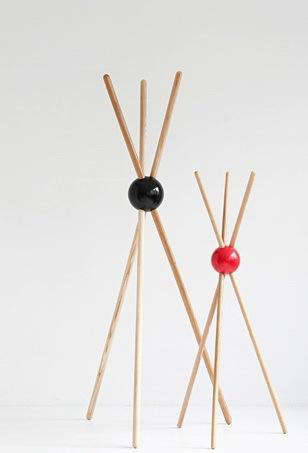
The Lock Coat Stand by Sylvain Willenz is the kind of furniture piece that makes you pause before dropping your jacket on it. Most coat stands live quiet lives in corners, doing the noble but thankless work of holding winter coats, tote bags, scarves, and the occasional hat that everyone swears they did not lose. Lock, however, has more personality. It looks simple at first: three ash wood legs gathered by a glossy Bakelite sphere. Then the idea clicks. The ball is not decoration pretending to be useful. It is the structural heart of the object.
Designed by Brussels-based designer Sylvain Willenz for Belgian brand Tamawa, the Lock Coat Stand blends playful color, clever engineering, and minimalist furniture design. It is practical, yes, but it also behaves like a small sculpture for the entryway. That is rare in home organization furniture, where “functional” too often means “gray, square, and emotionally unavailable.”
Lock is especially appealing for people who want their entryway furniture to feel intentional. It is not a bulky hall tree, not a wall hook system, and not one of those wobbly coat racks that leans dramatically every time someone hangs a backpack on it. Instead, it is a clean three-legged coat stand with a strong graphic identity, a compact footprint, and an unmistakable central bead that gives the design its name and character.
Who Is Sylvain Willenz?
Sylvain Willenz is a Belgian furniture, lighting, and product designer known for a strong but simple visual language. His work often uses clear lines, approachable forms, and a sense of graphic precision. He studied design in London, opened his Brussels design office in 2004, and has worked with international brands across furniture, lighting, textiles, and objects.
What makes Willenz’s work interesting is that it rarely shouts. Instead, it finds one strong idea and carries it through with discipline. With the Lock Coat Stand, that idea is the connection point: a large Bakelite ball that gathers three wooden rods into a usable object. The concept is so direct that it almost feels obvious after you see it, which is usually a sign that the designer has done the hard thinking for you.
The Tamawa Connection: From Jewelry to Furniture
Tamawa is a Belgian design manufacturer closely associated with Bakelite balls. The brand originally built its identity around jewelry, watches, and small accessories using colorful spherical components. The name “Tamawa” is commonly understood as a reference to a “ball on a steel ring,” which makes sense when you see the brand’s bracelets, rings, cufflinks, and watches.
The Lock Coat Stand cleverly expands that jewelry language into the home. Instead of using a small bead on the body, Willenz uses a large Bakelite sphere as the central connector for a piece of furniture. In other words, Lock is not just a coat rack with a colorful accent. It is a furniture-scale translation of Tamawa’s material identity. The bead becomes architecture. The entryway gets jewelry. Your jacket gets a better social life.
Design Analysis: Why the Lock Coat Stand Works
1. The Structure Is the Decoration
Many furniture pieces separate structure and style. They hide joints, cover screws, or add decorative pieces after the functional parts are already solved. Lock does the opposite. Its central Bakelite ball is both the visual focus and the mechanical connector. This gives the coat stand a satisfying honesty. You can understand how it works just by looking at it.
The three ash wood legs pass through or meet at the sphere, creating a tripod form that naturally supports itself. The result is visually light but physically grounded. A tripod is one of the oldest stability tricks in the book, and Lock uses it with modern polish.
2. The Materials Create Contrast
The combination of ash wood and Bakelite gives Lock its charm. Ash wood brings warmth, grain, and a natural furniture feel. Bakelite adds gloss, color, and historical design flavor. Bakelite is famous as one of the earliest synthetic plastics, often associated with vintage radios, telephones, jewelry, and industrial objects. In Lock, that retro-industrial material becomes bright, playful, and surprisingly fresh.
The contrast matters. If the entire stand were wood, it might feel too quiet. If it were entirely plastic, it might feel less refined. By combining ash and Bakelite, Willenz gives the piece balance: natural and manufactured, warm and shiny, familiar and unexpected.
3. It Has Personality Without Becoming a Gimmick
A coat stand shaped like a giraffe might be fun for one week and exhausting by week three. Lock avoids that trap. Its personality comes from proportion, color, and construction rather than novelty for novelty’s sake. The bead is playful, but the overall silhouette is restrained. This is why it can work in a modern apartment, a family hallway, a design studio, or a boutique retail space.
Product Details and Practical Features
The standard Lock Coat Stand is made from Bakelite and ash wood. Tamawa lists the adult version at approximately 165 cm high with a footprint around 65 x 65 cm, using a large 16 cm Bakelite bead. A smaller Lock Kids version has also been associated with the collection, offering a child-friendly scale for bedrooms, playrooms, or preschool-style entry areas.
The product has been shown in several bright color options, including shades such as blue, fuchsia, orange, yellow, black, and red. These colors are not shy. They are the design equivalent of someone arriving at a dinner party with excellent shoes and zero interest in beige small talk.
Because Lock is freestanding, it does not require drilling into the wall. That makes it useful for renters, design lovers who rearrange often, and anyone who has ever stared at drywall anchors with the cold fear of permanent commitment. Its relatively open structure also means it does not visually crowd an entryway the way a heavier storage unit might.
Where the Lock Coat Stand Fits Best
Modern Entryways
In a modern entryway, Lock can act as both coat storage and visual punctuation. Place it near the front door with a slim bench, a small tray for keys, and a mirror. The stand adds height and color without overwhelming the space. For a white or neutral hallway, a yellow, red, or blue Bakelite ball can become the focal point.
Small Apartments
Small apartments need furniture that earns its floor space. Lock is not a full storage system, but it solves the daily outerwear problem elegantly. It works best when used intentionally: one or two coats, a scarf, a lightweight bag, and maybe a hat. It is not designed to hold the emotional baggage of an entire household, plus six parkas and a mystery umbrella from 2017.
Kids’ Rooms and Play Areas
The Lock Kids version makes particular sense in children’s spaces because the design feels friendly without becoming cartoonish. The bright Bakelite bead adds a playful touch, while the wood keeps it from feeling disposable. In a child’s bedroom, it can encourage the habit of hanging up jackets and bags. Parents may call this “organization.” Children may call it “the colorful stick thing.” Either way, it helps.
Boutiques, Studios, and Creative Offices
Lock also works beautifully in commercial interiors. A design studio, fashion showroom, small boutique, or creative office can use it as a practical hospitality piece. Guests see it immediately, understand it instantly, and remember it later. That is the quiet power of good design: it performs its task and leaves a small mental postcard behind.
How to Style the Lock Coat Stand
The easiest way to style the Lock Coat Stand is to give it breathing room. Because the central ball is the star, avoid burying the stand under too many coats. Think of it like a sculpture that occasionally holds a trench coat. Position it against a simple wall, near natural light if possible, and let the color of the Bakelite bead interact with nearby accents.
If the bead is yellow, echo the warmth with brass hardware, a small artwork, or a woven basket. If it is black, pair it with monochrome decor and a graphic rug. If it is red or fuchsia, keep surrounding colors calm so the coat stand can do its dramatic little entrance scene without competing with twelve other loud objects.
For a Scandinavian-inspired interior, the ash wood legs will feel right at home with pale floors, white walls, linen textures, and soft lighting. For a more eclectic home, Lock can join colorful art, patterned textiles, and vintage accessories. It is flexible because the shape is simple, even when the bead color is bold.
Is the Lock Coat Stand Worth It?
The Lock Coat Stand is not for someone who simply wants the cheapest place to hang a coat. There are plenty of basic coat racks for that job. Lock is for people who care about design authorship, material story, and the small daily pleasure of using an object that has been thoughtfully resolved.
Its value comes from more than utility. It offers a conversation piece, a dose of color, and a compact lesson in how furniture design can turn a joint into a feature. For design collectors, fans of Belgian modern design, and homeowners who want entryway furniture with character, Lock is a compelling piece.
That said, it should be used with realistic expectations. A sculptural coat stand is best when it is not overloaded. If your household needs heavy-duty storage for five people, sports bags, raincoats, dog leashes, and winter boots, Lock should be paired with additional storage. Let it handle the visible, everyday items. Let the closet handle the chaos. Everybody wins.
Care and Maintenance Tips
Because Lock combines wood and Bakelite, care should be gentle. Dust it regularly with a soft cloth. Avoid harsh chemical cleaners on the Bakelite sphere, especially if the finish is glossy and colorful. For the ash wood legs, use a dry or slightly damp cloth and avoid leaving moisture on the surface. If the stand is placed near a door, check occasionally for grit or dirt around the feet, especially during rainy seasons.
Also, distribute weight evenly. A tripod form is stable, but any freestanding coat rack can become unbalanced if one side carries all the heavy coats. Hang heavier items lower and spread them around the stand when possible. This keeps the piece looking graceful instead of like it is reconsidering its career choices.
Experience Section: Living With a Design Coat Stand
Using a piece like the Lock Coat Stand changes how an entryway feels. With ordinary storage, the goal is often invisibility: hide the mess, close the closet, pretend the pile of scarves is a lifestyle choice. With Lock, the storage becomes visible in a positive way. You start thinking about what you hang on it because the stand itself has presence. A beautiful wool coat looks better on it. A canvas tote looks intentional. Even a rain jacket seems slightly more cultured, as if it has been reading design magazines while waiting for the weather to improve.
In daily life, the best thing about a freestanding coat stand is convenience. You walk in, hang your jacket, drop your bag, and move on. No closet door. No hanger hunt. No wrestling with an overstuffed wardrobe while holding groceries. Lock does this simple task while adding a cheerful design note to the room. That matters more than people think. Entryways are transition spaces. They shape the mood between outside and inside. When the first object you touch at home is thoughtful and well made, the whole arrival ritual feels calmer.
There is also a social side to this kind of furniture. Guests notice it. They may ask about the colorful ball, the designer, or the material. The conversation is easy because the design is easy to understand. You can explain that the sphere locks the wooden rods together, that the piece was designed by Sylvain Willenz, and that Tamawa is known for Bakelite bead-based objects. Suddenly, your coat stand has done more networking than most people at a cocktail party.
For families, the experience depends on placement and expectations. If placed near the main entrance, Lock can become the “daily jacket station.” If used in a bedroom, it can hold tomorrow’s outfit, a robe, a backpack, or a favorite hat. In a child’s room, the smaller version can make tidying up feel less like a command and more like a game. The bright bead provides a visual target: hang things here. Simple cues often work better than complicated storage systems.
The main lesson from living with a design-forward coat stand is restraint. It looks best when it is allowed to remain visible. Overload it, and the clever structure disappears under fabric. Use it lightly, and it rewards you every day. That is the charm of Lock: it is not trying to be a closet. It is trying to be a beautiful, useful object that makes the small act of hanging up a coat feel a little more considered.
Conclusion
The Lock Coat Stand by Sylvain Willenz is a smart example of modern furniture design doing more with less. Three ash wood rods, one bold Bakelite sphere, and a clear structural idea become an object that is practical, memorable, and full of personality. It brings Tamawa’s bead-based design language into the home while showing Willenz’s talent for simple, graphic, functional products.
For anyone searching for a designer coat stand, modern entryway furniture, or a playful yet refined freestanding coat rack, Lock deserves attention. It proves that storage does not have to be boring, corners do not have to be sad, and even a jacket deserves a stylish place to recover from the outside world.