Jimmy Kimmel has built a career out of saying the thing everyone at Thanksgiving dinner is thinking but is too full of mashed potatoes to say out loud. But in September 2025, one late-night monologue moved far beyond the usual “politician did something strange” punchline cycle. ABC pulled Jimmy Kimmel Live! from the air after Kimmel commented on the political reaction to the killing of conservative activist Charlie Kirk, sparking a national debate about comedy, grief, broadcast pressure, free speech, corporate caution, and the increasingly blurry line between entertainment and politics.
The headline many readers searched for was simple: What exactly did Jimmy Kimmel say? The answer is more complicated than a single sentence, because the controversy was not just about one joke. It was about timing, tone, political blame, media pressure, affiliate station power, and how quickly a late-night segment can become a national test of speech in America.
This article breaks down the key remarks, the context behind the suspension, how Hollywood reacted, why ABC reversed course, and what creators, comedians, journalists, and everyday posters can learn from the whole strange episode. And yes, there will be analysis. Because apparently one monologue now needs the kind of decoding usually reserved for ancient tablets, tax forms, and group chat screenshots.
What Happened To Jimmy Kimmel’s Show?
On September 17, 2025, ABC said that Jimmy Kimmel Live! would be “preempted indefinitely.” The decision followed Kimmel’s comments during a monologue about the political response to Charlie Kirk’s death. The move immediately became one of the biggest entertainment stories of the year because it involved a major network, a prominent late-night host, affiliate station owners, political pressure, and a heated free speech debate.
The show did not disappear forever. Disney, ABC’s parent company, later announced that Jimmy Kimmel Live! would return on September 23, 2025. But the short suspension left a large footprint. Nexstar and Sinclair, two major owners of ABC affiliate stations, initially continued to preempt the program even after ABC brought it back, meaning some viewers still could not see the comeback episode on their local ABC stations.
The controversy also drew attention from the Federal Communications Commission, political figures, entertainment unions, late-night hosts, and hundreds of actors and artists. In other words, a monologue turned into a cultural earthquake, and late-night television suddenly looked less like a comedy desk and more like the front row of a constitutional law seminar with better lighting.
The Short Version: What Did Jimmy Kimmel Say?
The most widely cited portion of Kimmel’s remarks focused on what he described as political attempts to shape the public narrative around Kirk’s killing. In a brief excerpt, Kimmel said that some in the “MAGA gang” were trying to characterize the suspect in a certain way and were doing everything they could to “score political points.”
That short passage became the center of the backlash. Critics argued that Kimmel was minimizing or misrepresenting the political context of the suspect. Supporters argued that his point was not about mocking Kirk’s death, but about criticizing the political rush to assign blame and exploit tragedy. The disagreement came down to interpretation, timing, and whether late-night satire should be expected to handle national trauma with the same caution as a news desk.
Because the original monologue is copyrighted broadcast material, a full verbatim transcript is not reproduced here. Instead, the key substance can be summarized accurately: Kimmel criticized conservatives and Trump-aligned figures for, in his view, trying to use Kirk’s death as a political weapon. He also mocked Donald Trump’s public response, suggesting that Trump seemed more focused on other subjects than on grief. That combinationpolitical accusation plus dark late-night sarcasmwas enough to ignite a major reaction.
Why The Comment Became So Controversial
Late-night hosts make political jokes every night. Usually, the news cycle absorbs them, social media yells for a few hours, and everyone moves on to the next outrage like a nation collectively refreshing a broken app. This situation was different for several reasons.
1. The subject was a recent killing
Kirk’s death was still raw when Kimmel commented on the political reaction around it. Even jokes that are aimed at politicians, not victims, can land differently when grief is fresh. For many viewers, the issue was not only what Kimmel said, but when he said it.
2. The political climate was already explosive
The United States was already deeply divided over political violence, blame, and rhetoric. Kimmel’s remarks arrived in an environment where both sides were accusing the other of hypocrisy. That made the monologue less like a joke floating in the air and more like a match near a gas stove.
3. FCC pressure became part of the story
FCC Chair Brendan Carr criticized Kimmel’s comments and suggested that broadcasters had responsibilities under the public interest standard. Critics saw those remarks as government pressure on a media company. Supporters of the suspension argued that networks and affiliates had the right to distance themselves from content they considered offensive or irresponsible.
4. Affiliate owners had leverage
ABC does not reach viewers only through a single pipe from a magic castle in Burbank. Local affiliate stations matter. Nexstar and Sinclair own many ABC affiliates, and their decisions to preempt the program increased pressure on ABC and Disney. The controversy showed how local station groups can shape national television outcomes.
ABC’s Suspension And Disney’s Reversal
ABC’s initial decision to pull the show was described as an indefinite preemption, which sounds like the kind of phrase a corporate lawyer whispers into a conference room speakerphone. In practical terms, the show was off the air while Disney and Kimmel’s team discussed a path forward.
Disney later said the show would return, and Kimmel came back on September 23. His return became an event in itself. Viewers tuned in not just for jokes, but for a response. Would he apologize? Would he double down? Would he say nothing and let Guillermo hold a cue card that said “awkward”? Instead, Kimmel addressed the suspension directly and framed the controversy around free speech, public pressure, and the role of comedy in political life.
The reversal did not instantly settle the matter. Some affiliate groups still chose not to air the show immediately. That created a strange split-screen reality: the program was officially back, but not universally available through every local ABC station. In media terms, that is the equivalent of saying the party has restarted, but several doors are still locked.
How Hollywood Stars Reacted
The reaction from Hollywood was fast, loud, and emotional. Many entertainers viewed the suspension as a dangerous precedent. They were not necessarily defending every word Kimmel said; many were defending the principle that government pressure and corporate fear should not decide which comedians remain on television.
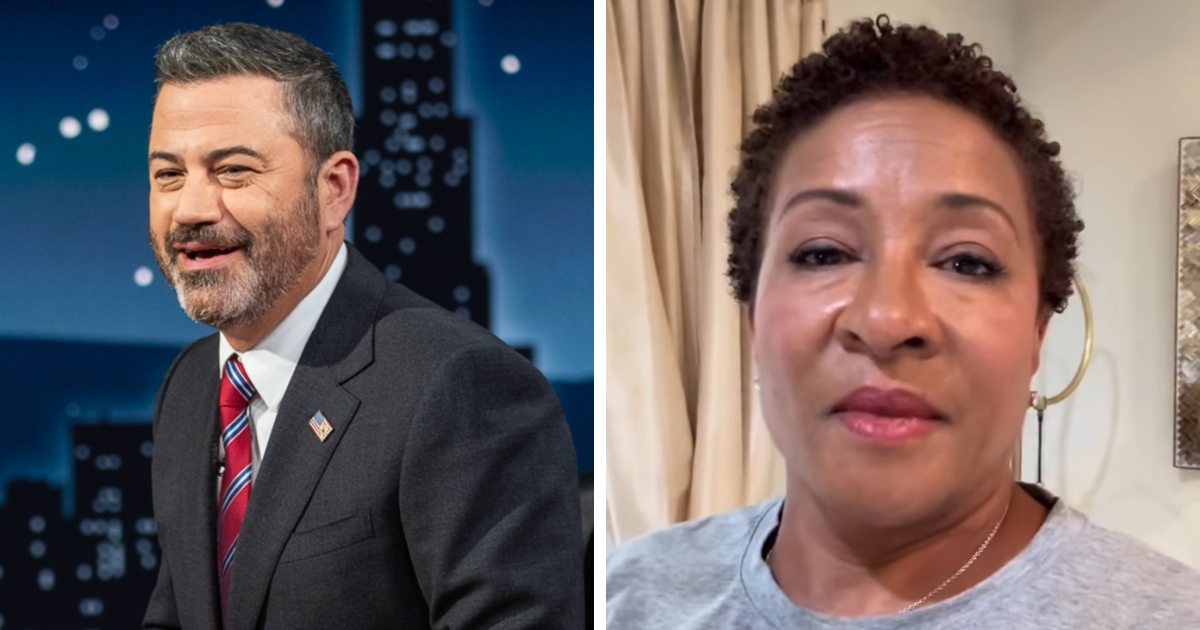
Ben Stiller, Wanda Sykes, Jean Smart, Sophia Bush, Rosie O’Donnell, Henry Winkler, Don Lemon, and other public figures expressed concern or support for Kimmel. Stephen Colbert called the move censorship, while other late-night hosts treated the situation as bigger than one network decision. David Letterman, Conan O’Brien, Jimmy Fallon, Seth Meyers, Jon Stewart, and others were pulled into the broader conversation about whether late-night comedy was becoming vulnerable to political retaliation.
The ACLU also organized an open letter condemning the suspension and defending free speech. Hundreds of artists and tens of thousands of people joined the effort. The letter framed the issue not as a celebrity complaint, but as a warning about government threats and media self-censorship.
Of course, not everyone sided with Kimmel. Conservative critics said ABC was right to act, arguing that Kimmel’s remarks were insensitive and inaccurate. Donald Trump praised the move, and some commentators argued that free speech does not protect anyone from workplace consequences. That is true in a narrow employment sense, but critics of the suspension argued that the larger issue was not merely employmentit was whether government pressure had pushed a broadcaster toward punishment.
Was This Really About A “Full Transcript”?
The public search for a “full transcript” reveals something important about modern outrage: people no longer trust headlines to tell them what happened. They want the original words, the clip, the context, the before-and-after, and sometimes a forensic reconstruction worthy of a prestige crime documentary.
That instinct is healthy. Controversies often mutate as they travel. One person says “Kimmel mocked Charlie Kirk.” Another says “Kimmel criticized MAGA reaction.” Someone else says “ABC canceled him for attacking Trump.” Each version contains a piece of the story, but none of them is complete alone.
The fairest reading is this: Kimmel did not deliver a long attack on Kirk himself in the key disputed passage. The controversy centered on his comments about how Trump-aligned figures were responding to the killing and assigning political meaning to it. Whether that distinction matters depends on the viewer. To supporters, it proves the backlash was exaggerated. To critics, it misses the point because the subject was too sensitive for that style of commentary.
Why Late-Night Comedy Keeps Becoming Political News
Late-night television used to be where America went to watch celebrities promote movies, comedians roast headlines, and hosts gently mock whichever president had recently mispronounced something. But the format changed. Since the rise of social media, every monologue is clipped, captioned, and redistributed to viewers who may never watch the full show.
That matters because late-night jokes are built for rhythm and context. A joke may depend on the setup, the previous segment, the host’s persona, and the audience’s expectations. Online, a ten-second clip can become a political weapon. The joke leaves the theater and enters the arena.
Kimmel, Colbert, Meyers, Stewart, and other hosts have leaned heavily into political commentary because audiences increasingly expect it. For some viewers, late-night comedy is a pressure valve. For others, it is partisan noise with a laugh track. That split explains why Kimmel’s suspension produced such wildly different reactions. One audience saw censorship. Another saw accountability. Both sides believed the other was pretending not to understand the obvious.
What The Suspension Says About Corporate Media
The Kimmel controversy also highlighted a difficult truth about corporate media: creative freedom often exists inside a building owned by people who worry about regulators, advertisers, affiliates, mergers, stock prices, and public backlash. That does not mean every executive decision is corrupt or cowardly. It does mean that the creative side and the business side are not always best friends. Sometimes they are roommates arguing over the thermostat.
Disney had to weigh several pressures at once. There was backlash from conservatives, concern from affiliate station owners, criticism from free speech advocates, and the potential reputational cost of appearing to punish a host after political pressure. By bringing Kimmel back, Disney signaled that the suspension had gone as far as it was willing to take it. But the damage to trust had already happened for many viewers.
The episode demonstrated that television networks are no longer simply competing for ratings. They are navigating ideological storms, regulatory attention, activist campaigns, and online outrage cycles. A late-night show is now not only a show. It is a brand, a political symbol, a business asset, and occasionally a national argument wearing a suit.
Experience Notes: Lessons For Writers, Creators, And Anyone With A Platform
The Kimmel suspension offers useful experience-based lessons for anyone who writes, jokes, posts, podcasts, reports, or creates content online. The first lesson is simple: timing changes meaning. A line that might sound sharp two months later can sound cruel two days after a tragedy. Even when the target is political opportunism rather than the victim, audiences may hear the emotional context before they hear the argument. Good creators understand that timing is not censorship; it is part of communication.
The second lesson is that context rarely survives distribution. Kimmel’s full monologue had a structure, a tone, and a target. But most people encountered the controversy through clips, headlines, quote cards, or angry posts. Once a statement leaves its original format, it becomes easier to misread, simplify, or weaponize. Writers and publishers should assume that any sentence can be separated from its paragraph and sent into the internet wilderness with no snacks and no adult supervision.
The third lesson is that precision matters most when emotions are high. If a creator is discussing a developing investigation, political violence, or public grief, vague language can become a liability. Saying “some people are exploiting this tragedy” is different from implying certainty about motive or identity. When facts are still emerging, the safest strong commentary is commentary that clearly separates verified facts from opinion. That does not make the writing boring. It makes it harder to knock down.
The fourth lesson is that platforms come with power, and power comes with consequences. A late-night host speaks to millions. A blogger may speak to thousands. A TikTok creator may speak to more people before breakfast than a local newspaper reaches in a week. That reach creates responsibility. It does not mean creators should become bland, robotic, or afraid of every joke. It means they should understand the blast radius of their words.
The fifth lesson is that free speech debates are rarely clean. A government official criticizing a broadcaster is different from a viewer complaining. A company suspending a host is different from the state banning speech. Affiliate owners refusing to air a program is different from a court order. But when all of those pressures happen close together, the public sees a pattern. That is why the Kimmel case became larger than Kimmel. It became a test of whether media companies would defend creative expression when powerful people disliked the message.
For SEO publishers and digital writers, there is one more practical takeaway: do not chase a viral headline without explaining the full context. Readers searching for “what Jimmy Kimmel said” are not just looking for gossip. They are trying to understand why a few sentences caused a national reaction. The best article gives them the timeline, the disputed wording, the reactions, the business stakes, and the broader meaning. In other words, do not just throw a quote on the page and call it journalism. Add the map, the compass, and maybe a flashlight.
Conclusion
The suspension of Jimmy Kimmel Live! was not simply a celebrity scandal or a late-night dustup. It became a flashpoint because it connected several combustible issues at once: political violence, grief, satire, government pressure, corporate decision-making, affiliate power, and the future of free expression on television.
Kimmel’s disputed remarks criticized the political response to Charlie Kirk’s killing, especially the effort by some Trump-aligned figures to shape the narrative around blame. ABC’s decision to pull the show triggered backlash from Hollywood stars, free speech groups, late-night hosts, and viewers who worried that corporate media was yielding to political pressure. Critics of Kimmel, meanwhile, argued that the network had every right to respond to comments they considered irresponsible.
The show returned, but the debate did not end. The episode remains a reminder that in modern media, a monologue can become a movement, a joke can become a legal-adjacent argument, and a late-night host can suddenly find himself at the center of America’s never-ending debate over speech, power, and who gets to decide what is too offensive to air.