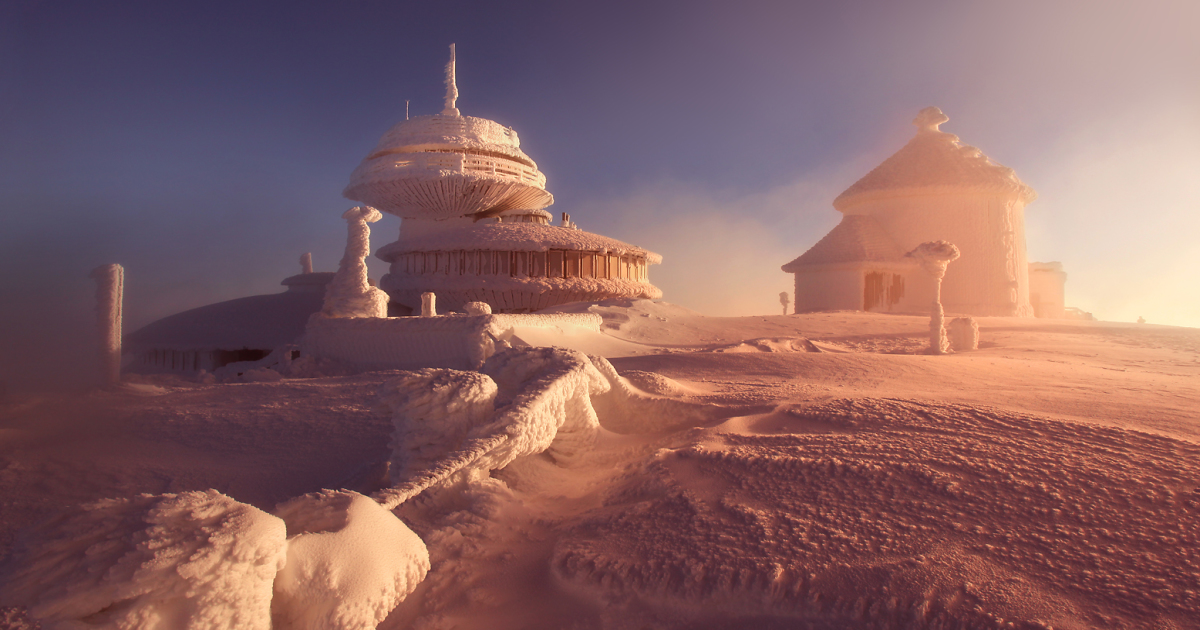
Some people collect stamps. Some people collect vinyl records. Karol Nienartowicz collected mornings so cold your eyelashes could file a complaint, sunsets that looked freshly painted, and one mountain range that refused to look the same twice.
For 13 years, the Polish mountain photographer returned again and again to the Karkonosze Mountains, also known as the Giant Mountains, a dramatic range stretching along the Polish-Czech border. Instead of chasing a different “epic” location every weekend, he did something quieter, harder, and arguably more impressive: he kept going back to the same place until the landscape stopped being a destination and became a long conversation.
The result is more than a pretty collection of mountain photos. It is a visual diary of weather, patience, altitude, obsession, and the strange magic that happens when one photographer learns a landscape the way other people learn a favorite song.
The Mountain Range That Kept Changing Its Mind
The Karkonosze Mountains are the highest part of the Sudetes, with Śnieżka rising as the range’s most famous peak. Depending on which side of the border you stand on, you may hear it called Śnieżka in Polish or Sněžka in Czech. Either way, it is the kind of mountain that looks like it knows secrets and is absolutely not telling tourists all of them at once.
This range is not as globally famous as the Alps, the Rockies, or the Himalayas, but that is part of its charm. The Karkonosze landscape has sweeping ridges, glacial cirques, peat bogs, mountain meadows, waterfalls, forests, rock formations, and high plateaus that can look almost Arctic in the right weather. In winter, trees become “snow ghosts,” wrapped in rime and frost until they resemble frozen creatures wandering through a fairy tale.
That variety is exactly what makes the project so compelling. A single mountain range can become a hundred different worlds when photographed across seasons, storms, sunrise glow, blue hour, mist, and snow.
Why Photograph One Place for 13 Years?
At first, the idea sounds oddly limiting. Thirteen years? One range? No tropical beaches? No dramatic “I quit my job and moved into a van” montage? But long-term landscape photography has a secret advantage: repetition reveals difference.
A visitor may see Śnieżka once and remember a windy summit. A photographer who returns 200 times sees the mountain under rose-colored dawn, under bruised storm clouds, under moonlight, under heavy snow, under summer haze, and under that absurdly perfect golden light that makes even a backpack strap look poetic.
This kind of work rewards patience more than luck. Yes, luck matters. Weather may hand you a miracle, or it may hand you fog so thick you begin photographing your own confusion. But after years of returning, luck becomes less random. You learn where clouds gather, which trails open the best sightlines, where the sun rises in different months, and which weather reports deserve trust.
The Real Star: Light
Mountain photography is basically a long-term negotiation with light. Midday can be useful, but sunrise and sunset are where mountains start showing off. During golden hour, low sunlight adds warmth, depth, and long shadows. During blue hour, the scene becomes quieter and moodier, as if the mountains have switched from adventure film to classical music.
Karol’s work focuses heavily on these fleeting windows. That means early alarms, cold fingers, long hikes before breakfast, and the emotional roller coaster of watching clouds either part like theater curtains or stubbornly sit on the horizon like they own the place.
But that is exactly why the photographs feel alive. The same ridge can look heroic at sunrise, mysterious in fog, peaceful under snow, and almost alien when wind sculpts cloud over the summit. The mountain stays put. The light does the acting.
What Makes the Karkonosze Mountains So Photogenic?
Śnieżka: The Iconic Summit
Śnieżka is the headline act. It is the highest peak in the Karkonosze Mountains and the Sudetes, and its summit often appears in photographs as a bold, recognizable silhouette. In winter, its harsh conditions create a raw, windswept look. In warmer months, it becomes a destination for hikers chasing broad views across Poland and Czechia.
Śnieżne Kotły: Drama in the Rocks
The Snow Cirques, or Śnieżne Kotły, bring a wilder texture to the range. These glacial forms add cliffs, shadow, and scalethree ingredients landscape photographers treat like gold dust. They remind viewers that these mountains are not just pretty hills; they are shaped by deep time, ice, erosion, and weather with a flair for sculpture.
Lake Wielki Staw and Mountain Reflections
Water gives mountains a second chance to impress. Lakes and tarns such as Wielki Staw can turn a strong composition into a memorable one, especially when still water mirrors cliffs, sky, or moving cloud. Reflection is the landscape photographer’s polite way of saying, “Look, I brought you two mountains for the price of one.”
Wang Church: Culture in the Landscape
Not every powerful mountain photograph needs only wilderness. Wang Church in Karpacz adds history, architecture, and human presence to the story. Its wooden structure, originally tied to Norway’s stave church tradition, creates a surprising cultural note in the mountain environment. It proves that landscapes are not just geology; they are also memory, travel, faith, and the footprints of people who came before us.
Thirteen Years of Weather, Waiting, and Wonderful Bad Ideas
Anyone can take a mountain photo when the conditions are easy. The more interesting images often happen when the weather is rude. Snowstorms, freezing wind, sudden fog, muddy trails, and cloud inversions can all turn a normal outing into either a masterpiece or a personal lesson in why waterproof socks exist.
Long-term mountain photography requires a strange combination of planning and surrender. You plan the route, check the forecast, pack layers, charge batteries, and choose lenses. Then the mountain says, “Cute. Here is a wall of fog.”
But fog can be beautiful. So can snow. So can weather that looks miserable to everyone except a photographer who has learned that atmosphere is not an inconvenience; it is the subject. The Karkonosze Mountains reward that mindset with scenes that feel cinematic rather than postcard-perfect.
The Difference Between Taking Photos and Building a Body of Work
A single good photo can impress people. A 13-year project can make them feel time. That is the real achievement here.
When viewers see Karol’s collection, they are not only seeing beautiful landscapes. They are seeing commitment. They are seeing the same mountain range become soft, fierce, delicate, frozen, golden, mysterious, and monumental. They are seeing a photographer’s relationship with place deepen over time.
This is where the project becomes useful for anyone interested in photography, art, travel, or creativity. It suggests that originality does not always require going farther. Sometimes it requires looking longer.
Lessons for Landscape Photographers
1. Return to the Same Place
Beginners often assume better photos are hiding somewhere else. Sometimes they are hiding in the same place at a different hour, in different weather, or in a season you have not bothered to visit yet.
2. Study Light Like It Owes You Money
Light can rescue an ordinary scene and humble a spectacular one. Learn how sunrise, sunset, cloud cover, and snow reflection affect your subject. In mountain photography, the difference between “nice view” and “frame it immediately” can be ten minutes.
3. Use Foreground, Layers, and Scale
Mountains can look flat in photos if the composition has no depth. Rocks, paths, grasses, trees, water, huts, and human figures can help the viewer understand distance and scale.
4. Pack for Survival, Not Just Style
A camera is important. So are gloves, water, a headlamp, snacks, and clothing that does not betray you halfway up a ridge. Nobody composes elegantly while shivering like a shopping cart with one bad wheel.
5. Let the Landscape Surprise You
Planning matters, but the best photographs often happen when the plan fails beautifully. A cloud rolls in. A beam of light breaks through. Snow falls harder than expected. Suddenly the image you came for is gone, and a better one is standing right in front of you.
Why This Project Feels So Timeless
In an age when social media encourages speed, novelty, and endless scrolling, a 13-year photography project feels almost rebellious. It says: slow down. Return. Notice. Wait. Let the subject change you.
There is also a deeper environmental value in repeated landscape photography. Scientists use repeat photography to document changes in glaciers, vegetation, and landforms over time. While Karol’s project is primarily artistic, it belongs to that larger tradition of seeing place across years rather than seconds. Mountains may look permanent, but they are always changingthrough weather, seasons, tourism, climate, erosion, and human impact.
That makes these images more than pretty mountain wallpaper. They are records of atmosphere, memory, and time.
The Emotional Result
The best part of the project is not simply that the Karkonosze Mountains look beautiful. Of course they do. Mountains are naturally dramatic; they wake up every morning with cheekbones.
The best part is that the photographs make a lesser-known range feel important. They show that wonder is not reserved for famous destinations. A photographer with patience can turn a regional landscape into a world stage. A familiar trail can become a gallery. A mountain you thought you knew can surprise you for 13 years and still not run out of material.
That is the quiet power of this project: it proves that attention is creative. The longer you look, the more the world gives back.
Additional Experiences: What 13 Years With One Mountain Range Can Teach You
Spending years photographing one mountain range is not just a creative project; it is an education with mud on its boots. Over time, you begin to understand that mountains operate on a schedule completely unrelated to your calendar, your comfort, or your battery percentage.
The first lesson is humility. You can hike for hours with a carefully planned composition in mind, only to arrive and find the summit swallowed by clouds. At first, this feels like failure. Later, you realize the cloud is not ruining the photograph; it is changing the assignment. Instead of shooting the wide panorama, you photograph a lone tree fading into mist, frost gripping a trail marker, or a hiker disappearing into white air. The mountain has not said no. It has said, “Try again, but smarter.”
The second lesson is memory. After repeated visits, you stop seeing the range as a map and start seeing it as a series of personal chapters. That bend in the trail becomes the place where the sunrise finally exploded after three failed attempts. That shelter becomes the place where hot tea tasted like a five-star meal because your gloves were wet and your soul was negotiating with winter. That ridge becomes the place where you learned that wind can, in fact, have opinions.
The third lesson is patience. Great landscape photography is often less about pressing the shutter and more about not pressing it yet. You wait for the light to move two meters across a slope. You wait for the cloud shadow to lift. You wait for hikers in neon jackets to leave the frame, unless their tiny figures suddenly make the mountain look even larger. Waiting becomes part of the craft.
The fourth lesson is that repetition does not make a place boring. It makes it richer. A first visit gives you scenery. A tenth visit gives you patterns. A fiftieth visit gives you instincts. After years, you can feel when the conditions are about to turn interesting. You notice the color of cloud edges, the direction of wind, the way snow holds on one slope longer than another. The camera becomes less like a tourist tool and more like a notebook.
The final lesson is gratitude. A long-term project forces you to care about a place beyond its usefulness as content. You start worrying about trail damage, crowded viewpoints, litter, climate shifts, and whether future visitors will be able to experience the same silence, snow, and sunrise that made you fall in love with the range in the first place.
That may be the real result after 13 years: not just photographs, but a relationship. The mountain range becomes a teacher, a challenge, a stubborn friend, and occasionally a very cold comedian. And when the light finally lands exactly where you hoped it would, after years of missed alarms, fogged lenses, frozen fingers, and long climbs, the photograph feels earned.
Conclusion
“For 13 Years, I Photographed One Mountain Range And This Is The Result” is more than a title with a built-in wow factor. It is a reminder that meaningful photography often grows from devotion. Karol Nienartowicz’s long relationship with the Karkonosze Mountains shows how one place can become endlessly new when approached with curiosity, discipline, and a willingness to wake up before sunrise more often than any reasonable person should.
The Karkonosze range may not be the loudest name in mountain travel, but through years of patient photography, it becomes unforgettable: snowy, golden, mysterious, rugged, and alive. The project proves that you do not always need to chase the whole world to create powerful work. Sometimes the world is waiting in one mountain range, changing its face every morning, daring you to notice.
Note: This is an original, web-ready article based on real publicly available information about Karol Nienartowicz, the Karkonosze Mountains, landscape photography practices, and long-term visual documentation. It contains no copied source text, no citation placeholders, and no unnecessary publishing elements.