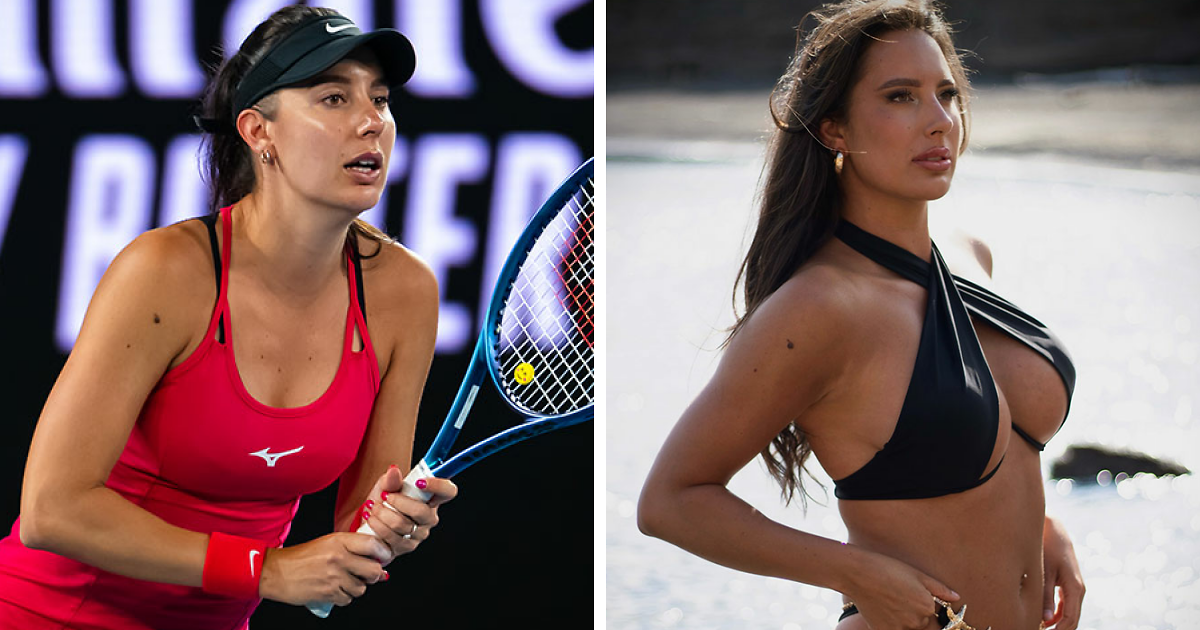
Editorial note: This article covers a public sports-and-media story in a non-explicit, publication-ready style. It focuses on athlete branding, career economics, media reaction, and the business side of modern sports fame.
Professional tennis has always been a sport of plot twists. A player can be down a set, limping through a service game, and suddenly produce three winners that make the scoreboard look like it had a change of heart. But even by tennis standards, the recent career turn involving French player Océane Dodin has become one of the more unexpected stories bouncing around the sports internet.
Dodin, a former top-50 WTA player, has been widely discussed after reports connected her return from a long break, her decision to have breast enhancement surgery, and her move into subscription-based adult content creation. The headline practically serves itself with extra spin: a tennis star known for a powerful game may now earn more in one year from off-court content than she did across her entire athletic career.
That last part is the spark. Tennis is glamorous from the outside: Grand Slam stadiums, sponsor logos, dramatic slow-motion replays, and fans who clap politely until the exact moment someone double-faults. But behind the polished image is a punishing business. Unless a player lives near the very top of the rankings, the math can be brutal. Travel, coaching, fitness, medical support, tournament fees, taxes, and constant uncertainty can drain prize money faster than a bad first-serve percentage.
Dodin’s story is not just about a headline-friendly career pivot. It is about the changing economy of attention, the complicated way women athletes are judged, and the growing reality that personal branding can sometimes pay more than professional results.
Who Is Océane Dodin?
Océane Dodin is a French professional tennis player known for a bold, attacking style. At her best, she has been the type of player who does not gently negotiate with the ball. She hits it hard, early, and with the calm confidence of someone who believes rallies are best kept short, like meetings that could have been emails.
Her career peak came when she reached a WTA singles ranking of No. 46. That achievement matters. Getting into the top 50 in women’s tennis is not a cute résumé bullet; it is proof that a player has survived years of qualification draws, pressure matches, injuries, and rankings math that can feel like accounting done during a thunderstorm.
Dodin has also played on some of tennis’s biggest stages. One of her best Grand Slam results came at the 2024 Australian Open, where she reached the fourth round. That run reminded fans that she could still trouble opponents when her game clicked. She has also spent years competing across WTA and ITF events, the less glamorous but absolutely essential roadways of professional tennis.
For casual fans, the phrase “professional tennis player” may sound like automatic luxury. For many players, however, it means constant travel, uneven income, and the pressure to stay healthy enough to earn the next check. Dodin’s career has included promising highs, ranking slides, health interruptions, and now a headline-making off-court move.
The Breast Enhancement Story Became Bigger Than Tennis
Dodin drew major attention after discussing her decision to undergo breast enhancement surgery during a break from competition. According to public reporting, she had been away from the sport for months while dealing with an inner-ear condition that affected her ability to compete. During that period, she chose to have a procedure she had reportedly wanted for a long time.
What made the story travel so quickly was Dodin’s suggestion that she may be the first active professional tennis player to compete after such a surgery. Whether sports historians eventually file that under “confirmed first” or “media-friendly first,” the discussion exploded because it touched multiple hot-button subjects at once: women’s bodies, elite athletic performance, personal autonomy, and the internet’s endless appetite for commentary.
Some observers questioned whether the surgery would affect her movement or comfort on court. Dodin pushed back on that idea, saying in interviews that she could still play and that the decision was personal. In other words, she treated it like what it was: her body, her timeline, her call.
The reaction also revealed something familiar about women in sports. A male athlete can change his hairstyle, grow a beard, launch a questionable cologne, and people call it branding. A female athlete makes a personal appearance decision, and suddenly the entire internet forms a committee, complete with unsolicited medical opinions and moral weather reports.
From Tennis Court To Adult Content Creator
The next twist came when Dodin was reported to have joined a subscription-based adult content platform, becoming part of a broader creator economy where athletes can monetize attention directly. This move quickly became the bigger headline, partly because it sits at the intersection of sports, celebrity, digital media, and money.
Reports suggested that Dodin could earn more in her first 12 months as a creator than she made during her tennis career. That claim has not been fully verified through public contract documents, so it should be treated as a projection rather than a confirmed bank statement. Still, the possibility is believable enough to start a larger conversation.
Why? Because the modern internet rewards audience access. A traditional tennis career pays through prize money, appearance fees, and sponsorships. Those rewards usually depend on ranking, tournament performance, marketability, and federation support. A creator career, by contrast, can pay based on direct fan interest. The gatekeepers are different. The scoreboard is different. The audience may be smaller, but the revenue path can be more direct.
This is why the story feels so disruptive. Dodin did not simply move from one job to another. She stepped from a traditional sports economy into a digital attention economy, where personality, curiosity, controversy, and brand control can sometimes out-earn athletic performance.
The Money Angle: Why This Story Hit A Nerve
The reported income comparison is what made the story go viral. Dodin has earned millions in prize money over a long professional career, but gross prize money is not the same as take-home pay. Tennis players often cover substantial expenses, especially if they are not consistently seeded at major tournaments or backed by major sponsorships.
A player outside the very top tier may need to pay for coaching, travel, hotels, physical therapy, equipment, training facilities, and support staff. Even when a tournament pays well, getting there can cost plenty. Tennis is one of the few major sports where independent contractors must fund much of the operation themselves. Imagine having to pay your own way to every office meeting, then only getting paid if you outperform the person across the conference table. Also, the conference table is in Australia next week.
That reality explains why the creator economy can look attractive. A digital subscription model offers a different kind of business structure. It can produce recurring income, build a direct fan base, and reduce dependence on weekly match results. Of course, it also comes with reputational risk, privacy concerns, and intense public judgment. But from a business standpoint, it is not hard to see why athletes are paying attention.
Dodin’s case stands out because it makes the contrast unusually clear. Years of serves, volleys, ranking pressure, and travel grind may be financially outpaced by one year of content-driven personal branding. That is not just a tennis story. It is a creator economy story wearing tennis shoes.
Public Reaction: Support, Criticism, And The Usual Internet Circus
As expected, the public reaction has been mixed. Some people supported Dodin’s right to make personal and professional choices. Others criticized the move, arguing that it distracted from her athletic career or reflected poorly on professional sports. And then there were the comments that seemed less like thoughtful criticism and more like someone typing with boxing gloves on.
The debate says as much about the audience as it does about Dodin. Female athletes are often expected to perform a nearly impossible balancing act. They must be excellent but not intimidating, marketable but not too commercial, confident but not too outspoken, attractive but not too aware of it, private but available enough for fans to feel connected. That is not a brand strategy. That is a circus act with no net.
Dodin’s decision challenges those expectations. She is not the first athlete to use personal branding beyond competition, and she will not be the last. Athletes have long earned money through swimsuit shoots, fashion campaigns, reality television, podcasts, and social media. The difference here is the category of the platform and the sharper public reaction attached to it.
Whether people approve or disapprove, the conversation shows how sports fame has changed. Fans no longer only follow athletes through match results. They follow training clips, lifestyle posts, sponsorship announcements, personal updates, and off-court business moves. The athlete is no longer just the competitor. The athlete is also the media channel.
Why Athletes Are Looking Beyond Prize Money
Dodin’s move fits a broader pattern. Athletes across many sports are learning that the window for earning money from competition can be short, unpredictable, and injury-prone. Even a strong career can be interrupted by one health issue. Rankings can fall quickly. Sponsorships can disappear. A player’s body, once the engine of the whole business, can become the biggest source of uncertainty.
That is why many athletes now build off-court brands earlier. Some launch podcasts. Some start training apps. Some sell courses or merchandise. Some become commentators. Some grow social media channels. Some join subscription platforms. The methods vary, but the goal is similar: create income that does not depend entirely on winning the next match.
For Dodin, the decision arrived after a difficult period away from the court. Her ranking dropped during her absence, and rebuilding a tennis career from outside the top tier is not easy. A lower ranking can mean tougher draws, smaller tournaments, less prize money, and fewer automatic entries. It is a grind, and not the glamorous kind with dramatic music and a documentary crew.
In that context, a direct-to-fan business model can appear less like a shocking detour and more like a practical alternative. It does not erase the controversy, but it does explain the logic.
Body Autonomy And The Double Standard In Sports
The breast enhancement angle made the story more clickable, but it also made it more revealing. Athletes make body-related decisions all the time. They change diets, add muscle, lose weight, undergo surgeries, use recovery technology, and adjust training plans. Some choices are celebrated as discipline. Others are treated as scandal, especially when they involve women’s appearance.
Dodin’s decision became a public talking point because it did not fit the usual sports narrative. Cosmetic surgery is often framed as separate from athletic identity, as if athletes are required to live as performance machines with no personal preferences. But athletes are people. They make choices about health, appearance, confidence, and timing like anyone else.
The fair question is whether a decision affects performance or safety. The unfair question is whether a woman athlete owes the public an explanation for every personal choice. Dodin has made it clear that she believes she can still compete. That should matter more than the noise surrounding her appearance.
The bigger issue is respect. Coverage can discuss the news without reducing the athlete to a body part or turning the story into a digital shouting match. The most interesting part of Dodin’s career pivot is not the surgery itself. It is how quickly public attention can transform a personal decision into a business opportunity, a controversy, and a global headline.
What This Means For Tennis
Tennis has always had a complicated relationship with image. The sport sells elegance, intensity, fashion, rivalry, and personality. From iconic outfits to player endorsements, tennis has never been only about forehands and backhands. The difference now is that athletes have more tools to monetize their image directly.
For tennis organizations, that creates both opportunity and discomfort. On one hand, players with strong personal brands can bring new audiences to the sport. On the other hand, not every brand partnership fits the traditional image of tennis as polished, restrained, and country-club approved.
Dodin’s move may not change tennis overnight, but it adds another example to a growing list of athletes experimenting with alternative income. The sport may need to accept that players, especially those outside the superstar tier, will continue looking for ways to control their own earning power.
And honestly, who can blame them? Tennis asks players to be entrepreneurs already. They manage travel, teams, schedules, equipment, recovery, and finances. If the sport operates like an individual business, players will eventually behave like individual businesses.
Experiences And Takeaways From The Dodin Story
The biggest experience connected to this story is the experience of reinvention. Almost every career, athletic or not, eventually reaches a moment when the original plan needs editing. Sometimes the edit is small: a new coach, a different schedule, a fresh training method. Sometimes it is enormous: a new business model, a new public identity, or a new way of earning money.
Dodin’s pivot shows how uncomfortable reinvention can be when it happens in public. Most people get to change careers quietly. They update a résumé, tell a few friends, maybe buy a blazer that says “I am serious now.” Athletes do not have that luxury. Their choices become headlines, comments, debates, and reaction videos before they have even had time to enjoy a normal breakfast.
Another experience here is the emotional weight of being judged. Dodin’s personal choices have been discussed by strangers with remarkable confidence. That is common for public figures, but it is especially intense for women athletes. People often talk about them as if athletic talent cancels out personal autonomy. The lesson is simple: spectators may buy tickets, but they do not own the player.
There is also a financial lesson. A long career in a respected profession does not always guarantee financial security equal to the effort invested. Tennis looks luxurious, but many players operate with high costs and uncertain income. Dodin’s reported earning potential as a creator highlights how digital platforms have changed the value of attention. In the old model, performance created fame, and fame attracted sponsors. In the new model, attention itself can become the business.
For readers, the practical takeaway is not that every athlete should follow the same route. The takeaway is that career ownership matters. Whether someone is an athlete, artist, writer, coach, designer, or small business owner, relying on one income stream can be risky. Building a personal brand, developing direct audience relationships, and understanding how value moves online can create options.
At the same time, every option has trade-offs. A controversial platform can bring money and attention, but it can also bring criticism, privacy pressure, and long-term reputation questions. The smartest career decisions are not only about what pays today. They are also about what still feels acceptable tomorrow.
Dodin’s story is fascinating because it refuses to fit neatly into one box. It is partly a tennis comeback story, partly a body autonomy story, partly a creator economy story, and partly a reminder that the internet loves nothing more than a headline it can argue about during lunch. Whether her move becomes a financial triumph, a short-lived experiment, or simply another chapter in a complicated career, it already says something important about modern sports: the match does not end when the player leaves the court.
Conclusion
Océane Dodin’s transformation from former top-50 tennis player to headline-making adult content creator is not just a viral sports story. It is a snapshot of how fame, money, personal choice, and public judgment now collide in real time. Her reported ability to earn more in 12 months from digital content than across years of professional tennis may sound shocking, but it reflects a deeper shift in the economics of attention.
For tennis fans, the story raises questions about how much the sport supports players outside the elite earning tier. For media watchers, it shows how quickly a personal decision can become a global talking point. For athletes, it highlights the growing importance of owning a brand beyond competition.
Dodin’s critics may focus on the controversy. Her supporters may focus on independence. But the bigger picture is clear: modern athletes are no longer limited to the prize money table. They are brands, businesses, and broadcasters of their own lives. In Dodin’s case, the next chapter may be unconventional, but it is undeniably hers.