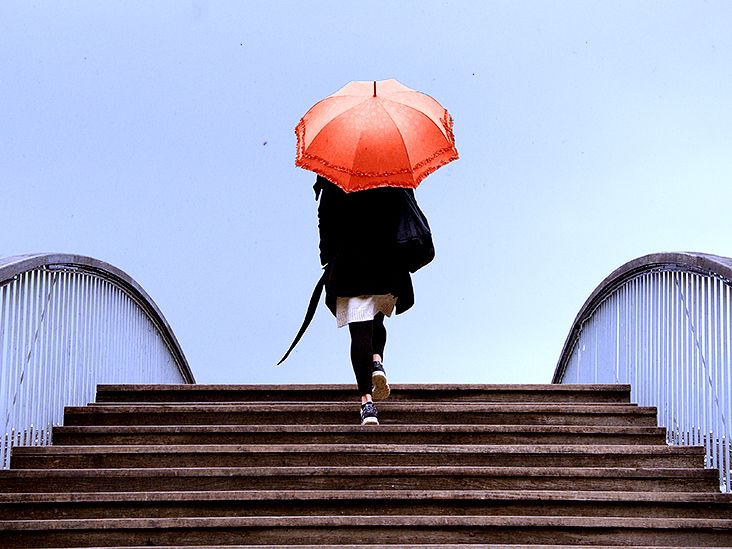
The phrase “out of office” used to be a boring little email auto-reply, the digital equivalent of a beige filing cabinet saying, “Your message has been received, but your dreams will need to wait until Monday.” Now? It has become a full-blown mood. It is a calendar block, a travel fantasy, a wellness strategy, a boundary, a linen shirt, a beach read, a silent phone, and, for many exhausted Americans, a tiny rebellion against the always-on work culture.
“Current Obsessions: Out of Office” is not just about booking a flight, tossing sunscreen into a tote bag, and pretending airport coffee is a personality trait. It is about the growing desire to disconnect with intention. After years of remote work, hybrid schedules, Slack pings, Zoom fatigue, economic uncertainty, rising travel costs, and the strange modern habit of answering emails while standing next to a very beautiful lake, people are rethinking what it means to rest.
The new out-of-office lifestyle is less about bragging and more about recovering. It can mean a long weekend in a small coastal town, a staycation with the phone face-down, a wellness trip, a cabin escape, a backyard dinner, or simply one blessed afternoon where nobody asks you to “circle back.” In short: out of office has become the unofficial love language of burned-out people with full inboxes.
Why “Out of Office” Is the Mood of the Moment
There is a reason the out-of-office mindset feels so magnetic right now. American workers are surrounded by mixed signals. On one hand, many companies promote flexibility, wellness, mental health, and work-life balance. On the other hand, employees are often dealing with heavier workloads, fragmented workdays, unclear expectations, and the quiet pressure to stay visible even when they are supposed to be resting.
Recent workplace research shows a clear tension: people want time away, but many do not take it fully. Some workers leave vacation days unused. Others take PTO but check email anyway. Some plan trips around affordability, while others skip travel altogether and build rest into ordinary life. The result is a new kind of aspiration: not necessarily luxury travel, but protected time.
The auto-reply became a boundary
The out-of-office message has evolved from a polite notification into a small declaration of sanity. A good OOO reply now says more than “I am unavailable.” It says, “I have a life outside this inbox, and I plan to remember what clouds look like.” That may sound dramatic, but in a culture where after-hours messages, weekend catch-ups, and endless notifications are common, a clear boundary can feel almost luxurious.
The best out-of-office boundaries are specific, boring, and beautiful. They include the return date, who to contact in the meantime, and whether the sender should expect a reply. No apology paragraph. No fake urgency. No “I’ll be checking messages occasionally,” unless that is truly necessary. If rest is the plan, the auto-reply should not sneak work into the suitcase.
The Big Shift: Rest Is No Longer a Reward for Finishing Everything
One of the biggest cultural changes around time off is the realization that rest cannot wait until everything is done. Everything is never done. The inbox refills. The meeting invite multiplies. The project changes scope. The “quick question” grows legs and becomes a committee. Waiting for perfect timing to take a break is like waiting for a toddler to say, “Actually, I think I’ll put myself to bed.” Charming idea. Not happening.
Modern out-of-office culture works best when rest is treated as maintenance, not indulgence. People do not charge their phones only after the screen goes black forever. They charge them regularly because a dead phone is useless, except as a tiny expensive mirror. Humans are not so different, though we usually come with more emotional tabs open.
Burnout changed the conversation
Burnout has pushed companies, managers, and workers to think differently about time away. It is no longer enough to offer PTO on paper. If employees feel guilty using it, if workloads make it impossible, or if managers send “quick” messages during vacation, the policy becomes decorative. Very nice in the handbook. Less useful in real life.
A healthy out-of-office culture requires coverage plans, realistic staffing, leadership modeling, and permission that is more than a motivational poster in the break room. When leaders take real time off and do not perform fake availability from a hotel balcony, employees get the message that rest is allowed. When leaders say “take care of yourself” but answer emails at 11:47 p.m. from a beach chair, employees get a different message, and it wears flip-flops.
Current Obsessions in the Out-of-Office Era
The new OOO lifestyle is not one single trend. It is a collection of small obsessions that all point in the same direction: people want experiences that restore them instead of draining them further. Here are the out-of-office habits, ideas, and rituals shaping the moment.
1. The micro-break
Not everyone can take two weeks off, fly across the country, and return with a sun hat the size of a satellite dish. Rising travel costs, family responsibilities, school schedules, and work pressure make long vacations difficult for many people. That is why micro-breaks are having a moment.
A micro-break might be a Friday afternoon off, a one-night hotel stay, a three-day weekend, or a no-plans Sunday protected like a national monument. The point is not the distance traveled. The point is the mental shift. A small break done well can be more restorative than a big vacation spent answering emails between overpriced appetizers.
2. The staycation with standards
The staycation has been unfairly treated as the consolation prize of vacations. But done properly, it can be elite. The trick is to treat it like real time away. That means no laundry marathon, no “I’ll just organize the garage,” and absolutely no checking work messages while pretending it does not count because you are technically sitting on your own couch.
A strong staycation has ingredients: clean sheets, a loose plan, a special breakfast, a walk somewhere pretty, a book that is not about productivity, and maybe a local museum, park, pool, bakery, or farmers market. You are not “stuck at home.” You are becoming the mysterious relaxed person your neighbors notice watering basil at 10 a.m. on a Tuesday.
3. The quiet itinerary
The overstuffed vacation schedule is losing its shine. People are increasingly craving slower trips: fewer attractions, longer meals, more wandering, less frantic documentation. Nobody returns deeply restored from a vacation where every hour is managed like a military operation with gelato.
The quiet itinerary leaves room for discovery. It allows for naps, detours, weather, spontaneous tacos, and the ancient vacation art of sitting somewhere scenic and saying, “Wow,” every few minutes. In a world full of optimization, the unoptimized afternoon is starting to feel radical.
4. The better OOO message
People are also getting smarter about the out-of-office email itself. The best versions are brief, confident, and useful. For example:
“Thanks for your message. I’m out of office through July 8 and will respond after I return. For urgent needs, please contact Jordan Lee at [email protected].”
That is it. No guilt. No novel. No promise to check in “between hikes,” which only tells people the boundary has a side door. A good OOO message lowers anxiety for everyone. The sender knows what to expect, the team knows who is covering, and the person away can stop mentally refreshing an inbox they are not supposed to be visiting.
5. The local escape
With travel costs still a major factor, many Americans are choosing closer-to-home trips. Regional beaches, state parks, small towns, lakes, cabins, roadside motels, and nearby cities are getting renewed attention. The local escape has a lot going for it: less planning, lower transportation costs, fewer airport meltdowns, and a better chance of getting home without needing a vacation from the vacation.
There is also something satisfying about discovering beauty nearby. A good local trip reminds people that rest does not require crossing three time zones. Sometimes it is two hours away, near a diner with excellent pie and a lake that looks suspiciously like it knows secrets.
How Remote and Hybrid Work Changed “Out of Office”
Remote and hybrid work made flexibility more common, but it also blurred the border between work and life. For many workers, the office is no longer a place they leave. It is a laptop on the dining table, a phone on the nightstand, or a notification that appears during dinner like a tiny rude ghost.
This is why out-of-office time matters even more now. If work can happen anywhere, then rest has to be designed on purpose. Otherwise, every place becomes a potential office: the couch, the airport gate, the passenger seat, the hotel lobby, the beach chair, the kitchen counter, and, tragically, the bathroom. Civilization deserves better.
Flexibility without boundaries is just availability in nicer pants
Flexible work is valuable, but flexibility should not mean being reachable all the time. A sustainable remote or hybrid culture needs shared norms: response-time expectations, meeting-free blocks, backup coverage, and leaders who do not treat “online” as a synonym for “healthy.”
For employees, the challenge is to be clear before leaving. Tell the team what is done, what is paused, who owns what, and when you will return. For managers, the challenge is to protect that time. Do not reward the person who secretly works through vacation and then wonder why everyone looks tired enough to be a Victorian ghost.
Building a Better Out-of-Office Plan
A good out-of-office experience begins before the break starts. The goal is not to disappear into the mist and leave coworkers solving a mystery called “Where Is That File?” The goal is to create enough clarity that time off feels clean.
Make a coverage map
Before leaving, identify active projects, deadlines, owners, and true emergencies. Share the map with the people who need it. Keep it simple. A coverage plan should not require a decoder ring, three meetings, and emotional support snacks.
Set a real return buffer
One of the most underrated out-of-office tricks is not scheduling a wall of meetings the morning you return. A buffer gives you time to read updates, sort priorities, and re-enter work like a person instead of a startled raccoon dropped into a conference room.
Use phone settings like a grown-up wizard
Turn off work notifications. Use focus mode. Remove work apps from the home screen. Set app limits if necessary. The goal is not to become unreachable in a reckless way. The goal is to stop your nervous system from treating every buzz as a tiny corporate emergency.
Plan joy, not just absence
Time away is better when it includes something that actually fills you back up. That might be nature, cooking, reading, sleeping, swimming, seeing friends, walking through a new neighborhood, or sitting in silence with coffee while nobody says “deliverable.” Rest is personal. The best out-of-office plan is the one that makes you feel more like yourself when you return.
Out of Office as a Design Aesthetic
There is also a visual side to the obsession. Out-of-office style has become a design language: breezy fabrics, sun-faded colors, woven bags, outdoor showers, striped towels, canvas chairs, enamel mugs, linen bedding, portable lamps, picnic blankets, and rooms that look as if someone just stepped out to pick lemons. It is not about perfection. It is about ease.
The home version of out-of-office is especially appealing. People want spaces that help them decompress without needing a boarding pass. A reading corner, a balcony garden, a shaded patio, a hammock, a kitchen table cleared of work clutterthese small domestic upgrades can create the feeling of leaving, even when you are staying.
This is why “out of office” works as both a travel idea and a lifestyle concept. It captures the fantasy of being unreachable, but also the practical need to make everyday life less frantic. You do not need a villa in Tuscany to practice it, although nobody here is rejecting the villa if it comes with snacks.
The Business Case for Letting People Leave
Companies sometimes treat time off as a productivity threat, but the smarter view is the opposite. Rested people make better decisions, communicate more clearly, recover faster from stress, and bring more energy to creative work. Burned-out employees may still be online, but online is not the same as effective.
Organizations that want healthier teams need to move beyond performative wellness. A meditation app is nice. A yoga webinar is fine. But if the workload is impossible and nobody can take PTO without guilt, the real message is clear: please breathe deeply while drowning. Employees notice.
The best workplaces make time off normal. They encourage people to use it, plan for coverage, avoid punishing absence with chaos, and respect boundaries while employees are away. In those cultures, out of office is not a disruption. It is part of the rhythm that keeps people able to do good work for the long haul.
Experiences: The Real-Life Out-of-Office Test
The first time I truly understood the value of being out of office, I was not on a dramatic vacation. There was no infinity pool, no passport stamp, no cinematic sunrise over a mountain range. I was at home on a random weekday with my laptop closed, my phone on silent, and a sandwich that I ate slowly enough to remember what lunch was supposed to feel like. Revolutionary? Not exactly. Necessary? Absolutely.
At first, the silence felt suspicious. I kept expecting a notification to leap out from behind the curtains. My hand reached for my phone several times out of pure muscle memory, the way people open the fridge when they are not hungry but believe cheese might provide answers. That was the first lesson: being out of office is not only a calendar status. It is a habit you have to rebuild. If you have trained your brain to be available at all times, rest can feel weird before it feels good.
On another out-of-office day, I tried the local escape approach. Instead of planning an expensive trip, I drove to a nearby town I had ignored for years because it was “too close” to feel special. That was a mistake. The place had a quiet main street, a bookstore with a sleepy dog near the register, and a diner where the pancakes arrived looking like they had been training for the Olympics. I walked without checking the time. I bought a paperback. I sat outside with coffee. Nothing spectacular happened, which was exactly the point. Not every break needs to become content. Some breaks are successful because they leave no evidence except a calmer nervous system.
The best out-of-office experiences have taught me that rest requires fewer accessories than we think. Yes, a beach house is lovely. So is a cabin, a hotel, a lake, a scenic train ride, or a tiny rental with mismatched mugs. But the deeper magic is in the permission to stop performing productivity. It is the moment you realize nobody needs your immediate opinion on a spreadsheet. It is the joy of reading three pages without rereading the same sentence because your brain is still in meeting mode. It is cooking dinner with music on, walking until your shoulders drop, or taking a nap so good it feels like you briefly joined another civilization.
I have also learned that returning matters. A great break can be ruined by a chaotic re-entry, so I now believe in the soft landing. No early meeting if possible. No heroic inbox sprint. No pretending I can process 147 messages before coffee. The first hour back is for sorting, not panicking. That small buffer helps preserve the benefits of the break instead of feeding them directly into the shredder.
Out of office, at its best, is not about escaping life. It is about coming back to it with more attention. It reminds us that we are not machines with vacation settings. We are people who need sleep, sunlight, laughter, boredom, movement, food that was not eaten over a keyboard, and occasional afternoons where the most urgent decision is whether to order the fries. For the record, order the fries.
Conclusion: The New Luxury Is Being Unreachable
“Current Obsessions: Out of Office” captures something bigger than vacation. It speaks to a cultural craving for protected attention, slower time, healthier work boundaries, and experiences that do not have to be extravagant to be meaningful. Whether the plan is a week by the ocean, a cabin weekend, a local day trip, or a staycation with excellent snacks and no email, the heart of the trend is the same: people want their time back.
The modern out-of-office mindset is practical, stylish, and quietly powerful. It asks workers to plan better, managers to respect boundaries, and companies to understand that rest is not the enemy of productivity. It is the condition that makes sustainable productivity possible. The inbox will survive. The calendar will cope. The world will keep spinning if you stop answering messages long enough to remember you have a body, a life, and possibly a book you bought three vacations ago and still have not opened.
So yes, set the auto-reply. Take the day. Plan the trip. Stay home beautifully. Wander locally. Log off fully. Be unavailable with confidence. Out of office is no longer just a message. It is a modern survival skill with better lighting.