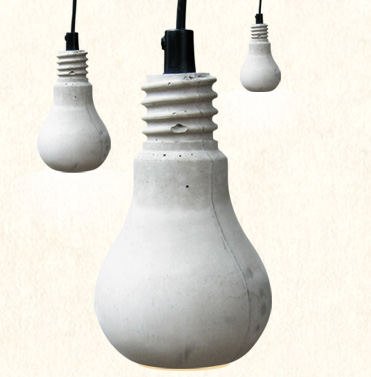
A concrete bulb lamp sounds like something invented after a light bulb lost an argument with a sidewalk. In reality, it is one of those wonderfully simple design ideas that makes you wonder why concrete spent so many decades stuck outside holding up buildings.
The most recognizable version is a pendant light molded into the silhouette of an oversized light bulb. Instead of hiding the lamp inside a conventional metal or glass shade, the design turns concrete itself into the visual centerpiece. Archived design listings have featured compact bulb-shaped concrete pendants with exposed cords and deliberately minimalist construction, while modern designers have expanded the concept into geometric shades, concrete bases, sculptural table lamps, and even concrete fixtures incorporating LEDs and translucent materials.
Research basis:
What makes the idea interesting is contrast. Concrete looks heavy, permanent, architectural, and slightly serious. Light feels weightless. Put the two together and suddenly your ceiling fixture has more personality than some entire living rooms.
What Is a Concrete Bulb Lamp?
A concrete bulb lamp is a decorative light fixture that uses cast concrete as a major part of its visible structure. In the classic interpretation, the concrete shade itself resembles an enlarged traditional light bulb. Other interpretations use concrete as a pendant shade, table-lamp base, socket surround, or sculptural shell around an LED light source.
The original bulb-shaped concept works particularly well because everyone already recognizes the familiar bulb silhouette. Recreating that form in gray concrete turns an everyday object into something unexpected. It is part industrial design, part visual joke, and part functional sculpture.
Concrete lighting has also become broader than a single novelty shape. Designers featured by Dwell and other architecture publications have experimented with cylindrical, geometric, hand-cast, and minimalist concrete shades, often pairing the material with steel, glass, wood, brass, or textile-covered electrical cords. The result can range from raw Brutalism to surprisingly warm Scandinavian-inspired minimalism.
Source synthesis:
Why Concrete Works Surprisingly Well for Lighting
It Has Natural Texture
Even when poured into a smooth mold, concrete rarely looks perfectly manufactured. Tiny pores, slight color variations, and occasional air bubbles give each casting individuality. Instead of being manufacturing defects, these marks can become part of the appeal.
A very smooth mold can create an almost polished architectural surface, while rougher forms leave visible texture. Makers can also sand edges, expose aggregate, apply pigment, stain the finished piece, or leave everything untouched.
Concrete Creates Visual Weight
A small concrete pendant can visually anchor an otherwise light room. That makes it particularly effective above kitchen islands, bedside tables, bars, dining areas, and minimalist desks.
The trick is moderation. One concrete fixture can look sophisticated. Twelve massive concrete fixtures in a tiny studio apartment may make the ceiling appear to be preparing for an invasion.
It Pairs Well With Other Materials
Concrete becomes especially interesting when contrasted with warmer or more refined materials. Some of the strongest combinations include:
- Concrete and natural oak
- Concrete and walnut
- Concrete and matte black steel
- Concrete and brass
- Concrete and copper
- Concrete and opal glass
- Concrete and braided textile cord
Commercial concrete lamps frequently use these contrasts because they prevent the material from feeling unfinished or overly industrial.
Concrete Bulb Lamp Design Styles
The Classic Bulb-Shaped Pendant
This is the design most closely associated with the name Concrete Bulb Lamp. The concrete body follows the rounded outline of an oversized light bulb and hangs from a simple cord. An archived retail example measured roughly 15 centimeters long by 10 centimeters wide and used a relatively low-wattage bulb.
Archived product reference:
Despite its small size, the unusual silhouette makes it a strong accent piece. Several can also be installed at different heights for a clustered installation.
Concrete Pendant Shade
Another popular approach uses concrete as a downward-facing shade rather than making the entire fixture look like a bulb. Cone, bell, cylinder, and dome shapes work especially well.
A documented DIY pendant project, for example, used an existing inexpensive pendant shade as the form for a cast concrete version. Because the finished shade weighed approximately six to seven pounds, the project required a separate structural support rather than relying on the electrical cord to carry the load. That is an important distinction when moving from decorative craft project to real ceiling fixture.
Structural example:
Concrete Table Lamp
If suspending several pounds of concrete above your breakfast makes you nervous, a table lamp is the friendlier option. Concrete bases are naturally stable and work beautifully with globe shades, exposed Edison-style LED bulbs, linen shades, or small metal stems.
Retail versions demonstrate how versatile the material can be. Geometric concrete bases paired with white shades create a softer contemporary look, while concrete combined with opal glass feels more refined and architectural.
Design examples:
How a DIY Concrete Bulb Lamp Is Made
A DIY concrete lamp is conceptually simple: create a mold, reserve space for the electrical components, mix the concrete, pour or pack it into the form, allow it to cure, remove the mold, finish the surface, and install appropriate lighting hardware.
The simplicity ends somewhere around the moment wet concrete escapes through an unsealed corner and begins exploring your workbench.
1. Plan the Shape Before Mixing Anything
The mold determines almost everything about the finished lamp. Plastic containers, cardboard cartons, melamine forms, bowls, bottles, and custom silicone molds have all been used successfully for small decorative concrete projects.
For a true bulb-shaped lamp, a two-part spherical or bulb-like mold provides the cleanest form. For beginners, however, a geometric or cylindrical base is much easier.
Whatever shape you choose, decide where the socket, cord channel, mounting hardware, and any support system will go before the concrete is mixed. Trying to solve those problems after curing usually involves masonry bits, colorful vocabulary, or both.
2. Choose the Right Concrete Product
Standard concrete contains cement, sand, and larger aggregate. For smaller decorative castings, very large aggregate can make thin details difficult to reproduce. Depending on the design, makers often choose fine concrete mixes, countertop-type products, cement-based casting mixes, or repair materials intended for smaller sections.
For one official concrete lamp project, QUIKRETE uses QUIKRETE 5000 and demonstrates pouring the material into a carton-based mold, working it into corners and vibrating the form to release trapped air.
Concrete lamp instructions:
3. Do Not Turn the Mix Into Concrete Soup
Adding extra water can make concrete easier to pour, but excessive water can compromise the finished material. Follow the water ratio specified by the manufacturer rather than improvising until the mixture resembles a milkshake.
For decorative pieces, consistency matters because it affects both strength and surface quality.
4. Reduce Air Bubbles
Concrete loves collecting small pockets of air against molds. Gentle tapping or vibration after pouring can encourage bubbles to rise and help the mix settle into corners.
Some pinholes actually enhance the handmade appearance of a concrete bulb lamp, so absolute perfection is not required. The goal is to avoid large voids that weaken thin edges or make the piece look unintentionally damaged.
5. Give the Concrete Time
Concrete setting and concrete curing are not the same thing. A piece may become hard enough to remove from a mold relatively quickly while still gaining strength afterward.
QUIKRETE’s concrete box-lamp instructions call for approximately 48 hours of curing before the mold is removed. Broader concrete guidance emphasizes that curing conditions during the early period strongly influence strength and surface quality.
Curing guidance:
Translation: the fact that your lamp looks solid tomorrow morning does not mean it wants to be thrown across the workshop to test its character.
6. Sand and Finish Carefully
After demolding, sharp edges can be softened with suitable abrasive tools. Sanding also removes small ridges left along mold seams.
You can leave the concrete natural or add a compatible sealer for easier cleaning. Pigments and stains can create charcoal, warm gray, sand, terracotta, or other tones without completely covering the characteristic concrete texture.
Electrical Safety Matters More Than Aesthetics
Concrete itself is not an excuse to improvise electrical components. UL Solutions evaluates portable luminaires, fixed luminaires, lamp components, LED equipment, and related lighting products under established safety standards. For a home project, using appropriately listed or certified lamp sockets, cords, plugs, switches, and LED components is a much better approach than assembling mystery electrical parts from the bottom of the workshop drawer.
Lighting safety:
A heavy concrete pendant also needs mechanical support independent of the conductors supplying electricity. Do not assume an ordinary cord, socket, or drywall attachment is designed to carry a substantial concrete casting.
When a fixture connects directly to household wiring, local electrical codes may apply. If you are uncertain about wiring or structural mounting, have a qualified electrician handle the installation.
Why LED Bulbs Are the Natural Choice
LED bulbs suit concrete fixtures especially well because they can produce substantial light while consuming far less power than traditional incandescent bulbs. The U.S. Department of Energy identifies LED technology as today’s most energy-efficient lighting technology, while federal lighting guidance recommends comparing bulbs by lumens rather than assuming wattage equals brightness.
LED efficiency:
ENERGY STAR’s consumer lighting guidance provides a useful brightness reference: approximately 450 lumens corresponds to the traditional output associated with a 40-watt incandescent bulb, around 800 lumens with a 60-watt incandescent, and roughly 1,100 lumens with a 75-watt incandescent.
Brightness reference:
For an exposed concrete pendant, warm LED light around the familiar warm-white range tends to complement gray concrete especially well. Lower output may be enough for atmospheric bedside or accent lighting, while kitchen work surfaces usually need stronger task illumination.
Safety When Working With Cement and Concrete
The creative part of concrete casting is fun. Cement dust in your eyes is considerably less charming.
OSHA warns that wet Portland cement can cause skin irritation, dermatitis, and chemical burns. NIOSH also identifies the eyes, skin, nose, and respiratory system as potential exposure targets for Portland cement.
Cement safety:
For small DIY projects, work in a well-ventilated area and follow the product manufacturer’s safety instructions. Eye protection and waterproof gloves are standard precautions when handling cement-based products. Avoid unnecessarily generating airborne dust while pouring or mixing dry material.
How to Style a Concrete Bulb Lamp
Above a Kitchen Island
Concrete pendants look especially natural around stone countertops, wood cabinetry, matte-black hardware, and stainless appliances. Three smaller fixtures in a row can create rhythm without overwhelming the kitchen.
Beside the Bed
Hanging a small pendant beside the bed frees nightstand space and creates a boutique-hotel effect. Concrete keeps the arrangement from becoming overly delicate, especially when paired with warm wood furniture and neutral bedding.
In a Minimalist Living Room
A single sculptural concrete lamp can function almost like artwork. Keep nearby accessories restrained and allow the material contrast to do the decorating.
In an Industrial Interior
Concrete understandably feels at home with exposed brick, black steel, reclaimed timber, visible pipes, and loft-style architecture. The key is introducing something softtextiles, plants, warm lighting, or woodso the room does not begin resembling a particularly stylish parking garage.
In Modern and Scandinavian Spaces
Concrete does not have to look harsh. Pair pale gray concrete with oak, off-white walls, linen, and opal glass, and the effect becomes calm rather than industrial.
Common Concrete Lamp Mistakes
Making the Shade Too Thick
Concrete gets heavy quickly. A pendant shade that looks pleasantly substantial on the workbench can become an engineering problem once it is hanging overhead.
Ignoring the Cord Path
Plan electrical and mounting passages in the mold whenever practical. Drilling later is possible with appropriate masonry tools, but casting the necessary openings is usually cleaner.
Demolding Too Soon
Premature demolding is an efficient way to convert one lamp into several abstract concrete objects.
Expecting a Factory-Perfect Surface
The occasional pore or color variation is part of cast concrete’s charm. If absolute uniformity is the goal, concrete may be the wrong material.
Using the Electrical Cord as Structural Support
This is especially dangerous with heavy pendant shades. A documented DIY concrete pendant weighing six to seven pounds required dedicated steel support rather than simply hanging from its original electrical cord.
Weight and suspension example:
Practical Experiences and Lessons From Concrete Bulb Lamp Projects
Looking across documented concrete-lamp builds reveals a useful pattern: the projects that appear simplest in photographs often require the most planning before the pour. The actual act of filling a mold may take only minutes. Getting the mold, cord opening, socket position, wall thickness, and support arrangement right is where most of the thinking happens.
One recurring maker experience involves leaks. Concrete mixtures can find surprisingly small gaps in a mold. Builders using cardboard, foam board, plastic containers, or fabricated forms repeatedly emphasize sealing joints before pouring. A mold can look perfectly respectable when empty and turn into a miniature Hoover Dam emergency once several pounds of wet mix are inside it.
Maker experiences synthesized from:
Another recurring lesson is that vibration matters. Small decorative pieces show surface bubbles much more clearly than sidewalks or foundations. Gently tapping and vibrating the form can dramatically improve the visible finish. At the same time, chasing an absolutely flawless surface is not always necessary. Some of the best-looking concrete lamps retain tiny pores that immediately reveal the piece was cast rather than manufactured from plastic.
Demolding also seems to be one of the most satisfyingand dangerousmoments psychologically. After investing time in the project, there is a powerful temptation to unwrap everything early just to see whether it worked. Experienced instructions consistently reward patience. The piece may appear hard at the exposed surface while edges and thinner sections remain vulnerable.
Weight is perhaps the biggest surprise for first-time concrete-light makers. A tabletop base benefits from mass because it resists tipping. A pendant does not. Several DIY approaches therefore focus on reducing the amount of concrete or creating thin shells, while heavier shades require genuinely structural suspension hardware.
The electrical portion creates another useful lesson: separate artistic experimentation from safety experimentation. There is endless room to customize mold shapes, pigments, surface textures, cords, wood accents, and bulb appearance. Electrical connections should be comparatively boring. Certified components, appropriate ratings, strain relief, proper structural mounting, and professional help when hardwiring are precisely where originality is unnecessary.
Finally, concrete lamps often look better after small imperfections are accepted rather than aggressively corrected. Sanding sharp edges is useful. Trying to grind away every pore can erase the character that made concrete attractive in the first place. Maker projects range from highly polished pieces to deliberately rough castings, and both approaches can work.
That may be the most useful experience-related takeaway: decide what kind of imperfection you want before you begin. A handmade concrete bulb lamp does not need to impersonate a mass-produced fixture. Its slight variations are evidence of the process. In a world full of perfectly identical household products, a lamp with one tiny bubble near the bottom suddenly feels almost rebellious.
Is a Concrete Bulb Lamp Worth Making or Buying?
Yesif you want lighting that behaves more like a design object than an invisible household appliance.
Buying a finished concrete light makes sense when electrical certification, predictable dimensions, clean finishing, and easy installation are priorities. Making one yourself is more appealing when you want a specific shape, enjoy casting projects, or simply want to experience the strangely satisfying moment when a disposable plastic container becomes architectural lighting.
A concrete bulb lamp will not suit every interior. It is heavier than many conventional fixtures, the material demands thoughtful installation, and handmade surfaces can be unpredictable. But those characteristics are also the reason the design remains compelling.
Conclusion
The concrete bulb lamp succeeds because it plays with expectations. Concrete belongs under our feet; a bulb belongs above our heads. Combine the two and a familiar lighting object becomes something sculptural, tactile, and unexpectedly sophisticated.
Whether you choose a literal bulb-shaped concrete pendant, a thin concrete shade, or a table lamp with a cast base, focus on three things: proportion, light quality, and safety. Keep suspended designs reasonably lightweight, use suitable lighting components and structural hardware, and let concrete’s natural imperfections contribute to the finished appearance rather than fighting them.
Pair the fixture with a warm, efficient LED bulb and materials such as wood, glass, brass, or black steel, and the result can fit everything from industrial lofts to minimalist bedrooms. Concrete may be one of the world’s oldest practical building materials, but apparently it was just waiting for someone to give it a light socket.
Note: DIY concrete casting should follow the safety instructions supplied with the cement or concrete product. Hardwired lighting and heavy suspended fixtures should be installed using appropriately rated components and structural supports; consult a qualified electrician whenever the electrical installation is uncertain.