There are few sentences in life as unfair as, “We had to say goodbye to the dog,” or its equally devastating cousin, “The cat’s ashes are ready to be picked up.” Pet loss has a way of flattening a room. One minute the food bowl is in the kitchen, the leash is still hanging by the door, and there’s fur on the couch you used to complain about. The next minute, the house feels suspiciously polite. Too quiet. Too tidy. Entirely rude.
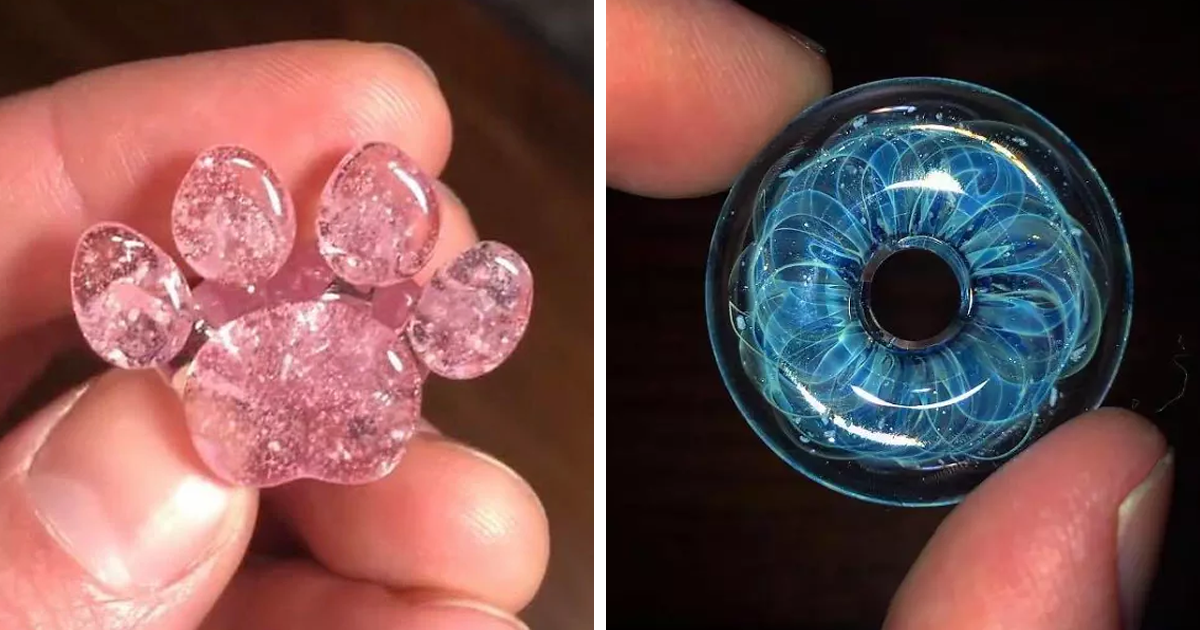
That is exactly why a company making glass replica paws from cremation ashes strikes such a nerve. It is not just selling an object. It is selling shape to grief. It is taking the abstract weight of loss and giving it a form you can hold, display, and look at without needing to explain yourself to anyone. In a culture where pets are treated like family members, memorial art is no longer a niche idea. It is a natural extension of love, ritual, and remembrance.
One of the clearest examples of this trend is Davenport Memorial Glass, which offers cat and dog cremation paws made with ashes. On the company’s current site, cat cremation paws are listed at $190, while dog cremation paws are listed from $230 to $315. That pricing tells you something important: this is not a novelty trinket or an impulse purchase tossed into an online cart next to dish soap and a phone charger. It is a deliberate memorial choice, one made by people who want something more personal than a box on a shelf. The company’s growth story also says plenty about public demand. Spokane Journal of Business reported that a viral Facebook ad featuring a glass dog paw reached more than 12.5 million people and generated 30,000 emails in just a few weeks. Apparently, a lot of people saw that paw and thought, “Yes. That. Exactly that.”
Why a glass paw memorial hits people right in the feelings
The paw shape matters. A lot. It is instantly recognizable, emotionally loaded, and deeply specific to the animal-human bond. A decorative urn can be beautiful, but it is still an urn. A glass paw, on the other hand, looks like a symbol lifted straight out of memory. It calls up muddy floors, scratched doors, soft taps on hardwood, dramatic hallway zoomies, and that one paw that always landed directly on your ribcage at 3 a.m.
Veterinary and grief resources consistently suggest that memorializing a pet can help families process loss. The point is not to “move on” as if a golden retriever were a canceled gym membership. The point is to create a continuing bond. That may be a ceremony, a framed photo, a clay print, a donation, a garden stone, a necklace, or an art piece made with ashes. What changes is the format. What stays the same is the need. People want a reminder that says, “This life mattered here.”
That is why glass works so well as a memorial medium. It is durable, luminous, and a little magical-looking without becoming overly theatrical. In practical terms, it feels permanent. In emotional terms, it feels softer than stone and more elevated than a storage container. A glass paw catches light in a way grief often works too: unexpectedly, at odd hours, and usually when you were just trying to make coffee like a normal person.
The rise of pet memorial art is not random
The pet memorial market exists because the American relationship with pets has changed in a major way. According to APPA, 95 million U.S. households owned at least one pet in 2025, and total U.S. pet industry expenditures reached $158 billion that same year. Those numbers do not describe a side hobby. They describe a national emotional infrastructure built around companion animals. Pets are embedded in routines, identities, social media feeds, family photos, weekend plans, and holiday gift budgets. Once you understand that, memorial spending makes complete sense.
When a pet dies, families are not simply handling “animal remains.” They are handling the loss of a daily relationship. The veterinarian who helped at the end, the cremation choice, the return of the ashes, the paw print, the collar, the blanket from the final week, the place where the dog liked to nap in the sun these become memory objects. Grief often clings to ordinary things first. Memorial art simply turns that instinct into something intentional.
That shift is reflected across pet care guidance too. AKC discusses memorial services and meaningful remembrance. PetMD notes that keepsakes made from ashes or fur are one way people honor a pet’s life. Lap of Love highlights paw prints, custom urns, art, jewelry, and memorial contributions. Daily Paws rounds up jewelry, plaques, frames, and blown-glass options. Rover highlights memorial cards, books, jewelry, urns, and stones. In other words, the glass paw is not arriving from nowhere. It is part of a larger cultural movement in which pet grief is being treated as real grief, because that is exactly what it is.
From ashes to art: why families choose something tangible
There is a practical reason these memorials resonate too: ashes can be emotionally complicated. Some people want them returned immediately. Others do not know what to do once they are home. Some display them proudly. Some tuck them into a closet because the container feels too clinical, too funereal, or too final. A custom memorial changes the emotional equation. It gives the remains a new role.
That role matters more than many people realize. AVMA guidance notes that taking steps to memorialize a pet can be therapeutic. PetMD frames memorials as part of attending to grief. Cornell’s pet loss resources underline that grief support itself deserves structure, compassion, and validation. Together, that guidance points toward an important truth: rituals help. Objects can help. Symbolic acts can help. Not because they erase loss, but because they give people somewhere to place love that suddenly has no job to do.
A glass paw does that elegantly. It is not trying to replace the pet. Nothing could. It is offering a visual shorthand for a whole relationship. The moment you see it, you do not think, “Ah yes, a decorative item.” You think, “That was Daisy.” Or Milo. Or Pepper. Or Mr. Whiskers, who was technically adopted as a kitten and then somehow ended up running the household like a tiny union boss.
What sets glass replica paws apart from other pet memorials
Plenty of memorial products exist, and many are meaningful. Clay paw prints are classic because they preserve literal contact. Jewelry keeps a pet close to the body. Garden stones build an outdoor ritual. Framed photos keep the face present. Donating in a pet’s name turns grief outward into generosity. All of those choices work because memorialization is personal.
Still, glass replica paws offer a unique combination of symbolism and beauty. First, the form directly references the animal. Second, the material feels artistic rather than purely functional. Third, the piece can live almost anywhere: on a shelf, desk, mantle, side table, or memory nook. And fourth, it tends to invite conversation gently. People do not need to ask, “Is that an urn?” They can simply notice it, admire it, and if you want, hear the story.
That last part matters. Grief is often loneliest when it feels socially awkward. Not everyone knows how to talk about pet loss, which is unfortunate because the heartbreak is very real and very common. A memorial object can become a bridge between private mourning and shared memory. It lets owners speak about their pet in the present tense of love, even if the animal is gone in the physical sense.
Is this sentimental, strange, beautiful, or all three?
Honestly? All three, depending on the person and the day.
Some people see a glass paw and immediately melt. Others pause and think, “I’m not sure I need my sadness professionally handcrafted.” Both reactions are fair. Grief is deeply individual, and memorial preferences are not a moral test. There is no trophy for being the least sentimental. There is also no prize for having the fanciest mourning shelf. The right memorial is the one that feels true to the relationship.
That said, there is something refreshing about the honesty of a keepsake like this. It refuses the old idea that pet loss should be minimized, hidden, or hurried along. It says that a dog can be worthy of art. A cat can be worthy of ritual. A rabbit, bird, or other beloved companion can leave behind not just sorrow, but beauty. That is not indulgence. That is love with nowhere else to go but form.
What the experience can feel like for grieving pet owners
For many people, the experience begins long before the memorial arrives. It starts in the hardest moments: the quality-of-life conversations, the last car ride, the decision no one wants to make, the strangely calm paperwork, the silence afterward. Families often leave the veterinary office holding only a collar, maybe a paw print, and the sensation that the world is somehow offensively normal.
Then comes the waiting. If cremation is chosen, there is often a gap between the loss and the return of ashes. That waiting period can feel surreal. The routines are gone, but the grief has not yet found a container. Some people find themselves talking to their pet anyway. Some keep a favorite toy out. Some cannot bear to look at the empty bed. Others sit on the floor next to it, as if proximity alone might explain anything.
That is why memorial pieces often matter more than outsiders understand. When the ashes come home, families do not just receive remains. They receive responsibility. What now? Do the ashes stay in the standard container? Do they go on a shelf? Into a drawer? Into a garden? Into jewelry? Into art? There is no universal answer, but there is a universal desire to do something that feels worthy of the life that was shared.
A glass replica paw meets that desire in a very human way. Owners often want a memorial that captures the personality of the pet without turning the home into a museum of grief. A well-made glass paw can do exactly that. It is small enough not to dominate a room, but meaningful enough to become a daily touchpoint. It can sit beside a framed photo, a candle, or a tiny box of tags. It can also stand alone, which many families prefer. Sometimes one object is enough. Sometimes one object says everything.
There is also a tactile comfort to memorial art that should not be underestimated. Grief is not just emotional; it is physical. It lives in the chest, throat, stomach, hands, and habits. People reach for the leash that is no longer needed. They wake up expecting the click of nails on the floor. They listen for sounds that will not come. A memorial object gives the hands somewhere to go. It offers a focus point for all the love that used to be expressed through feeding, brushing, walking, petting, carrying, and simply being followed from room to room like a celebrity with a fuzzy security detail.
Families also experience these memorials differently across time. In the earliest stage of grief, the piece may function like proof: this happened, this mattered, this animal was here. A few months later, it may feel more like companionship than evidence. A year later, it may become a ritual object tied to anniversaries, holidays, or everyday remembrance. People may touch it before leaving for work, dust it carefully during spring cleaning, or point to it when telling stories to new friends, partners, or children. The meaning evolves, but the emotional utility remains.
For households with multiple people, a glass paw can also become shared ground. Grief rarely looks identical inside a family. One person cries openly. Another gets quiet. Another starts organizing drawers at supernatural speed. A memorial object can help everyone gather around one symbol without requiring everyone to grieve in the same style. It says, “We loved this animal together,” even if each person carries the loss differently.
And perhaps that is the most powerful part of all. A memorial like this does not trap anyone in sadness forever. It does something gentler. It makes room for memory in a way that feels beautiful, stable, and kind. It lets people remember the life before the loss, not just the loss itself. That may be the real magic of turning ashes into glass: it transforms the last chapter into an object that still reflects light.
Final thoughts
The idea of turning a pet’s ashes into a glass replica paw might sound unusual at first, but the deeper you look, the more sense it makes. This is not really a story about glass. It is a story about attachment, ritual, and the changing way Americans honor animals they consider family. As pet ownership becomes more emotionally central, memorial choices are becoming more personal, artistic, and intentional.
Davenport Memorial Glass did not invent grief, of course. It simply found a striking way to translate grief into something visible and lasting. And that is why the idea resonates. Because after a beloved pet dies, people are not looking for “stuff.” They are looking for a form of remembrance that feels equal to the relationship. Sometimes that means a garden stone. Sometimes it means a donation. Sometimes it means a framed paw print. And sometimes it means a luminous glass paw that says, without a single word, “You were loved here. You still are.”