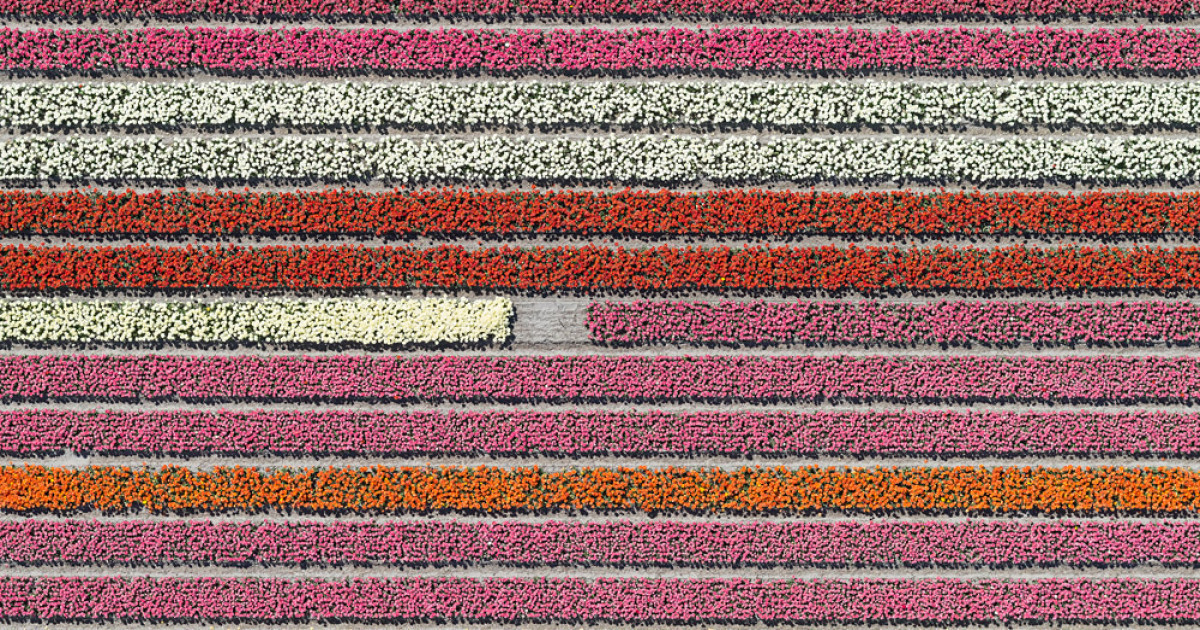
Every spring, the Netherlands performs one of the world’s most cheerful magic tricks: ordinary farmland turns into enormous ribbons of red, pink, yellow, purple, orange, and white. From above, the tulip fields look like someone spilled a box of crayons, panicked for half a second, then decided, “Actually, this is art.” The colourful patterns of tulip fields in Netherlands are not just beautiful; they are agricultural design, cultural history, seasonal timing, and travel fantasy rolled into one very photogenic landscape.
For travelers, photographers, gardeners, and anyone who has ever looked at a flower and thought, “Yes, I would absolutely plan a vacation around that,” Dutch tulip season is a dream with petals. The fields stretch across famous bulb-growing regions such as Bollenstreek, Flevoland, and Kop van Noord-Holland, while Keukenhof in Lisse offers a carefully designed garden experience with millions of spring bulbs. Together, they create the Netherlands’ most recognizable spring scenery: long, straight bands of color glowing under wide Dutch skies.
Why Dutch Tulip Fields Look Like Giant Colorful Patterns
The first thing to understand is that the tulip fields are not planted purely for tourists, although tourists do arrive with cameras, bikes, and expressions of floral disbelief. Many of these fields are working farms. Growers plant tulips in disciplined rows because the bulbs are the real crop. The flowers are beautiful, but the underground bulbs are what drive the business. The neat stripes help growers organize different tulip varieties, monitor plant health, manage harvesting, and prevent confusion between colors and cultivars.
That practical farming system is exactly what creates the famous visual effect. A red row may sit beside a yellow row, followed by deep purple, snowy white, and bubblegum pink. The color blocks are not random; they often represent different varieties grown for specific bulb characteristics. Nature provides the drama, but Dutch farming supplies the ruler. It is a rare case where efficiency and beauty share a bicycle lane.
Best Time To See Tulip Fields In The Netherlands
The tulip season in the Netherlands generally runs from late March through early May, but April is the main event. Early spring often brings crocuses, daffodils, and hyacinths first, while tulips usually reach their strongest field color from mid-April into late April, depending on weather. A warm spring can push blooms earlier; a cold spring can make everyone wait like they are refreshing a tracking page for a package labeled “millions of flowers.”
For the best chance of seeing the most colourful tulip fields in the Netherlands, plan for the second half of April. This window often gives travelers the richest combination of open fields, active flower routes, garden displays, and seasonal events. Keukenhof usually opens only during spring, typically from mid-March to early May, which makes timing especially important. A tulip trip is not the kind of vacation where you say, “Maybe I’ll go whenever.” The flowers have a schedule, even if they refuse to send calendar invites.
Where To See Colourful Tulip Fields In Netherlands
Bollenstreek: The Classic Tulip Region
Bollenstreek, also known as the Bulb Region, is the classic place to see tulip fields near Amsterdam. Located between Haarlem and Leiden, this area includes towns such as Lisse, Hillegom, Noordwijkerhout, and Sassenheim. It is popular because it combines easy access, dramatic fields, bike routes, and nearby Keukenhof. If you have seen postcard images of perfectly striped Dutch flower fields, there is a good chance your eyes have already visited Bollenstreek before your feet have.
The area is especially attractive for first-time visitors because it offers many ways to enjoy the scenery. You can cycle along designated routes, take local buses, join guided tours, or drive carefully through the countryside. The fields often appear beside canals, farmhouses, windmills, and low-slung villages, creating the kind of view that makes people whisper, “This cannot be real,” while taking their 47th photo of the same flower row.
Keukenhof: The Designed Garden Experience
Keukenhof is not the same as a commercial tulip field, but it is one of the most famous places to enjoy Dutch spring flowers. Located in Lisse, it is known for massive seasonal displays featuring tulips, hyacinths, daffodils, and other bulbs. The park is carefully landscaped, so instead of long agricultural stripes, visitors find sweeping garden beds, color themes, ponds, pavilions, and photo-friendly paths.
Keukenhof is ideal for travelers who want dependable flower displays, accessible walking paths, and a polished experience. Commercial fields can vary depending on farming schedules and weather, but Keukenhof is designed to provide color across its short open season. It is also a practical choice for families, casual travelers, and anyone who wants tulip beauty without accidentally wandering into a farmer’s livelihood. The rule is simple: admire working fields from the edges unless a farm specifically invites visitors inside.
Flevoland: Big Skies And Big Tulip Routes
Flevoland offers a different kind of tulip experience. This province, built on reclaimed land, is known for spacious landscapes and wide agricultural views. The tulip fields here can feel more open and less crowded than the areas closest to Amsterdam. Around the Noordoostpolder, travelers can often follow seasonal tulip routes by car or bike, passing long fields that stretch toward the horizon.
The patterns in Flevoland feel bold because the land itself is so broad and flat. The rows appear almost graphic, like a modern painting made with soil and petals. For visitors who want fewer crowds and a stronger sense of countryside scale, Flevoland deserves serious attention. It is especially rewarding for photographers who enjoy clean lines, wide compositions, and the peaceful feeling of having more space to breathe between flower stops.
Kop Van Noord-Holland: A Quieter Flower Landscape
Kop van Noord-Holland, the northern part of North Holland, is another excellent region for spring flower viewing. Around places such as Anna Paulowna, Schagen, and Julianadorp, visitors can find colorful bulb fields with a calmer atmosphere than the busiest tourist corridors. The region is known not only for tulips but also for hyacinths, daffodils, and other spring bulbs.
This area is perfect for travelers who like their flower fields with a side of quiet roads, sea air, and village charm. The patterns may feel less staged than the famous garden displays, but that is part of the appeal. You get the sense of seeing Dutch agriculture at work rather than simply checking off a famous attraction.
The History Behind The Netherlands’ Tulip Obsession
Tulips are now strongly associated with the Netherlands, but they did not originate there. The flower’s story reaches back through Central Asia and the Ottoman Empire before tulips became fashionable in Western Europe. By the Dutch Golden Age, rare tulip bulbs had become status symbols, and the famous Tulip Mania of the 17th century turned certain bulbs into objects of wild speculation. Today, the tulip is less financial fever dream and more national icon, which is healthier for everyone’s blood pressure.
The modern Dutch flower industry is built on horticultural skill, export networks, breeding knowledge, and a deep understanding of soil and water management. The fields are beautiful, yes, but behind the beauty is serious expertise. Growers work with sandy soils, drainage systems, crop rotation, disease control, and careful timing. Those joyful stripes of color are the visible part of a highly organized agricultural world.
How To Photograph The Colourful Patterns Of Tulip Fields
Photographing Dutch tulip fields is both easy and tricky. Easy because the subject is spectacular. Tricky because everyone else has noticed the same thing. The best light usually comes early in the morning or later in the afternoon, when the sun is softer and the colors look rich instead of harsh. Cloudy weather can also be excellent because it reduces glare and makes the flower colors appear deeper.
For classic pattern shots, look for diagonal rows that lead the eye through the frame. A low angle can make the tulips feel immersive, while a higher viewpoint can emphasize the stripes. Include a windmill, farmhouse, cyclist, or canal when you want context, but do not force every photo to contain every Dutch symbol at once. Tulips plus windmill plus wooden shoes plus cheese may be charming, but it can also start to look like the Netherlands was assembled by a souvenir shop.
Responsible Tulip Tourism: Look, Don’t Stomp
One of the most important travel rules is simple: do not walk into private tulip fields unless you have clear permission. Many fields are working farms, and stepping between rows can damage crops, spread disease, compact soil, or harm bulbs. A single visitor may think, “I am just taking one quick photo,” but hundreds of quick photos can become a real problem for growers.
Responsible tulip tourism means staying on roads, paths, marked viewpoints, and official visiting areas. Many farms and attractions provide designated photo fields where visitors can enjoy the flowers without damaging commercial crops. Use those spaces. Your photos will still be beautiful, and you will not become the villain in a farmer’s springtime horror story.
A Simple One-Day Tulip Field Itinerary
If you are based in Amsterdam, a practical one-day tulip itinerary could begin with an early train or bus connection toward the Bollenstreek area. Start at Keukenhof in the morning, when crowds are lighter and the garden feels fresh. Spend a few hours exploring the themed beds, pavilions, ponds, and walking paths. After lunch, rent a bike or join a local route around Lisse and Hillegom to view the surrounding fields from public roads and paths.
In the afternoon, aim for golden-hour views across the fields. This is when the rows glow, the skies soften, and the countryside becomes deeply photogenic. End the day in Haarlem or Leiden for dinner, both of which offer historic streets, canals, and a calmer evening atmosphere than central Amsterdam. It is the kind of day that leaves your camera full, your legs slightly tired, and your brain convinced that “tulip stripe” should be an official design category.
Why The Patterns Feel So Magical
The colourful patterns of tulip fields in Netherlands feel magical because they combine opposites. They are natural but organized, temporary but unforgettable, agricultural but artistic. They last only a few weeks, which makes them feel precious. The straight rows give the eye order, while the colors deliver pure joy. It is geometry wearing a flower crown.
There is also something emotionally refreshing about seeing land used in such a bright way. Many travel landscapes impress us with height, scale, or drama: mountains, cliffs, skyscrapers, deserts. Tulip fields impress differently. They are low to the ground, quiet, and soft, yet the effect is enormous. They remind us that beauty does not always need to shout. Sometimes it simply blooms in rows and lets everyone else gasp.
Extended Experience: What It Feels Like To Visit The Colourful Tulip Fields
Arriving near the tulip fields for the first time feels a little like stepping into a screensaver that learned manners. The landscape begins calmly enough: a road, a few houses, a canal, a cyclist moving with the relaxed confidence of someone born knowing how to balance a grocery bag on handlebars. Then, suddenly, the fields appear. A long band of yellow flashes on one side. A red block opens on the other. Farther ahead, purple and pink run across the land like giant ribbons. You understand immediately why people travel across oceans for this season.
The most memorable part is not only the color; it is the scale. A bouquet on a table is pretty. A garden bed is lovely. But a field of tulips stretching in precise rows toward the horizon feels almost unreal. The flowers repeat by the thousands, and the repetition creates rhythm. Walking or cycling beside the fields, you notice how each color changes with the light. Pink becomes peachy in soft sun. Red turns velvety under clouds. White tulips glow even when the sky looks gray. Yellow, being yellow, behaves like it has been hired to cheer up the entire country.
A bike ride through the bulb region is one of the best ways to experience the patterns slowly. You can stop at safe viewpoints, listen to birds, smell hyacinths when they are blooming nearby, and watch local life continue around the spectacle. Farmers work. Buses pass. Visitors take photos. Dutch cyclists glide by as if this level of beauty is completely normal, which is both admirable and mildly suspicious.
The experience is also surprisingly peaceful when you move away from the busiest spots. In quieter regions such as Flevoland or North Holland, the fields feel more expansive. The sky seems larger, the roads straighter, and the colors even more graphic. You may find yourself taking fewer photos and simply looking longer. That is when the tulip fields become more than a travel checklist item. They become a seasonal mood: fresh, bright, temporary, and slightly unbelievable.
Visiting also teaches patience and respect. Not every field will be at peak bloom. Some may have already been topped, because growers remove flowers to strengthen bulb production. Some roads may be crowded. Weather may change quickly. The Netherlands in spring can deliver sunshine, wind, drizzle, and dramatic clouds before lunch, just to keep travelers humble. But even with imperfect conditions, the fields have a way of making the day feel special. The best approach is to plan carefully, stay flexible, follow local rules, and remember that the flowers are part of a living agricultural landscape, not a movie set built for selfies.
By the end of a tulip-field day, the colors stay with you. You may close your eyes and still see stripes. You may become temporarily impossible to impress with ordinary flower arrangements. You may also understand why the Netherlands and tulips are so deeply linked in the global imagination. The fields are beautiful in photographs, but in person they are bigger, brighter, breezier, and far more alive. They are spring written across the land in color.
Conclusion
The colourful patterns of tulip fields in Netherlands are one of Europe’s most joyful seasonal sights. They are shaped by farming, history, horticulture, and the Dutch talent for making practical landscapes look like masterpieces. Whether you visit Bollenstreek for classic flower routes, Keukenhof for designed displays, Flevoland for wide-open color, or North Holland for quieter countryside views, the experience is unforgettable.
To make the most of the trip, aim for April, check bloom conditions before traveling, respect private fields, and give yourself time to explore beyond the most crowded viewpoints. The tulips may bloom for only a short season, but their impact lasts much longer. After all, it is hard to forget a country that spends spring looking like a perfectly organized rainbow.
Note: This original article is prepared for web publication in clean HTML and is based on synthesized, real-world travel and horticultural information about Dutch tulip regions, timing, and visitor etiquette.