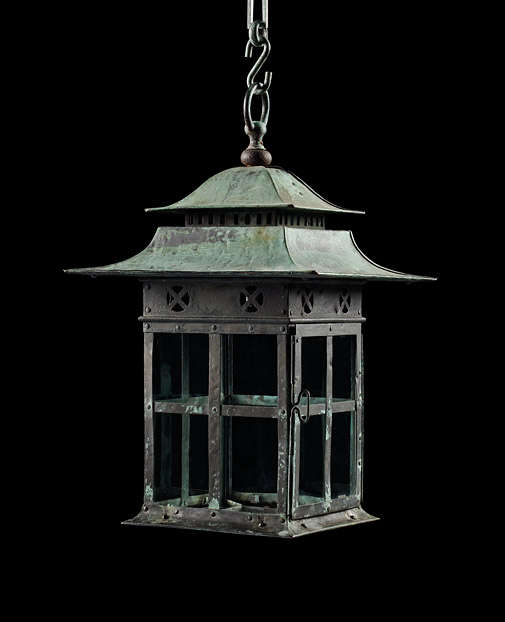
The Ashbee Hanging Lantern is not the kind of light fixture that quietly blends into the ceiling and hopes nobody notices. It has presence. It has character. It has the architectural confidence of a small country house that knows exactly where the good biscuits are kept. With its Arts and Crafts influence, glazed lantern body, geometric roofline, and hand-finished metalwork, this hanging lantern is designed for spaces that deserve more than a basic bulb in a cage.
Whether used in a covered porch, a dramatic foyer, a garden room, a stair hall, or a dining space with old-house charm, the Ashbee Hanging Lantern brings together practical illumination and historic personality. It is decorative, yes, but not fussy. It feels crafted rather than manufactured, refined rather than shiny for the sake of being shiny. In a world full of forgettable lighting, the Ashbee walks in wearing a tailored coat and politely steals the room.
What Is the Ashbee Hanging Lantern?
The Ashbee Hanging Lantern is a high-end decorative hanging light inspired by the Arts and Crafts tradition. Depending on the maker and version, it may feature a pagoda-like roof, glazed sides, pierced metal details, visible rivets, a latched access door, and a candelabra-style interior. Some versions are handmade in brass, while others highlight copper, verdigris, patinated finishes, nickel, bronze, or custom paint options.
The name “Ashbee” naturally calls to mind Charles Robert Ashbee, the influential British designer associated with the Arts and Crafts Movement. That connection matters because the lantern’s appeal is not only about lighting a room. It is about celebrating honest materials, visible craftsmanship, and design that feels human. The Ashbee Hanging Lantern does not scream for attention; it glows with the quiet confidence of something made with intention.
Why the Ashbee Style Still Works Today
It Brings History Without Making Your Home Feel Like a Museum
Arts and Crafts design has a useful superpower: it can look historic without feeling dusty. The movement valued handwork, natural materials, thoughtful proportions, and decorative restraint. That is exactly why an Ashbee-style lantern can work in older homes, renovated farmhouses, Craftsman bungalows, English cottage interiors, traditional foyers, and even modern spaces that need a touch of warmth.
The best part? It does not require the rest of your house to wear tweed. A clean-lined entry with white walls, stone flooring, and a dark door can handle an Ashbee Hanging Lantern beautifully. So can a moody library, a covered porch with brick steps, or a sunroom filled with plants that are trying very hard to look effortless.
It Has Strong Architectural Shape
A lantern is more than a light source; it is a suspended architectural object. The Ashbee Hanging Lantern often has a strong roof form, visible framework, and glass panels that give the fixture structure from every angle. This makes it ideal for spaces where the light can be seen from multiple viewpoints, such as a stairwell, entry hall, vaulted porch, or open-plan room.
Because the form is geometric, it feels ordered. Because the metalwork is detailed, it feels handmade. That combination makes the Ashbee Hanging Lantern unusually versatile. It can soften a formal space, dress up a casual one, or give a plain ceiling something better to do than stare back at you.
Materials, Finish, and Glass Details
One of the biggest reasons people search for an Ashbee Hanging Lantern is the material quality. Many premium versions are handmade from brass or copper, materials that age gracefully and respond beautifully to patination. A bright brass finish feels classic and polished. Verdigris brings that greened-copper romance usually reserved for old garden gates and European rooftops. Bronze adds depth. Nickel feels cleaner and slightly more formal.
Glass is just as important. Clear glass gives the most sparkle and shows off candle-style bulbs. Seeded or textured glass adds movement and helps soften the light. Frosted glass reduces glare and creates a calmer glow. Colored or lightly tinted glass can become a design feature, especially in rooms with painted cabinetry, patterned tile, or richly stained wood.
When choosing a finish, think about the fixed elements around the lantern: door hardware, stair railings, cabinet pulls, window frames, fireplace tools, and even the color of nearby stone or brick. The fixture does not have to match everything exactly. In fact, a little variation is often more elegant. But it should feel like it belongs to the same design conversation, not like it wandered in from a different renovation project carrying a suitcase.
Lighting Quality: Warm, Soft, and Human-Friendly
The Ashbee Hanging Lantern is at its best when paired with warm light. A color temperature around 2700K is usually ideal for this style because it creates a soft, welcoming glow similar to traditional incandescent lighting. Cooler bulbs can make historic metalwork feel harsh, especially through clear glass. Nobody wants their charming entryway to look like a dental clinic with better millwork.
Many Ashbee-style lanterns use candelabra bulbs, often in groups of three. This gives the fixture a candlelit feeling while still providing practical illumination. Clear LED candle bulbs can be a smart choice because they preserve the traditional look while using less energy than incandescent lamps. If the lantern is used in a foyer, dining room, or covered porch, a dimmer can make it much more flexible. Full brightness for guests arriving with luggage; low glow for evenings when the house should feel relaxed and slightly cinematic.
Best Places to Use an Ashbee Hanging Lantern
Covered Front Porch
A covered porch may be the most natural home for the Ashbee Hanging Lantern. It creates a gracious first impression and works especially well above a front door, between columns, or centered in a porch ceiling. The lantern should be rated appropriately for the location, especially if wind, moisture, or salt air are part of the environment.
Entryway or Foyer
In a foyer, the Ashbee Hanging Lantern becomes a handshake in light-fixture form. It introduces the home’s style before anyone sees the living room, kitchen, or the shoe pile everyone promised would not happen. For two-story foyers, the lantern can hang lower and become a sculptural focal point. For standard ceilings, choose carefully so it does not crowd the space.
Stair Hall
A stair hall is an excellent place for a lantern with glass sides because the fixture can be admired from above, below, and across the landing. The Ashbee shape adds rhythm to stair architecture, especially when paired with wood treads, painted paneling, or iron balusters.
Dining Room or Breakfast Nook
Although chandeliers dominate dining-room conversations, a hanging lantern can be more interesting. The Ashbee Hanging Lantern brings intimacy and structure without dripping crystals over the mashed potatoes. Over a round or square table, its geometry feels balanced. Over a long table, two smaller lanterns can create a polished, symmetrical look.
Garden Room or Conservatory
Because the Ashbee style has a handcrafted and slightly botanical mood, it works beautifully in garden rooms, sunrooms, and conservatories. Pair it with terracotta pots, woven shades, aged wood, and leafy plants. The result feels collected instead of decorated, which is usually the goal unless your personal style is “hotel lobby with commitment issues.”
How to Size an Ashbee Hanging Lantern
Size is where many lighting mistakes begin. A lantern that is too small looks nervous. A lantern that is too large looks like it is preparing to land aircraft. The right size depends on ceiling height, room width, door height, sightlines, and the purpose of the space.
For walk-through areas, the bottom of a hanging lantern should generally allow comfortable head clearance. In many homes, that means keeping the lowest point around seven feet or more from the floor. In a porch or foyer with a higher ceiling, you can use a larger fixture or longer chain, but the lantern should still feel connected to human scale. If it floats too high, it loses intimacy. If it hangs too low, tall guests will develop a personal relationship with the glass panels.
For a front entry, a useful visual rule is to compare the lantern with the height and width of the door. A fixture that feels proportional to the door and porch opening will usually look more intentional. For a room, measure the space and consider the fixture as part of the architecture, not just a decorative accessory.
Installation Considerations
The Ashbee Hanging Lantern may look graceful, but premium metal lanterns can be heavy. Always confirm the fixture weight, canopy size, chain length, electrical rating, and mounting requirements before installation. A standard ceiling box may not be enough for a substantial handmade lantern. This is one of those moments when hiring a licensed electrician is not a luxury; it is how you avoid turning your beautiful lantern into an expensive gravity experiment.
For outdoor or semi-outdoor use, check whether the lantern is rated for dry, damp, or wet locations. A covered porch is different from an exposed pergola. A bathroom, coastal porch, or breezeway may need additional moisture protection. Also confirm the bulb base, maximum wattage, LED compatibility, and whether the fixture works with the dimmer you plan to use.
Design Pairings That Make It Shine
The Ashbee Hanging Lantern pairs naturally with materials that have texture and age. Think limestone, brick, limewash, oak, walnut, honed marble, slate, plaster, handmade tile, and unlacquered brass. It also looks handsome against dark painted doors, warm white walls, and earthy greens or blues.
For a traditional look, pair the lantern with brass door hardware, paneled walls, and antique rugs. For a cleaner transitional style, use it against simple plaster walls, black steel accents, and minimal furniture. For a cottage look, combine it with painted wood, woven baskets, floral textiles, and slightly imperfect ceramics. The Ashbee is formal enough to behave, but relaxed enough not to complain about muddy boots.
Common Mistakes to Avoid
Choosing Bulbs That Are Too Cool
Cool white bulbs can make the fixture feel sterile. Choose warm white bulbs, usually around 2700K, for a softer and more historically appropriate glow.
Ignoring Scale
A statement lantern should make a statement, not whisper from the ceiling like it forgot its lines. Measure before buying and consider the fixture from every major viewpoint.
Forgetting About Maintenance
Glass panels collect dust, pollen, and the occasional insect with poor life planning. Choose a design with accessible glass and bulb access if the lantern will be used often.
Over-Polishing the Finish
Patina is part of the charm. If you buy a verdigris, antique brass, or aged bronze finish, do not polish it aggressively unless the maker specifically recommends it.
Care and Maintenance Tips
To maintain an Ashbee Hanging Lantern, dust the frame regularly with a soft cloth. Clean glass panels with a gentle glass cleaner applied to the cloth rather than sprayed directly onto the fixture. This helps prevent liquid from reaching joints, sockets, or decorative finishes.
For exterior installations, inspect the chain, canopy, fasteners, and glass after storms or seasonal changes. In coastal areas, salt air can be especially hard on metal finishes, so more frequent cleaning may be necessary. Replace bulbs in sets when possible so the color temperature and brightness remain consistent. A lantern with mismatched bulbs can look oddly chaotic, like a tiny committee arguing inside the ceiling.
Buying Checklist for an Ashbee Hanging Lantern
Before purchasing, confirm the overall height, width, depth, and weight. Check the chain length and canopy style. Review the finish options and ask whether the metal will naturally age over time. Confirm whether the glass is clear, frosted, seeded, or custom. Make sure the fixture rating matches the planned location. Ask about bulb type, maximum wattage, LED compatibility, and dimming. If ordering a handmade or custom version, confirm lead time, return policy, and whether small dimensional variations are expected.
For high-end lighting, patience is often part of the process. Handmade fixtures may take longer than mass-produced lights, but the tradeoff is individuality. The small variations in finish, construction, and patina are not flaws; they are part of what makes the piece feel alive.
Real-World Experiences With the Ashbee Hanging Lantern
Living with an Ashbee Hanging Lantern is different from simply installing a light. At first, most people notice the shape. The roofline, the metal frame, the glass panels, and the suspended profile immediately change how a space feels. A plain foyer becomes more composed. A covered porch feels more welcoming. A stairwell suddenly looks like it has been waiting years for the right finishing touch and is now quietly smug about it.
One common experience is that the lantern changes the mood of arrival. When guests walk toward a front door lit by a warm Ashbee-style lantern, the home feels intentional before the door even opens. The light is not merely functional; it frames the entrance. It makes brick warmer, wood richer, and painted trim more dimensional. In the evening, the glass panels catch reflections from windows and hardware, creating a layered glow that flat ceiling lights rarely achieve.
Inside the home, the biggest surprise is often how sculptural the lantern feels during the day. Many fixtures disappear when turned off, but the Ashbee Hanging Lantern remains part of the architecture. In a foyer, it can balance a staircase. In a dining room, it can give the table a stronger center. In a garden room, it can echo the shapes of window muntins, plant stands, and old metal furniture. It is one of those pieces that still earns its keep at noon, which is not something every light fixture can say.
Homeowners also tend to learn quickly that bulb choice matters. Clear candelabra LEDs can look beautiful, but the wrong color temperature may flatten the entire effect. Warm bulbs create charm; cold bulbs create interrogation-room energy. A dimmer makes the experience even better. At full brightness, the lantern works for greeting guests or cleaning up after dinner. Dimmed low, it becomes atmosphere. Suddenly the hallway feels like the opening scene of a tasteful period drama, minus the inheritance dispute.
Maintenance is usually manageable, but it is not zero. Glass panels need occasional cleaning, especially in outdoor or semi-outdoor spaces. Dust can collect on the roof and frame. If the finish is aged or patinated, owners often become more relaxed over time because small changes in the surface add character rather than panic. That is part of the charm of brass, copper, bronze, and verdigris finishes: they are allowed to have a life.
The most satisfying experience comes when the lantern looks as though it has always belonged. That is the magic of a well-chosen Ashbee Hanging Lantern. It does not feel trendy. It does not chase attention. It simply brings proportion, warmth, craftsmanship, and a little architectural romance to the space. And if a light fixture can make you pause for half a second when you come home at night, that is not just lighting. That is atmosphere doing its job.
Conclusion
The Ashbee Hanging Lantern is a strong choice for anyone who wants lighting with craftsmanship, history, and architectural personality. Its Arts and Crafts influence gives it warmth and integrity, while its glazed form and metal detailing make it flexible enough for porches, foyers, stair halls, dining rooms, and garden rooms. Choose the right size, use warm bulbs, respect the finish, and install it properly. Do that, and the Ashbee will not just light the space; it will give the space a better story.