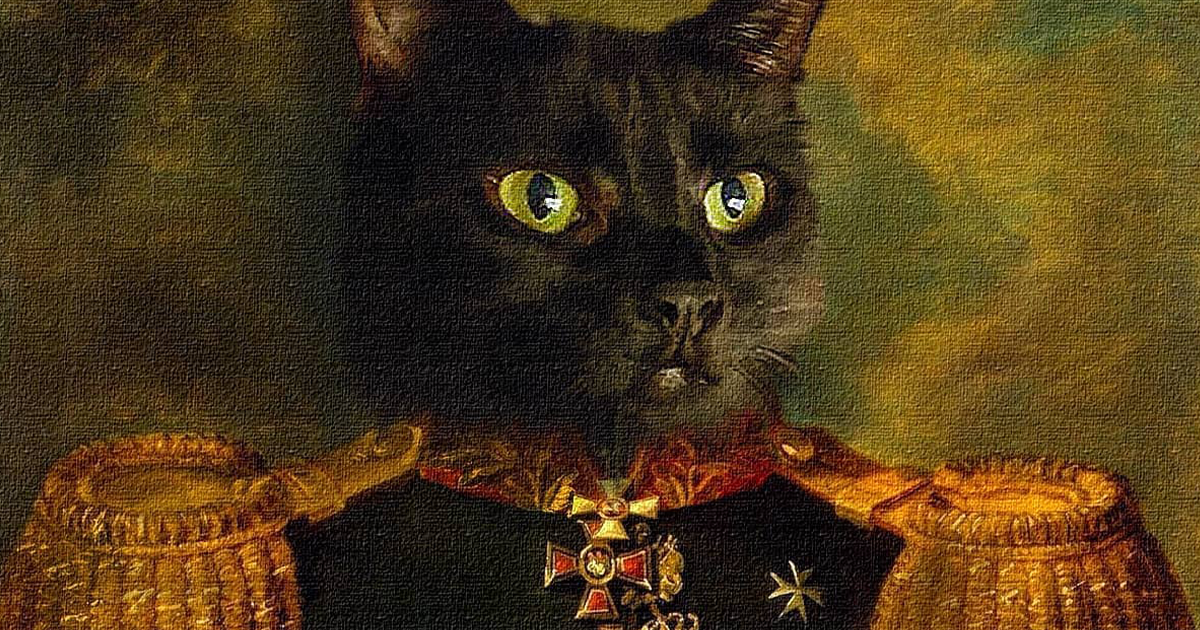
Some cats sit in a cardboard box and look like they have conquered a small kingdom. Others stare across the room with the heavy, unreadable expression of a duke who has just discovered the peasants are late with dinner. That is why the idea behind “Artist Turns Pictures Of Cats Into Classical Paintings (56 Pics)” feels less like a joke and more like a historical correction. Of course cats belong in classical paintings. They have been posing dramatically since the beginning of civilization; humans simply forgot to hand them velvet cloaks.
The viral project is widely associated with digital creator Galina Bugaevskaya, also known online as Koty Vezde, a name often translated as “Cats Are Everywhere.” Her work reimagines formal portraits, royal costumes, and ceremonial compositions by replacing noble human sitters with cats. The result is funny, strangely elegant, and occasionally so believable that you may wonder whether a long-lost Count Whiskerford really did rule a small European estate in 1643.
At its best, this kind of cat classical painting art is not just a quick Photoshop gag. It works because cats already carry the emotional ingredients of old master portraiture: mystery, pride, softness, menace, and a face that says, “I own this chair, this room, and possibly your tax records.” By combining pet photography with the visual language of aristocratic portrait paintings, the artist creates a playful bridge between museum culture and internet humor.
Why Cats Look So Natural in Classical Paintings
Classical and Renaissance-style portraits were never only about accurate faces. They were carefully designed statements of identity. Clothing, jewelry, posture, background objects, and even animals helped communicate wealth, education, power, virtue, or family pride. When a cat is placed into that structure, the joke lands instantly because cats already behave like portrait subjects who know their worth.
A dog in a royal portrait might look loyal. A horse might look powerful. A cat, however, looks like it commissioned the painting and negotiated the frame price. That is the magic of these edited images. The heavy collars, embroidered robes, pearls, lace sleeves, military jackets, and dramatic lighting do not feel absurd for long. Within seconds, the viewer accepts the fantasy. Yes, this orange tabby could be a baron. Yes, this fluffy Persian could be a duchess. Yes, that tiny kitten in brocade absolutely has opinions about trade policy.
Who Is the Artist Behind the Cat Portraits?
Galina Bugaevskaya became known for humorous digital edits that place cat faces onto animals, objects, and famous-looking scenes. Her larger creative world is often described as a “cat universe,” where ordinary images are transformed by feline expressions. The classical portrait series takes that idea in a more polished direction. Instead of simply making something weird, she makes it weirdly convincing.
Her approach depends on selecting the right cat face for the right painting. A sleepy, unimpressed cat may be perfect for a solemn nobleman. A wide-eyed kitten might turn a stiff royal portrait into comedy gold. A long-haired cat with a naturally grand expression can make an elaborate gown or jeweled collar feel almost documentary. The funniest examples are often the ones where the cat’s expression clashes slightly with the formality of the scene. That tiny mismatch creates the spark.
The Art-History Trick That Makes the Series Work
One reason these images feel satisfying is that they borrow from the grammar of old portraiture. Classical portraits often rely on a few recognizable visual cues: a centered sitter, controlled lighting, elegant fabric, a formal pose, and an atmosphere of importance. When the human face is replaced with a cat, the structure remains serious while the subject becomes ridiculous. That contrast is the engine of the humor.
1. Formal Composition Adds Instant Authority
A cat photographed on a kitchen counter may look cute. The same cat placed in a dark, oil-painted background with a gold-trimmed coat suddenly looks like it has inherited land. The composition tells the viewer, “This subject matters.” The cat’s face replies, “Naturally.”
2. Costumes Create Character
Historical clothing does a lot of storytelling. Lace, velvet, armor, ribbons, and pearls suggest rank and personality before the viewer reads a single word. A grumpy cat in a powdered wig becomes a judge. A regal white cat in a gown becomes a queen. A tabby in military dress becomes the general who will absolutely knock a glass off the war table.
3. Cat Expressions Add Modern Humor
Cats are masters of emotional ambiguity. Are they judging us? Are they sleepy? Are they plotting? Are they simply waiting for wet food? Nobody knows, and that is exactly why their faces fit into dramatic portraiture. Old paintings often ask viewers to interpret subtle expressions. Cats turn that exercise into a comedy museum tour.
Cats Have Always Had a Place in Human Culture
The success of these classical cat paintings also connects to a much older tradition. Cats have been admired, feared, pampered, and mythologized for thousands of years. In ancient Egypt, feline imagery was closely tied to protection, domestic life, and the goddess Bastet. Cat-shaped statues, amulets, and mummified cats show how deeply felines entered spiritual and artistic life.
That background gives modern cat art an amusing kind of continuity. Today’s internet may seem far removed from ancient temples, but the basic impulse is familiar: humans see cats, project meaning onto them, and then make art about it. The medium has changed from bronze statues to digital edits, but the message remains surprisingly stable: cats are special, cats are mysterious, and cats should probably be honored before they become annoyed.
Why the Internet Loves Cat Art So Much
There is a reason cat content keeps returning to the top of online culture. Cat videos, memes, illustrated pet portraits, and edited images are easy to share because they communicate quickly. You do not need a long explanation to understand a cat dressed like a Renaissance prince. The image does the work immediately.
In the United States, cats are also a massive part of everyday life. Recent pet-industry data has reported tens of millions of American households with cats, which means the audience for feline humor is not exactly a small secret society meeting behind the scratching post aisle. Many readers already know the personality types: the dramatic cat, the chaotic cat, the loaf-shaped cat, the elegant cat, the cat who looks like a retired opera critic.
Classical cat portraits combine several internet-friendly ingredients at once: cuteness, sophistication, surprise, nostalgia, and meme energy. They are shareable because they make people feel clever for recognizing the art style and delighted by the feline twist. It is high culture wearing a tiny bell collar.
The Best Examples: What Makes a Cat Portrait Memorable?
Although the full collection includes dozens of images, the most memorable examples usually fall into a few delightful categories. Each type shows how flexible the concept can be.
The Royal Cat
This is the classic version: a cat placed in the role of monarch, aristocrat, or noblewoman. The cat may wear a crown, jewels, or an extravagant gown. These images work because cats already expect service. Put one in royal clothing and the viewer does not question it for a second.
The Military Cat
A stern feline in uniform is comedy with epaulets. The serious posture of old military portraits clashes beautifully with the tiny nose and whiskers. The result suggests a commander whose battlefield strategy is mostly “push everything off the table and see what happens.”
The Melancholy Cat
Some of the strongest edits use cats with soulful or slightly tragic expressions. These portraits feel like lost masterpieces from a museum wing devoted entirely to dramatic pets. The humor is softer here. Instead of a punchline, the image creates a mood: elegant, strange, and oddly touching.
The Overdressed Kitten
Few things are funnier than a tiny kitten dressed like an important historical figure. The oversized seriousness of the costume makes the smallness of the subject even more charming. It is the visual equivalent of a toddler giving a budget speech.
Why This Is More Than a Meme
It would be easy to dismiss these images as simple internet fun, but they also reveal something interesting about how people interact with art today. Many viewers who would scroll past a traditional portrait may stop for a cat version. The humor becomes an entry point. Once someone laughs, they may notice the lighting, costume, pose, and visual style. In a sneaky way, the cat becomes an art-history tour guide.
This is one of the strengths of remix culture. A familiar image style is transformed into something accessible and contemporary. The old portrait does not disappear; it gains a new layer of meaning. The viewer is invited to enjoy both the original seriousness and the new absurdity. That double reading is what gives the project staying power.
Digital Art, Pet Portraits, and the New Age of Feline Nobility
Custom pet portraits have become a popular gift category, especially for people who see their pets as family members with unusually strong opinions. Some owners want watercolor portraits. Others want modern illustrations. And then there are those who want their cat painted as an admiral, queen, philosopher, saint, or suspiciously wealthy count. Honestly, who can blame them?
The appeal is emotional as much as visual. A funny royal cat portrait captures the animal’s personality in a way a normal photo may not. A cat who acts superior can finally be shown as superior. A dramatic cat can become a tragic heroine. A silly cat can become a noble disaster in satin.
Digital tools make this kind of transformation more accessible, but good execution still requires artistic judgment. The face must fit the lighting. The fur must blend with the costume. The angle must make sense. The expression has to carry the joke without destroying the illusion. When done well, the viewer forgets the technical process and simply accepts the finished character.
How the Series Balances Humor and Beauty
The best thing about “Artist Turns Pictures Of Cats Into Classical Paintings (56 Pics)” is that it does not rely only on silliness. Many of the images are genuinely pretty. The textures, color palettes, and formal framing create a polished look. The comedy is there, but so is affection. The artist clearly understands that cats are not funny because they are ridiculous; they are funny because they are majestic and ridiculous at the same time.
That balance matters. If the edits were too sloppy, the joke would fade quickly. If they were too serious, they might lose the playful charm. Instead, the series sits in the perfect middle: museum-worthy nonsense. It is elegant enough to admire, silly enough to share, and cat-like enough to make the viewer feel mildly judged.
What These Cat Paintings Say About Us
On the surface, the project says, “Here are cats in fancy clothes.” Beneath that, it says something warmer about the relationship between people and pets. We do not only document animals; we imagine inner lives for them. We give them titles, voices, motives, and biographies. We call them kings, goblins, babies, roommates, supervisors, and tiny landlords. Cat portrait art simply makes that habit visible.
When a cat is transformed into a classical painting, it becomes a character in a story we already half-believe. The image confirms what many cat owners suspect: this creature is not merely sleeping on the laundry. It is resting after a complicated morning of estate management.
Experiences Related to Cat Classical Paintings
One of the most enjoyable experiences connected to this topic is the simple act of looking at a familiar cat photo and imagining what historical role the cat would play. Not every cat is a king. Some are clearly monks. Some are pirates. Some are minor nobles who spend too much money on curtains. A round orange cat with sleepy eyes may belong in a Renaissance banquet scene, while a sleek black cat might fit perfectly into a mysterious Baroque portrait with dramatic shadows and one suspicious candle.
For cat owners, this experience can become surprisingly personal. Choosing a portrait style means thinking about the cat’s real personality. Is the cat brave, lazy, elegant, chaotic, clingy, or permanently offended? A classical portrait can exaggerate those traits in a way that feels affectionate rather than random. A shy cat might become a quiet scholar in dark robes. A bossy cat might become a queen with pearls and a stare sharp enough to slice bread. A mischievous kitten could become a young prince who has definitely hidden a mouse under the throne.
Another fun experience is sharing these images with people who do not usually care about art. A classical painting can sometimes feel distant or formal, especially to readers who think museums are places where everyone whispers and pretends their feet do not hurt. But add a cat, and suddenly the image becomes approachable. People begin noticing the costume, the pose, the background, and the expression. They laugh first, then look closer. That is a wonderful doorway into visual culture.
There is also a gift-giving experience here. A custom royal cat portrait can be far more memorable than another mug or scented candle. It says, “I know your pet is not just a pet. I know this animal runs your home with velvet-pawed authority.” For birthdays, holidays, memorial gifts, or housewarming presents, a personalized classical cat portrait can feel funny and heartfelt at the same time.
Finally, these images create a shared language among cat lovers. Anyone who has lived with a cat understands the joke instantly. Cats do not need crowns to act royal. They do not need oil paint to appear mysterious. They do not need a palace to demand service. The artwork simply makes official what the household already knows. The cat is in charge, the humans are staff, and the classical painting is merely overdue paperwork.
Conclusion
“Artist Turns Pictures Of Cats Into Classical Paintings (56 Pics)” succeeds because it understands two powerful truths: classical portraits were designed to make subjects look important, and cats already believe they are important. By merging those worlds, Galina Bugaevskaya’s cat-centered digital art turns old-world elegance into modern internet delight. The collection is funny, stylish, and surprisingly thoughtful, proving that a good visual joke can also be a smart cultural remix.
Whether you love cats, classical art, digital creativity, or simply the sight of a tabby dressed like it owns three provinces, this project offers a charming reminder that art does not have to stay locked behind museum glass. Sometimes it can leap onto the internet, grow whiskers, and stare at us like we are late with dinner.
Note: This article is written as original, web-ready HTML content in standard American English and is designed for SEO publishing without embedded source links or citation artifacts.