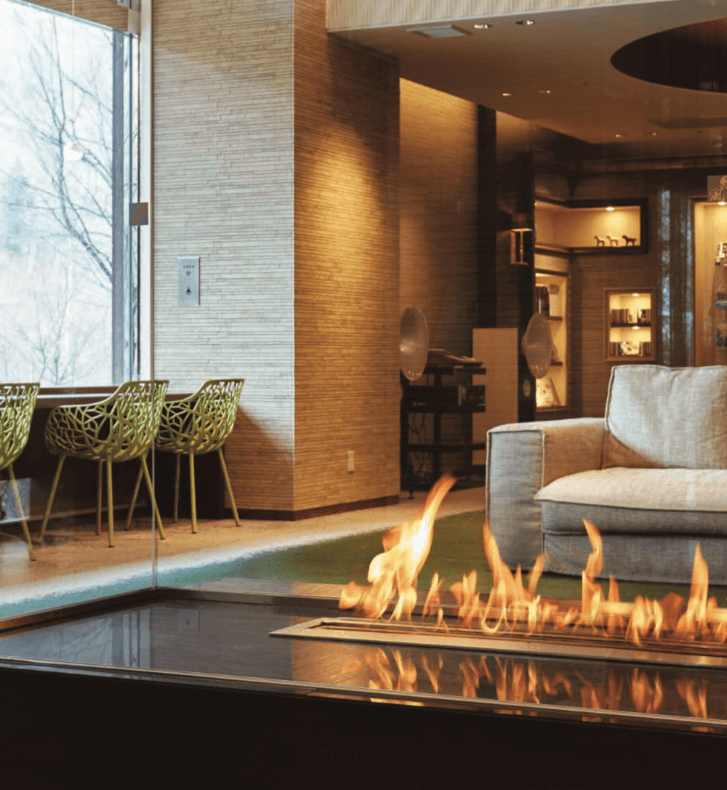
Traditional fireplaces are charming right up until someone has to sweep the ashes, order firewood, inspect the chimney, and explain why the living room smells like a very polite campfire. EcoSmart fireplaces offer a different proposition: real flames, contemporary styling, and far fewer construction headaches.
Best known for its bioethanol fireplaces, EcoSmart Fire also produces built-in, freestanding, indoor, and outdoor fire features in numerous configurations. Many models operate without a chimney, gas line, or electrical connection. That flexibility makes them attractive for apartments, renovations, hospitality projects, modern media walls, and homes where installing a conventional fireplace would be difficult or expensive.
Still, an EcoSmart fireplace is not simply a decorative bowl that happens to be on fire. Bioethanol is a highly flammable liquid, the flame is real, and safe operation requires correct installation, sufficient room volume, approved fuel, careful refilling, and adult supervision. Before buying one, it helps to understand what the appliance does well, where it falls short, and what living with it is actually like.
Research basis: EcoSmart Fire technical documentation, U.S. safety agencies, standards organizations, scientific literature, and major fireplace retailers.
What Is an EcoSmart Fireplace?
An EcoSmart fireplace is a modern fire appliance designed to create an open-flame focal point without relying on a traditional wood-burning chimney. The brand offers several fuel and installation formats, but its manual bioethanol systems are the products most closely associated with the EcoSmart name.
A typical bioethanol model contains a stainless-steel burner that holds liquid fuel. After the fuel is added according to the operating instructions, it is ignited with the supplied lighting equipment. The vapor above the fuel burns, creating a yellow-orange flame. No logs, pilot light, electrical heating element, or gas connection is required.
Major EcoSmart Fireplace Categories
The collection includes built-in fireplace inserts, standalone burners, fire tables, fire bowls, freestanding fireplaces, outdoor fire pits, and grates designed to sit inside suitable existing fireplace openings. The Flex Series is intended for architectural installations and includes single-sided, see-through, left-corner, right-corner, and peninsula-style configurations.
Standalone burners provide even more design freedom. A designer or contractor can integrate one into an approved noncombustible surround, provided every clearance, ventilation, and construction requirement in the model-specific manual is followed. Freestanding models, meanwhile, arrive as more complete products and usually require less construction.
Some EcoSmart outdoor products may be offered with bioethanol, natural gas, or propane options. Fuel availability varies by model, so buyers should not assume that every fireplace can be converted from one fuel to another.
Product categories and configurations:
How Bioethanol Fireplaces Work
Bioethanol is ethanol produced from biomass feedstocks. In the United States, ethanol is commonly made from starch- or sugar-rich crops, although other plant materials and waste streams can also be used. Fireplace fuel is denatured so that it is unsuitable for drinking.
When bioethanol burns under suitable conditions, the primary combustion products are heat, carbon dioxide, and water vapor. It does not create the piles of ash, sparks, creosote, or visible chimney smoke associated with wood fires. This is why a properly designed ethanol fireplace can operate without a conventional flue.
However, “clean-burning” should not be interpreted as “produces absolutely nothing.” Any open flame consumes oxygen and releases combustion products into the surrounding environment. Research into ethanol fireplaces has found that emissions can vary with fuel composition, burner design, flame conditions, ventilation, and room size. The appliance must therefore be matched to an adequately sized room and operated with the ventilation specified by its manufacturer.
Bioethanol composition and indoor combustion considerations:
Why Homeowners Choose EcoSmart Fireplaces
No Chimney or Gas Line
The greatest advantage is installation flexibility. A bioethanol burner does not normally require a flue, gas pipe, hardwired power supply, or traditional hearth system. This can make a fireplace possible in rooms where routing utilities would be impractical.
That does not mean every installation is a do-it-yourself weekend project. Built-in models still require accurate framing, noncombustible materials, approved clearances, ventilation, and protection from nearby furnishings. The absence of a chimney removes one complication; it does not remove the laws of thermodynamics or local building rules.
A Real Flame
Electric fireplaces have become impressively realistic, but they are still visual simulations. EcoSmart’s bioethanol models produce an actual flame with natural movement and warmth. For many buyers, that distinction is the entire reason to choose ethanol over an electric fireplace.
Minimal Routine Cleaning
There is no ash pan to empty and no soot-covered glass door demanding attention every weekend. Once the burner has cooled completely, routine care generally involves checking the burner, wiping accessible surfaces, removing dust, and cleaning glass screens with suitable products.
Contemporary Design
EcoSmart products lean heavily toward modern architecture: long linear flames, black fireboxes, stainless-steel burners, glass screens, concrete fire bowls, and low-profile outdoor tables. A built-in Flex model can become part of a feature wall, while a freestanding unit can serve as a visual divider between living areas.
Indoor and Outdoor Options
Selected models can be used outdoors, giving patios and pool areas a genuine flame without a woodpile. Outdoor placement still requires clearance from combustible furniture, umbrellas, overhanging plants, and structures. Wind can disturb an open flame, so the appliance should not be operated when weather conditions exceed the limits stated in its manual.
Installation and retailer design information:
Heating Performance: Ambience First, Furnace Second
EcoSmart fireplaces generate useful heat, but most should be considered supplemental room heaters rather than replacements for central heating. Heat output varies by burner size. Compact units may provide warmth for a small seating area, while larger linear burners can noticeably raise the temperature in a spacious room.
Because there is no chimney carrying hot air outside, much of the generated heat remains in the room. That can feel efficient on a cool evening. It can also make the room uncomfortably warm if a large burner is installed in a space that is too small.
Model selection should therefore begin with room volume, not simply with the width of the empty wall. EcoSmart publishes minimum room-size information for its burners and fireplace inserts. A wide model may require several thousand cubic feet of room volume. Ceiling height, ventilation, insulation, climate, and open-plan connections to adjacent spaces also affect comfort.
Anyone seeking rapid, thermostatically controlled, low-cost heating may be happier with a heat pump or conventional heating appliance. An EcoSmart fireplace is primarily a design feature that happens to provide real warmthnot a furnace wearing expensive black clothing.
Heat output and minimum room-volume guidance:
EcoSmart Fireplace Safety
Safety is the most important part of owning any ethanol fireplace. Ethanol can ignite at ordinary temperatures, and its vapors may travel to an ignition source. The U.S. Consumer Product Safety Commission has issued serious warnings about hazardous pooled-alcohol fire pots and tabletop fireplaces linked to flame jetting, uncontrolled fires, severe burns, and deaths.
Those warnings do not establish that every professionally engineered ethanol fireplace is identical to a cheap tabletop fire pot. They do prove that buyers should avoid treating alcohol-fueled products as harmless decorations. Choose a model with appropriate third-party testing or listing, verify the certification of the exact product, and follow its manual without improvisation.
Never Refill a Burning or Hot Burner
Refilling is the critical rule. Never add fuel while flames are present, while the burner is warm, or when you are unsure whether the flame has gone out. Ethanol flames can be difficult to see in bright light. Allow the appliance to cool for the full period required by its instructions before opening or filling the burner.
Use Only the Specified Fuel
EcoSmart recommends its e-NRG liquid bioethanol for its ethanol burners. Do not substitute gasoline, rubbing alcohol, gel fuel, spirits, homemade alcohol, or mystery liquid discovered in the back of a garage. Different fuels can alter flame behavior, heat output, odor, emissions, and burner performance.
Control Spills Before Ignition
Use the approved safety spout or filling equipment. Do not overfill the burner. If fuel spills, do not ignite the appliance. Clean the spill completely, ventilate the area, and wait until surfaces are dry and vapors have dispersed.
Maintain Required Clearances
Curtains, books, artwork, televisions, upholstered furniture, rugs, plants, and decorative objects must remain outside the specified clearance zones. Heat travels upward, but radiant heat can also affect objects in front of and beside the flame.
Supervise the Fire
Never leave the fireplace operating unattended. Keep children, pets, loose clothing, and intoxicated guests away from the burner. A protective glass fire screen may reduce accidental contact, but it does not turn an open flame into a childproof appliance.
Provide Ventilation and Detection
Follow the minimum room-volume and ventilation requirements for the exact model. Maintain working smoke alarms, and consider carbon monoxide detection as an additional layer of protection whenever a combustion appliance is used indoors. Local fire, building, landlord, condominium, and insurance rules should be checked before installation.
Safety guidance:
Installation Considerations
Built-In Models
A built-in EcoSmart fireplace should be planned before framing begins. The contractor needs the exact model dimensions, viewing area, minimum room volume, ventilation requirements, rear and side clearances, overhead clearance, burner access, and permitted finishing materials.
Noncombustible construction is usually required around the firebox. Materials described as “heat resistant” are not automatically acceptable. Adhesives, wall panels, paints, cabinetry, and television mounts must also tolerate the temperatures expected in their locations.
Freestanding Models
Freestanding fireplaces require less construction but still need a stable, level surface and safe separation from combustible objects. Do not place one in a busy walkway where a person, pet, robot vacuum, or dramatically oversized handbag could strike it.
Existing Fireplace Conversions
EcoSmart’s grate and burner products can give an unused fireplace opening a contemporary flame. Before installation, inspect the old fireplace for loose masonry, debris, combustible modifications, and unsuitable dimensions. An existing opening is not automatically safe merely because somebody burned wood there during the previous century.
Outdoor Placement
Outdoor fire tables and bowls need a firm foundation, adequate airflow, weather protection, and generous clearance. Never operate them beneath low roofs, enclosed patios, temporary tents, or combustible awnings unless the product manual expressly permits that configuration.
Fuel Costs and Ongoing Ownership
Bioethanol eliminates gas-line installation and chimney maintenance, but the fuel is generally more expensive per hour than running many electric or natural-gas heating appliances. Consumption depends on the burner, flame setting, and operating conditions. Larger flames create more heat and drama while consuming fuel fastera discovery that surprises absolutely nobody once it appears on the credit-card statement.
Buyers should estimate annual use before purchasing. A fireplace lit for special dinners twice a month has a very different operating budget from one used for four hours every evening. Include the cost of approved fuel, delivery, safe storage, replacement glass or accessories, and professional installation where necessary.
Fuel should remain in its original closed container and be stored away from heat, sparks, flames, children, and direct sunlight. Do not store unnecessary quantities inside living spaces. Follow the label, safety data sheet, local fire rules, and manufacturer’s storage instructions.
Fuel handling and operating-cost context:
Environmental Benefits and Limitations
Bioethanol is renewable when produced from biomass, and burning it avoids the smoke, soot, ash, and creosote associated with wood fireplaces. There is also no permanent gas connection consuming fossil fuel at the point of use.
Nevertheless, the word “Eco” deserves analysis rather than applause on command. The environmental footprint of bioethanol depends on its feedstock, farming inputs, land use, refinery energy, packaging, transportation, and final combustion. Burning the fuel still releases carbon dioxide, while producing and delivering each container consumes resources.
The strongest environmental case often comes from using the fireplace selectively: choose an appropriately sized burner, avoid unnecessary operation, purchase only the fuel you will use, and treat the unit as an occasional source of atmosphere and zone warmth rather than an all-night heating system.
Who Should Buy an EcoSmart Fireplace?
An EcoSmart fireplace may be a good fit for homeowners who want a genuine flame, modern design, flexible placement, minimal ash and soot, and no conventional chimney. It is particularly appealing for high-end renovations, feature walls, unused fireplace conversions, covered outdoor living areas, restaurants, hotels, and entertaining spaces.
It may be a poor fit for households seeking the cheapest possible heat, automatic thermostat control, instant remote ignition, or an appliance that can operate without supervision. Families with highly active children or pets should carefully consider barriers, placement, and whether an open flame suits their routines.
Renters and apartment owners must verify lease, building, fire-code, and insurance restrictions. A ventless design does not automatically mean permission-free installation.
How to Choose the Right EcoSmart Fireplace
- Define the primary goal. Decide whether you want architectural drama, outdoor ambience, supplemental warmth, or a simple existing-fireplace conversion.
- Measure room volume. Width alone is not enough. Calculate length, width, and ceiling height, then compare the result with the model’s minimum requirement.
- Choose an installation format. Compare built-in inserts, freestanding fireplaces, fire tables, bowls, grates, and standalone burners.
- Review heat output. Avoid oversizing a burner for a small, well-insulated room.
- Confirm certification. Verify the testing or listing associated with the exact model and market.
- Read the manual before buying. Review clearances, ventilation, filling procedures, fuel requirements, and construction details before finalizing cabinetry or framing.
- Estimate fuel consumption. Multiply expected weekly operating hours by the model’s approximate consumption and local fuel cost.
- Check local rules. Contact the building department, fire authority, property manager, or insurer when necessary.
Living With an EcoSmart Fireplace: A Realistic Owner Experience
The following experience is a realistic composite based on operating instructions, retailer information, and recurring owner observations. It is not presented as a claim of personal ownership.
The First Impression
The first thing most people notice is how clean the installation looks. There is no traditional log set, bulky vent, visible gas valve, or electrical cord wandering toward an outlet. In a black built-in firebox, the flame seems to float across the burner. Guests generally ask how it works before asking what it costs, which is the decorating equivalent of winning the first round.
Lighting the fireplace feels more deliberate than pressing a remote. Fuel is checked and added while the burner is cold, the filling equipment is put away, and the flame is ignited with the designated lighting rod or tool. The ritual takes only a few minutes, but it demands attention. Owners who enjoy preparing a fire tend to find it satisfying. People who become impatient waiting for a microwave may prefer electric.
What the Heat Feels Like
The warmth becomes noticeable near the seating area after the flame stabilizes. In a properly sized room, it can take the edge off a chilly evening and create a comfortable zone around the fireplace. The sensation is different from forced-air heat because there is no fan blasting warm air across the room.
Expectations matter. A modest burner will not heat an entire drafty house during a winter storm. Its job is to warm the immediate space while producing ambience. Larger burners can generate substantial heat, which is why matching the appliance to room volume is essential. In a compact, airtight room, “cozy” can become “why is everyone opening a window?” surprisingly quickly.
The Day-to-Day Routine
The pleasant part is the lack of debris. There are no bark fragments on the floor, smoky logs, ash clouds, or chimney odors. After the unit cools, wiping fingerprints from the glass and dust from nearby surfaces is usually more important than removing combustion residue.
Fuel management is the less glamorous side. Containers take up storage space, and approved fuel must be reordered before the supply runs out. The fireplace cannot be casually topped up halfway through an evening. When the burner is empty, it must be extinguished or allowed to go out, then cooled completely before refilling. Planning ahead prevents a romantic dinner from becoming two people staring at a cold burner while reading safety instructions.
Odor, Ventilation, and Room Comfort
A high-quality fuel and correctly operating burner should not create the smoke smell associated with wood, although some users may notice a mild alcohol odor during ignition or shutdown. Sensitivity varies. Ventilation, room size, burner condition, fuel quality, and spills can all influence the experience.
Cracking a window or otherwise following the specified ventilation guidance can help maintain comfort. If unusual odors, headaches, eye irritation, unstable flames, or soot appear, the sensible response is to extinguish the appliance safely, ventilate the room, and investigatenot to declare that the fireplace has developed personality.
Entertaining and Outdoor Use
During gatherings, an EcoSmart fireplace naturally becomes the visual center of the room or patio. A long linear flame looks particularly effective against stone, concrete, or dark tile. Outdoors, fire tables encourage guests to gather without producing the smoke that always seems to follow one unlucky person around a wood fire.
The owner still needs to act as the responsible operator. Drinks, napkins, serving boards, and sleeves should remain away from the flame. Wind conditions must be monitored, and nobody should move or refuel the appliance while it is hot.
The Long-Term Verdict
Owners are most satisfied when they purchase an EcoSmart fireplace for design, real-flame ambience, and occasional supplemental warmth. Frustration is more likely when someone expects inexpensive primary heating or completely automated operation.
The experience is best described as low-mess rather than zero-effort. You trade firewood, ash, chimney servicing, and gas-line work for fuel containers, manual operation, ventilation awareness, and strict refilling discipline. For the right household, that trade is worthwhile. The room gains a striking architectural feature and a genuine flame without becoming a part-time lumber-processing facility.
Conclusion
EcoSmart fireplaces combine contemporary design with one of the most flexible ways to introduce a real flame into a home or outdoor living space. Their bioethanol models avoid chimneys, gas lines, wood storage, ash, and soot, while offering built-in, freestanding, and architectural configurations for many design styles.
The advantages are balanced by important responsibilities. Bioethanol remains a highly flammable fuel. Buyers must choose a correctly sized and appropriately tested model, follow room-volume and clearance requirements, use the specified fuel, maintain ventilation, supervise the flame, and never refill a hot burner.
Approached as a premium design appliance and supplemental heat source, an EcoSmart fireplace can be an elegant centerpiece. Approached as a decorative object that requires no rules, it can become dangerous. Read the manual, respect the flame, plan the fuel budget, and let the fireplace provide the dramayour evening does not need additional special effects.