On a foggy May morning in Wisconsin, 25-year-old angler Christopher Thuss headed out onto Lake
Michigan expecting nothing more dramatic than a few bass and maybe a good story for his group chat.
Instead, his sonar lit up with a massive, mysterious shape lurking just nine feet below the surface.
Within hours, he would learn he’d stumbled onto the wreckage of a 144-year-old tugboatan industrial
giant from the age of lumber barons and railroads, hiding in plain sight just off the Manitowoc shore.
It’s the kind of plot twist every casual fisherman secretly dreams about: you go out for fish,
come back with a shipwreck.
This discovery isn’t just a cool “guess what I did this weekend” story. It’s a time capsule from the
late 19th century and a reminder that the Great Lakes are less like lakes and more like freshwater
museumsonly with worse visibility and more zebra mussels.
The Day a Routine Fishing Trip Turned into a History Lesson
Thuss was fishing near Manitowoc, Wisconsin, scanning the lakebed with his sonar the way many modern
anglers dopart fish finder, part underwater detective. When a long, solid return appeared on his
screen, it didn’t look like a rock pile or a random log. It looked deliberate, structured… and big.
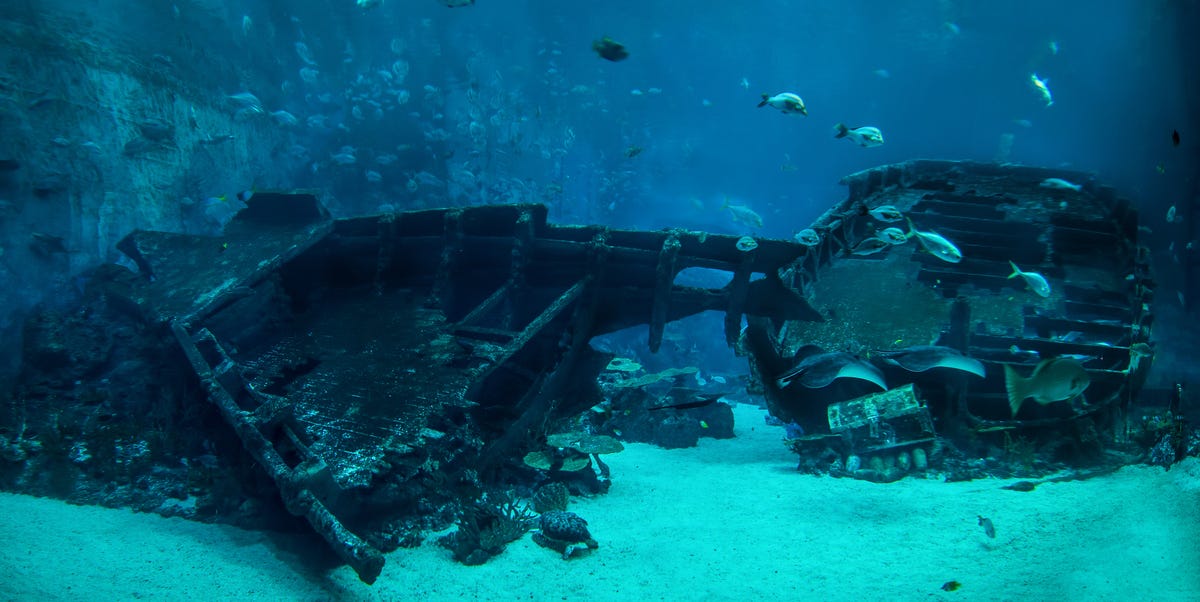
Curious, he steered closer and realized he could actually see outlines in the greenish water:
timbers, hardware, and shapes that definitely didn’t belong to fish. Instead of shrugging and casting
again, Thuss did exactly what maritime archaeologists wish more people would dohe took screenshots,
grabbed coordinates, and reached out to state experts.
His photos and sonar images went to the Wisconsin Historical Society’s maritime archaeology team.
Within days, divers and underwater archaeologists were in the water, swimming along the remains of a
large wooden hull and a massive propeller. What they saw matched archival drawings and old photographs
of a legendary tugboat: the J.C. Ames, built back in 1881.
Just like that, a casual day of fishing turned into a major historical discovery. And yes, it
absolutely makes losing a lure feel a lot less dramatic by comparison.
Meet the J.C. Ames: A 19th-Century Powerhouse Tug
Long before it was a ghostly outline in murky water, the J.C. Ames was one of the most powerful
tugboats on the Great Lakes. Built by Rand & Burger in Manitowoc in 1881, it stretched roughly
160 feet and packed a 670-horsepower compound steam enginea serious amount of muscle for its time. The
tug cost about $50,000 to build, a fortune in the 1880s, and it was designed to move lumber and other
heavy cargo with ease.
The J.C. Ames didn’t stay in one role for long. After starting as a workhorse for the lumber trade, it
later pulled rail cars on special barges, shuttling rolling stock across the lake. Over the decades, it
changed owners several times, took a beating in at least one major collision, and kept going after
multiple repairs.
From Floating Muscle to Maritime Relic
By the early 1920s, the J.C. Ames had “outlived its usefulness”which, in the language of early 20th
century shipping, meant it was cheaper to scrap it than to keep it running. The tugboat was stripped of
its machinery, towed out from Manitowoc’s harbor, burned, and scuttled in 1923. Back then, intentionally
sinking retired ships was normal practice, and sometimes even turned into a bit of a waterfront
spectacle.
After the flames died down and the hull slipped beneath the surface, the J.C. Ames joined a growing
underwater graveyard of retired vessels. For more than a century, storms, currents, and shifting sands
buried and revealed pieces of wreckage again and again. Eventually, the tug disappeared under the lake
bottom entirelyor so it seemed.
How a 144-Year-Old Ship Vanishedand Then Reappeared
When divers visited the wreck site after Thuss’s discovery, they noticed something surprising: the hull
wasn’t completely smothered in invasive quagga mussels, the way many Great Lakes wrecks are today.
Instead, parts of the tug looked relatively newly exposed. That suggested the J.C. Ames had been buried
in sand or sediment for decades and only recently uncovered, likely by strong winter storms that
reshaped the lakebed.
The freshwater of the Great Lakes is a preservation superpowercold, low in salt, and generally lacking
the kind of wood-eating organisms that destroy wrecks in the ocean. That’s why so many shipwrecks in
these lakes still have intact hulls, cabins, even cargo a century or more after sinking. The J.C. Ames
benefited from that same freshwater protection, plus an extra layer of sand acting like a natural
blanket.
Once divers and archaeologists documented the site, they confirmed key details: the size and
construction of the hull, the shape of the propeller, and the configuration of structural elements all
lined up with historic photos and plans of the J.C. Ames. It wasn’t just “some old wreck”it was a
specific, named vessel from the age when steam, lumber, and railroads were reshaping the Midwest.
The Great Lakes: Where Shipwrecks Outnumber Beach Towels
The J.C. Ames is only one story in a much larger underwater archive. The Great Lakes are believed to
contain more than 6,000 shipwrecks, and some estimates go as high as 10,000 when you factor in smaller
vessels and undocumented losses. Many of these wrecks date from the 19th and early 20th centuries, when
the lakes were crowded highways for lumber, grain, iron ore, coal, and passengers.
These freshwater wrecks are often astonishingly well preservedwooden hulls, deck fittings, and even
painted details can survive for decades or centuries. That’s why discoveries like the J.C. Ames, the
Western Reserve in Lake Superior, or long-lost schooners like the F.J. King generate so much excitement
among historians and divers: they’re not just broken piles of wood and rivets; they’re snapshots of
technology and commerce frozen in time.
Unfortunately, that preservation is now under pressure. Invasive quagga musselsa cousin of the better
known zebra musselare transforming Great Lakes ecosystems and clinging to shipwrecks in dense clusters.
Over time, their weight, waste, and acidic secretions can weaken wood and corrode metal, threatening
wrecks that have survived storms, ice, and a century of darkness.
That’s part of why maritime archaeologists feel a real sense of urgency. Every new discovery is not just
a “cool story”; it’s a race to document and protect a piece of shared history before natureand human
activityerase it.
Why This Discovery Matters Beyond the Wow Factor
At first glance, the story is simple: a fisherman found a shipwreck. But beneath that headline are
several deeper themes that make the J.C. Ames important to more than just shipwreck nerds and sonar
geeks.
A Window into Industrial Great Lakes History
The J.C. Ames represents a transition period when the Great Lakes were the beating heart of North
America’s industrial economy. Tugboats like this one kept lumber, rail cars, and raw materials moving,
tying together small lakeside towns with big city factories. Seeing its hull and hardware on the bottom
of Lake Michigan is like walking into a factory floor from 140 years agojust with more fish and a lot
less oxygen.
Everyday People as Accidental Archaeologists
Thuss’s story is also a perfect example of “citizen science” in action. He’s not a professional
archaeologist; he’s an angler who knew enough to recognize something unusual on his sonar and cared
enough to report it. That single decision turned a private discovery into public knowledge and helped
preserve the wreck.
This is increasingly how shipwrecks are found: divers, boaters, fishermen, and even drone pilots or
kayakers spot something odd and pass the information along. One find can rewrite records, settle
long-standing questions, or add a missing piece to a historical puzzle.
Tourism, Education, and Local Pride
Wrecks like the J.C. Ames can eventually become attractions for divers and paddlers, giving local
communities a hook for tourism and education. Once the site is fully documented and evaluated for
safety, it could be folded into guided tours, museum exhibits, or digital reconstructions that let
people “visit” the wreck from the comfort of a screen.
For Manitowoc and surrounding communities, the discovery connects modern residents with the city’s
shipbuilding past. It’s one thing to read that your hometown once built powerful tugs for the lumber
trade; it’s another to know one of those tugs is lying just offshore where you fish, sail, or swim.
What We Can Learn from a 144-Year-Old Tugboat
The J.C. Ames isn’t a glamorous ocean liner or a famous tragedy like the Edmund Fitzgerald, but that’s
exactly what makes it valuable. Everyday working ships tell the story of ordinary people: crews who
hauled lumber in storms, engineers who kept steam engines running, welders and carpenters who built the
hull in the first place.
By carefully surveying and documenting the wreck, archaeologists can compare the actual construction to
plans, photographs, and written records. That helps them understand how shipbuilders solved problems,
how designs evolved, and how industrial demand shaped the region.
It also underscores a bigger point: history isn’t just preserved in museums or archives. Sometimes, it’s
sitting on the bottom of a lake, waiting for the right person with a cheap sonar unit and good timing.
Experiences and Reflections Inspired by the Discovery
Imagining the Moment on the Water
Picture yourself in Thuss’s place for a moment. The lake is quiet, muffled by fog. You’re watching your
sonar mostly out of habit, half-focused on your next cast. Then, instead of the usual fuzzy shapes of
baitfish or the occasional log, the screen shows something long, solid, and symmetricaltoo neat to be
natural.
There’s a real emotional shift in that moment. Fishing is about patience and repetition; discovering a
shipwreck is about surprise and curiosity. One second you’re wondering which lure to try next; the next,
you’re asking yourself, “How long has that been down there?”
The Quiet Responsibility of Finding History
Most people will never stumble onto a 144-year-old wreck, but the feelings that come with that kind of
discovery are surprisingly relatable. There’s excitement, of coursebut also a sense of responsibility.
Once you realize you’re looking at something historic, you have a choice: keep it as a private secret,
or share it so professionals can protect and study it.
Thuss chose the second path, and that’s worth emphasizing. In Great Lakes communities, it’s not unusual
to hear rumors: “There’s an old wreck off that point,” or “My grandfather swears he snagged his net on a
ship out there.” Turning rumor into documented reality often depends on one person deciding that the
story belongs to everyone, not just to them.
Visiting Shipwreck Country as a Traveler
You don’t need to be a diver or own a boat to connect with stories like the J.C. Ames. Many Great Lakes
townsManitowoc includedhave maritime museums, waterfront markers, and exhibits that tie modern life to
the ships still resting offshore. Standing on a pier and reading that a powerful tugboat was built just
a few blocks away, then picturing it lying under the waves within sight of shore, can be surprisingly
moving.
If you’re into road trips, you can build an entire route around Great Lakes shipwreck history: from the
big-name sites like the Edmund Fitzgerald memorials to lesser-known local stories like the J.C. Ames.
Along the way, you’ll see how much of the region’s identityindustry, culture, even architecturegrew
from waterborne trade.
Lessons for Anglers, Boaters, and Curious Locals
This discovery also comes with some practical takeaways:
- Pay attention to your tech. Sonar isn’t just for finding fish; it can reveal
unexpected structures, drop-offs, or wrecks. If something looks unusual, take a screenshot and note
the GPS coordinates. - Don’t disturb what you find. It’s tempting to dive right in or try to “collect a
souvenir,” but shipwrecks are often protected under state and federal law, and disturbing them can
damage valuable evidence. - Report, don’t hoard. Local historical societies, museums, or maritime archaeology
groups genuinely want to hear from you. A quick email with a sonar image can be the start of a
significant discovery. - Share the story. Whether you post a photo, talk to local media, or just tell your
family, stories like this are a powerful reminder that history isn’t remoteit’s right under our
feet (and hulls).
Why These Stories Stick with Us
Part of the magic of a 144-year-old wreck is that it blends the ordinary and extraordinary. The J.C.
Ames wasn’t famous when it was working; it was just doing its job, day after day. Its rediscovery by a
fisherman on a foggy morning mirrors that same quiet, practical energy. No treasure chests, no dramatic
movie soundtrackjust a curious person, a sonar screen, and a willingness to follow up.
That combination is what keeps Great Lakes shipwreck stories alive. They’re not just about ships; they’re
about people who notice things, ask questions, and choose to bring the past back into the light. And the
next time you’re out on calm water, watching your sonar or staring down into the green, you might catch
yourself wondering: “What’s hiding under this patch of lake?”