Some home accessories whisper. Others politely clear their throat. Chilewich’s faux bois placemats do neither. They stroll onto the table looking like polished wood grain, then casually reveal that they are far more practical than the real thing. That is the magic trick. They bring the warmth of nature, the graphic punch of pattern, and the sanity-saving ease of a wipe-clean surface to everyday meals and dressed-up dinners alike.
If that sounds like a small miracle, it kind of is. Faux bois has always been about illusion with attitude: the charm of wood without the weight, fuss, or fragility. Chilewich took that old decorative idea and translated it into a modern tabletop accessory that feels both clever and livable. The original Faux Bois placemats made a splash because they looked like wood grain but behaved like a high-function table mat. Today, the same design spirit still feels fresh because most people want their homes to be beautiful, but they also want to eat pasta without staging a crisis response team.
This is where Chilewich shines. The brand has long built its reputation on placemats that feel design-forward without becoming precious. In other words, they are the rare tabletop pieces that can survive a Tuesday lunch and still look sharp on Saturday night when guests come over and suddenly everyone acts like they always use linen napkins.
What Makes Faux Bois So Endlessly Appealing?
Faux bois literally means “false wood,” but the phrase sounds much fancier than “pretend tree.” In design, faux bois is beloved because it captures the visual rhythm of wood grain without requiring actual lumber. That makes it a natural fit for interiors that want texture, warmth, and a little wink of personality. It feels organic, but not rustic in a hay-bales-and-rooster-motif way. It feels stylish, but not stiff. It lives in that sweet spot between natural and graphic.
On a dining table, that balance matters. Real wood can be gorgeous, but it can also be visually heavy. A faux bois placemat gives you the pattern of knots, swirls, and growth rings in a lighter, more flexible format. It frames the plate, grounds the setting, and adds texture without visually swallowing the table. Think of it as wood grain with better manners.
Chilewich understood this early. The brand’s original Faux Bois placemats leaned into simulated wood grain as a design statement, not a novelty. They were not trying to fool anyone into thinking the table had sprouted bark. They were offering a playful, polished interpretation of naturesomething modern enough for city apartments, warm enough for family dining rooms, and practical enough for anyone who has ever had olive oil go rogue.
Why Chilewich’s Version Works
It gives you texture without table clutter
One reason Chilewich placemats have endured is that they solve a real decorating problem. A table can feel flat without layers, but too many layers can turn dinner into an obstacle course of chargers, cloths, runners, folded napkins, and centerpieces tall enough to require their own zoning permit. Faux bois placemats provide visual richness while keeping the setup streamlined. They do the heavy lifting of pattern and texture, so the rest of the table can breathe.
It looks natural, but not overly themed
Nature-inspired décor can go wrong in two directions. It can become too plain, or it can go full woodland costume party. Chilewich’s faux bois look avoids both. The wood-grain effect feels earthy and relaxed, yet it remains polished enough for contemporary interiors. It pairs as easily with stoneware and brushed flatware as it does with porcelain and crystal. You do not need to start serving mushroom risotto by candlelight in a cabin. Unless you want to. In that case, congratulations on the ambiance.
It is designed for real life
Here is the part that makes the design people nod and the practical people cheer: Chilewich built its reputation on easy-care woven textiles and table mats that can handle regular use. That matters because the best tabletop accessories are not the ones you hide for rare occasions. They are the ones you reach for over and over because they make the table look finished with almost no effort. Faux bois placemats belong in that category. They give the visual payoff of something more elaborate without demanding a maintenance ritual worthy of a museum registrar.
It fits the Chilewich philosophy
Sandy Chilewich has long approached the table as a place for design, not decoration for decoration’s sake. That distinction is important. Chilewich placemats are not just colorful pads under a plate. They are meant to act as a visual foundationas the tabletop equivalent of a great rug or a well-cut jacket. The faux bois motif plays directly into that idea because it is both structure and style. It gives the place setting a base layer that feels intentional from the first glance.
How to Style Faux Bois Placemats Without Overthinking It
1. Let the placemat be the pattern
If your faux bois placemat already brings grain, movement, and character, do not force every other item on the table to compete. A solid plate, simple napkin, and restrained glassware will usually look better than a stack of patterns fighting for attention. The placemat should be the bass line, not the whole band attempting a solo at once.
2. Pair warm wood-look mats with cool ceramics
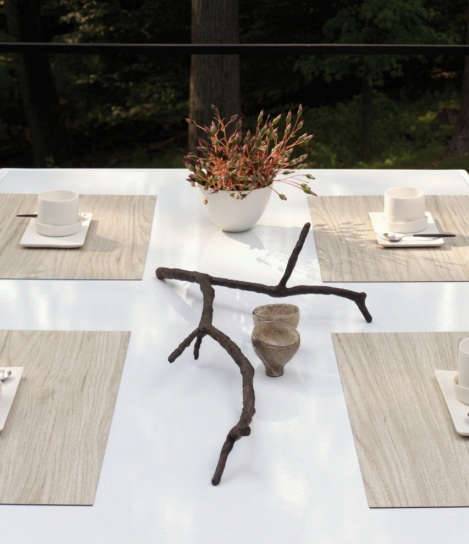
One of the easiest ways to make faux bois look sophisticated is contrast. If the placemat has a warm birch or walnut effect, pair it with white, cream, gray, or matte black dinnerware. The result feels balanced instead of matchy. Wood grain already brings warmth; cooler pieces keep the table feeling crisp.
3. Add one tactile element
Because Chilewich placemats are structured and graphic, they pair beautifully with one soft or tactile counterpoint. That could be a washed-linen napkin, a hand-thrown stoneware bowl, or a simple sprig of greenery tied with twine. You do not need an elaborate tablescape. You just need one element that softens the edges and makes the setting feel human.
4. Use them beyond dinner parties
Faux bois placemats are especially strong in casual, everyday moments: breakfast on a kitchen table, takeout in the dining nook, weekend pancakes, late-night tea. Because they are easy to wipe down and visually substantial, they make ordinary meals feel more pulled together. That matters more than people admit. A well-set everyday table quietly improves a room, even when the menu is leftover noodles and a heroic amount of sparkling water.
5. Try them outdoors
If you like dining outside, faux bois makes even more sense. The wood-inspired pattern feels right at home with gardens, patios, and summer entertaining, but it is less fussy than cloth and easier to manage when wind, drips, and the occasional flying leaf decide to join dinner uninvited. That indoor-outdoor versatility is a major part of Chilewich’s broader appeal.
Who Should Buy Into the Faux Bois Look?
The minimalist host: You want the table to look intentional, but you do not want to spend 45 minutes “building a story” with twelve decorative objects. Faux bois placemats give you a finished look fast.
The messy eater with standards: You appreciate nice design, but you also understand that tomato sauce, soy glaze, and coffee rings are not hypothetical. Wipe-clean practicality matters.
The texture lover: If your home already includes linen, boucle, stone, ceramic, or natural woods, faux bois placemats slide right in. They add another layer of visual texture without introducing chaos.
The seasonal stylist: These placemats transition beautifully. They feel earthy in fall, fresh in spring, relaxed in summer, and grounding in winter. Swap napkins, plates, or centerpieces and they keep up.
Care, Durability, and the Beauty of Not Babying Your Tabletop
A big reason Chilewich became a design staple is simple: the products are made for use, not admiration from a safe distance. That is not glamorous marketing language. It is the difference between décor you own and décor that owns you.
For many households, placemats need to do several jobs at once. They should protect the table, look good, clean up fast, and avoid curling into abstract sculpture after a few weeks. Chilewich’s reputation in this category is strong because the brand has consistently leaned into performance as part of the design. The faux bois concept benefits from that philosophy. It is a pattern with warmth and personality, wrapped around a product that is meant to be handled, wiped, reused, and enjoyed.
That practicality also supports a smarter kind of decorating. Instead of buying disposable seasonal pieces or fabric placemats that need constant laundering, a durable tabletop mat can become a long-term staple. Good design earns its keep. Chilewich understood that early, and it is one reason the brand remains relevant in homes that care as much about function as they do about aesthetics.
The Bigger Design Lesson
The real story of Chilewich faux bois placemats is not just about one product. It is about a broader shift in how people want to live with design. We no longer separate “beautiful” from “usable” as neatly as we used to. We want homes that look thoughtful but feel relaxed. We want the good plates out more often. We want the table to be styled, but not stage-managed.
That is exactly why faux bois works. It gives the table character, but it does not make the table fussy. It nods to the natural world, but it still feels urban, clean, and contemporary. It is decorative, but it behaves like a workhorse. In short, it is a grown-up design move with a tiny mischievous grin.
And honestly, that may be the best compliment you can give any tabletop accessory. It makes the room look better, it makes hosting easier, and it never asks you to apologize for actually using it.
Experience: Living With Faux Bois Placemats from Chilewich
Spend a week with faux bois placemats from Chilewich and something slightly ridiculous happens: you start setting the table even when nobody is coming over. Not in a formal, silver-polishing, “announce the soup course” way. More in a “why does lunch suddenly look like it has its life together?” way. The placemats become an easy ritual. You toss one down, add a plate, maybe a napkin if you are feeling extra civilized, and somehow the whole meal gets a promotion.
The first thing you notice is the warmth. Faux bois has that visual trick of making a table feel layered and grounded before any food hits the plate. On a plain dining table, it adds movement. On a wood table, it adds contrast rather than competition, because the pattern is interpreted rather than literal. On a glass or lacquer table, it keeps things from feeling cold. It is the design equivalent of putting on a great jacket over a white T-shirt: the look sharpens instantly, but nobody has to know how little effort it took.
Then there is the practical side, which becomes obvious the moment real life barges in. A drizzle of salad dressing? Fine. Coffee ring from the mug you absolutely swore you would not carry into the dining room? Also fine. Breadcrumbs, juice splashes, the mysterious sticky dot that appears after toast with jam? Still fine. A quick wipe and the mat is ready to go again. That ease changes behavior. You stop saving the placemats for “good” dinners and start using them for breakfast, snacks, and impromptu work-from-home lunches that would otherwise happen over a keyboard with dangerous confidence.
They also change how the rest of the table behaves. Because the placemats carry so much visual texture, you do not need to pile on styling tricks. A white plate looks crisp. A stoneware bowl looks earthy. Flatware looks more intentional. Even a paper napkin looks less like surrender and more like a choice. That is a small miracle in home styling: an object that makes everything around it look slightly better without turning into a diva.
Guests tend to notice them, too, but in an interesting way. They do not always ask, “Where are these from?” right away. First they touch them. Then they look closer. Then comes the double take. “Wait, this is not wood?” That pause is part of the charm. Faux bois works because it reads warm and familiar from a distance, then clever up close. It creates a moment without screaming for one.
What is perhaps most satisfying is the lack of stress. Some tabletop pieces feel like they require a code of conduct. No spills. No hot dishes. No fun. Chilewich faux bois placemats do the opposite. They invite use. They make everyday dining feel more deliberate, but they do not punish you for having an actual meal. In a home, that matters. Design should support living, not interrupt it.
By the end of the week, the experience is less about a placemat and more about a mood. Meals feel a touch more composed. The room feels a little more finished. The table becomes a place you want to return to, not just a surface you happen to eat on. And that is the quiet genius of Chilewich’s faux bois idea: it brings a hint of nature, a splash of wit, and a lot of usability to the everyday table. No drama, no fuss, no woodshop required.