Note: This article is written for public education and web publishing. It synthesizes information from reputable nuclear-safety, scientific, and institutional sources, including the IAEA, NRC, UNSCEAR, World Nuclear Association, Science, Argonne National Laboratory, OECD Nuclear Energy Agency, and related technical literature.
Introduction: When Chernobyl “Wakes Up,” Should We Panic?
Few places on Earth can make a radiation monitor feel like it deserves hazard pay quite like Chernobyl Reactor 4. Decades after the 1986 disaster, the ruined unit is still not “finished” in the tidy way people like stories to end. It is covered, studied, monitored, stabilized, reinforced, and politely avoided by anyone who enjoys having a normal afternoon. But it is not gone.
That is why reports of increased neutron levels at Chernobyl-4 attracted so much attention. Neutrons are not just random nuclear background noise. In the right context, they can signal fission activity, meaning uranium atoms are splitting again inside old fuel-containing material. The phrase sounds dramatic because, frankly, it is. But dramatic does not automatically mean apocalyptic. Nuclear science is full of phrases that sound like heavy metal album titles but require careful explanation.
At the heart of the concern is corium, the lava-like material formed when nuclear fuel, metal, concrete, sand, and other reactor materials melted together during the accident. Chernobyl’s corium is sometimes called fuel-containing material, or FCM. The most famous example is the “Elephant’s Foot,” a dark, wrinkled mass of radioactive lava discovered beneath Reactor 4. It looks like something a volcano made after reading too much Soviet engineering documentation.
So how dangerous is corium today? The short answer is: very dangerous locally, scientifically complicated, but not likely to cause a second Chernobyl-style disaster. The long answer involves neutron counts, water, criticality, radioactive dust, aging materials, damaged structures, and the hard truth that cleaning up a melted reactor is not like cleaning out a garage. You cannot just buy storage bins, label everything, and pretend you are on a home organization show.
What Happened at Chernobyl-4?
On April 26, 1986, Unit 4 of the Chernobyl Nuclear Power Plant in Ukraine was destroyed during a failed safety test. The RBMK reactor experienced a sudden power surge, explosions, fire, and a massive release of radioactive material. The accident was caused by a dangerous combination of reactor design flaws, poor safety culture, and operator decisions made under deeply flawed conditions.
After the explosion, parts of the reactor core were exposed to air. Graphite burned. Fuel overheated. Reactor materials melted and flowed into lower rooms of the building. Emergency crews dropped sand, boron, clay, lead, and other materials from helicopters. The sand helped smother fires, while boron helped absorb neutrons and reduce additional nuclear reactions.
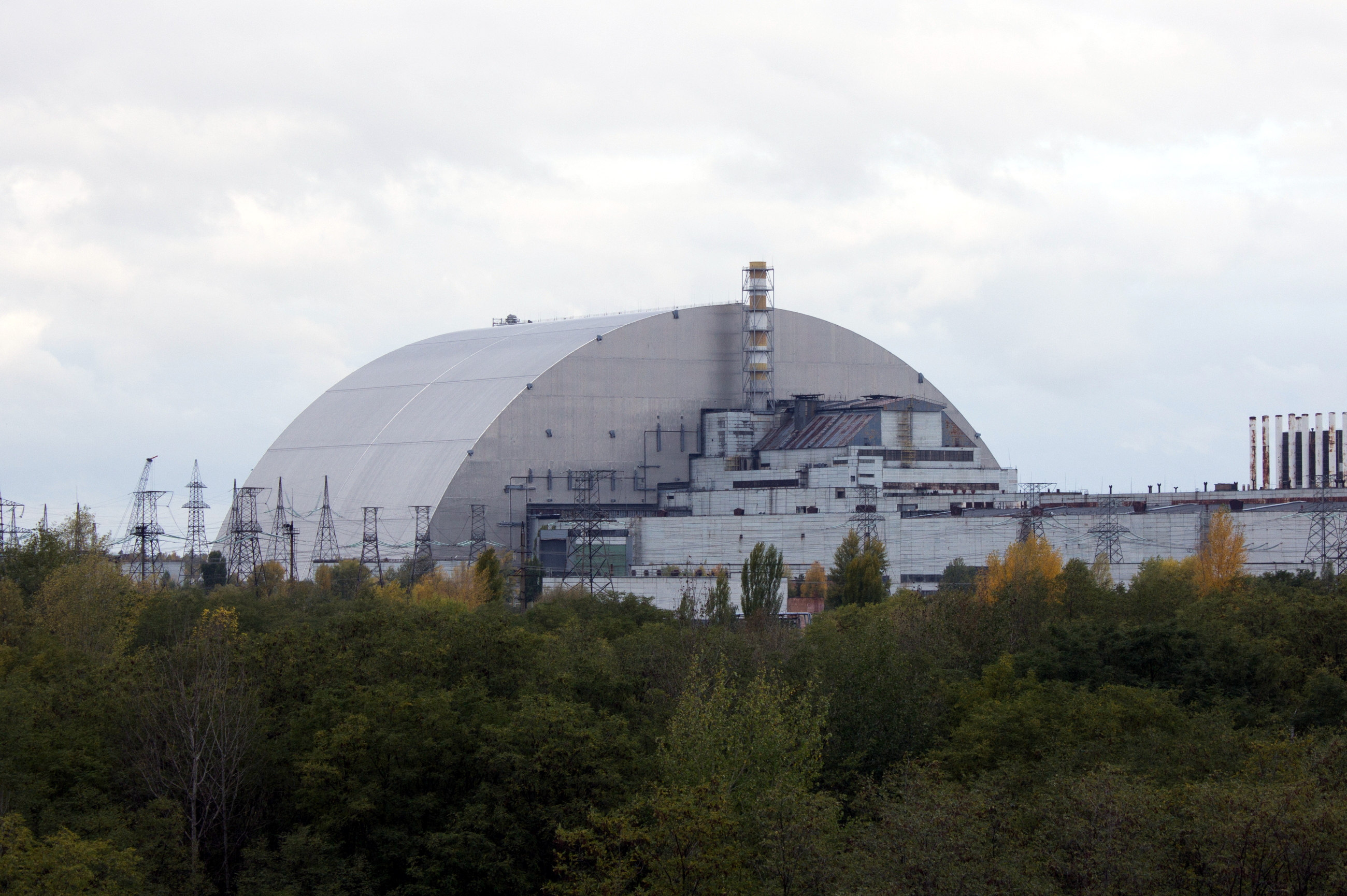
Within months, workers built a temporary concrete and steel structure known as the Shelter Object, often called the sarcophagus. It was an emergency solution, not a forever solution. Decades later, the New Safe Confinement, a huge steel arch, was moved over the damaged reactor to reduce weather exposure, contain radioactive materials, and eventually support dismantling work.
What Is Corium?
Corium is the material created during a severe nuclear meltdown when reactor fuel becomes hot enough to melt and mix with surrounding materials. At Chernobyl, corium included uranium dioxide fuel, zirconium cladding, graphite, steel, concrete, sand, and other building materials. Once molten, it behaved like an artificial lava flow, moving through broken spaces beneath the reactor before cooling into hard, glassy, ceramic-like masses.
Unlike ordinary lava, corium is radioactive and chemically complex. It may contain uranium, plutonium, fission products, activation products, and structural materials fused into irregular forms. It can crack, crumble, absorb moisture, release dust, and change over time. In other words, it is not just “hot rock.” It is radioactive reactor history frozen into a very unfriendly sculpture.
The famous Elephant’s Foot is only one piece of the larger Chernobyl fuel-debris problem. It became famous because photographs of it circulated widely and because early radiation levels around it were extremely high. However, there are many other masses and fragments of fuel-containing material inside Unit 4, including material in rooms that are difficult or impossible for humans to access safely.
Why Did Neutron Levels Rise?
Neutrons matter because they are central to nuclear fission. When a neutron strikes a fissile atom such as uranium-235, that atom can split, releasing energy and more neutrons. If enough neutrons continue splitting more atoms, a chain reaction can occur. In a working reactor, that reaction is controlled. In damaged fuel debris, it is something scientists monitor with extreme seriousness.
Reports in 2021 described a gradual rise in neutron counts from an inaccessible area beneath Chernobyl Reactor 4, especially near room 305/2. Scientists compared the phenomenon to embers in a barbecue pit: not a roaring fire, but not cold ashes either. The concern was not that Chernobyl would explode again like it did in 1986. The concern was that localized fission activity could increase, potentially causing heat, radiation changes, or a release of radioactive dust inside the confinement structure.
The strange part is that water plays two different roles. Water can slow neutrons, a process called moderation, making them more likely to trigger fission in uranium-235. Before the New Safe Confinement, rainwater could leak into parts of the old shelter and influence neutron behavior. After the new structure reduced rainwater intrusion, some fuel-containing materials began drying out. In most areas, drying reduced neutron activity. But in some locations, neutron counts rose, suggesting that the geometry, moisture level, and composition of the debris created a more complicated “Goldilocks zone.” Too much water, not enough water, or just the right amount can change the nuclear behavior of fuel debris.
Does Increased Neutron Activity Mean Chernobyl Is Going Critical?
The word criticality sounds terrifying, but in nuclear science it has a specific meaning. A system is critical when a self-sustaining fission chain reaction is occurring. Power reactors are designed to become critical in a controlled way. Random piles of melted reactor debris are not.
The rising neutron counts raised concern about a possible criticality accident, but experts generally did not describe the situation as an immediate public disaster. The more realistic risk was a localized event inside the damaged reactor remains. A criticality excursion could release a burst of radiation, heat, or contaminated dust. That would be dangerous for workers and could complicate cleanup. It would not resemble the original 1986 explosion, because the reactor core, pressure conditions, graphite fire, and operating state that made the original accident so severe no longer exist in the same way.
Think of it like finding a smoking electrical panel in an abandoned building. It is not the same as the original building fire, but it is still something you do not ignore while saying, “Probably fine,” and walking away with a sandwich.
How Dangerous Is Corium Today?
1. Corium Is Highly Radioactive at Close Range
Chernobyl corium remains dangerous because it contains radioactive material. Radiation levels have fallen dramatically since 1986 due to radioactive decay, but many areas inside the Shelter Object and beneath Reactor 4 remain hazardous. Workers rely on remote monitoring, shielding, robotics, strict procedures, and limited exposure times.
The main danger is not to people living far away. The major danger is to workers, engineers, and scientists who must eventually characterize, stabilize, remove, package, and dispose of fuel-containing materials. In the wrong location, close exposure can still be severe.
2. Corium Can Generate Radioactive Dust
Over time, corium can crack and degrade. Radiation damages the material from within. Moisture, temperature changes, chemical alteration, and structural aging can turn once-solid masses into brittle, dusty material. That dust is a serious concern because radioactive particles can be inhaled, spread, or resuspended during dismantling work.
This is one reason a sudden local event inside Unit 4 would be bad news. Even if it did not cause a large off-site release, it could contaminate work areas inside the New Safe Confinement and delay decommissioning. Cleanup workers hate radioactive dust for the same reason everyone hates glitter: once it spreads, it appears everywhere, except glitter usually does not require dosimetry.
3. Corium Can Still Contain Fissile Material
Fuel-containing material at Chernobyl still includes uranium. The distribution is uneven, which matters because nuclear behavior depends on geometry, concentration, moderation, neutron absorption, and surrounding materials. A small change in water content or structure can alter neutron counts.
This does not mean every lump of corium is waiting to become a reactor. Most fuel debris is subcritical. But the uncertainty is the problem. Some rooms are inaccessible, debris is irregular, and the exact internal structure of the material is difficult to measure. Nuclear safety experts do not like mystery meat, and they especially do not like mystery uranium.
4. Corium Is Hard to Remove
Removing corium is not as simple as scooping it into a bucket. The material may be hard, brittle, powdery, or embedded in rubble. Radiation damages electronics. Structures may be unstable. Some areas are blocked by collapsed concrete, metal, and debris. Robots must survive radiation, dust, uneven floors, and limited visibility.
Possible interventions include drilling into fuel-containing material and inserting neutron absorbers such as boron-containing materials. But drilling radioactive lava inside a damaged reactor is not exactly a weekend DIY project. It requires careful modeling, remote equipment, radiation protection, and contingency planning.
Why Room 305/2 Matters
Room 305/2 is one of the areas associated with concern over rising neutron counts. It sits beneath the destroyed reactor and contains a chaotic mixture of damaged structures, reactor components, and fuel-containing materials. Access is extremely difficult. That makes direct investigation challenging and increases reliance on sensors and modeling.
Scientists are especially cautious because room geometry matters. A fuel mass spread thinly across a floor behaves differently from fuel concentrated in a compact pile. Water in cracks behaves differently from standing water. Concrete, steel, sand, and neutron absorbers can all affect the system. This is why experts watch trends rather than react to one number alone.
Could Corium Explode?
Corium itself is not a bomb. It does not sit there with a tiny nuclear countdown clock, no matter what late-night internet threads may suggest. However, several kinds of hazardous events are possible in severe accident environments.
In an active meltdown, molten corium interacting with water can create steam explosions. Corium interacting with concrete can produce gases and erode structures. At Chernobyl today, the corium is no longer a fresh, flowing molten mass. It has cooled and solidified. That reduces some hazards but introduces others, such as dust formation, structural instability, and uncertain neutron behavior.
The plausible concern from increased neutron levels is not a Hollywood nuclear blast. It is a localized criticality excursion or heat-generating event that could endanger workers, damage equipment, spread contamination inside the confinement, or slow decommissioning. That is serious enough without adding movie-trailer thunder.
What Is Being Done to Control the Risk?
Chernobyl-4 is monitored with radiation sensors, neutron detectors, structural assessments, and environmental controls. The New Safe Confinement was designed to reduce water intrusion, contain radioactive material, and provide a controlled environment for future dismantling. It also allows work to be done with cranes and remote systems inside the arch.
However, the site remains complicated. The original Shelter Object was built quickly under emergency conditions. It contains unstable structures and large amounts of radioactive debris. The New Safe Confinement improved the situation, but long-term safety still depends on maintaining the structure, controlling dust, monitoring neutron activity, and eventually removing or stabilizing fuel-containing material.
In 2025, the New Safe Confinement was damaged by a drone strike and subsequent fire, raising renewed concern about long-term confinement functions. Radiation levels did not indicate a large immediate release, but the damage showed how vulnerable nuclear legacy sites can be during conflict. Even a shutdown, ruined reactor requires protection, maintenance, funding, and peace. Nuclear cleanup does not respond well to war, weather, or wishful thinking.
Why Corium Teaches Modern Nuclear Safety Lessons
Corium is not only a Chernobyl problem. Severe accident research studies how molten fuel behaves in extreme conditions, including how it interacts with steel, concrete, water, and containment systems. Research at laboratories such as Argonne has helped engineers understand molten core-concrete interaction and develop safer reactor designs and accident management strategies.
Modern reactors include more robust containment strategies, improved safety systems, passive cooling features, hydrogen management, severe accident guidelines, and better emergency planning. The goal is to prevent fuel damage in the first place. If fuel damage occurs, the goal is to keep corium contained, cooled, and isolated from the environment.
Chernobyl is an extreme case because the reactor exploded, burned, and lost much of its original containment capability. The result was a messy, open, high-radiation environment unlike most modern nuclear accident scenarios. Still, Chernobyl’s fuel debris remains a powerful case study in long-term nuclear waste behavior.
Public Risk vs. Worker Risk
For the general public, increased neutron levels inside Chernobyl-4 do not mean people in Kyiv, Europe, or elsewhere should expect a new disaster cloud. Monitoring agencies would be watching for releases, radiation changes, and structural developments. The more immediate risk is occupational and operational: people working at or near the damaged reactor face the highest concern.
That distinction matters. Public fear often jumps straight to worst-case images from 1986. But nuclear risk depends on pathway. Is radiation escaping? Is dust airborne? Are workers nearby? Is the structure stable? Is water entering? Is fuel geometry changing? A scary source inside a contained, monitored, restricted area is very different from an uncontrolled release into the open environment.
Corium is dangerous because it is radioactive, physically unstable in places, and difficult to manage. It is not dangerous in the sense of being an unstoppable monster tunneling toward the center of the Earth. That myth has always been more science fiction than science.
What Would Make the Situation Worse?
The Chernobyl corium risk would increase if several conditions developed at once. A major structural collapse inside the Shelter Object could disturb fuel-containing material and spread radioactive dust. Water intrusion could change neutron moderation or transport contamination. Loss of monitoring systems would reduce situational awareness. Damage to the New Safe Confinement could compromise its ability to isolate radioactive materials and support safe dismantling work.
Another concern is delayed cleanup. The longer fuel-containing materials remain in unstable or poorly characterized locations, the more time aging processes have to weaken them. Long-term management requires money, expertise, functioning equipment, political stability, and international cooperation. Corium does not care about budgets, elections, or supply chains. It simply sits there, changing slowly, while humans try to remain organized.
What Would Make the Situation Safer?
The safest path is continued monitoring, restoration of damaged confinement functions, improved access for robotic investigation, better characterization of fuel-containing materials, dust control, and eventual removal or stabilization of high-risk debris. Neutron absorbers may be used where criticality risk requires intervention. Engineering plans must account for radiation, structure, fire risk, humidity, and worker dose.
Robotics will likely play a major role. Machines can enter areas too dangerous for humans, drill samples, map surfaces, remove debris, or place neutron absorbers. But radiation-resistant robotics are difficult to design. Chernobyl is not a clean laboratory floor. It is a maze of rubble, dust, shadow, twisted metal, and radiation fields. Sending a robot into that environment is less “cute little rover” and more “good luck, brave toaster.”
Experience-Based Lessons From Chernobyl’s Corium Problem
The long experience of managing Chernobyl-4 teaches one lesson above all: a nuclear accident does not end when the fire goes out. The emergency phase may last days or weeks, but the technical, environmental, and social consequences can last generations. Corium is the physical proof. It is the accident made solid, a material reminder that severe reactor damage creates problems no cleanup team can solve quickly.
One practical experience from Chernobyl is that temporary fixes become long-term responsibilities. The original sarcophagus was built under heroic and dangerous conditions. It reduced releases and allowed the site to be stabilized, but it was never meant to be a final answer. Over time, its weaknesses required the New Safe Confinement, a massive engineering project involving international support. That experience shows that emergency containment must eventually become planned, maintainable containment.
Another lesson is that water control is more complicated than it sounds. In ordinary buildings, leaks are annoying. At Chernobyl, water can affect corrosion, contamination transport, dust behavior, and neutron moderation. Rainwater once influenced fission conditions inside fuel debris. Later, drying conditions under the New Safe Confinement may have contributed to unusual neutron trends in certain areas. The experience is humbling: sometimes fixing one problem changes another problem.
Chernobyl also shows the importance of measurement. Without neutron detectors, radiation monitors, structural sensors, sampling, and modeling, the world would know far less about what is happening inside Unit 4. Monitoring does not remove the hazard, but it turns invisible risk into manageable information. That is the difference between engineering and guessing while wearing a hard hat.
For workers, the experience is deeply practical. Radiation protection depends on time, distance, shielding, contamination control, and planning. Every task near fuel-containing material must be designed to reduce exposure. A simple inspection may require remote cameras, protective clothing, air sampling, dose estimates, backup plans, and strict procedures. In normal workplaces, forgetting a tool is inconvenient. At Chernobyl, it can mean redesigning the entire job.
The corium problem also teaches patience. Public attention rises whenever phrases like “neutron levels increased” appear in headlines. Then attention fades. But the site remains. Scientists, engineers, radiation protection specialists, and plant workers continue the slow work of keeping the hazard contained. Their job is not glamorous. It is careful, repetitive, technical, and essential. Nuclear safety often looks boring when it is working, which is exactly the point.
Finally, Chernobyl reminds us that technological confidence must be paired with humility. Corium formed because a complex system failed catastrophically. Managing it requires admitting uncertainty, updating models, improving equipment, and resisting the urge to simplify. The danger is real, but it is not magic. It can be studied, monitored, reduced, and eventually managed. The monster under Reactor 4 is not unbeatable. It is just radioactive, stubborn, awkwardly located, and very bad at respecting human schedules.
Conclusion: Dangerous, Yes. Doomsday, No.
Increased neutron levels at Chernobyl-4 deserve attention because they may indicate changing fission behavior in old fuel-containing materials. Corium remains one of the most challenging nuclear accident materials on Earth: radioactive, irregular, aging, dusty, and difficult to access. It is dangerous to workers and dangerous to cleanup operations if disturbed or poorly managed.
But the danger should be understood accurately. Rising neutron counts do not mean another 1986-style catastrophe is around the corner. The more realistic concerns are localized criticality risk, radioactive dust release inside the confinement, worker exposure, structural complications, and delays in decommissioning. Those are serious engineering and safety problems, not internet panic fuel.
Chernobyl’s corium is a long-term warning written in melted fuel and concrete. It tells us that nuclear safety must include design, operation, emergency response, waste management, security, and decades of follow-through. The story of Reactor 4 is not over, but it is being watched. And when dealing with corium, watching carefully is not paranoia. It is professionalism.