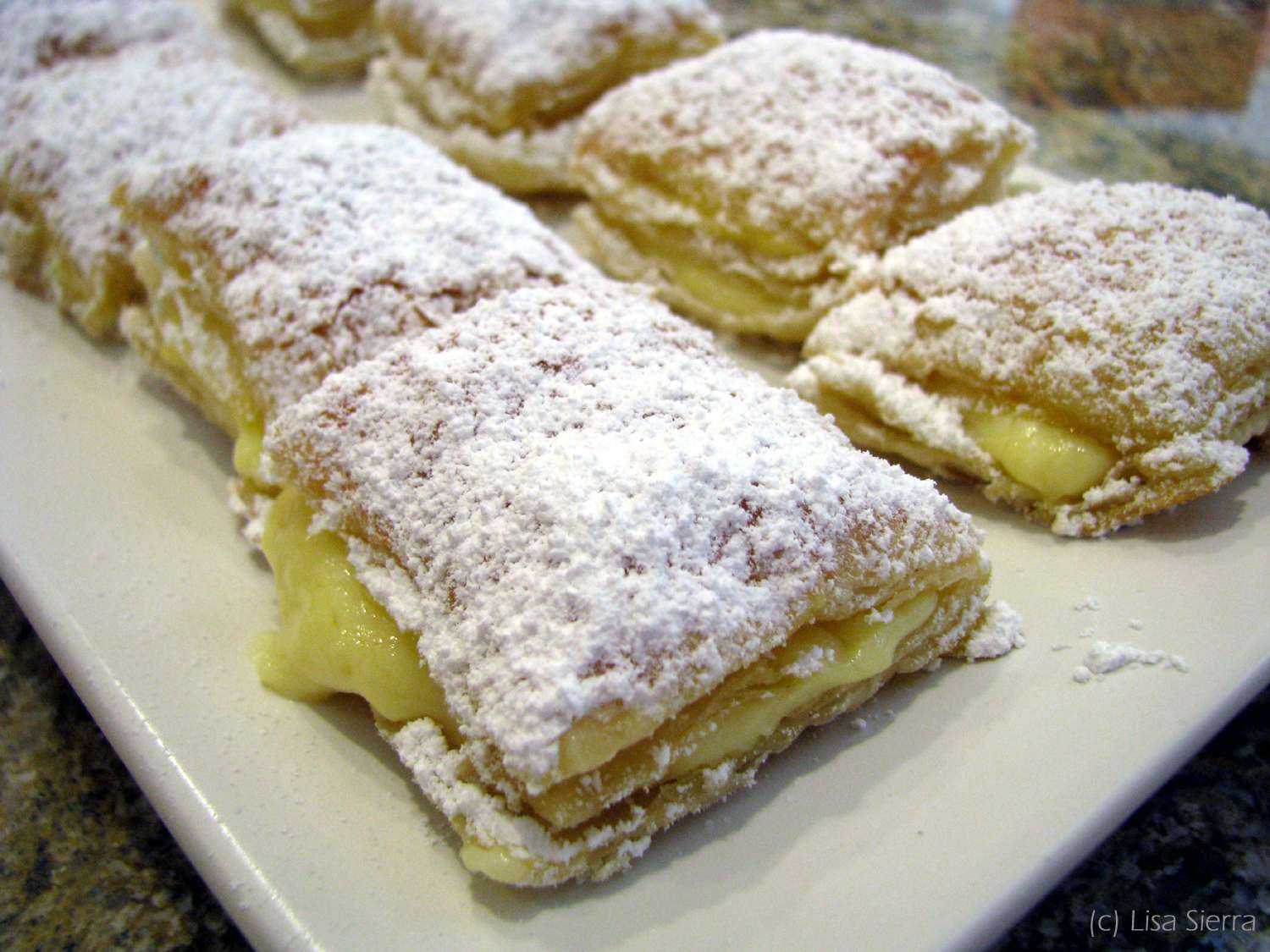
Miguelitos are the kind of dessert that make you believe puff pastry has a secret side hustle as edible architecture. They are light, crisp, golden, generously filled with silky pastry cream, and finished with a snowy dusting of powdered sugar. In other words, they look elegant enough for a bakery window but are friendly enough for a home kitchen where the rolling pin sometimes lives in the same drawer as batteries and birthday candles.
This Spanish cream-filled pastry is most famously associated with La Roda, a town in Albacete, Spain, where Miguelitos became a beloved local specialty. The classic version is beautifully simple: baked puff pastry, vanilla pastry cream, and confectioners’ sugar. No twelve-layer chocolate waterfall. No flaming torch. No pastry degree required. Just flaky layers, creamy filling, and a dessert that disappears faster than you can say, “I’ll only have one.”
This recipe keeps the spirit of traditional Miguelitos while making the process practical for American home bakers. Store-bought puff pastry keeps things approachable, homemade pastry cream gives the filling that rich bakery-style taste, and a few technique tips help you avoid sad, soggy pastry. Because nobody wants a Miguelito that looks like it just heard bad news.
What Are Miguelitos?
Miguelitos are Spanish puff pastry squares or rectangles filled with cream, usually pastry cream, and dusted with powdered sugar. Their charm comes from contrast: the pastry should be crisp and airy, while the filling should be smooth, cool, and rich without being heavy. Think of them as a smaller, friendlier cousin of a mille-feuille or Napoleon, but with less drama and far fewer crumbs judging your life choices.
The traditional Miguelitos de La Roda are known for their delicate puff pastry and creamy center. Some bakeries also sell versions filled with chocolate cream, whipped cream, or other sweet fillings, but the vanilla pastry cream version remains the classic. For this recipe, we will focus on the most familiar cream-filled style because it offers the best balance of flavor, texture, and nostalgia.
Why This Miguelitos Recipe Works
A great Miguelito depends on three things: fully baked puff pastry, thick but silky pastry cream, and smart assembly. If the pastry is underbaked, it turns chewy. If the cream is too loose, it slides out like it is trying to escape. If you assemble too early, the pastry softens before dessert time. The good news is that each problem has an easy fix.
First, the puff pastry is baked until deeply golden, not pale beige. Puff pastry needs heat to expand its layers and time to dry out enough to stay crisp. Second, the pastry cream is cooked until thick, then chilled so it can hold its shape. Third, the Miguelitos are filled close to serving time whenever possible. That one little timing trick makes the difference between “bakery quality” and “why is my dessert wearing a custard sweater?”
Ingredients for Spanish Cream-Filled Miguelitos
For the Puff Pastry
- 1 package frozen puff pastry, thawed according to package directions
- 1 large egg, beaten with 1 teaspoon water, optional for shine
- Powdered sugar, for dusting
For the Pastry Cream Filling
- 2 cups whole milk
- 1/2 cup granulated sugar
- 4 large egg yolks
- 1/4 cup cornstarch
- 2 tablespoons unsalted butter
- 2 teaspoons vanilla extract or 1 teaspoon vanilla bean paste
- 1/8 teaspoon fine salt
- Optional: 1 strip lemon peel or orange peel for a Spanish-style aromatic note
How to Make Miguelitos
Step 1: Make the Pastry Cream
Pour the milk into a medium saucepan. If using lemon or orange peel, add it to the milk. Warm over medium heat until the milk is steaming but not boiling. Remove the citrus peel before combining the milk with the egg mixture.
In a separate bowl, whisk the egg yolks, sugar, cornstarch, and salt until the mixture looks pale and smooth. Slowly pour about half of the warm milk into the yolk mixture while whisking constantly. This tempering step keeps the yolks from scrambling. Scrambled eggs are wonderful at breakfast, less wonderful inside a delicate Spanish pastry.
Pour the tempered mixture back into the saucepan. Cook over medium heat, whisking constantly, until the pastry cream thickens and begins to bubble gently. Let it bubble for about one minute while whisking so the cornstarch fully activates. Remove from heat and whisk in the butter and vanilla.
Transfer the pastry cream to a bowl. Press plastic wrap directly against the surface to prevent a skin from forming, then refrigerate until completely cold. The filling should be thick, glossy, and pipeable.
Step 2: Prepare the Puff Pastry
Heat the oven to 400°F. Line a baking sheet with parchment paper. Unfold the thawed puff pastry on a lightly floured surface. If needed, gently roll it just enough to smooth the seams. Do not roll it too thin; Miguelitos need height and flaky layers.
Use a sharp knife or pizza cutter to cut the pastry into rectangles or squares. A size around 2 1/2 to 3 inches works well for home baking. Try to cut cleanly instead of dragging the blade, because crushed edges can prevent puff pastry from rising properly.
Place the pastry pieces on the prepared baking sheet, leaving space between them. Brush lightly with egg wash if you want a more golden top, but keep the egg wash away from the cut edges. Bake for 14 to 18 minutes, or until the pastry is puffed, crisp, and golden brown.
Step 3: Cool and Split the Pastry
Let the baked pastry cool completely on a wire rack. Once cool, use a serrated knife to gently split each piece horizontally. Many puff pastry pieces naturally separate into a top and bottom layer, so you may only need a light touch. If a piece breaks, call it “rustic” and continue with confidence.
Step 4: Fill the Miguelitos
Whisk the chilled pastry cream until smooth. Transfer it to a piping bag fitted with a round tip, or use a zip-top bag with the corner snipped off. Pipe a generous layer of cream onto the bottom half of each pastry. Place the top half over the filling, pressing very gently.
Dust the filled Miguelitos generously with powdered sugar. The sugar is not just decoration; it gives the pastries their classic bakery look and adds a soft sweetness to the crisp top.
Pro Tips for Perfect Miguelitos
Use Cold Puff Pastry
Puff pastry performs best when it is cold but flexible. If it gets warm and sticky, place it in the refrigerator for 10 to 15 minutes before baking. Cold butter inside the dough creates steam in the oven, and that steam is what makes the pastry puff into beautiful layers.
Bake Until Truly Golden
Pale puff pastry may look done, but it often tastes doughy and softens quickly after filling. Miguelitos need crisp pastry, so wait for a confident golden color. The pastry should feel light and dry, not soft in the center.
Chill the Cream Completely
Warm pastry cream will melt into the pastry and make the whole dessert collapse emotionally and structurally. Chill the filling until firm, then whisk it before piping. This gives you a smooth, stable cream that stays where it belongs.
Assemble Near Serving Time
Miguelitos taste best the day they are assembled. You can bake the pastry and make the cream ahead, but fill the pastries shortly before serving for the crispest texture. If you must assemble them early, keep them refrigerated and serve within a few hours.
Flavor Variations
Traditional vanilla pastry cream is hard to beat, but Miguelitos are flexible. For a chocolate version, whisk 3 ounces of finely chopped dark chocolate into the hot pastry cream after cooking. For a citrus version, infuse the milk with lemon or orange peel. For a lighter filling, fold a small amount of whipped cream into chilled pastry cream to create a diplomat-style cream.
You can also add a thin layer of fruit preserves under the pastry cream. Raspberry, apricot, or strawberry jam works nicely, but keep the layer thin so it does not overpower the pastry. Miguelitos are elegant because they are balanced; they are not trying to become a fruit-filled suitcase.
Serving Suggestions
Miguelitos are excellent with coffee, espresso, café con leche, or black tea. They also make a beautiful addition to brunch, holiday dessert trays, birthday tables, or Spanish-themed dinners. Serve them chilled or slightly cool, not warm, so the cream keeps its shape.
For presentation, arrange the pastries on a platter and dust them with powdered sugar right before serving. Add a few fresh berries on the side if you want color, but avoid piling fruit directly on top because moisture can soften the pastry.
How to Store Miguelitos
Store filled Miguelitos in an airtight container in the refrigerator for up to two days. They will still taste delicious, but the pastry will gradually soften. For the best texture, store the baked pastry shells at room temperature in an airtight container and the pastry cream in the refrigerator, then assemble before serving.
Freezing filled Miguelitos is not recommended because pastry cream can separate after thawing. However, you can freeze unfilled baked puff pastry pieces for short-term storage. Re-crisp them in a low oven before filling.
Common Mistakes to Avoid
Cutting the Pastry with a Dull Knife
A dull knife presses the layers together, which limits the rise. Use a sharp knife or pizza cutter for clean edges.
Overfilling the Pastries
More cream sounds like a good idea until the first bite launches custard onto your shirt. Use enough filling to be generous, but not so much that the top slides around.
Skipping the Cooling Time
Both the pastry and cream must be cool before assembly. Warm pastry plus cream equals soggy layers. Patience is not glamorous, but in baking it often wears a cape.
Why Miguelitos Belong in Your Baking Rotation
Miguelitos are impressive without being fussy. They use simple ingredients, require no complicated shaping, and deliver a bakery-style result with minimal equipment. The recipe is also easy to scale. Make a small batch for family dessert or a big platter for a party. Either way, expect people to ask where you bought them.
Another reason to love this Spanish cream-filled pastry recipe is its balance. The puff pastry is buttery but light. The pastry cream is rich but not overwhelming. The powdered sugar adds sweetness without turning the dessert into a sugar avalanche. It is the kind of treat that feels special but still comfortable, like wearing a nice shirt with stretchy pants.
Experience Notes: Making Miguelitos at Home
The first time you make Miguelitos, the biggest surprise is how quickly they come together once the pastry cream is chilled. The recipe looks fancy on paper, but the process is mostly about timing. Make the cream first, let it cool, bake the pastry, then assemble. That is it. The dessert feels like something from a European pastry shop, yet the actual kitchen work is calm and manageable.
One useful experience is learning how puff pastry behaves. It rewards a cool kitchen, clean cuts, and a hot oven. If the dough becomes soft, do not panic. A short rest in the refrigerator brings it back to life. When the pastry hits the oven, the layers rise dramatically, and suddenly those flat little rectangles become golden pillows. This is the part where home bakers tend to stand near the oven door like proud grandparents at a school play.
The pastry cream is another confidence builder. At first, it may seem too thin, then almost suddenly it thickens as the cornstarch cooks. Keep whisking and trust the process. Once chilled, the cream becomes smooth and stable. If it looks slightly firm after refrigeration, whisk it briefly and it will loosen into a pipeable texture. Vanilla gives the filling a classic flavor, while citrus peel adds a subtle Spanish bakery aroma that makes the whole dessert feel brighter.
Serving Miguelitos is also part of the fun. They are small enough for a dessert tray but elegant enough for a dinner party. Guests usually notice the powdered sugar first, then the flaky layers, then the cream. The first bite is crisp, soft, sweet, and buttery all at once. It is not a loud dessert. It does not need sprinkles, frosting mountains, or dramatic decorations. Miguelitos win people over quietly, then vanish from the plate with suspicious speed.
If you are making them for the first time, assemble only a few at first and keep extra pastry and cream separate. This lets you enjoy the crispiest texture throughout the day. It also gives you the excellent excuse of “testing one more” before serving. For family gatherings, bake the pastry in the morning, chill the cream overnight, and fill the Miguelitos shortly before guests arrive. The kitchen stays calm, the dessert looks fresh, and you get to pretend you are effortlessly organized.
Miguelitos are especially satisfying because they teach a valuable baking lesson: simple desserts can feel luxurious when texture is handled well. Crisp pastry, smooth cream, and a snowy finish are enough. No overcomplication required. Once you master the basic recipe, you can try chocolate cream, citrus cream, or a tiny swipe of jam. But the classic version is worth making again and again because it proves that a few humble ingredients can create something memorable.
Conclusion
Miguelitos are a beautiful example of Spanish pastry at its most inviting: crisp puff pastry, creamy vanilla filling, and a generous dusting of powdered sugar. This homemade Miguelitos recipe gives you the classic flavor and texture without requiring advanced pastry skills. With store-bought puff pastry, a dependable pastry cream, and careful assembly, you can make a dessert that feels bakery-worthy but fits comfortably into a home kitchen.
The key is respecting the texture. Bake the pastry until golden and crisp, chill the cream until thick, and fill the pastries close to serving time. Do that, and your Miguelitos will be light, flaky, creamy, and dangerously easy to eat. Consider yourself warned: once these land on the table, “just one” becomes a very flexible concept.
Note: This article was written as original, publication-ready content based on established Miguelitos preparation methods, traditional Spanish pastry characteristics, and practical home-baking techniques.