Some headlines sound like they escaped from a science-fiction writer’s notebook, took a wrong turn at the Kremlin, and landed in the news. “Russia wants to clone an ancient army” is one of those headlines. It has everything: warriors, frozen tombs, ancient DNA, political theater, and just enough laboratory jargon to make a Bond villain quietly nod.
The story traces back to comments associated with Sergei Shoigu, Russia’s then-defense minister, about the possibility of using DNA from ancient Scythian warriors. The Scythians were not a fantasy race from a video game, although their résuméhorseback archery, elaborate gold, tattooed bodies, elite burials, and fearsome reputationsdoes make them sound suspiciously overqualified for one. They were real Iron Age nomads of the Eurasian steppe, and archaeological work in Siberia has uncovered impressive burial mounds, or kurgans, connected to their culture.
But the big question is not whether the Scythians were fascinating. They were. The real question is whether anyone could legally or scientifically clone them into a modern fighting force. The short answer: no, not in any practical, ethical, or lawful sense. The longer answer is much more interestingand less likely to require a bunker.
What Is the “Ancient Army” Cloning Story Really About?
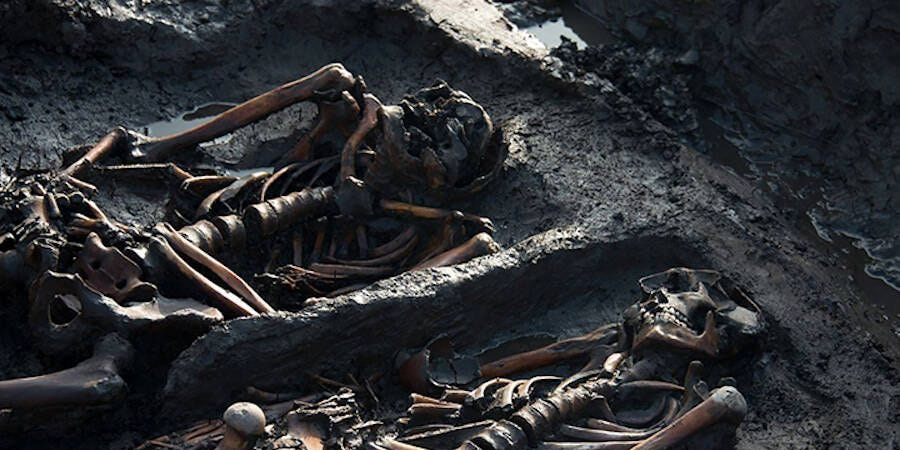
The phrase “Russia wants to clone ancient army” refers to speculation around ancient Scythian remains found in regions such as Tuva, a republic in southern Siberia. Tuva’s “Siberian Valley of the Kings” contains large burial mounds linked to early Scythian culture. Archaeologists have studied sites such as Tunnug 1, also called Arzhan 0, which belongs to the early Scythian horizon and may date to around the 9th century BCE.
These sites are important because they can preserve evidence of how early nomadic societies lived, fought, worshipped, traveled, and buried their elites. In some cases, cold conditions help preserve organic material better than ordinary soil would. That makes the region valuable for ancient DNA research, archaeology, and the study of early steppe cultures.
Somewhere between “ancient DNA is scientifically useful” and “let’s build a cavalry unit from 3,000-year-old skeletons,” the internet did what the internet does best: it put on sunglasses, grabbed a megaphone, and shouted the wildest version of the story.
Who Were the Scythians?
The Scythians were groups of nomadic peoples who dominated parts of the Eurasian steppe from roughly the first millennium BCE. They were famous for mobility, horse culture, archery, metalwork, and elaborate animal-style art. Ancient Greek writers described them as formidable warriors, and modern archaeology has added a more detailed picture: they were not just raiders on horseback, but complex societies with status, trade, ritual, and political organization.
Recent genetic research has helped illuminate their social structure. Studies of Iron Age Scythian burials show that elite families may have held inherited power, and that women could occupy high-status roles. That matters because it moves the Scythians out of the cartoon category of “ancient tough guys with arrows” and into the much more accurate category of “complex steppe societies with dynastic leadership, ritual power, and impressive logistics.”
So, if scientists can recover DNA from Scythian remains, what can they do with it? They can learn about ancestry, migration, kinship, diet, disease, and population history. They can reconstruct relationships between individuals buried in different tombs. They can compare ancient populations to modern groups. What they cannot do is press “print warrior” on a laboratory machine.
How Human Cloning Actually Works
When people talk about cloning, they often imagine a full-grown duplicate stepping out of a glass tube, preferably with dramatic fog and questionable lighting. Real cloning is much less cinematic and much more fragile.
The best-known method is somatic cell nuclear transfer, or SCNT. In simple terms, scientists take the nucleus from a body cell and place it into an egg cell whose own nucleus has been removed. If the egg begins developing, it may become an embryo with nuclear DNA matching the donor. This is the broad technique associated with Dolly the sheep, the famous mammal cloned from an adult cell.
That process requires something ancient remains almost never provide: an intact, usable cell nucleus. Ancient DNA is usually fragmented. Time, moisture, temperature changes, microbes, radiation, and chemistry all attack DNA. Even under excellent conditions, genetic material breaks into pieces. Sequencing ancient DNA is like reconstructing a shredded library from confetti. Cloning requires something closer to an intact original manuscript.
Why Ancient DNA Is Not a Clone Recipe
Ancient DNA can be powerful, but it is not magic dust. Researchers can sequence fragments, compare them to reference genomes, and infer biological information. That is a long way from creating a living human embryo.
Problem One: The DNA Is Broken
A 3,000-year-old human body may preserve some DNA, especially in cold or dry conditions, but not in the clean, complete, cell-ready form needed for reproductive cloning. Ancient DNA is usually short, damaged, chemically altered, and mixed with DNA from microbes, soil, handlers, and the environment. Scientists can filter and analyze it, but analysis is not the same as resurrection.
Problem Two: A Genome Is Not a Person
Even if scientists somehow reconstructed a Scythian genome, that would not recreate the original individual. A clone would not inherit memories, training, language, loyalty, culture, or battle experience. You would not get a warrior who wakes up asking for a horse and a bronze arrowhead. You would get a modern child with a copied genome, born into a completely different world, requiring care, education, rights, andideallysomeone to explain smartphones.
Problem Three: Biology Needs More Than Nuclear DNA
A cloned embryo also depends on egg cell biology, mitochondrial DNA, epigenetic reprogramming, pregnancy, maternal environment, and early development. Mammalian cloning remains inefficient and risky even in animals where the technology is established. Applying it to humans would raise severe medical and ethical concerns.
Problem Four: “Army” Is Not a Genetic Trait
No gene says “excellent with horse archery and emotionally prepared for steppe warfare.” Physical traits may be influenced by genetics, but military skill is training, culture, discipline, equipment, tactics, nutrition, and social organization. A Scythian warrior was not simply DNA wearing boots. He or she was the product of a whole society.
Is Human Cloning Legal?
Legally, cloning an ancient human would crash into a wall almost immediately. International bioethics standards strongly reject human reproductive cloning. UNESCO’s Universal Declaration on the Human Genome and Human Rights states that practices contrary to human dignity, including reproductive cloning of human beings, should not be permitted.
Russia itself has had a federal law imposing a ban on cloning a person. The Russian law defines human cloning as creating a person genetically identical to another living or deceased person through transfer of a somatic cell nucleus into an egg cell without its nucleus. It also prohibits import and export of cloned human embryos while the law applies.
In the United States, the legal picture is more complicated because there is no single simple federal statute that says “all human cloning is banned” in every possible context. However, federal funding restrictions, FDA oversight, state laws, and bioethics rules create major barriers. The FDA has asserted regulatory authority over clinical research involving cloning technology to create a human being, requiring investigational review before any such work could proceed.
In plain English: trying to clone a human being would not be a bold science project. It would be a legal, ethical, medical, and political disaster buffet.
Would Cloning an Ancient Warrior Be Ethical?
Even if the law magically disappearedand it has notthe ethics would still be brutal. A cloned person would be a human being, not a historical artifact, not government property, and not a museum exhibit with knees. Creating a child for a predetermined military or political purpose would violate basic principles of autonomy and human dignity.
There is also the problem of consent. Ancient individuals did not consent to genetic extraction for reproductive experiments. Archaeological remains are often culturally sensitive, and descendant communities may have moral, spiritual, or historical interests in how remains are treated. Turning burial evidence into a military fantasy would be a spectacularly bad look, somewhere between “grave robbery with a lab coat” and “Jurassic Park, but with lawyers crying.”
Human cloning also raises questions about identity. Would the clone be expected to represent an ancient culture? Would the state claim special authority over that person? Would the individual be treated as a citizen, a research subject, a soldier, or a symbol? The only ethical answer is that any cloned human would have full human rights. The moment that is acknowledged, the “ancient army” idea collapses.
What About De-Extinction?
Some readers may ask: if scientists are discussing mammoth-like elephants and extinct species, why not ancient humans? The difference is enormous.
De-extinction projects usually focus on animals and often do not involve true cloning from intact ancient cells. Instead, researchers may compare ancient DNA with the genome of a living relative and attempt to edit living cells to express selected traits. A proposed mammoth-like elephant, for example, would not be a perfect resurrected mammoth. It would be a modern organism engineered to carry some mammoth-like features.
Humans are not conservation projects. There is no ethical conservation argument for recreating a Scythian person. Scythians were not a separate extinct species; they were ancient human populations whose descendants and genetic legacies are part of broader human history. Treating them like extinct zoo animals would be scientifically confused and morally ugly.
What Science Can Actually Do With Scythian DNA
The useful science is not cloning. It is research. Ancient DNA can help answer serious questions:
- How were Scythian elites related to one another?
- Did power pass through family lines?
- How did steppe populations migrate and mix?
- What diseases or genetic traits appeared in ancient communities?
- How did burial status relate to biological kinship?
- What role did women play in elite Scythian society?
These questions are far more valuable than cloning fantasies. They help us understand the past without pretending we can reboot it. Archaeology is not a “restore factory” for dead civilizations. It is a careful discipline that combines material evidence, genetics, chemistry, geography, and historical interpretation.
The Political Theater of Ancient Power
There is another layer to the story: politics loves ancient symbolism. States often look to the deep past to build prestige, identity, and legitimacy. Ancient warriors are especially convenient because they do not give interviews, file complaints, or object when modern leaders borrow their image.
The Scythians make a powerful symbol: mobile, fierce, mysterious, and rooted in the Eurasian steppe. For modern political storytelling, that is tempting material. But symbolism should not be confused with science. Saying “we admire ancient warriors” is cultural theater. Saying “we can clone them” is biology taking a wrong exit.
The danger is not that an ancient Scythian army will appear tomorrow. The danger is that exaggerated science stories can blur the public understanding of genetics. Ancient DNA research is already complicated. Add nationalism, military language, and viral headlines, and suddenly people imagine laboratories full of spear-carrying embryos. That is not education. That is a Netflix pitch.
Is It Possible to Clone a 3,000-Year-Old Human?
With current science, no. A true clone would require intact nuclear material from a viable cell, and ancient remains do not provide that. Sequencing fragments is possible. Reconstructing parts of a genome is possible. Making statistical inferences is possible. Creating a living cloned human from 3,000-year-old remains is not realistically possible.
Could future technology synthesize a genome based on ancient DNA fragments? Perhaps in some theoretical sense, future scientists may become better at reconstructing ancient genomes. But a synthesized genome would still not equal a person from the past. It would involve countless assumptions, missing data, modern biological systems, and extreme ethical barriers. “Possible someday in a speculative technical discussion” is not the same as “Russia can build an ancient army.”
Is It Legal to Clone a 3,000-Year-Old Human?
No, not in any straightforward lawful way. Human reproductive cloning is widely condemned, restricted, or prohibited across much of the world. Russia’s own legal framework bans cloning a person. International bioethics principles reject reproductive human cloning as contrary to human dignity. In the United States, FDA oversight and funding restrictions would make any attempt to clone a human subject to serious regulatory barriers.
Also, the “ancient” part does not create a loophole. A cloned embryo intended to become a human being would still be human cloning. Whether the donor lived last week or 3,000 years ago does not magically convert the project into archaeology.
Could a Clone Become a Warrior?
Only in the same sense that any person could choose a military career after growing up, receiving training, and making adult decisions. But that would not make them an ancient warrior. They would be a modern person with a genetic connection to an ancient individual or reconstructed genome. Genes do not transmit culture like a USB drive.
Imagine cloning Mozart and expecting the baby to immediately compose symphonies. You would mostly get a baby who needs milk, sleep, and someone to stop saying, “Play piano, tiny genius.” Talent, identity, and achievement arise from genes interacting with environment. The same applies to warriors. A Scythian fighter was made by the steppe world: horses, bows, family, conflict, food, climate, spiritual beliefs, and social training.
Why the Story Still Matters
This story matters because it sits at the crossroads of science, law, ethics, archaeology, and propaganda. It forces us to ask what ancient DNA is for. Is it a tool for understanding humanity, or a toy for power fantasies? Is the past something we study respectfully, or something we try to weaponize?
The best use of Scythian DNA is to learn from it. It can help scholars understand ancient mobility, family structure, social hierarchy, and cultural exchange across Eurasia. It can correct myths and enrich history. That is already impressive. We do not need to add clone battalions to make it exciting.
In fact, the real Scythians are more interesting than the fantasy version. They built far-reaching networks across harsh landscapes. They mastered horse culture at a high level. Their art remains stunning. Their burials reveal political and ritual complexity. Their women may have held elite status in ways that challenge lazy assumptions about ancient warfare. No cloning required.
Experiences and Reflections: What This Topic Teaches Us
Reading about the idea of cloning an ancient army feels like opening a door marked “serious science” and finding a movie trailer inside. The first reaction is usually laughter. The second is curiosity. The third is a slightly nervous question: wait, can anyone actually do that?
That emotional journey is exactly why this topic is so useful for public education. It gives readers a memorable way to understand the difference between DNA sequencing and cloning. Many people hear “scientists found ancient DNA” and assume it means scientists found a complete biological instruction manual. In reality, ancient DNA research is more like recovering damaged pages from a burned book, then using comparison, statistics, and patience to understand what the book once said.
The story also teaches humility. Modern technology is powerful, but it does not erase time. A burial mound is not a freezer full of ready-to-use cells. A genome is not a soul. A clone is not a resurrected person. A warrior is not a chromosome with a helmet. The gap between genetic data and living identity is enormous, and respecting that gap is part of being scientifically literate.
There is also a museum experience hidden in this topic. Anyone who has stood in front of ancient armor, weapons, pottery, or human remains knows the strange feeling of closeness and distance. The people of the past were real. They ate, feared, loved, fought, aged, and died. Archaeology brings them nearer, but it should not turn them into raw material for modern fantasies. Good archaeology asks careful questions. Bad imagination grabs a skull and says, “Can we draft him?”
For writers, educators, and SEO publishers, this topic is a gift because it blends a viral headline with genuinely important explanations. It lets an article be fun without becoming fake. The trick is to keep the humor pointed at the absurdity, not at the science. Ancient DNA researchers do difficult, careful work. Bioethicists wrestle with real problems. Legal systems try, imperfectly, to keep technology from sprinting ahead of human values. The comedy comes from the clone-army headline, not from the experts trying to keep everyone grounded.
There is a personal lesson here too: whenever a headline sounds like “Jurassic Park, but geopolitical,” slow down. Ask what was actually said, what evidence exists, what the technology requires, and who benefits from the dramatic version. The answer is often more ordinary than the headlinebut also more meaningful.
In this case, the meaningful answer is clear. Russia is not about to field an ancient Scythian clone army. The law would block it. The science cannot deliver it. The ethics would condemn it. But the archaeological research behind the headline is genuinely fascinating. It shows that the ancient steppe was politically complex, genetically diverse, and historically rich. That is a better story than clone soldiers. It just has fewer laser sounds.
Conclusion
So, is it legal? No, human reproductive cloning faces strong legal and ethical prohibitions, including in Russia. Is it possible? Not with current science, and especially not from ancient fragmented DNA. The idea of cloning Scythian warriors may be headline gold, but the real treasure is the ancient DNA research helping us understand who these people were.
The Scythians do not need to be cloned to matter. Their history is already alive in archaeology, genetics, art, and the cultural memory of the Eurasian steppe. And frankly, if a 3,000-year-old warrior could speak today, he might not ask for a cloning lab. He might ask why everyone is staring at glowing rectangles and why nobody brought a horse.