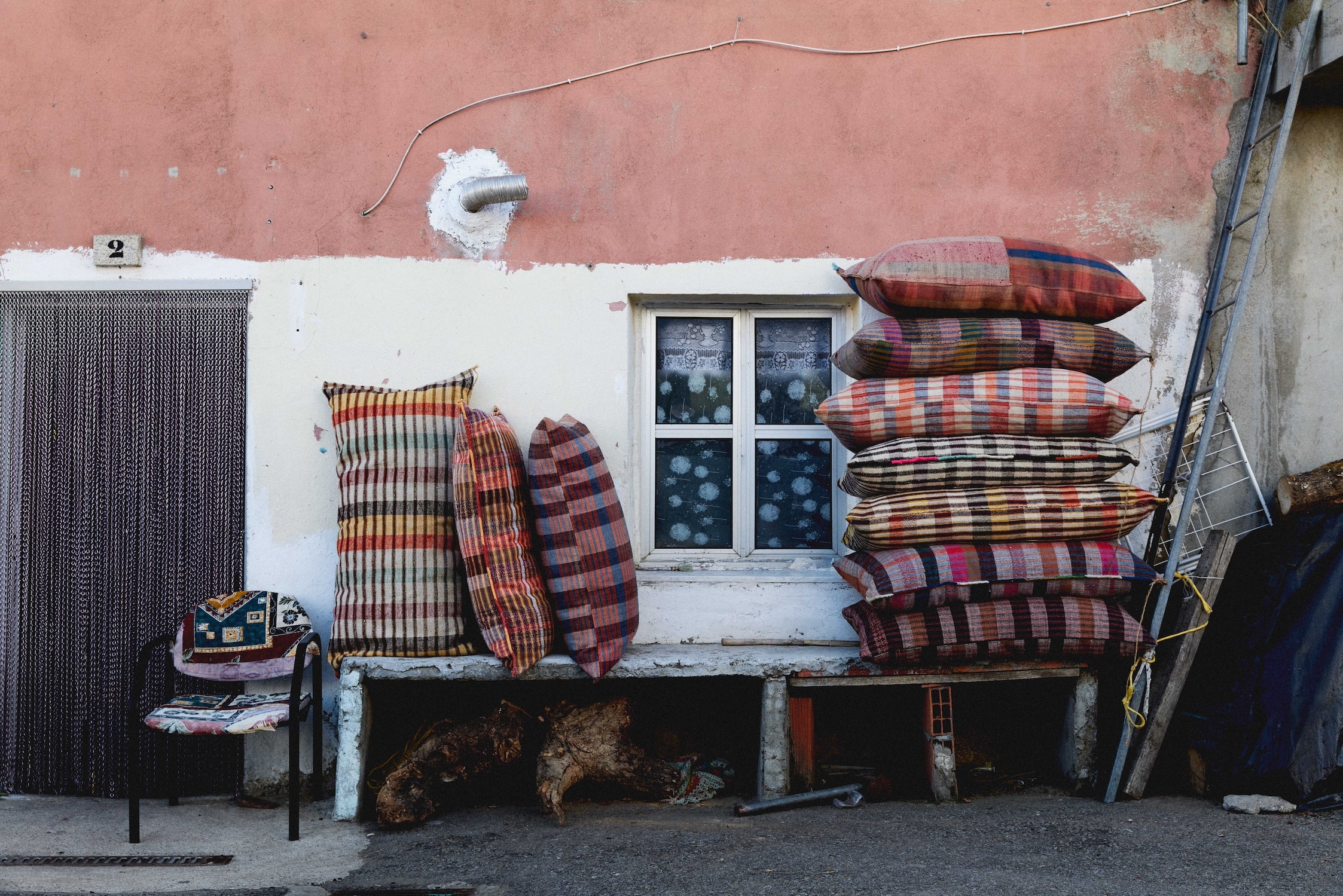
If your home has ever whispered, “Please stop buying bland throw pillows from aisle 14,” Studio Augustin may be the stylish intervention it has been waiting for. The brand’s vintage grain sack pillows and poufs are not just pretty accents with good posture. They are one-of-a-kind pieces made from handwoven vintage cereal sacks from northern Portugal, transformed into cushions and poufs that preserve the soul of the original textile while making it useful for modern living. That is a fancy way of saying they are old workhorse fabrics that retired beautifully.
What makes these pieces especially compelling is that they do not try to scrub history away. Studio Augustin leans into it. The hand-stitching, loops, mends, color variation, and patches are not treated like flaws to hide. They are the headline act. In a design era where every room risks looking like it was assembled by a very efficient algorithm, these pillows and poufs feel human. They bring warmth, story, and texture without trying too hard, which, frankly, is the hardest trick in decorating.
Why Studio Augustin Stands Out
Studio Augustin’s appeal starts with its raw material. These are vintage Portuguese grain sacks, originally woven for practical farm use. That humble origin matters because it gives the finished pillows and poufs something mass-market decor often lacks: authenticity. These textiles were made to carry grain, endure friction, and survive daily life. They were not born in a trend forecast. They earned their stripes, sometimes literally.
The studio transforms those sacks into one-of-a-kind home pieces rather than producing endless copies of the same design. That means every cushion or pouf arrives with its own rhythm of stripes, colors, seams, and wear. Some pieces feature visible repairs or irregularities that make them feel more intimate, more tactile, and more interesting than anything that rolls off a generic production line. The overall result is rustic, artistic, and refined in a way that never feels fussy.
The Story Behind Vintage Grain Sacks
Functional textiles with serious charm
Vintage grain sacks have a long history in Europe, where farmers used them to store and transport grain, flour, and other staples. The best surviving examples are often woven from strong natural fibers such as linen and hemp, which explains their durability and rich texture. Studio Augustin’s collection draws from handwoven cereal sacks found in northern Portugal, particularly pieces associated with the Trás-os-Montes region and the area around Miranda do Douro. That regional identity matters because these sacks are not generic old fabric. They are tied to place, craft, and rural life.
One of the loveliest details in Studio Augustin’s story is the visible presence of the women who originally made these bags. Their contribution still shows up in hand-finished seams, attached loops, careful mending, and the bold, intentional color choices woven into the cloth. In other words, these textiles were practical, yes, but they were never joyless. Even a grain sack, it turns out, can have personality.
Why the repairs make them better
In most modern retail, wear is a problem to conceal. With vintage grain sacks, wear is often part of the beauty. Studio Augustin repurposes sacks with holes into poufs and also uses damaged sections as patches for cushions. This is a smart circular-design move, but it also creates visual depth. A stitched mend or carefully placed patch tells you the textile lived a life before it landed on your sofa.
That sense of visible repair gives these pieces an emotional pull. They do not look sterile. They look seasoned. Like a cast-iron skillet, a leather armchair, or a grandparent who knows exactly how to make potatoes taste better than a restaurant’s.
Materials, Texture, and the Magic of Natural Fibers
Part of the charm of vintage grain sack pillows and poufs is the feel. Linen and hemp have a naturally nubby, tactile surface that reads as relaxed luxury rather than polished perfection. Linen is beloved in interiors because it is breathable, durable, and gets softer with time. That makes it ideal for decorative pieces that people actually touch, lean against, move around, and occasionally claim during movie night as if they were human rights.
The texture is especially important. Grain sack fabric has body. It is not limp, slippery, or over-processed. That heft allows Studio Augustin pillows to hold shape beautifully while still feeling casual. The poufs benefit even more from that structure. They function as extra seating, footrests, low tables with a tray on top, or floor cushions for spaces that want flexibility without bulk.
Because these are vintage textiles, the colors and patterns also feel richer than many contemporary reproductions. Rather than flat, factory-perfect stripes, you get tones that read warmer, softer, and more nuanced. They carry patina. They suggest history. They make a room feel collected rather than decorated in one aggressive afternoon.
How Studio Augustin Pillows and Poufs Work in Real Rooms
In the living room
Studio Augustin’s larger cushions work beautifully on sofas, benches, and daybeds, especially in rooms that need a little looseness and character. If your living room already has smooth surfaces like painted walls, polished wood, or crisp upholstery, a grain sack pillow can introduce just enough friction to keep the space from feeling flat. The stripes and woven irregularities do the visual work that a loud print might do, but with far more charm and far less shouting.
The poufs are particularly useful in casual entertaining spaces. Architectural Digest has noted the enduring appeal of poufs and pillow ottomans because they add practical seating with a playful, collected look. Studio Augustin’s versions bring that same function, but with deeper narrative value thanks to the reused vintage textile.
In the bedroom
Bedrooms benefit from grain sack pillows because they soften the line between rustic and refined. Country-inspired interiors often rely on layered textures and vintage finds to feel welcoming rather than staged, and these pillows fit that formula naturally. A long lumbar on a bed, a square pillow on a reading chair, or a pair of mismatched cushions on a bench can make a room feel personal without tipping into clutter.
Blue-and-white or red-and-neutral striped grain sack textiles are especially effective in bedrooms because they echo classic farmhouse palettes while still feeling grounded and timeless. They look just as comfortable paired with crisp white bedding as they do with quilts, coverlets, or weathered wood furniture.
In reading nooks, guest rooms, and awkward corners
Here is where the pouf earns its paycheck. An awkward corner becomes a reading perch. A guest room gets a landing spot for a bag. A fireplace area gains extra seating without introducing a bulky armchair. Smaller swaths of vintage fabric often shine when turned into poufs because the shape lets the textile be seen from multiple angles, almost like soft sculpture.
This is one reason vintage-based decor continues to resonate. It is not just about nostalgia. It is about utility with soul. Studio Augustin’s pieces work hard while looking like they wandered into your home after a glorious life somewhere else.
What to Know Before You Buy
No two pieces are identical
If you need perfect symmetry, identical twins, or stripe placement that obeys military discipline, vintage grain sack decor may not be your love language. Studio Augustin’s pillows and poufs are intentionally one of a kind. Variations in weave, color, repair, and wear are part of the point. That individuality is exactly what many buyers want, but it helps to go in with the right expectations.
Signs of age are part of the appeal
Traces of use are not defects to panic over. They are part of the natural history of vintage textiles. In fact, those subtle signs of age often separate truly compelling vintage-inspired decor from pieces that only imitate it. Original monograms, patched areas, old seams, and softened fiber texture give grain sack pillows their gravitas. Without those details, the whole category can start to look like costume rather than character.
Care requires a little respect
Natural fibers are durable, but they still deserve thoughtful care. Some Studio Augustin pillows sold through retailers feature removable covers, hidden zipper closures, and guidance for gentle spot cleaning or dry cleaning. That is encouraging, but owners should still treat each piece according to its specific construction and care label.
It is also wise to keep vintage textiles out of harsh direct sunlight for long stretches. Sun can fade colors and weaken fibers over time, especially on textiles used indoors that are not designed for heavy UV exposure. Rotate cushions occasionally, keep them clean, and avoid treating them like indestructible outdoor furniture unless the product is specifically made for that use. In short: vintage charm does not mean invincible.
Why These Pieces Feel So Relevant Right Now
Studio Augustin’s vintage grain sack pillows and poufs land at the intersection of several lasting design priorities: sustainability, craftsmanship, tactility, and individuality. People increasingly want homes that feel layered and lived in, not merely coordinated. They want materials with integrity. They want pieces that do not look like everybody else’s purchase history.
That is where Studio Augustin succeeds. The brand offers a kind of slow decor. These are pieces with an origin story, a visible hand, and a practical role in the home. They are also refreshingly free from trend exhaustion. A vintage grain sack pillow does not need to be “the moment” to justify its place. It simply has to look beautiful, feel useful, and age well. Conveniently, it does all three.
Are Vintage Grain Sack Pillows and Poufs from Studio Augustin Worth It?
For shoppers who value originality, craft, and material honesty, yes. These pieces are not competing with cheap throw pillows, and they should not be judged by the same standard. You are not paying only for a cushion cover or a pouf shape. You are paying for vintage textile sourcing, curation, transformation, and the preservation of a handmade story. That is a different category altogether.
The strongest argument in their favor is that they can shift a room without overwhelming it. One well-chosen Studio Augustin pillow can add more depth to a space than a whole cart of trendy accessories. A pouf can solve a practical seating problem while acting as a piece of textile art. That kind of versatility is hard to fake and even harder to replace with something forgettable.
Experiences Related to Vintage Grain Sack Pillows and Poufs from Studio Augustin
Living with pieces like these is less about making a dramatic decorating statement and more about noticing a room feels better over time. That is usually the first experience people describe. A sofa that once looked a little too crisp or a little too safe suddenly feels more relaxed with a grain sack pillow tossed into the mix. The room stops looking “finished” in a showroom sense and starts looking lived in, like a place where people read on rainy afternoons, drink coffee that gets cold, and forget their phones in the other room for once.
Another common experience is how often guests ask about them. Not because the pieces are flashy, but because they have texture and story. Someone sits down, touches the fabric, notices a stitched repair, and asks where it came from. That conversation rarely happens with a generic pillow. Vintage grain sack textiles have a way of inviting curiosity. They feel substantial in the hand, with that slightly nubby, weighty quality that makes people instinctively understand they are touching something older and more meaningful than standard decor.
There is also a practical side to the experience. A Studio Augustin pouf tends to become the unofficial utility player of the house. One day it is extra seating when friends come over. The next day it is a footrest. Then it becomes a perch for a tray, a stack of magazines, or the sweater someone tossed off because the room got too warm. In family spaces, these kinds of objects earn affection because they are useful without looking overly functional. They move around easily and solve little problems all day long.
Bedrooms change in quieter ways. A long grain sack pillow across the bed can make even simple white bedding feel more layered and intentional. In a guest room, one vintage cushion on a chair or bench can create that “someone thought this through” feeling without requiring a full design makeover. The best part is that the imperfection makes the room feel warmer. Nothing about these textiles says, “Please do not touch.” They say, “Go ahead, sit down.” That is a deeply underrated design quality.
People also tend to appreciate these pieces more over time rather than less. Because the materials are natural and visually complex, they do not become boring quickly. You notice different details as the light changes: a faded stripe, a hand-finished seam, a patch that suddenly reads like abstract art. The experience is similar to living with old wood, handmade pottery, or vintage rugs. The object keeps giving because it is not flat in either texture or meaning.
Perhaps the most satisfying experience, though, is emotional. There is comfort in owning something that was not made yesterday for a trend cycle that will vanish by next spring. Studio Augustin’s pillows and poufs carry evidence of work, repair, reinvention, and continued use. They remind you that beauty does not need to be pristine to be valuable. Sometimes it is the opposite. Sometimes the worn places, the odd stripe, the careful mend, and the slight asymmetry are exactly what make a home feel honest. And honestly, that is a lot more memorable than another beige pillow trying very hard to be invisible.
Final Thoughts
Vintage Grain Sack Pillows and Poufs from Studio Augustin offer more than rustic charm. They bring together handwoven Portuguese history, natural-fiber texture, thoughtful reuse, and modern-day practicality in a way that feels both grounded and elevated. These pieces are not background decor. They are quiet storytellers.
If your taste leans toward homes that feel layered, soulful, and slightly less interested in perfection, Studio Augustin makes an excellent case for decorating with textiles that have already lived a life. And really, who among us does not trust a pillow with a little backstory?