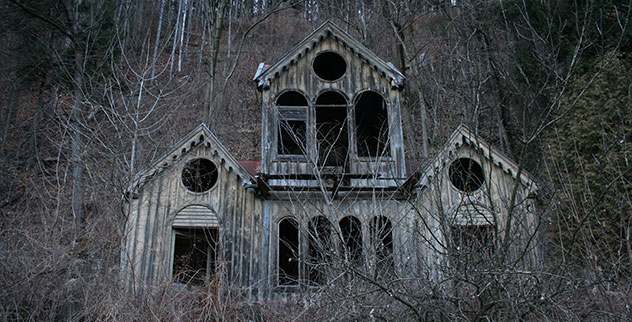
Some criminals become famous because they leave fingerprints, sloppy alibis, or a getaway car parked in exactly the wrong place. Others become infamous because they seem to leave almost nothing at all. They slip through investigations, confuse witnesses, frustrate police departments, and earn the kind of nickname usually reserved for haunted houses and overdramatic Halloween decorations: phantom.
The phrase “phantom law breakers” does not mean ghosts are out here ignoring parking tickets. It describes real offenders, suspects, and mystery figures who became difficult to identify, catch, or explain. Some were eventually exposed as very human criminals. Some were never caught. One was not a criminal at all, but a forensic mistake so strange it briefly looked like an international supervillain had joined the chat.
This list explores ten of the most fascinating phantom law breakers in history, from burglars and hijackers to strange intruders, cold-case killers, and one “criminal” created by contaminated evidence. The stories are weird, unsettling, and sometimes tragic, but they also reveal something important: mystery is powerful, but facts matter more.
What Makes a Law Breaker a “Phantom”?
A phantom law breaker usually has three ingredients: a memorable nickname, a pattern that scares the public, and an investigation full of gaps. The “phantom” label often appears when people are afraid and authorities cannot quickly explain what is happening. Newspapers love a spooky nickname, communities repeat it, and suddenly a criminal case sounds like a campfire story wearing a police badge.
But behind every nickname is a real-world lesson. These cases show how eyewitness accounts can disagree, how rumors can outrun evidence, how forensic tools can both help and mislead, and how public fear can turn a local crime into a legend.
10. The North Side Phantom
A Pittsburgh burglar with a very bad storage plan
In 1945, Pittsburgh’s North Side dealt with a series of burglaries that made residents feel as if a shadow had learned how to open windows. The thief, soon nicknamed the North Side Phantom, was linked to dozens of break-ins and thousands of dollars in stolen jewelry. Witness descriptions were inconsistent, which only made the mystery feel more ghostly.
The truth, however, was less supernatural and more “teenager with terrible decision-making skills.” The culprit was identified as Vincent Donnelly, an 18-year-old escapee from a juvenile facility. He reportedly hid in empty cellars and worked with other young accomplices. The funniest twist, in the dark-comedy sense, is that much of the stolen property was stored in a basement locker belonging to a police officer. That is not exactly criminal genius; that is a sitcom subplot with handcuffs.
The North Side Phantom case reminds us that fear can inflate a suspect into a legend. Once the name “phantom” stuck, the burglar seemed almost mythical. In reality, he was a young offender relying on vacant spaces, confusion, and luck.
9. The Pittsburgh Phantom Wreckers
The crew that made houses disappear
Most thieves steal jewelry, cash, or maybe a bicycle if they are feeling unambitious. The Pittsburgh Phantom Wreckers went bigger. In 1980, an unauthorized demolition crew allegedly targeted condemned or vacant houses, stripped them for valuable materials, and left behind little more than debris and questions.
The most bizarre part is how bold the operation appeared. These were not midnight burglars tiptoeing around with tiny flashlights. Reports described houses being dismantled in broad daylight, as if the crew had permission. When challenged, the confusion over authorization helped the “phantom” act survive longer than it should have.
This case is fascinating because it sits at the intersection of crime, bureaucracy, and urban decline. A city with vacant properties can become vulnerable to people who know how to look official. A clipboard, a truck, and confidence can sometimes fool a neighborhood faster than a mask. The lesson: not every phantom hides in darkness. Some wear work gloves and act like they have a permit.
8. The Phantom Barber of Pascagoula
The strangest haircut nobody requested
In 1942, Pascagoula, Mississippi, was busy with wartime production, blackout rules, and a growing population. Then came a case so odd it sounds like folklore: an intruder who entered homes and cut locks of hair from sleeping victims. Newspapers called him the Phantom Barber.
The incidents created fear because they were intimate, strange, and hard to explain. Nothing about the pattern looked like ordinary burglary. The intruder was not after money or silverware. He seemed interested in hair, which is the kind of detail that makes a whole town check its windows twice before bed.
A man named William Dolan was later arrested in connection with a related attack, but debate has continued over whether he was truly the Phantom Barber. That uncertainty is part of why the story has lasted. It is not only a crime story; it is a local legend shaped by wartime anxiety, newspaper drama, and the universal horror of waking up to find someone has turned your bedroom into an unwanted salon.
7. The Phantom Burglar of Bel-Air
Hollywood glamour meets second-story crime
From the mid-1930s to 1939, wealthy homes in Bel-Air became targets for a burglar who seemed to float through Los Angeles high society. The Phantom Burglar of Bel-Air reportedly stole jewelry, furs, bonds, silver, and collectibles from the homes of celebrities and affluent residents.
What made the case so compelling was the setting. Bel-Air already sounded like a movie backdrop, and the idea of a phantom burglar visiting the rich and famous felt ready-made for a black-and-white crime film. The crimes were eventually connected to William Borton, also known as Ralph Graham, who was arrested in San Francisco while trying to sell stolen jewels.
The Phantom Burglar story shows how class and celebrity can magnify a case. A burglary in a normal neighborhood is serious. A burglary in a movie star’s mansion becomes national gossip with better lighting. Yet beneath the glamour was a basic truth: even the fanciest homes can be vulnerable when a skilled offender understands habits, access points, and timing.
6. The Los Angeles Phantom Sniper
A citywide panic with a real suspect
In the early 1950s, Los Angeles faced a frightening series of attacks attributed to the Phantom Sniper. The crimes created public anxiety because they appeared sudden, random, and difficult to predict. Women were targeted in public places, and the uncertainty made the city feel unsafe.
Police later arrested Evan Charles Thomas. Court records show he was convicted in the death of Nina Marie Bice, and the case became part of California’s legal record. Unlike some phantom cases, this one did not remain permanently unsolved. The “phantom” was identified, tried, and punished.
The case is important because it shows how quickly a nickname can amplify fear. “Unknown attacker” is alarming enough. “Phantom Sniper” sounds like a villain invented by a tabloid editor who just drank six coffees. Still, the fear was not imaginary. The nickname may have been dramatic, but the investigation and its consequences were very real.
5. The Texarkana Phantom Killer
The Moonlight Murders and an enduring cold case
In 1946, Texarkana, on the Texas-Arkansas border, was shaken by a series of attacks known as the Moonlight Murders. The unidentified offender became known as the Phantom Killer. Five people were killed and others were injured during the spring of that year, and the case was never solved.
The fear spread beyond the crime scenes. Residents changed routines, rumors traveled quickly, and law enforcement faced intense pressure. The mystery later inspired the film The Town That Dreaded Sundown, which helped preserve the Phantom Killer in American true-crime culture.
What makes the Texarkana case especially haunting is not gore or shock value. It is the silence after the violence. No confirmed identity. No courtroom ending. No final answer for families and communities. In true crime, the most unsettling stories are often not the loudest ones. They are the ones that stop mid-sentence.
4. The Freeway Phantom
A Washington, D.C. cold case that still deserves attention
Between 1971 and 1972, Washington, D.C., was marked by a devastating series of killings connected to the nickname Freeway Phantom. The victims were young Black girls and women, and the case remains one of the capital’s most painful unsolved mysteries.
The name “Freeway Phantom” came from the pattern of victims being found near roadways. But the nickname should never distract from the human loss at the center of the case. These were not characters in a mystery novel. They were daughters, sisters, students, friends, and neighbors whose families deserved answers.
This case also raises serious questions about media attention, race, policing, and whose stories receive urgency. The Freeway Phantom is a reminder that a cold case is not “old news” to the people who still live with it. Time may pass, but grief does not simply retire.
3. The Phantom of Heilbronn
The serial criminal who never existed
The Phantom of Heilbronn, sometimes called the “Woman Without a Face,” appeared to be linked by DNA to dozens of crime scenes across Europe. For years, investigators believed they might be dealing with an almost impossible offender: someone connected to wildly different crimes in different places, yet never clearly seen.
Then the case collapsed in a way that sounds like a forensic science blooper reel. The DNA did not belong to a criminal mastermind. It came from contaminated cotton swabs used to collect evidence. The “phantom” was not sneaking across borders. Her DNA had accidentally traveled through the tools used by investigators.
This case is one of the best modern examples of why evidence must be interpreted carefully. DNA is powerful, but it is not magic. A lab result still needs context, chain-of-custody controls, and quality assurance. The Phantom of Heilbronn did not prove forensic science is useless. It proved that even excellent tools can create terrible confusion when the process around them fails.
2. The Isabella Stewart Gardner Museum Thieves
The art heist ghosts of Boston
In 1990, two thieves entered the Isabella Stewart Gardner Museum in Boston disguised as police officers. They stole 13 works of art, including masterpieces by Rembrandt, Vermeer, Degas, and Manet. The FBI has described the theft as one of the world’s largest property crimes, with the missing works valued at more than $500 million.
The thieves were not officially nicknamed “phantoms,” but they deserve a place here because few modern criminals have vanished so completely while leaving such a public absence behind. The empty frames still displayed at the museum are a haunting reminder of what was taken.
The Gardner heist is fascinating because it combines art, organized-crime theories, security failures, and decades of dead ends. It is also a story about cultural loss. Stealing a painting is not like stealing a luxury watch. A masterpiece belongs to history, education, and public memory. When art disappears, everyone loses a little inheritance.
1. D.B. Cooper
America’s most famous disappearing act
No list of phantom law breakers would feel complete without D.B. Cooper, the unknown man who hijacked Northwest Orient Flight 305 in 1971, received $200,000 in ransom, and parachuted into the night somewhere over the Pacific Northwest. He was never conclusively identified.
Cooper’s case has everything a legend needs: a calm suspect, a dramatic escape, missing money, endless theories, and just enough evidence to keep people arguing for decades. The FBI investigated the case for 45 years before redirecting resources in 2016, while still leaving the door open for credible new evidence.
Why does Cooper remain so famous? Partly because he vanished in a way that feels cinematic. But the real reason is uncertainty. If investigators had caught him the next morning, he would be a historical footnote. Because he disappeared, he became a national riddle in a suit.
Why Phantom Law Breakers Fascinate Us
Phantom law breakers fascinate people because they challenge our need for closure. We like stories with endings. We want the detective to explain the clue, the judge to announce the verdict, and the final paragraph to tie everything up with a neat little bow. Phantom cases refuse to cooperate.
They also reveal the limits of investigation. Police work depends on witnesses, evidence, documentation, technology, and cooperation. When one piece fails, the whole picture can blur. A witness may misremember. A suspect may leave town. A lab process may be flawed. A file may be misplaced. A community may be too frightened or distrustful to speak openly.
At the same time, these stories should be approached with care. It is easy to turn criminals into legends and forget the victims, neighborhoods, and families affected. The best true-crime writing keeps the mystery interesting without making the offender look heroic. A phantom may be fascinating, but harm is not entertainment furniture.
Experiences and Lessons From Exploring Phantom Law Breakers
Researching phantom law breakers feels a little like walking through a museum where every exhibit has a missing label. You can see the shape of the story, but something important is absent. A name. A motive. A confession. A recovered painting. A reliable witness. That missing piece creates the itch that keeps readers, historians, investigators, and armchair detectives returning to the case.
One experience that stands out is how quickly a nickname changes the emotional temperature of a story. “Unidentified burglar” sounds like a police report. “Phantom Burglar of Bel-Air” sounds like a movie poster. “Unknown hijacker” is a crime. “D.B. Cooper” is an American myth. The label does not change the facts, but it changes how people remember them. That is useful for headlines, but dangerous for understanding. A good reader has to separate the spooky branding from the evidence underneath.
Another lesson is that old cases are often messier than modern audiences expect. We live in an era of security cameras, digital records, GPS data, and forensic databases. It is tempting to look backward and wonder why investigators did not simply “check the footage” or “run the DNA.” In many of these cases, those tools did not exist, were limited, or were vulnerable to error. The Phantom of Heilbronn is the perfect cautionary tale: even advanced science can mislead when the evidence collection process is contaminated.
These stories also show the power of ordinary people. Neighbors noticed suspicious demolition. Families reported strange intrusions. Communities changed habits in response to fear. Sometimes public attention helps a case. Other times, rumor clouds the truth. The challenge is finding the balance between awareness and panic. A town full of rumors can become its own fog machine, and criminals love fog.
For writers, phantom law breakers are rich material because they combine mystery, history, psychology, and social context. But they require restraint. The goal is not to make the offender glamorous. The better angle is to ask why the case unfolded the way it did. What did the community fear? What did investigators miss? What did the media amplify? What can modern readers learn without turning someone’s real loss into a campfire thrill?
The biggest takeaway is simple: “phantom” usually means “not yet understood.” Sometimes the phantom turns out to be a young burglar hiding in basements. Sometimes it is a bold hijacker whose identity remains unknown. Sometimes it is not a person at all, but a mistake hiding inside a clean-looking evidence kit. The mystery is exciting, yes, but the lesson is better: facts are the flashlight. Use them carefully, and the shadows get smaller.
Conclusion
The top 10 phantom law breakers prove that crime history is not just about what happened. It is also about what people believed, feared, misunderstood, and remembered. A phantom nickname can turn a person into a legend, but every case still comes down to evidence, impact, and accountability.
Some of these figures were caught. Some vanished. Some were never real in the way investigators first believed. Together, they show why mystery has such a strong grip on public imagination. We are drawn to unanswered questions, but we should be even more committed to careful answers.
Note: This article is written for historical education and responsible true-crime discussion. It avoids instructional details and treats victims, families, and affected communities with respect.