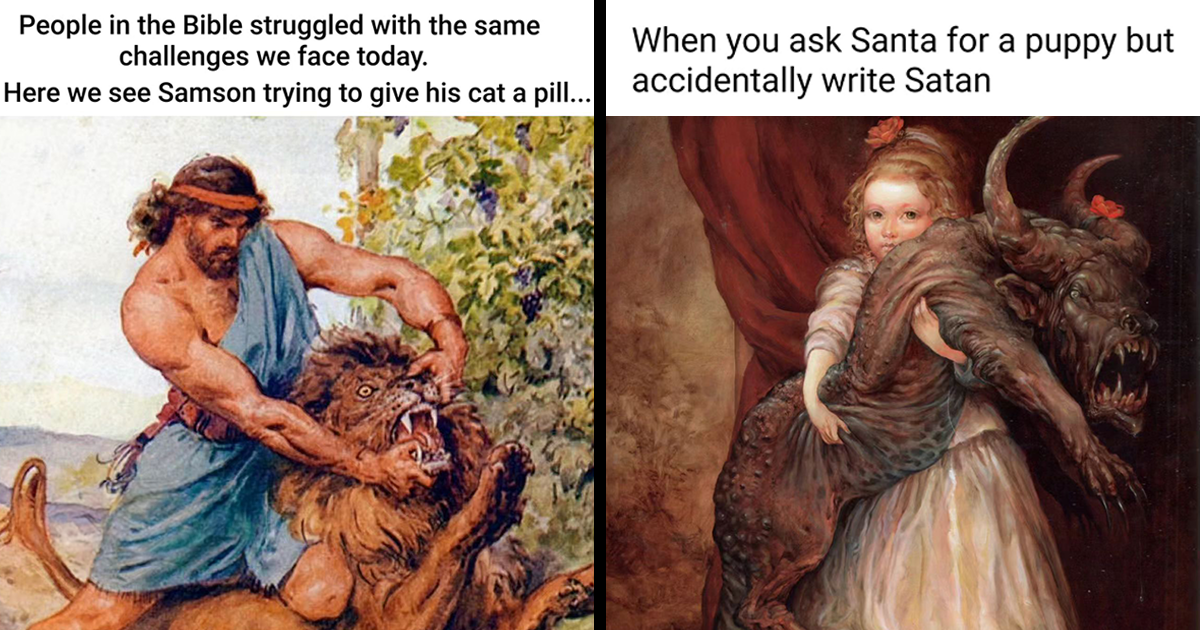
Somewhere between a museum wall and your group chat, classical art discovered its second career: becoming extremely memeable. The account “Art Memes Central” has built a loyal audience by taking paintings that look serious, dramatic, romantic, confused, judgmental, or suspiciously over-caffeinated and pairing them with captions that sound like modern life wearing a powdered wig.
The result is a strange and delightful cultural remix. Centuries-old portraits suddenly complain about unread messages. Renaissance dinner scenes look like awkward family gatherings. Baroque expressions become the official face of “I said I was fine, but I was absolutely not fine.” And somehow, it all works.
Why Classical Paintings Make Such Perfect Memes
Classical paintings were not created for Instagram, obviously. Nobody in the 1600s was thinking, “This dramatic candlelight scene will crush on social media.” Yet many old paintings are perfect for meme culture because they already contain the raw ingredients of a great joke: emotion, exaggeration, conflict, body language, and a tiny bit of chaos.
Before photography, film, and reaction GIFs, painters had to capture human drama in a single frame. That meant every lifted eyebrow, tilted hand, shocked face, and suspicious side-eye had to do serious storytelling work. Today, meme creators use those same visual signals to express modern situations. A noblewoman staring into the distance becomes someone waiting for a text back. A saint looking overwhelmed becomes every student opening a final exam. A group of elegantly dressed people gathered around a table becomes the office meeting that could have been an email.
This is why “Art Memes Central” feels so instantly relatable. The captions may be modern, but the feelings are ancient. Awkwardness, jealousy, boredom, pride, panic, romantic confusion, social exhaustion, and dramatic overthinking have apparently been with us since humans first discovered both paint and problems.
What “Art Memes Central” Gets Right
The magic of “Art Memes Central” is not simply slapping random text on old art. Good classical art memes work because the caption appears to reveal what the painted character is already thinking. The best ones feel less like edits and more like translations from oil paint into group-chat English.
1. The Captions Match the Facial Expressions
A painting with a person looking deeply offended does not need a caption about sunshine and fresh fruit. It needs something petty, wounded, or socially exhausted. When the facial expression and caption line up, the joke lands instantly.
2. The Humor Is Relatable, Not Random
The most shareable art memes are usually about common situations: bad dates, friendship drama, workplace stress, family expectations, procrastination, overthinking, social anxiety, and the eternal human struggle of pretending to understand what is happening. In other words, they are not just “old painting plus joke.” They are “old painting plus Tuesday.”
3. The Art Still Matters
A surprisingly important part of the trend is that the original artwork does not disappear. In fact, memes often make viewers look closer. People notice the clothes, gestures, setting, lighting, and composition because the humor draws them in. A funny caption becomes the welcome mat; curiosity about the painting is what happens once you step inside.
The Secret Formula Behind Meme-Worthy Paintings
Not every painting is equally meme-ready. A quiet landscape can be beautiful, but unless a tree looks personally betrayed, it may not be ideal meme material. The paintings that work best usually have at least one of the following features.
Expressive Faces
Faces are the engine of reaction memes. A raised eyebrow can say “I know what you did.” A blank stare can say “My last brain cell has left the building.” A dramatic gasp can say “You used ‘reply all’ again.” Historical portraiture and religious art often include exaggerated emotional expressions, which makes them surprisingly compatible with internet humor.
Group Drama
Paintings with several figures are meme gold. One person may look guilty, another confused, another angry, and someone in the corner is clearly just there for snacks. These scenes invite modern captions about family dinners, friend-group conflict, school projects, workplace gossip, or any situation where everyone is pretending to be normal and failing beautifully.
Ambiguous Storytelling
Many older paintings are rich with symbolism, but modern viewers may not know the exact story behind them at first glance. That ambiguity leaves room for playful reinterpretation. A mysterious glance becomes romantic suspicion. A dramatic hand gesture becomes “me explaining why I deserve dessert.” The less obvious the original scene is, the more space there is for meme imagination.
Extreme Costumes and Serious Poses
There is something inherently funny about a person wearing velvet, pearls, armor, or an enormous collar while expressing a feeling as ordinary as “I forgot my password.” The contrast between formal visual style and casual modern language is one of the biggest reasons classical art memes are so addictive.
50 Paintings, 50 Modern Moods
A collection like “50 Paintings Perfectly Suited For Memes” works because it turns art history into a gallery of modern moods. While the exact captions vary, the emotional categories are familiar to anyone who has ever had a phone, a deadline, a crush, a budget, or a family group chat.
The “I Am Calm, But Only Technically” Painting
Some paintings show figures sitting politely while their faces suggest emotional weather warnings. These are perfect for memes about pretending everything is fine. They capture the sacred art of smiling through inconvenience, which may be humanity’s oldest performance skill.
The “Main Character Having a Crisis” Painting
Dramatic historical scenes often look like someone has just received shocking news. In meme form, that news might be “the Wi-Fi is down,” “your package is delayed,” or “the meeting has been extended by 30 minutes.” The gap between epic visual drama and tiny modern inconvenience is exactly where the comedy lives.
The “Judgmental Side-Eye” Painting
Art history contains enough side-eye to power the internet for a thousand years. These faces are perfect for captions about gossip, questionable decisions, bad fashion, suspicious excuses, or that friend who says, “I’m not judging,” while absolutely judging in high definition.
The “Group Project” Painting
Any painting with multiple people gathered around a table can become a perfect school or office meme. One person is doing all the work. One person is confused. One person is dramatically pointing. One person has clearly contributed nothing but vibes. The Renaissance may not have had shared Google Docs, but it understood group tension.
The “Romantic Confusion” Painting
Courtship scenes are wonderfully memeable because romance has always been a comedy of hesitation, mixed signals, and people looking across rooms while pretending they are not looking across rooms. Add a modern caption about texting, situationships, or accidental eye contact, and suddenly an old painting feels painfully current.
Why Art Memes Do Not Ruin Art
Some people worry that memes make art less serious. But that argument misses an important point: humor often brings people closer to culture, not farther away from it. A person who laughs at a classical art meme may later search for the original painting, the artist, the period, or the story behind the scene. That is not cultural destruction. That is a very stylish trapdoor into learning.
Museums and cultural institutions have increasingly understood that digital access matters. Major collections now offer large numbers of public-domain images online, making it easier for students, writers, designers, educators, and casual browsers to explore art without needing a plane ticket or a silent marble hallway. Open access has helped classical paintings travel beyond textbooks and museum catalogs into classrooms, blogs, social feeds, and yes, memes.
The internet can be messy, but it can also be a massive informal classroom. When a painting becomes a meme, it enters everyday conversation. People who might never stop in front of a 17th-century portrait in a gallery may pause when that same portrait perfectly describes their Monday morning. The joke opens the door; art history walks in wearing dramatic sleeves.
The Connection Between Memes and Art History
Memes may feel new, but remixing images is not new at all. Artists have borrowed, quoted, parodied, transformed, and reinterpreted visual culture for centuries. Modern meme culture simply speeds up the process and places it in the hands of millions of users.
Pop art, collage, political cartoons, advertising, conceptual art, and internet memes all share a fascination with context. Change the text, setting, or audience, and the meaning changes too. A painting that once communicated religious devotion, social status, mythology, or moral instruction can become a joke about unread emails. That does not erase the original meaning; it creates a new layer.
In this sense, “Art Memes Central” is part of a much larger tradition of visual remixing. The account succeeds because it understands that images are not frozen. They move through time, gather new meanings, and meet new audiences. A painting can be historical and hilarious at the same time. It can be a masterpiece and a meme. Culture is roomy enough for both.
How Classical Art Memes Improve Engagement
From an SEO and content perspective, classical art memes are powerful because they combine three things audiences love: recognizable emotion, visual storytelling, and quick humor. The topic also naturally attracts searches around “funny classical art memes,” “old paintings as memes,” “Art Memes Central,” “Renaissance memes,” and “relatable art memes.”
These keywords work because they reflect real user intent. Some readers want entertainment. Others want art-history content that does not feel like homework wearing uncomfortable shoes. Others are looking for shareable social media material. A well-written article can serve all of these audiences by offering laughs, context, examples, and analysis in one friendly package.
Great Visual Content Creates Longer Reading Time
Even when images are not embedded, describing meme-worthy paintings keeps readers engaged. People enjoy imagining the expression, the caption, and the situation. The more vivid the writing, the longer readers stay with the article.
Humor Makes Educational Content Easier to Share
A serious article about art history may interest a narrow audience. A funny article about paintings that look like modern memes can reach casual readers, students, teachers, creators, and museum fans. Humor does not weaken the educational value; it gives it better shoes.
Relatability Turns Old Art Into Evergreen Content
Trends change quickly, but human emotions remain refreshingly stubborn. That is why classical art memes have lasting appeal. The platforms may change, the captions may evolve, and the slang may expire faster than milk, but a face that says “I regret attending this event” will never go out of style.
Examples of Meme Situations That Fit Classical Paintings
To understand why these paintings work so well, imagine the following meme setups without needing to reproduce any specific caption or artwork.
The Overdramatic Deadline
A painting of someone collapsing onto a chair could easily represent a student remembering an assignment at 11:47 p.m. The old-world drama makes the small modern crisis funnier. Nobody is actually fighting a dragon, but the essay due at midnight may feel dragon-adjacent.
The Suspicious Dinner Guest
A banquet painting with one figure staring directly at another can become a meme about someone hearing gossip but pretending not to listen. The beauty of the scene makes the pettiness more elegant. Suddenly, gossip has candlelight and brocade.
The Unread Message Spiral
A portrait of someone gazing sadly out a window is ideal for captions about waiting for a reply. The emotional intensity of the image turns a tiny digital delay into an opera. The person has not been left on read; they have entered Act III.
The Friend Who Knows Too Much
A figure leaning in with a knowing expression can become the friend who remembers every embarrassing detail. Classical art is full of faces that say, “I have receipts,” even when the original subject was probably thinking about politics, religion, or lunch.
What Creators Can Learn From “Art Memes Central”
For meme creators, bloggers, social media managers, and digital publishers, “Art Memes Central” offers several useful lessons. First, a strong niche matters. The account is not trying to meme everything in existence; it focuses on classical and historical artworks, which gives it a recognizable identity.
Second, visual selection is everything. The painting must already contain a clear emotion or narrative. A good caption enhances what the viewer sees; it does not fight against it. Third, the tone should feel natural. The funniest captions often sound like something a friend would say, not like a committee-approved joke that was sanded down until it became beige.
Finally, creators should respect context. Public-domain art can be reused widely, but responsible content still benefits from curiosity and care. Knowing something about the artwork, artist, or era can lead to smarter captions and richer posts. The best art memes are funny because they are sharp, not because they are careless.
Why Readers Love These Meme Collections
Collections like “50 Paintings Perfectly Suited For Memes” are satisfying because they offer rapid emotional recognition. Readers do not need an art-history degree to understand a face that says, “Absolutely not.” They do not need to know the painting’s original patron to enjoy a caption about modern awkwardness.
At the same time, the format invites deeper exploration. A reader may laugh first and research later. That sequence is perfectly valid. Many people discover music, books, history, science, and art through entertainment. Curiosity does not always enter through the front door. Sometimes it climbs in through a meme wearing a ruff collar.
The appeal also comes from emotional comfort. Seeing old paintings express modern feelings reminds us that people have always been complicated. We are not the first generation to feel overwhelmed, dramatic, shy, jealous, tired, confused, or mildly betrayed by social obligations. The costumes were different. The feelings were not.
Personal Experiences With Classical Art Memes
The first time many people discover classical art memes, the reaction is usually a mix of laughter and surprise. You expect old paintings to feel distant, formal, and maybe a little intimidating. Then one appears with a caption that perfectly describes your exact mood after opening your inbox, and suddenly the distance collapses. The painting is no longer “important culture over there.” It is your emotional support oil portrait.
That is the experience that makes this topic so fun to write about. Classical art memes create a bridge between the museum and daily life. They remind us that art does not have to be approached with a stiff posture and a whispering voice. Sometimes art can be approached with coffee, curiosity, and the thought, “Why does this 400-year-old man look exactly like my friend when the restaurant forgets the fries?”
One of the most enjoyable parts of browsing meme-ready paintings is noticing background characters. In many historical artworks, the central figure gets all the attention, but the background people are quietly carrying the comedy. Someone is peeking from behind a curtain. Someone looks bored during a very serious event. Someone appears to have wandered into the wrong painting entirely. These tiny details make old art feel alive, because they show that painters understood human behavior in wonderfully specific ways.
Another memorable experience is how classical art memes can change the way you look at museums. Once you have seen enough of them, walking through a gallery becomes interactive. You begin noticing expressions and imagining possible captions. A solemn portrait becomes “me trying to look productive when the teacher walks by.” A mythological scene becomes “the group chat after one person says, ‘I have news.’” This does not make the museum less meaningful. It makes it more personal.
There is also a social pleasure in sharing these memes. They are easy to send because they fit so many situations. A dramatic painting can comfort a stressed friend. A judgmental portrait can respond to gossip. A chaotic group scene can summarize a family holiday. Unlike some internet jokes that expire quickly, classical art memes have a flexible quality. The image may be centuries old, but the caption can always be updated for the current disaster, inconvenience, or mildly embarrassing life event.
From a content creator’s point of view, the experience is also a lesson in timing. A great art meme depends on restraint. The caption should be short enough to hit quickly but specific enough to feel fresh. Too much explanation ruins the joke. Too little context makes it confusing. The best examples feel effortless, though they are usually the result of careful observation. The creator sees the expression, understands the mood, and finds the modern sentence that unlocks it.
Perhaps the biggest takeaway is that classical art memes make art feel shared. They remove the invisible velvet rope that sometimes separates casual viewers from fine art. Instead of asking, “Do I understand this correctly?” the viewer gets to ask, “What does this make me feel?” That question is often a better starting point. Once people feel welcome, they are more likely to learn names, dates, movements, and stories.
In that sense, “Art Memes Central” and similar creators are doing more than making people laugh. They are helping old paintings circulate in new ways. They are giving audiences permission to enjoy art without fear of sounding uneducated. They are proving that a masterpiece can survive a joke. In fact, sometimes the joke is what gets the masterpiece seen by someone who would have otherwise scrolled right past history.
Conclusion
“50 Paintings Perfectly Suited For Memes, Courtesy Of ‘Art Memes Central’” is more than a funny internet collection. It is a reminder that art history is packed with human emotion, and meme culture is very good at recognizing emotion quickly. When old paintings meet modern captions, the result can be hilarious, surprisingly educational, and oddly comforting.
The best classical art memes do not mock the paintings. They revive them for new audiences. They turn museum faces into modern reaction images, transform historical scenes into relatable comedy, and invite readers to look twice. Whether you are an art lover, meme enthusiast, content creator, or casual browser avoiding responsibilities with impressive dedication, these paintings prove one thing clearly: humanity has always been dramatic. We just have better Wi-Fi now.