Frogs and toads have been perfecting weirdness for millions of years. Some resemble moss-covered rocks. Others glide between trees, freeze nearly solid, carry babies inside their skin, or wear colors bright enough to make a tropical bird look underdressed.
Although people commonly separate frogs from toads, both belong to the amphibian order Anura. “Toad” is an informal label usually applied to stockier frogs with shorter legs and drier, bumpier skin. Collectively, these amazing amphibians live on every continent except Antarctica and occupy habitats ranging from steamy rainforests to deserts and frozen woodlands. Their permeable skin can absorb water and exchange gases, but it also makes them unusually sensitive to pollution and environmental change.
Prepare for transparent bellies, questionable facial expressions, extreme parenting and enough biological plot twists to fill a very damp superhero franchise. Here are 41 of the coolest frogs and toads in the world.
Colorful Frogs That Look Almost Too Bright to Be Real
Brilliant amphibian colors are not merely decorative. In many species, bold skin warns predators about toxic or unpleasant chemical defenses. It is nature’s version of a flashing sign that reads, “Eating this may ruin your afternoon.”
-
1. Golden Poison Frog
The golden poison frog is a tiny Colombian rainforest resident with an enormous reputation. Its wild diet helps it accumulate exceptionally powerful skin toxins, while its yellow coloration advertises danger.
-
2. Blue Poison Dart Frog
Electric-blue skin covered in irregular black spots makes each blue poison dart frog look individually painted. Like other dart frogs, captive individuals usually lack the potent toxicity produced from wild prey.
-
3. Strawberry Poison Frog
This Central American frog occurs in an astonishing assortment of colors. Mothers transport tadpoles to tiny water-filled plants and return to provide unfertilized eggs as nutritious baby food.
-
4. Mimic Poison Frog
Among the few known socially monogamous frogs, mimic poison frog parents cooperate closely. Fathers tend eggs, while both adults help transport and feed their demanding tadpoles.
-
5. Panamanian Golden Frog
Panama’s celebrated national animal is technically a true toad. Because rushing streams can drown out calls, these golden amphibians also communicate by waving their feet and forelimbs.
-
6. Golden Mantella
Madagascar’s golden mantella resembles an orange candy with legs. It obtains defensive chemicals by eating particular ants, demonstrating that even a frog’s personal security system can begin with lunch.
-
7. Tomato Frog
Named for its round body and tomato-red coloration, this Madagascan frog can inflate when threatened. It may also release a sticky secretion that encourages predators to reconsider their dining plans.
-
8. Madagascar Rainbow Frog
Splashed with orange, green, black and cream, the Madagascar rainbow frog looks like it escaped from an artist’s palette. Specialized feet help it scramble around steep rocky environments.
Tree Frogs, Gliders and Masters of Camouflage
Not every frog wants to be noticed. Many unusual frog species survive by vanishing into leaves, bark, moss or shadows. Others rely on adhesive toes and enormous webbed feet to turn the forest canopy into an amphibian playground.
-
9. Red-Eyed Tree Frog
Its green body hides neatly among foliage until those enormous red eyes open. Blue-and-yellow sides and orange feet can suddenly flash into view, startling a predator long enough for escape.
-
10. Lemur Leaf Frog
This delicate Central American tree frog appears yellow-green while resting during the day but becomes darker at night. Unfortunately, habitat loss and disease have made it critically endangered.
-
11. Wallace’s Flying Frog
Wallace’s flying frog does not truly fly, but it glides impressively. Huge webbed feet and skin flaps act like parachutes when it leaps between rainforest trees.
-
12. Waxy Monkey Tree Frog
Instead of hopping everywhere, this South American frog often climbs deliberately like a tiny monkey. It rubs a waxy secretion over its body to slow moisture loss in hot conditions.
-
13. Amazon Milk Frog
Large toe pads help this chunky frog cling to rainforest trees. Its name comes from the milky defensive secretion it may release when stressednot from any hidden talent for dairy production.
-
14. White’s Tree Frog
Also called the dumpy tree frog, this Australian favorite has a famously calm expression and pleasantly plump build. A protective skin coating helps it tolerate comparatively dry environments.
-
15. Vietnamese Mossy Frog
Green, black and brown bumps make this frog nearly disappear against wet moss and stone. It often remains motionless when threatened, trusting its camouflage to finish the job.
-
16. Grainy Cochran Glass Frog
Its translucent abdominal skin can reveal internal organs, while green bones enhance its ghostly appearance. Eggs are deposited on leaves above streams, allowing hatchlings to drop directly into the water.
-
17. Malayan Horned Frog
Pointed projections above its eyes and a sharply shaped snout transform this frog into an excellent imitation of a dead leaf. Forest-floor insects rarely see the ambush coming.
Bizarre Frogs With Unforgettable Bodies and Behaviors
-
18. Purple Frog
This round, purple-gray frog spends most of its life underground in India’s Western Ghats. It emerges briefly during monsoon rains, looking rather like a living potato with a pointed nose.
-
19. Turtle Frog
With a tiny head, loose skin and powerful forelimbs, Australia’s turtle frog resembles a shell-less turtle. It burrows forward rather than backward and specializes in raiding termite colonies.
-
20. Desert Rain Frog
This round coastal-dune resident has short legs, shovel-like feet and a surprisingly high-pitched defensive squeak. Its perpetually offended appearance has made it an internet celebrity.
-
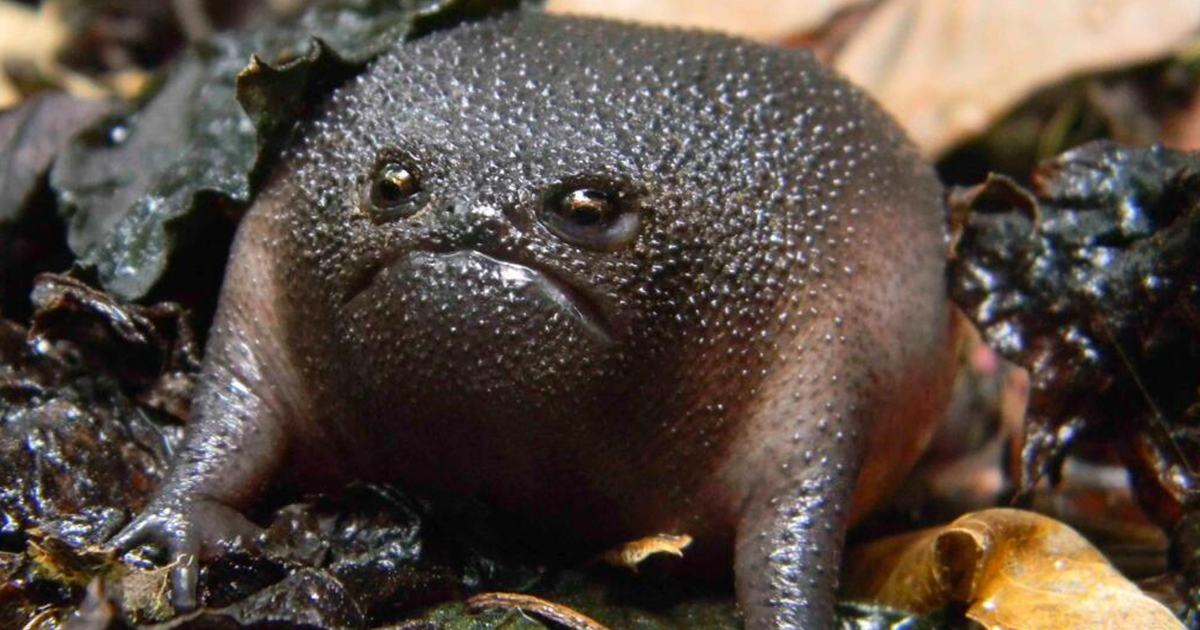
21. Black Rain Frog
Dark, bumpy skin and downturned mouth give this South African burrower a legendary grumpy face. It inflates its body when threatened, becoming a gloomy little balloon.
-
22. Mexican Burrowing Toad
The sole living member of its family, this compact amphibian spends long periods underground. Heavy rain brings it to the surface, where its shovel-like feet and booming call become useful.
-
23. Surinam Toad
Few animals can outperform the Surinam toad in the unusual-parenting category. Fertilized eggs become embedded in the female’s back, where young develop before emerging as fully formed miniature toads.
-
24. Budgett’s Frog
Nearly all head and mouth, Budgett’s frog is an aquatic ambush predator from South America. When frightened, it may inflate, open its enormous mouth and produce an alarmingly loud scream.
-
25. Ornate Horned Frog
Popularly called a Pacman frog, this round predator waits beneath leaf litter with only its head exposed. Anything small enough to fit inside its broad mouth may become dinner.
-
26. Amazon Horned Frog
Leaf-like horns, mottled skin and an enormous jaw make this rainforest frog an exceptional ambush hunter. Its menu can include insects, lizards, rodents and other frogs.
-
27. Hairy Frog
Breeding males develop hair-like skin structures along their sides and legs. More dramatically, the frog can break bones in its toes and force sharp points through the skin as defensive claws.
Giants, Extreme Survivors and Remarkable Parents
-
28. Goliath Frog
The world’s largest living frog can reach roughly the size and weight of a small house cat. Adults even move rocks to construct or improve nesting areas beside fast-flowing rivers.
-
29. African Bullfrog
This muscular frog can tackle surprisingly large prey. Protective fathers guard tadpoles and may dig channels between shrinking pools, essentially performing emergency amphibian engineering.
-
30. Indian Bullfrog
Outside breeding season, this large frog looks relatively ordinary. During courtship, males turn bright yellow and inflate brilliant blue vocal sacs, instantly becoming the loudest fashion statement in the pond.
-
31. Wood Frog
Wood frogs survive northern winters by allowing much of their body water to freeze. Breathing and heartbeat stop temporarily, while glucose helps protect cells until spring brings a remarkable thaw.
-
32. Water-Holding Frog
During Australian droughts, this frog burrows underground, stores water and surrounds itself with a moisture-saving cocoon. Rain awakens it for a hurried season of feeding and breeding.
-
33. Crucifix Frog
A bold cross-shaped pattern decorates this Australian burrowing frog. When attacked, it produces an exceptionally sticky defensive substance capable of gluing an impatient predator’s mouth together.
-
34. Darwin’s Frog
Male Darwin’s frogs collect developing tadpoles inside their vocal sacs. The young remain protected there until tiny froglets eventually emerge through their father’s mouth.
-
35. Bornean Flat-Headed Frog
This rare stream-dwelling species is the only known frog without lungs. Its flattened body allows oxygen to pass efficiently through the skin in cold, fast-moving water.
Toads and Tiny Frogs With Outsized Personalities
-
36. Oriental Fire-Bellied Toad
Its green-and-black back provides camouflage, but danger reveals a blazing orange-red belly. The toad arches its body to display this warning coloration to potential predators.
-
37. Cane Toad
Large poison glands and tremendous reproductive capacity make cane toads formidable survivors. Introductions outside their native range have caused severe ecological damage, especially in Australia.
-
38. Oak Toad
North America’s smallest toad measures only about 0.75 to 1.3 inches long. Its light-colored back stripe helps distinguish it from larger neighbors that might mistake it for a youngster.
-
39. Yosemite Toad
The sexes dress differently: males are commonly yellow-green or olive, while females tend to be brown or gray with larger dark markings. Both inhabit high-elevation Sierra Nevada meadows.
-
40. Paedophryne amauensis
At approximately 0.3 inch long, this Papua New Guinea frog is among the smallest known vertebrates. It lives among damp leaf litter, where miniature prey and excellent camouflage support its tiny lifestyle.
-
41. Pumpkin Toadlet
This orange Brazilian miniature looks like a windup toy, but jumping is not its strength. Its extremely small balance organs contribute to uncontrolled landings, rolls and accidental midair backflips.
Why These Amazing Amphibians Matter
Frogs and toads are both predators and prey. They consume enormous numbers of insects, feed birds, snakes, fish and mammals, and move nutrients between aquatic and terrestrial habitats. Their thin, absorbent skin also makes them valuable indicators of changes in water quality, disease and climate.
Unfortunately, remarkable adaptations cannot protect amphibians from every modern threat. Habitat destruction, chemical pollution, invasive predators, illegal collection, climate change and chytrid fungal disease are affecting species worldwide. The Smithsonian warns that more than 40 percent of amphibian species could face extinction within the next century. Protecting wetlands, forests, clean waterways and responsible wildlife-trade practices therefore benefits entire ecosystemsnot merely the animals doing the croaking.
What Experiencing the World of Frogs and Toads Is Really Like
A memorable frog-watching experience usually begins with sound rather than sight. Walk near a healthy pond after sunset and the darkness may seem completely emptyuntil one frog calls. Another answers, then ten more join in. Within minutes, the wetland becomes a layered concert of peeps, trills, chuckles and deep bass notes. Every species occupies its own acoustic space, although locating an individual singer can feel like searching for a ringing phone hidden inside several acres of vegetation.
Seeing tropical frogs in a reputable zoo or conservation center offers a different experience. The first surprise is often their size. Poison frogs that dominate close-up photographs may be barely longer than a person’s thumbnail. Vietnamese mossy frogs can remain invisible even when a display label points directly at them. Glass frogs are similarly talented disappearing acts; visitors may stare into a planted enclosure for several minutes before realizing that a translucent animal has been resting on the nearest leaf the entire time.
Backyard frog encounters can be just as rewarding. A porch light attracts moths and beetles, which may attract tree frogs eager for an easy buffet. Toads sometimes appear beneath planters, near leaky faucets or along garden paths after rain. Watching quietly reveals more than chasing or handling them ever could. A toad may creep rather than hop, while a tree frog can climb a window with adhesive toe pads and then wait motionlessly for an insect to make a career-ending decision.
Responsible observation also changes how people think about amphibians. A muddy pond stops looking like wasted space once egg masses, tadpoles and calling adults become visible. Fallen leaves become winter insulation. Temporary pools become essential nurseries because they may dry before fish can establish populations and eat the young. Even an untidy corner of a yard can provide cool shelter. The experience encourages patience: the less observers disturb the habitat, the more natural behavior they are likely to witness.
Photography adds another layer of appreciation, but amphibians reward restraint. Flashing lights repeatedly, moving animals into attractive positions or touching them with dry hands can cause stress and expose their skin to harmful residues. A better approach is to remain low, keep a respectful distance and photograph the animal where it was found. Record its call, note the weather and observe its surroundings. The resulting image may be less theatrical, but it tells a far better story about how the frog actually lives.
Perhaps the most powerful experience comes from returning to the same wetland across several seasons. Spring may bring eggs and deafening choruses. Summer reveals tadpoles and freshly transformed froglets. Autumn becomes quieter, while winter hides the entire community beneath mud, water or leaf litter. Seeing that cycle makes amphibian conservation feel immediate. These creatures are not merely colorful curiosities from distant rainforests; they are participants in delicate local systems that can disappear when clean water, shelter or breeding habitat is lost.
Final Thoughts
The coolest frogs and toads in the world prove that evolution has an excellent imagination. One frog glides like a parachutist, another freezes through winter, and another raises offspring inside its back. Some advertise themselves in neon colors; others survive by impersonating leaves, rocks or blobs of moss.
Their appearances may be funny, beautiful or gloriously bizarre, but their ecological importance is serious. Keeping amphibian habitats clean and intact gives these tiny predators, devoted parents, questionable jumpers and world-class screamers a fighting chance to keep surprising us.
Research note: This article synthesizes zoological and conservation information from AmphibiaWeb, the Smithsonian’s National Zoo, San Diego Zoo Wildlife Alliance, the American Museum of Natural History, the California Academy of Sciences, the U.S. Geological Survey, the U.S. Fish and Wildlife Service, the National Wildlife Federation, PBS Nature, Science News, Smithsonian Magazine and the University of Michigan’s Animal Diversity Web.