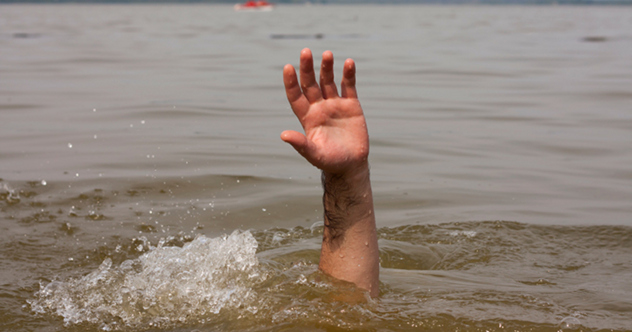
Water is supposed to be peaceful. It sparkles in travel brochures, reflects sunsets, and makes people say things like, “Let’s buy a kayak,” which is how many survival stories begin. But not every lake, river, spring, or sea is interested in being your relaxation partner. Some bodies of water are boiling, acidic, gas-filled, current-ripped, cave-riddled, or so cold that your lungs immediately file a complaint with management.
This is not a list of spooky campfire legends. These are real dangerous bodies of water with documented hazards, scientific explanations, and, in some cases, tragic histories. The point is not to make water sound evil. Water is not evil. Water is simply old, powerful, chemically weird, geologically dramatic, and completely uninterested in your confidence level.
So grab a towel, preferably from a safe distance, and let’s visit 10 bodies of water that want you deador at least want you to read the warning signs like a responsible adult.
1. Lake Nyos, Cameroon: The Lake That Exhaled Death
Lake Nyos looks like a calm volcanic crater lake, which is exactly the sort of disguise nature uses when it is hiding a nightmare in the basement. In 1986, the lake suddenly released a massive cloud of carbon dioxide. Because carbon dioxide is heavier than air, the invisible gas rolled into nearby valleys and displaced breathable oxygen. More than 1,700 people and thousands of animals died.
The event is called a limnic eruption, which sounds like a polite academic phrase for “the lake burped and everything went terribly wrong.” Deep volcanic lakes can store dissolved gases under pressure. If the layers of the lake are disturbed by a landslide, volcanic activity, or another trigger, the gas can rush upward and escape all at once.
Why It Is So Dangerous
You cannot smell carbon dioxide. You cannot see it. You may not know anything is wrong until breathing becomes impossible. Today, Lake Nyos has degassing systems designed to reduce the risk, but its history remains one of the clearest examples of how a beautiful lake can become a silent natural disaster.
2. Lake Kivu, Rwanda and Democratic Republic of Congo: A Giant Soda Bottle With Volcanoes Nearby
Lake Kivu is enormous, scenic, and chemically complicated. Beneath its surface are large amounts of dissolved methane and carbon dioxide. Scientists watch it closely because it shares some of the same gas-storage concerns as Lake Nyos, only on a far larger scale and with millions of people living near its shores.
The good news is that Lake Kivu is being monitored, and methane extraction projects are turning some of that gas into energy. The less comforting news is that “lake full of explosive and suffocating gases near volcanic activity” is not a phrase that helps anyone sleep better.
Why It Is So Dangerous
The risk is not that a casual swim will instantly doom you. The concern is a large-scale disturbance that could destabilize the lake’s deep gas layers. Lake Kivu is a reminder that some dangerous lakes do not announce themselves with boiling water or monsters. Sometimes they just sit there calmly, like an overpressurized science experiment with a view.
3. Lake Natron, Tanzania: The Pretty Pink Lake With Caustic Attitude
Lake Natron is famous for its surreal red and pink colors, its flamingos, and its reputation for preserving dead animals in eerie, statue-like forms. The lake’s extreme alkalinity comes from sodium carbonate and other minerals washed in from the surrounding volcanic landscape. Its pH can climb high enough to make the water caustic, and temperatures can become brutally hot.
Despite the dramatic reputation, Lake Natron does not magically turn living animals into stone like a watery Medusa. The real process is more chemical and less mythological: animals that die in or near the lake can become preserved by mineral-rich, alkaline conditions. Still, “not literally magic” does not mean “safe for a refreshing dip.”
Why It Is So Dangerous
For humans, the danger comes from hot, highly alkaline water that can irritate or burn skin and eyes. For many animals, the lake is hostile. For lesser flamingos, however, it is prime real estate because the harsh water helps keep predators away. Nature, as usual, is weirdly selective.
4. Yellowstone Hot Springs, USA: The Spa Day From Hell
Yellowstone National Park contains more than 10,000 hydrothermal features, including hot springs, geysers, mudpots, and fumaroles. They are spectacular. They are colorful. They are also not hot tubs, no matter how strongly your inner tourist whispers, “Just one toe.”
Yellowstone’s thermal areas can contain near-boiling water, acidic pools, fragile crusts, and hidden runoff channels. The ground around a hot spring may look solid but can be a thin shell over scalding water. People have suffered severe burns and deaths after leaving boardwalks or falling into thermal features.
Why It Is So Dangerous
The danger is a combination of heat, chemistry, and deceptive terrain. A boardwalk at Yellowstone is not a suggestion; it is the difference between a vacation photo and becoming a cautionary paragraph. Stay on marked paths, keep children close, and resist the urge to test whether boiling water is still hot. Spoiler: yes.
5. Boiling Lake, Dominica: The Name Is Not Being Dramatic
Boiling Lake in Dominica’s Morne Trois Pitons National Park is one of the world’s largest hot springs. Surrounded by cliffs and steam, the lake is a flooded fumarole heated by volcanic gases below. Its water has been measured around 95°C, which is roughly 203°F, also known as “soup temperature, if the soup hated you.”
The trek to Boiling Lake is famous among adventurous hikers, but the area is not a casual stroll in flip-flops. The route passes through volcanic terrain, hot streams, sulfur smells, slippery rocks, and sudden weather changes. The lake itself can fluctuate in water level and activity, and past steam and gas explosions have been deadly.
Why It Is So Dangerous
The obvious danger is scalding water. The less obvious danger is volcanic gas and unstable geothermal activity. Boiling Lake is gorgeous, but it belongs in the “look, respect, do not touch” category of travel experiences.
6. Dahab Blue Hole, Egypt: The Diver’s Trap With a Beautiful Face
The Blue Hole near Dahab is one of the most famous dive sites in the world. It is also one of the most infamous. The site drops deeply close to shore, and an underwater passage known as the Arch tempts divers to go beyond recreational limits. The visibility can be stunning, which is part of the problem. When everything looks clear and close, danger can feel manageableright until it is not.
Many fatal incidents have been associated with deep dives, poor gas planning, nitrogen narcosis, disorientation, and divers attempting routes beyond their training. The Blue Hole is not inherently evil. Properly trained technical divers can plan and execute dives there. But for overconfident or underprepared divers, it can become a beautiful blue conveyor belt to disaster.
Why It Is So Dangerous
Depth changes everything. Nitrogen narcosis can impair judgment. Gas disappears faster. Emergency options shrink. The Blue Hole punishes ego, and unfortunately, ego travels light and packs poorly.
7. Jacob’s Well, Texas: The Swimming Hole With a Cave System Underneath
Jacob’s Well in Hays County, Texas, looks like the perfect Hill Country swimming hole: clear water, limestone beauty, and Instagram-friendly charm. Beneath that inviting surface, however, is a submerged cave system with tight restrictions, false exits, silty floors, and no natural light. At least nine people died scuba diving there between the 1960s and 1980s.
The danger is not the surface swimming area when managed safely. The danger is the cave. Cave diving is a highly specialized discipline requiring training, equipment, guideline use, gas planning, and discipline. Open-water confidence does not translate into cave survival. In fact, confidence can become the first mistake.
Why It Is So Dangerous
Inside an underwater cave, a wrong turn, kicked-up silt, equipment issue, or panic response can be fatal. Jacob’s Well is a classic example of a place that looks like summer fun on top and a labyrinth underneath.
8. The Bolton Strid, England: The River That Pretends to Be a Stream
The Bolton Strid is a narrow stretch of the River Wharfe in Yorkshire. At first glance, it can look almost jumpable, like a charming woodland stream designed for poetry and bad decisions. Upstream, however, the river is much wider. At the Strid, that water is forced through a narrow, deep, undercut channel with powerful currents hidden below the surface.
Local legends claim a near-perfect fatality rate for anyone who falls in. Exact numbers are difficult to verify, but the Strid’s reputation is built on real tragedies and very real hydraulics. The water may look small from above, but below, it is a fast, twisting trap full of submerged rock, force, and very little forgiveness.
Why It Is So Dangerous
The Strid is dangerous because it looks manageable. Humans are terrible at judging water power by surface appearance. If a river narrows dramatically, that water has not vanished; it has become faster, deeper, and angrier.
9. Lake Michigan, USA: The Freshwater Sea With Rip Currents
Lake Michigan is not salty, not sharky, and not usually included in people’s mental folder labeled “deadly water.” That is part of the problem. The Great Lakes behave more like inland seas than oversized ponds. Wind, waves, piers, and shoreline structures can create dangerous currents, including rip currents and structural currents.
Rip currents do not pull swimmers underwater; they pull swimmers away from shore. Panic does the rest. People exhaust themselves trying to fight the current directly. The safer response is to float, signal, and swim parallel to shore when possible. The Great Lakes can also be cold enough to trigger cold shock, even when the beach weather feels warm.
Why It Is So Dangerous
Lake Michigan combines deceptive familiarity with serious coastal hazards. It is a lake with sea-sized moods. Treat it like open water, check warnings, swim near lifeguards, and do not assume freshwater means friendly water.
10. The Drake Passage: The Ocean’s Washing Machine
The Drake Passage lies between South America’s Cape Horn and Antarctica. It is one of the most notorious sea crossings on Earth, known for powerful currents, strong winds, huge waves, and rapidly changing weather. Travelers even nickname its moods the “Drake Lake” when calm and the “Drake Shake” when the ocean decides everyone onboard should meet the floor.
The passage is dangerous because there is little land to interrupt the Southern Ocean’s winds and currents. Waves can build over long distances, storms can intensify quickly, and even modern ships treat the crossing with respect. For sailors of the past, it was a brutal gateway. For modern expedition travelers, it remains a reminder that the ocean does not care how expensive your parka was.
Why It Is So Dangerous
The Drake Passage is not a place for casual boating. Its hazards include rough seas, cold water, isolation, and weather that can turn from dramatic to dangerous faster than a tourist can say, “Is this included in the brochure?”
Common Lessons From Deadly Bodies of Water
These dangerous waters are different, but they share a few themes. First, the surface lies. Calm water may hide gas, caves, currents, heat, chemicals, or depth. Second, confidence is not safety equipment. A strong swimmer can still drown in cold shock. An experienced recreational diver can still be unprepared for deep technical conditions. A careful hiker can still slip near geothermal water.
Third, warning signs are not decorations. They are usually installed after nature has made its point in the worst possible way. If a sign tells you not to swim, step, dive, soak, jump, or wander off-trail, that sign is doing you a favor. Listen to it. It has probably seen things.
Safety Tips Before Visiting Dangerous Water Destinations
Check Local Conditions
Water conditions change by season, weather, wind, rainfall, volcanic activity, and temperature. A place that was calm yesterday can be deadly today. Check official park alerts, weather warnings, beach hazard statements, and guide recommendations before going.
Respect Training Limits
Do not cave dive because you are good at swimming. Do not deep dive because you watched a video. Do not enter cold open water without understanding cold shock. Training exists because water hazards are often invisible until the emergency begins.
Wear Real Safety Gear
A life jacket is not embarrassing. Drowning is embarrassing. Wear proper flotation when boating, paddling, or entering cold water. Divers should use appropriate technical equipment only within their certification and plan.
Do Not Rescue Recklessly
Many drowning incidents become worse when untrained people jump in to help. Use “reach or throw, don’t go” when possible: extend an object, throw flotation, call emergency services, and avoid becoming a second victim.
Experience Notes: What Dangerous Water Teaches Travelers
The strangest thing about dangerous water is how often it looks peaceful. Stand beside a cold alpine lake on a sunny day and it can seem harmless, almost polite. The sky is blue, the surface glitters, and someone nearby is probably saying, “It’s not that bad once you get in.” Then you touch the water and your body immediately starts negotiating with your ancestors. Cold water does not need waves to be dangerous. It only needs one shocked gasp at the wrong moment.
Travelers often learn this lesson through small moments. A hiker steps near a hot spring and feels heat rising from the ground before seeing any steam. A beachgoer watches a swimmer drift sideways faster than expected. A kayaker notices that the calm lake has become choppy because afternoon wind arrived like an unpaid bill. These experiences are not always dramatic, but they are educational. Water teaches through consequences.
The best outdoor people I have met are not fearless. They are observant. They notice where foam is moving, where waves are breaking differently, where a river narrows, where rocks are wet, where signs have been placed, and where locals refuse to swim. They ask guides boring questions. They check weather twice. They turn around without making a speech about it. In other words, they survive by being slightly less entertaining than the person who says, “Watch this.”
Dangerous water also changes how you define beauty. A boiling lake is beautiful because it is alive with geology, not because it invites you in. A deep blue sinkhole is beautiful because it reveals the scale of the earth beneath your feet, not because it owes you an adventure. A wild sea crossing is beautiful because it reminds you that humans are passengers on this planet, not managers of it. The safest way to enjoy these places is to let them remain bigger than you.
There is a certain humility that comes from standing at the edge of water you should not enter. It is the humility of reading the sign, backing up, taking the photo, and going home with all your original parts. That may not sound heroic, but it is underrated. The world is full of incredible places that do not need to be touched, conquered, or tested. Sometimes the best travel story is simple: “I saw something powerful, respected it, and did not become a footnote.”
Conclusion: Beautiful Water Still Deserves Fear
The most dangerous bodies of water are not always the ones with crashing waves or obvious drama. Sometimes they are quiet lakes, pretty springs, narrow rivers, or postcard-perfect dive sites. Their danger may come from chemistry, geology, temperature, current, depth, or human overconfidence. The common thread is simple: water does not need to look deadly to be deadly.
That does not mean we should avoid every wild place. It means we should visit with curiosity, preparation, and respect. Admire Lake Natron’s alien colors. Photograph Yellowstone’s hot springs from the boardwalk. Study Lake Nyos as a natural hazard lesson. Swim Lake Michigan only when conditions are safe. Dive the Blue Hole only with the right training, equipment, and humility. Nature is generous with beauty, but it charges extra for stupidity.
Note: This article is written for educational and entertainment purposes. Always follow official local safety guidance, posted warnings, trained guides, and emergency instructions when visiting lakes, rivers, springs, dive sites, or open water.