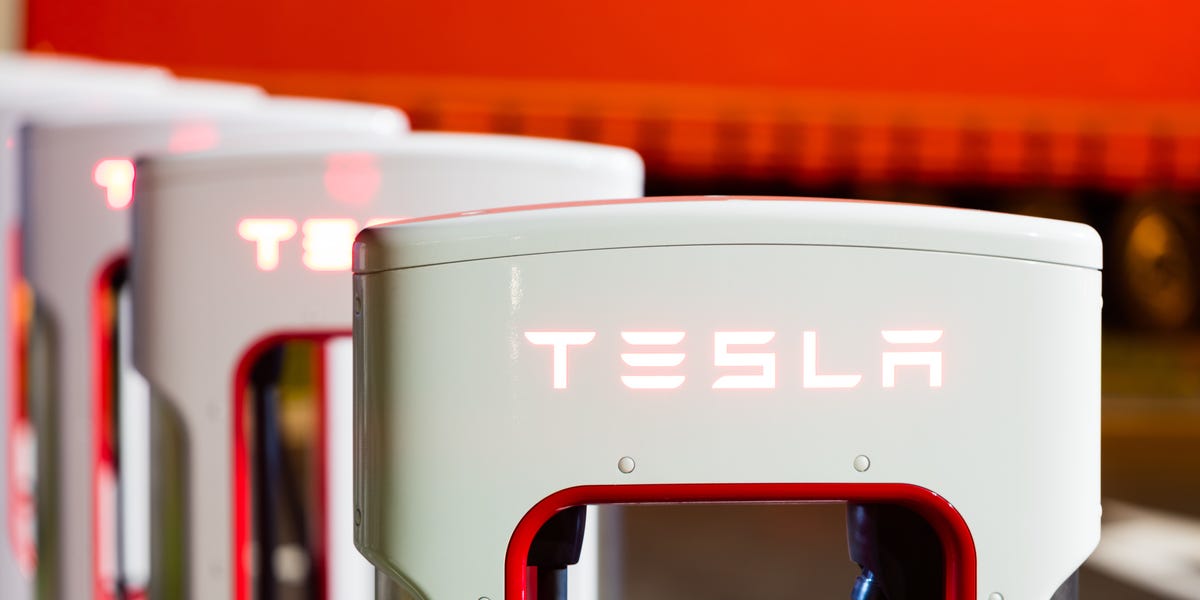
A typical roadside charging stop is not exactly a cinematic event. You park, plug in, buy a snack with the nutritional profile of a cardboard box, stare at your battery percentage, and wonder why the person in Stall 4 has been sitting at 100 percent for what feels like three geological eras.
Tesla appears determined to make at least one charging stop much strangerand much more memorable. In Roswell, New Mexico, the company has planned a UFO-inspired Supercharger station that blends the sharp-edged visual language of the Cybertruck with the town’s famous extraterrestrial mythology. The result is expected to be a desert charging hub that looks less like a parking lot amenity and more like a spacecraft that politely requested access to the electrical grid.
The planned Roswell Supercharger is not merely about novelty. It reflects a larger shift in electric vehicle infrastructure: charging stations are becoming places where drivers can eat, rest, shop, take photos, and briefly pretend their family road trip has entered a science-fiction movie. In a state known for long roads, wide-open landscapes, and enough sky to make you question your place in the universe, Tesla’s UFO-themed station may be a fittingly unusual addition.
What Tesla Is Planning in Roswell, New Mexico
Tesla’s proposed UFO-themed Supercharger is planned for Roswell, New Mexico, a city that has spent decades turning its connection to the 1947 Roswell incident into a full-scale tourism identity. Publicly reported plans describe a compact charging site near North Main Street, in the parking area of a Whataburger location. The station is expected to include eight charging stalls beneath a distinctive “CyberCanopy.”
The CyberCanopy is where the fun begins. Instead of a plain shade structure, the design reportedly uses angular surfaces inspired by Tesla’s Cybertruck, while also suggesting the silhouette of a flying saucer. Renderings have shown an illuminated canopy edge, colorful RGB lighting, and decorative lighting details underneath that could make nighttime charging look considerably more dramatic than a standard stop at a highway travel center.
Planned specifications have included a roughly 20.88-kilowatt solar array on top of the canopy. That does not mean the site will operate entirely from solar power during every charging session. Fast charging can demand far more power than a modest rooftop solar installation can produce at one moment. Still, solar panels can help offset a portion of site energy use, contribute to daytime generation, and make practical use of a canopy that would otherwise simply sit there looking suspiciously aerodynamic.
- Location: Roswell, New Mexico, near North Main Street
- Expected charging capacity: Eight Supercharger stalls
- Design concept: Cybertruck-inspired canopy with UFO styling
- Lighting: RGB accents and illuminated design features
- Solar component: Approximately 20.88 kW of rooftop solar panels
- Purpose: Fast charging, shade, visual appeal, and roadside tourism interest
The final installation could differ from early renderings or permit-based plans. That is normal for commercial construction, especially when a company is trying to build a charging station that doubles as an accidental photo booth for every person wearing an alien antenna headband.
Why Roswell Is the Perfect Home for a UFO Supercharger
Roswell does not need much help being weird in the best possible way. The city has been linked to UFO stories since 1947, when debris discovered near Roswell became the subject of military statements, newspaper headlines, public debate, conspiracy theories, documentaries, souvenir shops, and an endless supply of green alien keychains.
The historical record is more complicated than the Hollywood version. The Roswell story emerged during the early Cold War, when anxiety about military technology, aviation, and unexplained objects was already high. Government explanations eventually tied the debris to a balloon-related military project, but the story never stopped evolving in public culture. Today, Roswell embraces the mystery rather than running from it. The city hosts UFO-themed events, museums, tours, costume contests, alien-themed businesses, and enough little green mascots to make Mars nervous.
That makes the city an ideal setting for an unusual electric vehicle charging station. Tesla is not attempting to build a spaceship in a random strip mall. It is building a spaceship-adjacent canopy in a place where a spaceship-adjacent canopy feels almost civic-minded.
Roswell’s tourism economy has long benefited from visitors who come for science fiction, history, mystery, pop culture, and the possibility of seeing someone order fries while wearing a silver jumpsuit. A visually striking Supercharger could add another stop to that ecosystem. It may attract Tesla owners, electric vehicle enthusiasts, road-trippers, architecture fans, social media creators, and travelers who did not know they needed a photograph of their car under a glowing desert UFO until they saw one.
A Charging Station That Tries to Be a Destination
For years, EV charging has had a branding problem. Drivers understand that battery-electric vehicles can be practical, quick, and efficient, but many charging stops still feel temporary and unremarkable. You pull in, connect the cable, walk around a convenience store, and return to the car before your coffee develops a personality.
Tesla’s Roswell project points toward a more ambitious idea: what if a charging station could be part of the trip instead of simply a pause in the trip?
This is not entirely new territory for Tesla. The company has also experimented with destination-style charging concepts, including its Hollywood Tesla Diner, which combines Supercharging with food and a retro-futuristic drive-in experience. Roswell takes a different approach. Instead of a giant entertainment complex, it appears to focus on architecture, local identity, shade, lighting, and the simple joy of pulling up to something that looks unmistakably unlike every other parking lot in America.
The strategy makes sense because charging already creates downtime. Even a relatively short fast-charging session gives drivers time to stretch, use a restroom, buy food, check messages, or argue with their navigation system about whether “shortest route” truly needed to include a gravel road. A well-designed site can make that time feel useful rather than inconvenient.
Design Can Improve the Charging Experience
A canopy provides practical benefits in hot climates. Shade can make it easier to load children, pets, groceries, luggage, and human beings who have become emotionally attached to air conditioning. In a desert environment, a covered charging area can also make a stop more comfortable during intense sun, sudden rain, or dramatic weather that makes every windshield look like it is auditioning for a disaster movie.
Lighting is practical too. A visible, well-lit charging station can feel easier to find and more welcoming after dark. The Roswell canopy’s rumored RGB lighting may be playful, but visual cues matter. Drivers arriving late at night do not want to hunt for chargers behind a motel, a dumpster, or a suspiciously confident tumbleweed.
Solar Panels Add More Than Visual Flair
Solar canopies have become increasingly common at parking facilities, shopping centers, airports, and EV charging hubs. They create shade while producing electricity, which is especially sensible in sunny locations. Tesla’s planned solar array in Roswell is not large enough to eliminate the site’s reliance on the utility grid, but it can still contribute energy and reinforce the station’s clean-energy theme.
More importantly, the project gives the canopy a job. It is not just a giant metal hat for cars. It is shelter, branding, lighting support, solar generation, and a visual landmark in one package. That is better urban design than placing eight chargers in a bare asphalt field and calling it innovation because the payment screen has a nicer font.
Why Eight Stalls Still Matter in a Charging Desert
Eight charging stalls may not sound enormous compared with Tesla’s biggest charging hubs. Some major highway sites now have dozens of stalls, and Tesla has developed much larger solar-focused charging projects in California. But scale is not the only measure of usefulness.
In a remote or lightly served region, even a modest fast-charging site can significantly improve route flexibility. The U.S. Department of Energy has emphasized that charging infrastructure planning must account for local travel patterns, road-trip demand, rural access, site operations, electrical capacity, and the kinds of vehicles expected to use a location. A station in a sparsely served area may matter more to drivers than a larger station in a city with numerous alternatives.
Roswell sits in a region where distance is part of daily life. Drivers crossing New Mexico are accustomed to long stretches of highway, major temperature swings, wind, elevation changes, and landscapes that appear to have been designed by a cinematographer who really likes silence. For EV owners, reliable charging locations can turn a stressful route into a manageable one.
Eight stalls also create a balance. The site can support several drivers at once without requiring the footprint of a giant charging plaza. If traffic is moderate, it may offer enough capacity for local drivers and travelers. If demand rises sharply during holidays, festivals, or UFO-themed events, it could become busy quickly. That is why stall availability, uptime, charging speed, and nearby alternatives matter just as much as the number printed on a site plan.
What Drivers Should Realistically Expect
The Roswell UFO Supercharger should be viewed as a planned charging site, not a guarantee that every rendered detail will appear exactly as shown. Construction schedules move. Equipment availability changes. Utility work takes longer than expected. Lighting effects may evolve. The final canopy might look even better than the early concept, or it might be slightly less theatrical because apparently local building codes have opinions about intergalactic architecture.
Drivers should continue using Tesla’s in-car Trip Planner, the Tesla app, and live charging maps before relying on any new location during a road trip. Tesla says its navigation tools can consider factors such as traffic, weather, elevation, driving style, stall availability, and charging needs when building a route. Those details matter even more in areas where the next available charger may not be around the corner.
Charging speed will depend on the vehicle, battery temperature, battery state of charge, stall capability, weather, and other real-world conditions. Tesla often highlights that compatible vehicles can add substantial range in a short fast-charging session, but “up to” figures are never a promise that every driver will get the same result on every day. Batteries, much like people before breakfast, perform differently when they are cold.
The practical goal is simple: arrive with enough charge, do not wait until the battery is dramatically low, leave room for route changes, and treat a charging stop as part of the journey. The UFO canopy may be futuristic, but basic road-trip planning remains gloriously old-fashioned.
The Desert Charging Experience: What a Stop at Tesla’s UFO Supercharger Could Feel Like
Picture the approach first. You have been driving through southeastern New Mexico for hours, where the horizon stretches so far that it begins to look less like geography and more like an unfinished loading screen. The sun is high, the road is straight, and your Tesla’s navigation display is quietly calculating the most efficient way to get you to Roswell without requiring a dramatic battery percentage rescue mission.
Then you see it: a bright, angular structure rising above the parking lot. It is not quite a spaceship. It is not quite a standard solar canopy. It looks like someone asked a Cybertruck designer to sketch a UFO after watching too many late-night documentaries. The result is futuristic enough to make you slow down, even though you were already slowing down because you have finally reached a charger.
Arriving Under the CyberCanopy
Pulling into a normal charging station is usually a quiet routine. Pulling under a UFO-themed canopy could feel more like entering a roadside attraction. At night, the lighting may create the strongest effect: glowing edges, reflections on the car’s paint, and enough visual drama to make even a dusty family SUV look like it has arrived from another galaxy.
This is where the project’s design matters. A covered station can provide relief from harsh desert sunlight, which is especially welcome after a long drive. Instead of stepping out into an oven-shaped parking lot, drivers may have shade while they connect the cable, unload bags, check tire pressure, or explain to their children that no, the charger is not actually preparing the car for abduction.
Fifteen Minutes Can Become Part of the Adventure
Fast charging does not always take long enough for a full meal, but it creates a useful pocket of time. You might grab a drink, walk to nearby businesses, stretch your legs, take photographs, answer emails, or simply stand still for a moment and admire the fact that a car can refuel itself with electricity while you contemplate whether aliens would have better charging etiquette than humans.
The Whataburger-adjacent location also makes practical sense. Road-trip charging works best when drivers have access to food, restrooms, seating, and basic services. A charging station does not need a luxury lounge, a robot butler, or a holographic space captain to be useful. It needs reliable hardware, safe access, enough room to maneuver, and somewhere nearby to spend a few minutes without staring at a progress bar like it owes you money.
Still, the themed setting adds something ordinary roadside stops often lack: a story. A family might remember the trip not as “the time we charged outside Roswell,” but as “the time we stopped beneath a glowing UFO while Dad took 42 pictures of the car.” That kind of memory has value, especially for electric vehicle travel, which is still new enough that many drivers remember their first successful long-distance route as a personal milestone.
Road-Trip Reality Still Applies
The experience will be better if travelers arrive prepared. Desert driving can involve heat, wind, long distances between services, and changing weather. Drivers should avoid arriving with an extremely low battery whenever possible, particularly if the site is busy or if a detour becomes necessary. Carry water, keep an eye on weather forecasts, and remember that enthusiastic alien-themed tourism does not override the laws of battery chemistry.
It is also wise to treat the station as a charging stop first and a photo opportunity second. If the stalls are busy, move your vehicle once charging is complete. Take the photos, enjoy the canopy, admire the lighting, and buy the novelty souvenirbut do not become the person everyone remembers as “the Earthling who blocked the charger for 40 minutes.”
That may be the real promise of Tesla’s UFO-themed Supercharger: it transforms a necessary pause into a small event. It gives drivers shade, electricity, convenience, and a sense of place. In a world where gas stations can look nearly identical from one highway exit to the next, a charging station that embraces Roswell’s personality may prove that infrastructure does not have to be boring.
Conclusion: A Small Charging Station With a Big Personality
Tesla’s UFO-themed Supercharger in Roswell is a reminder that EV infrastructure can be practical without being bland. The planned eight-stall CyberCanopy may not be the biggest charging hub in America, but it could become one of the most recognizable. Its combination of solar panels, shade, futuristic styling, RGB lighting, and Roswell alien lore makes it more than another place to plug in.
For Tesla drivers, the station could provide valuable charging access in a region where route planning matters. For Roswell, it could become another memorable attraction in a city that has made mystery, imagination, and strange roadside charm part of its identity. And for everyone else, it may offer proof that the future of transportation does not have to look like a beige box beside a vending machine.
Sometimes progress arrives quietly. Sometimes it arrives under a glowing, solar-topped, Cybertruck-shaped UFO in the New Mexico desert. Frankly, the second option seems more fun.