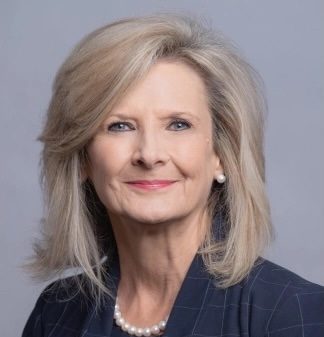
In the world of early childhood education, some names appear in headlines because they chase attention. Others appear because the work quietly changes classrooms, teacher preparation, curriculum design, and the way adults understand children. Christy Tirrell-Corbin belongs firmly in the second category. She is not a celebrity educator with a glitter cannon and a catchphrase. She is a scholar, clinical professor, program director, and early childhood advocate whose work connects research with real classroomswhere tiny sneakers, big feelings, snack-time politics, and curious questions all coexist before 10 a.m.
Dr. Christy Tirrell-Corbin is a Dean’s Impact Professor and Clinical Professor of Human Development at the University of Maryland. She serves as the founding Executive Director of the Center for Early Childhood Education and Intervention, commonly known as CECEI. Her professional focus includes early childhood policy, trauma sensitive pedagogy, culturally responsive curriculum, project-based learning, teacher education, children’s mental health, and high-quality learning experiences for young children.
That may sound like a long academic résumé, but the central idea is refreshingly human: young children learn best when adults understand their development, respect their identities, respond to their experiences, and design learning that feels meaningful rather than mechanical. In other words, preschool should not feel like a tiny corporate training seminar with crayons.
Who Is Christy Tirrell-Corbin?
Christy Tirrell-Corbin, PhD, is a faculty member in the Department of Human Development and Quantitative Methodology at the University of Maryland College of Education. Her work sits at the intersection of early childhood education, teacher preparation, trauma-informed practice, and public policy. She is widely connected to initiatives that aim to improve learning environments for young children, especially those growing up in communities affected by adversity, limited resources, disability access barriers, language barriers, and other complex needs.
One of her most important leadership roles is as the founding Executive Director of the Center for Early Childhood Education and Intervention. CECEI works on curriculum development, program evaluation, professional learning, inclusive education, and research-based approaches that support children, families, and educators. This is the type of center that does not merely ask, “What should children learn?” It also asks, “What do teachers need? What do families need? What does the system need to stop making everyone exhausted?”
Earlier in her career, Tirrell-Corbin worked in foster care and adoption in New York City. That experience is frequently described as foundational to her later research interests, particularly her focus on children facing adversity and the systems surrounding them. Her professional path reflects a consistent theme: children’s learning cannot be separated from their relationships, histories, communities, and emotional safety.
Her Role at the University of Maryland
At the University of Maryland, Christy Tirrell-Corbin holds several major responsibilities. She is a Clinical Professor of Human Development, Director of the Early Childhood General/Special Education teacher education program, and founding Executive Director of CECEI. These roles place her close to both research and practice. That balance matters because education can become strangely abstract when it floats too far from actual classrooms. A policy document may sound perfect until a teacher has to implement it while one child is crying, another is building a tower, and someone has just discovered the acoustic power of a metal lunchbox.
Her work in teacher education is especially significant because early childhood educators need more than affection for children. They need developmental knowledge, inclusive strategies, family engagement skills, trauma-sensitive practices, cultural responsiveness, assessment literacy, and the ability to create meaningful learning experiences. The early years are not “babysitting with bulletin boards.” They are a critical stage of cognitive, social, emotional, and language development.
Through her academic and leadership roles, Tirrell-Corbin helps prepare educators who can teach young children with both warmth and professional expertise. That combination is harder than it sounds. A strong early childhood teacher must know how to read a picture book, observe developmental progress, handle conflict, support children with disabilities, communicate with families, and turn curiosity into curriculum. Basically, it is part scientist, part coach, part storyteller, part emotional weather forecaster.
The Center for Early Childhood Education and Intervention
The Center for Early Childhood Education and Intervention is central to understanding Christy Tirrell-Corbin’s public work. CECEI focuses on improving early learning opportunities through research, curriculum, intervention, professional development, and evaluation. Its projects often involve partnerships with state agencies, schools, educators, and communities. The center’s work is practical, not just theoretical. It is designed to reach classrooms, programs, and educators who are doing the daily work of supporting young children.
CECEI’s initiatives include curriculum development for preschool children, trauma-sensitive pedagogy, early childhood workforce development, inclusive education, and evaluation projects. The center’s approach reflects a broader movement in education: research should not sit on a shelf wearing a tiny academic hat. It should help teachers make better decisions, help programs improve quality, and help children experience learning environments that are safe, engaging, and developmentally appropriate.
Under Tirrell-Corbin’s leadership, CECEI has become associated with projects that bridge research, practice, and policy. That three-way connection is essential in early childhood education because no single group can solve the field’s biggest challenges alone. Teachers understand the classroom. Researchers analyze patterns and evidence. Policymakers shape funding and systems. Families know children in ways no assessment tool can fully capture. The strongest work happens when these voices are not placed in separate rooms like awkward relatives at Thanksgiving.
Children Discovering Their World: Project-Based Learning for Preschool
One of the most visible CECEI initiatives connected to Christy Tirrell-Corbin is Children Discovering Their World, a curriculum series designed for preschool children. The series includes Children Study Their World for four-year-olds and Children Explore Their World for three-year-olds. These curricula are built around standards-driven, project-based learning experiences grounded in Maryland’s early learning standards and assessment expectations.
Project-based learning in preschool may sound ambitious to anyone who has watched a three-year-old spend ten minutes debating whether a worm is a pet. But that is exactly the point. Young children are naturally curious investigators. They ask questions, test ideas, observe the world, and build meaning through hands-on experiences. A well-designed preschool curriculum does not suppress that curiosity; it organizes it.
In a project-based classroom, children might explore topics such as buildings, water, families, nature, community helpers, or transportation. They observe, draw, discuss, count, compare, build, ask questions, read books, and connect ideas across subject areas. Literacy, math, science, social studies, language development, and social-emotional growth do not have to live in separate little boxes. In real life, children do not say, “Excuse me, I am now switching from science to vocabulary acquisition.” They simply explore.
Christy Tirrell-Corbin’s work with these curriculum efforts highlights a key belief in high-quality early childhood education: young children deserve intellectually rich learning. Preschool should not be reduced to worksheets, random crafts, or “letter of the week” routines that treat learning like a slow alphabet parade. Children can investigate meaningful questions when adults provide thoughtful guidance, materials, language, and time.
Trauma Sensitive Pedagogy and Children’s Mental Health
Another major area of Tirrell-Corbin’s work is trauma sensitive pedagogy. Trauma-sensitive education recognizes that children’s experiences can shape how they learn, behave, connect, and respond to stress. It also recognizes that teachers and school staff can experience secondary traumatic stress, especially when they work in communities facing high levels of adversity.
Tirrell-Corbin is connected to the Trauma Sensitive Pedagogy project, which focuses on helping educators understand the complex ways trauma can affect learning and development. The approach is not about labeling children as “difficult” or turning teachers into therapists. Instead, it encourages educators to create supportive, predictable, responsive environments that help children feel safe enough to learn.
This distinction is important. A trauma-sensitive classroom does not excuse harmful behavior, but it asks better questions about it. Instead of stopping at “Why is this child acting out?” educators are encouraged to consider, “What skill is missing? What stress response may be happening? What relationship or routine could help?” That shift can change everything. It moves adults from reaction to reflection.
Tirrell-Corbin’s scholarship and public writing also address educator well-being. During and after the COVID-19 pandemic, many teachers reported high levels of stress, burnout, and emotional strain. Trauma-sensitive systems must care about adults as well as children. A burned-out teacher cannot pour calm into a classroom like a magical teapot. Supporting educators is part of supporting children.
Culturally Responsive Curriculum and Conversations About Race
Christy Tirrell-Corbin’s work also includes culturally responsive pedagogy and early conversations about race, identity, and diversity. These topics can make adults nervous, especially when young children are involved. Some people worry that children are “too young” for such conversations. But children notice differences early. They observe skin color, language, family structure, clothing, food, ability, and social treatment. Silence does not make those observations disappear; it simply leaves children to interpret them without guidance.
A developmentally appropriate approach to diversity does not mean giving preschoolers a graduate seminar in sociology. It means helping children notice fairness, kindness, identity, respect, and community in concrete ways. For example, teachers can choose books that represent different families, invite children to share home languages, discuss fairness during play, and gently correct stereotypes when they appear. Young children are capable of thoughtful conversations when adults use language they can understand.
Tirrell-Corbin’s emphasis on culturally responsive curricula aligns with a larger goal in early childhood education: children should see themselves and others represented with dignity. A classroom library where every family looks the same quietly teaches a lesson. So does a curriculum that treats some cultures as “special event decorations” rather than part of everyday life. Responsive teaching makes belonging part of the structure, not a once-a-year bulletin board.
Maryland Early EdCorp and Workforce Development
Another important initiative connected to Christy Tirrell-Corbin is the Maryland Early EdCorp Registered Apprenticeship Program. This program is designed to strengthen the early childhood workforce by preparing educators through paid on-the-job training and coursework. It is especially focused on inclusive early childhood classrooms and on supporting children and families with complex needs.
The early childhood field has long faced workforce challenges, including low pay, high turnover, limited professional pathways, and uneven access to training. These problems did not appear overnight, and unfortunately they cannot be solved with inspirational posters in the staff lounge. Apprenticeship models offer one practical strategy: help people enter and grow in the profession while gaining experience, credentials, mentorship, and support.
By linking workforce development with inclusive practice, Maryland Early EdCorp reflects a larger vision of quality. Early childhood programs need educators who can support all children, including children with disabilities, multilingual learners, children affected by poverty, and children with social-emotional needs. Inclusion is not just about placing children in the same room. It requires trained adults, adapted environments, collaboration, and a belief that every child belongs.
Why Christy Tirrell-Corbin’s Work Matters
The importance of Christy Tirrell-Corbin’s work becomes clearer when we look at the pressures facing early childhood education today. Families need affordable, high-quality programs. Teachers need better preparation and support. Children need classrooms that recognize their curiosity and emotional lives. Policymakers need evidence-based models that can be implemented beyond small pilot projects. The field needs bridges, not more silos.
Tirrell-Corbin’s work matters because it connects the practical with the scholarly. She is associated with curriculum that teachers can use, research that explains why certain approaches matter, professional development that supports educators, and policy-related projects that influence systems. That combination gives her work a wider reach than a single classroom or a single publication.
Her focus on trauma-sensitive pedagogy is especially relevant in a time when educators are increasingly aware of children’s mental health needs. Her work on project-based preschool curriculum pushes back against shallow academic preparation and supports richer learning. Her leadership in workforce initiatives addresses the people who make early childhood programs possible in the first place: educators.
Examples of Her Educational Philosophy in Action
Example 1: Turning Curiosity Into Curriculum
Imagine a group of preschoolers fascinated by construction vehicles outside their classroom window. A traditional approach might tell them to sit down and finish a worksheet about the letter B. A project-based approach might ask: What are the workers building? What tools do they use? How do buildings stay up? Can we design our own structure? Suddenly, children are drawing plans, counting blocks, learning vocabulary, reading books about construction, discussing safety, and testing ideas. The bulldozer has become a curriculum partner. Honestly, it probably deserves a tiny name tag.
Example 2: Responding to Behavior With Insight
In a trauma-sensitive classroom, a child who frequently knocks over materials is not simply labeled “bad.” The teacher observes patterns, considers triggers, teaches regulation strategies, strengthens relationships, and adjusts routines. The goal is not permissiveness; it is understanding. Children learn self-control through support, modeling, and practicenot through shame.
Example 3: Making Inclusion Real
In an inclusive preschool classroom, a child with communication delays might participate in a group project using pictures, gestures, assistive tools, peer support, and adult scaffolding. Inclusion works when educators plan for access from the beginning. Tirrell-Corbin’s work in early childhood general and special education supports this broader vision of classrooms where children are not treated as interruptions to the lesson but as the reason the lesson exists.
Lessons for Educators, Parents, and Program Leaders
For educators, Christy Tirrell-Corbin’s work offers a reminder that early childhood teaching is deeply intellectual. It requires observation, planning, reflection, cultural awareness, and emotional sensitivity. Good teaching is not just being “nice with kids.” It is professional decision-making in motion.
For parents, her work highlights the importance of looking beyond surface features when choosing or evaluating a preschool program. A beautiful classroom is lovely, but the deeper questions matter more. Are children engaged? Are teachers responsive? Do children have chances to investigate and talk? Are families respected? Are all children included? Are routines predictable and warm? Glitter is not a curriculum, even if it will live in your car forever.
For program leaders, her work points toward systems thinking. Supporting young children means supporting teachers, families, curriculum quality, inclusion, mental health, and professional development. Strong programs are built through alignment, not random acts of enthusiasm.
Experiences and Practical Reflections Related to Christy Tirrell-Corbin’s Work
When people encounter the ideas associated with Christy Tirrell-Corbin’s work, the first reaction is often recognition. Teachers recognize the child whose behavior makes more sense when viewed through a trauma-sensitive lens. Parents recognize the preschooler who learns more from investigating puddles than from tracing the same letter fifteen times. Program directors recognize the challenge of asking educators to support complex needs without giving them enough training, time, or respect.
One practical experience that connects strongly to her work is the classroom shift from “activity planning” to “meaning planning.” In many early childhood settings, teachers are asked to prepare activities: a craft for Monday, a counting game for Tuesday, a themed coloring page for Wednesday. The room stays busy, but the learning may feel scattered. Project-based learning changes the rhythm. Instead of asking, “What activity should we do today?” teachers ask, “What are children investigating, and how can today deepen that investigation?” This small shift can make the classroom feel more coherent. Children begin to return to ideas, revise their thinking, and use new language because the topic actually matters to them.
Another experience relates to family engagement. Families often want to support learning but may not know how to connect with school expectations. A project-based curriculum can create natural bridges. If children are studying neighborhoods, families can talk about familiar places, share photos, describe jobs, or take a short walk and notice signs, buildings, and sounds. Learning becomes part of daily life rather than a mysterious school-only ritual guarded by laminated charts.
Trauma-sensitive pedagogy also changes everyday adult responses. Consider a teacher facing a child who refuses to join circle time. A purely compliance-based approach may escalate quickly: demands, warnings, consequences. A trauma-sensitive approach still holds expectations, but it adds curiosity. Is the group too loud? Is the transition too fast? Does the child need a visual cue, a job, or a trusted adult nearby? Over time, these adjustments can reduce conflict and build trust. The teacher becomes less of a referee and more of a guide, which is better for everyone’s blood pressure.
For early childhood leaders, Tirrell-Corbin’s workforce-related work connects to a very real experience: talented educators leaving because passion cannot pay rent or prevent burnout. Apprenticeship and professional development models recognize that educators need pathways, mentorship, and credentials. They also acknowledge that quality depends on the adults in the room. When teachers feel prepared and supported, children benefit. When teachers feel abandoned, even the best curriculum can become a stack of papers with good intentions.
Parents can also apply lessons from this work at home. A parent does not need a formal curriculum to encourage inquiry. When a child asks why leaves change color, why ants walk in lines, or why the moon follows the car, the adult can slow down and explore. Look closely. Ask what the child thinks. Read a book. Draw a picture. Test a simple idea. The goal is not to produce a tiny scientist with a lab coat by dinner. The goal is to show that questions are welcome.
The broader experience behind Christy Tirrell-Corbin’s topic is this: early childhood education works best when adults take children seriously without expecting them to act like miniature adults. Young children need play, relationships, structure, language, movement, imagination, and emotional safety. They need teachers who understand development and systems that understand teachers. Tirrell-Corbin’s work matters because it keeps those pieces connected.
Conclusion
Christy Tirrell-Corbin is an important figure in early childhood education because her work brings together research, practice, policy, curriculum, trauma sensitivity, inclusion, and teacher preparation. As a Dean’s Impact Professor, Clinical Professor of Human Development, founding Executive Director of CECEI, and leader in multiple early childhood initiatives, she represents a practical and research-grounded approach to improving learning for young children.
Her work reminds educators, families, and policymakers that preschool is not a warm-up act before “real school.” It is real schoolonly with smaller chairs, bigger feelings, and surprisingly intense opinions about glue sticks. Through project-based learning, trauma-sensitive pedagogy, culturally responsive teaching, and workforce development, Christy Tirrell-Corbin’s contributions continue to shape conversations about what young children need and what educators deserve.