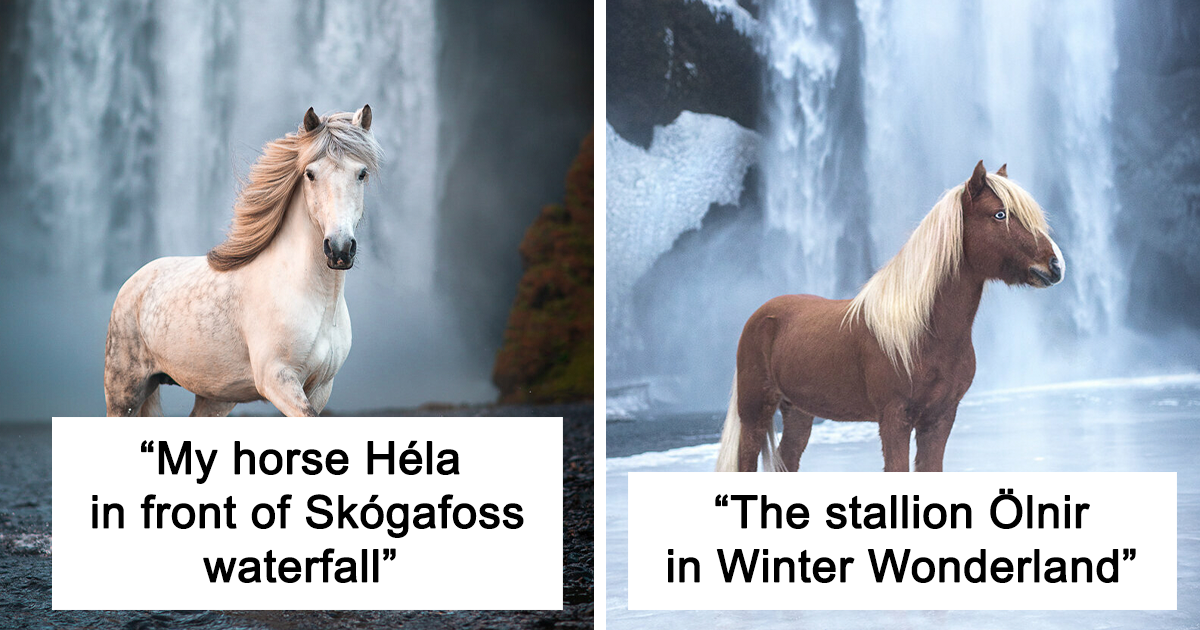
Some places are photogenic. Iceland is theatrical. It does not simply sit there looking pretty like a well-behaved postcard. It throws glaciers, lava fields, black-sand beaches, mossy hills, silver waterfalls, and moody skies into the frame like an overexcited art director with a bottomless budget. Then, just when you think the scenery has already done enough, an Icelandic horse wanders into view with a windblown mane, a calm stare, and the kind of confidence that says, “Yes, I know I’m the star. Please get my good side. Actually, every side is my good side.”
That is the magic behind a gallery like this one. It is not only about horses. It is about scale, weather, texture, movement, and the strange visual poetry that happens when a hardy Nordic breed meets one of the most cinematic landscapes on Earth. Icelandic horses are small compared with many other riding horses, but they are powerful, sure-footed, and famously expressive. Their thick coats, shaggy forelocks, and compact build make them look like they were designed by nature’s coziest sculptor. Put them in front of a glacier or beside a volcanic ridge, and suddenly every photo feels like a movie still from a fantasy film that forgot to add dragons because the horses were already enough.
Why Icelandic Horses Look So Good on Camera
Part of the appeal is visual, and part of it is cultural. Icelandic horses are deeply tied to the country’s history and rural identity. They are known for their toughness, their friendly curiosity, and their unique gaits, especially the famously smooth tölt. Even in still photography, that sense of motion matters. These horses do not merely stand in landscapes. They seem to belong to them. Their manes echo the grass. Their coats mirror volcanic earth, winter straw, storm clouds, and pale northern light. Iceland is rugged without feeling lifeless, and Icelandic horses are sturdy without losing elegance. It is a ridiculously unfair combination for every other destination trying to look interesting on Instagram.
The Breed Has Personality Built In
Icelandic horses have an alert, intelligent expression that photographers love. They often look curious rather than nervous, which means the lens captures more than anatomy. It captures attitude. One tilt of the head, one forelock blown sideways by Atlantic wind, and the whole image starts telling a story.
The Landscape Does Half the Work
Iceland is a dream for contrast. Dark sand beside white surf. Green valleys under charcoal clouds. Amber grass in front of blue ice. On most trips, photographers spend half their energy searching for a good background. In Iceland, the background strolls over and introduces itself every twelve minutes.
The Light Is Pure Drama
Whether it is soft summer glow, sharp winter brightness, or low clouds turning the world into a giant softbox, Iceland gives horse photography depth and mood. You do not just photograph an animal there. You photograph weather, distance, silence, and motion all at once.
30 Beautiful Icelandic Horse Photos, Told Through the Moments Behind Them
-
1. The Roadside Welcome Committee
The first frame came before the trip properly began: three horses standing near a fence, staring at me with the polite suspicion of tiny local celebrities. Behind them, open fields stretched toward distant hills, and the sky was so clean it looked recently edited.
-
2. Windblown Bangs, Zero Apologies
One chestnut horse stood sideways in the grass while its forelock exploded in the wind like a rock star mid-encore. Icelandic horses have famously thick manes, and in a strong breeze they stop looking like livestock and start looking like they have management.
-
3. Black Horse, Green Field, Blue Silence
This image was all contrast: a nearly black horse against electric green pasture, backed by pale blue mountains. The composition was simple, but the emotional effect was huge. Iceland has a talent for making quiet moments feel epic without trying too hard.
-
4. Golden Grass Before the Storm
A small herd gathered in dried amber grass while a layer of storm clouds moved in over the valley. Their coats picked up the warm tones of the field, and the gathering weather added tension, as if the land itself had decided to become moody for the camera.
-
5. The Foal Who Stole the Shoot
Every photographer knows that one image will be hijacked by a younger, fluffier, less experienced subject. In my case, it was a foal with short legs, bright eyes, and an obvious disregard for my original shot list. Reader, I forgave everything immediately.
-
6. Horses Beneath a Waterfall Mist
Not directly inside the spray, thankfully, but close enough for the air to shimmer. A line of horses grazed in a meadow while waterfall mist drifted across the scene. The result looked half pastoral postcard, half fantasy novel cover.
-
7. The Lava Field Portrait
This was one of the most Icelandic scenes imaginable: a horse standing near dark volcanic rock softened by moss. The animal looked warm, calm, and grounded; the land looked ancient and slightly otherworldly. It was a perfect reminder that Iceland does “beautiful” with a side of geology.
-
8. Midnight Sun on a Pale Mane
Late-evening summer light turned a cream-colored mane into something almost metallic. The horse lowered its head to graze, and for a second everything went still. No grand action, no dramatic gallop, just a quiet golden wash that made the frame feel expensive.
-
9. Group Portrait, Iceland Style
Five horses refused to line up in any useful way, which naturally produced a better image than if they had obeyed. One looked straight at me, one wandered off, one turned backward, and two pretended not to care. It felt honest, unscripted, and deeply charming.
-
10. Snow Line in the Distance
A herd moved across a field with snow-covered mountains rising behind them. The cold tones of the background made the warmer browns of the horses glow. This was one of those frames where the landscape did not compete with the subject; it elevated it.
-
11. The Black-Sand Beach Shot
If Iceland has a signature texture, it might be black sand. Seeing horses against that dark shoreline felt surreal. The surf was white, the beach was volcanic charcoal, the cliffs were severe, and the horses somehow made it all feel gentle instead of harsh.
-
12. Ears Forward, Horizon Endless
A single horse stood at a slight angle, ears alert, facing a horizon so broad it nearly swallowed the frame. I loved the sense of proportion. In Iceland, even a strong, muscular animal can look tiny beside the land, and that is exactly why the photo works.
-
13. Brown Coat, Silver River
Near a glacial stream, I photographed a chestnut horse with water flashing behind it like brushed steel. The color palette was almost absurdly good: rust, silver, slate, and pale green. It looked less like a random travel moment and more like deliberate production design.
-
14. Mane in Motion
One horse lifted its head at exactly the right second and sent its mane flying sideways. It was not running. It was not posing. It was simply being a horse in windy Iceland, which apparently is enough to create the visual equivalent of a fashion campaign.
-
15. The Calm Before Rain
Clouds gathered low over the valley, flattening the light and muting the colors. Instead of killing the image, the gray sky made everything feel richer. The horses’ coats deepened, the grass turned velvety, and the whole frame became quieter and more intimate.
-
16. Fjordside Grazing
There is something deeply unfair about seeing horses graze beside a fjord while mountains frame the far shore. It is too much beauty in one place. The photo looked like a desktop wallpaper made by someone with impossible standards and suspiciously good luck.
-
17. The Curious One
This horse walked straight toward the camera, stopping just close enough to fill the frame with soft muzzle, heavy forelock, and bright, calm eyes. Close-up horse portraits can feel cliché, but this one worked because the animal’s expression was pure curiosity, not performance.
-
18. Volcanic Ridge Backdrop
The ridge behind the herd was dark and sharp, almost theatrical. In front of it stood several horses in different shades of brown, black, and cream. Their variety mattered. Icelandic horses come in many colors, and that diversity makes group photos feel especially rich.
-
19. White Horse, Dark Weather
One pale horse against a bruised sky became an instant favorite. The contrast was dramatic but not flashy. It felt elegant. Sometimes Iceland does not hand you saturated sunshine; sometimes it gives you a cloud bank and says, “Work with this.” It usually knows best.
-
20. Path Through the Moss
A narrow riding trail cut through a mossy landscape while a horse moved slowly across it, sure-footed and unbothered. The image captured something important about the breed: these horses look comfortable on terrain that would make the average couch potato file a complaint.
-
21. Glacial Blue and Chestnut Brown
I loved this frame for color alone. A horse with a warm chestnut coat stood in front of cool glacial tones, creating a contrast that felt almost painterly. Iceland often pairs warmth and cold in the same scene, which is probably why the country photographs so well.
-
22. Family Cluster in the Wind
Several horses gathered shoulder to shoulder, their manes blowing in different directions while they faced the same invisible point in the distance. The photo felt communal. Icelandic horses often seem social and composed in groups, which makes herd photography especially rewarding.
-
23. Rain on the Horizon
Far away, a curtain of rain blurred the hills. In the foreground, the horses remained sharp and bright. That contrast between weather moving in and subjects standing firm gave the image its emotional core. Iceland’s weather changes fast, and photographs often catch that tension.
-
24. The Ridge-Line Silhouette
At one point, the horses crested a slight rise and turned into dark silhouettes against a brighter sky. Their compact build and thick necks made the outlines instantly recognizable. No details were needed. Just shape, light, and one unforgettable skyline.
-
25. Hooves on Dark Earth
This shot focused less on faces and more on movement: hooves stepping across damp volcanic soil, bits of grass, and low ground fog. It reminded me that horse photography is not only about portraits. Sometimes the mood lives in the lower half of the frame.
-
26. Under a Low Arctic Sky
The clouds sat so low they seemed to press gently on the hills. A group of horses grazed below them, unconcerned. The compressed sky made the land feel broader, and the horses grounded the scene. It was weather-heavy, spacious, and unmistakably Icelandic.
-
27. The Friendly Interruption
While I aimed at one horse farther away, another marched directly into the foreground and blocked the shot with perfect confidence. Usually that would be annoying. Here, it became one of the funniest and best images of the trip. Icelandic horses understand scene-stealing.
-
28. Sunbreak Over the Valley
A break in the clouds sent one shaft of sunlight across a herd, leaving the rest of the valley in shadow. It looked staged, but it was pure luck. In horse photography, good light is important. In Iceland, good light occasionally arrives like divine endorsement.
-
29. Quiet Field, Loud Beauty
This image was almost minimal: one horse, one fence line, one broad field, and miles of open air. Yet it stayed with me because of its calm. Iceland does spectacle well, but it also knows how to make stillness feel unforgettable.
-
30. The Last Look Back
The final photo happened by accident as I was leaving. One horse turned around and looked back across the field while the evening light caught the edge of its mane. It felt like a farewell shot, the kind every photographer hopes for and pretends was planned.
What These Horse Photos Reveal About Iceland
Together, these thirty images say something bigger than “look how pretty.” They show why Icelandic horse photography works so well online and in print. The breed has visual character. The country has texture and scale. The weather changes fast enough to keep every frame alive. And the landscapes are varied enough that a horse can appear beside black sand in one image, golden pasture in the next, and a glacier-fed valley right after that. That variety keeps the gallery from feeling repetitive, even when the subject remains the same. It also explains why travelers, photographers, and horse lovers keep returning to Iceland with full memory cards and absolutely no self-control around the phrase “just one more photo.”
My Experience Photographing Beautiful Horses in Iceland
Photographing horses in Iceland felt different from photographing animals anywhere else I have traveled, mostly because the country refuses to behave like a background. In many destinations, you find the subject first and then search for a setting that makes the image stronger. In Iceland, the landscape keeps barging in with excellent ideas. One minute I was focused on a horse’s eye, forelock, and profile; the next minute I was backing up because a waterfall, a lava ridge, or a line of snowy mountains had suddenly turned the entire scene into something much larger than a portrait.
What surprised me most was how relaxed the experience felt. There was no sense of rushing from one dramatic location to another just to collect pretty views like trophies. The horses themselves slowed me down. They grazed, wandered, paused, looked up, and returned to their own rhythm. That rhythm changed the way I shot. I stopped hunting for “perfect” images and started waiting for honest ones. A horse flicking its ears toward the wind. A foal lingering near a mare. A mane blown completely sideways by a gust that would have ruined a human hair commercial but improved the photo by at least 80 percent.
I also learned quickly that Icelandic weather is not a problem to solve; it is part of the visual language. Overcast light made coats look velvety. Brief sunbreaks turned ordinary fields into glowing stages. Distant rain added atmosphere. Even cold air seemed to sharpen the edges of everything. Instead of hoping for one kind of weather, I began appreciating whatever showed up. Iceland gave the photos mood for free, which was generous, because it certainly charged for snacks.
Another thing I loved was the horses’ presence. Icelandic horses may be smaller than some riders expect, but they do not feel delicate. They feel centered. Balanced. Capable. When they moved across rough ground, they looked completely at home, as if the land had designed them for itself. That sense of belonging is hard to fake in a photograph. You can tell when an animal is merely standing somewhere, and you can tell when it fits the place so perfectly that the image feels inevitable. These horses felt inevitable in Iceland.
Emotionally, the trip stayed with me because it blended grandeur and intimacy. The landscapes were huge, but the best moments were small: a horse breathing against cold air, the sound of hooves on dark soil, the silence after wind dropped for a few seconds, the way a whole herd could look wild and gentle at the same time. I came for beautiful horse pictures and left with something better: a sharper sense of patience, scale, and attention. Iceland asks you to look wider, but the horses teach you to look closer.
By the end of the shoot, I understood why people fall so hard for both the breed and the country. The horses are beautiful, yes, but not in a polished, decorative way. Their beauty feels useful, weather-tested, and alive. Iceland is breathtaking, but not because it tries to impress. It simply is what it is: volcanic, windswept, luminous, and impossible to ignore. Put those two together and the result is not merely a gallery. It is an atmosphere. It is a visual love letter to rugged beauty, soft noses, big skies, and the delightful possibility that your best photo of the day may be taken while standing in wet grass wondering whether your fingers still work.
Conclusion
If there is a lesson in these thirty moments, it is this: Icelandic horses do not need extravagant styling, complicated setups, or visual gimmicks. Give them space, weather, and Iceland itself, and the story almost tells itself. The breed brings character, movement, and warmth. The land brings scale, contrast, and drama. Together, they create the kind of images people stop scrolling for. And honestly, that seems fair. If any subject deserves a full pause on the internet, it is a beautiful horse standing in front of a glacier like it personally scheduled the light.