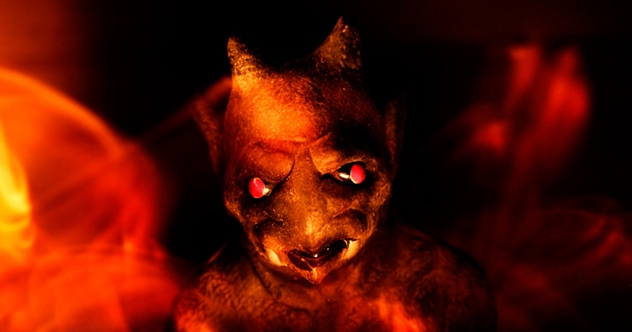
Toilets are usually where people go to escape awkward conversations, not encounter ancient gods. Yet across history, bathrooms, outhouses, drains, and latrines have been treated as spiritually important places. Before indoor plumbing made restroom visits wonderfully boring, these spaces could be dark, isolated, slippery, smelly, and closely tied to illness, household safety, farming, and fertility.
That combination made the toilet a perfect address for supernatural residents. Some traditions imagined protective deities who kept families safe. Others warned of lurking demons, household spirits, or scum-loving creatures that appeared when cleanliness took an extended vacation. In other words, folklore gave people a reason to respect sanitation long before anyone had a bathroom-cleaning app.
Why Toilets Became Mythological Hotspots
Ancient and premodern toilets were not simply private little rooms with a magazine rack and suspiciously weak hand soap. They were connected to larger systems: sewage, agriculture, water, household boundaries, health, and daily survival. Waste could be dangerous, but it could also become fertilizer. A toilet could represent pollution, yet it could also support the next harvest.
That strange mix explains why toilet mythology is often less silly than it first appears. A guardian of the latrine might protect a family from accidents, illness, or misfortune. A demon might warn people not to enter unsafe places alone. A goddess of filth might symbolize the need to recognize wrongdoing, clean up a mess, and begin again. The setting may be humble, but the ideas are surprisingly huge.
1. Šulak: The Mesopotamian Demon of the Privy
Ancient Mesopotamia gave the world cities, writing, mathematics, and apparently one of history’s least welcome restroom companions: Šulak. In Babylonian and Akkadian traditions, Šulak was associated with the lavatory and described as a lurking demon. Scholarly discussions of ancient Mesopotamian lavatories connect him with fears surrounding vulnerable, isolated spaces and sudden illness.
Šulak was not merely a spooky character invented to ruin a peaceful bathroom break. His story reflects a practical reality: old toilets and drainage spaces could be hazardous. They were dark, damp, and often physically risky. Protective objects and ritual practices around household thresholds made sense in a world where health threats were poorly understood. Šulak turned that uneasy feeling into a supernatural explanation: sometimes the bathroom felt dangerous because, well, perhaps something was waiting there.
2. Cloacina: Rome’s Goddess of the Sewer
The Romans were famous for roads, law, military engineering, and an impressive willingness to give divine status to nearly every important part of life. That included sanitation. Cloacina was associated with the Cloaca Maxima, Rome’s enormous drainage and sewer system. Her name comes from the Latin word cloaca, meaning sewer or drain.
Cloacina is a reminder that ancient Romans did not view drainage as purely invisible infrastructure. A functioning sewer mattered to public health, commerce, city life, and basic dignity. She later became associated with Venus in the cult title Venus Cloacina, blending themes of purification, civic order, and sacred protection. It may sound odd to modern ears, but a goddess connected to sewers was really a goddess connected to keeping a crowded city from becoming one giant public-health emergency.
3. Sterquilinus: The Roman Power Behind Manure
Sterquilinus, also called Sterculinus or Stercutus in later sources, was connected to manure and fertilization in Roman religious tradition. He is not always described as a strict “toilet god,” but he absolutely belongs in any mythological discussion of waste, farming, and the ancient habit of turning yesterday’s leftovers into tomorrow’s crops.
For Roman farmers, manure was not simply waste. It was an agricultural resource. The connection between bodily waste, animal waste, soil, and food production made perfect sense in a farming society. Sterquilinus represents the unglamorous but essential truth that fertility often begins in a place nobody wants to talk about at dinner. His role also proves that ancient religion was not always about thunderbolts and marble temples. Sometimes it was about compost, crops, and the cosmic importance of cleaning the barn.
4. Tlazolteotl: The Aztec Goddess of Filth and Purification
In Aztec religion, Tlazolteotl was associated with filth, impurity, vice, confession, and purification. She was not a toilet goddess in the narrow architectural sense, but she belongs in the wider mythology of waste and cleansing because “filth” could represent both physical dirt and moral disorder.
That dual role is what makes Tlazolteotl so fascinating. She was connected with the mess itself and with the possibility of being cleansed from it. In modern language, she was not just the goddess of the problem; she was also part of the process of confronting it. Her mythology reminds us that dirt has never been only dirt. Across many cultures, it has symbolized shame, disease, chaos, honesty, renewal, and the relief of finally admitting that something needs to be cleaned up.
5. Zigu: China’s Lady of the Latrine
Zigu, also known by names such as the Purple Lady or Lady of the Latrine, is one of China’s best-known toilet deities. Her stories vary, but she is commonly connected to a woman who suffered injustice and became a household spirit associated with latrines, women’s concerns, and divination.
In some historical traditions, Zigu was invoked during the Lantern Festival. Women gathered to invite her presence, ask questions, and seek answers about their future. This makes Zigu more than a novelty figure with an unusual job title. She represents a space where women could gather, share concerns, and seek symbolic guidance in a society that often limited their public authority.
Her mythology also shows how a low-status domestic space could become spiritually meaningful. The latrine was not glamorous, but it was private, familiar, and part of daily household life. Zigu turned that overlooked corner of the home into a place of ritual, memory, and quiet power.
6. Cheuksin: Korea’s Outhouse Deity
In Korean folk belief, Cheuksin was the deity of the outhouse. She was part of a larger group of household gods believed to inhabit different areas of the home, including the kitchen, courtyard, storage spaces, and living quarters. While some household spirits were protectors, Cheuksin had a reputation for being temperamental and easily offended.
Folklore surrounding Cheuksin often emphasized manners and caution. People were expected to acknowledge the outhouse rather than storm into it carelessly. The lesson is easy to recognize even today: respect shared spaces, do not be reckless, and perhaps do not treat the bathroom like a wrestling arena during a family gathering.
Cheuksin also reflects the old reality of outdoor toilets. An outhouse could be cold, dark, isolated, and unsafe, especially for children. Stories about an intimidating resident spirit gave people a reason to be alert. Folklore sometimes worked like an early warning label, only with more supernatural hair and fewer legal disclaimers.
7. Kawaya no Kami: Japan’s Toilet Guardian
Kawaya no Kami, often translated as the toilet god, refers to Japanese beliefs in a guardian spirit connected to the toilet or latrine. In older rural life, human waste could be collected and used as fertilizer. That made the toilet part of the agricultural cycle rather than a hidden room people tried not to think about.
Because toilets were tied to household safety, fertility, and farming, keeping them clean could be viewed as an act of respect toward the resident deity. In some regions, people offered food or performed New Year customs connected with toilet guardians and hopes for a good harvest.
This belief turns a modern chore into a spiritual concept: cleaning the bathroom is not just about avoiding unpleasant smells. It is about maintaining harmony in the home. Kawaya no Kami is basically the ancient world’s reminder that no amount of decorative candles can compensate for ignoring the actual cleaning.
8. Ususama Myo-o: The Buddhist Purifier of Defilement
Ususama Myo-o, also known as Ucchusma in Buddhist traditions, is a fierce Buddhist Wisdom King associated with purification and the removal of defilement. In Japan, he became closely linked with toilets and bathroom protection because of his power to cleanse impurity.
Ususama Myo-o was not limited to restrooms. Religious art and temple traditions connect him with health, protection, fertility, spiritual purification, and the defeat of harmful influences. Yet the toilet association makes sense: bathrooms are places where people deal directly with the body, cleanliness, vulnerability, and what society labels impure.
Unlike a cute mascot who hands out disinfectant wipes, Ususama Myo-o is usually depicted as a powerful, intense figure. That contrast is part of the charm. Ancient people did not imagine purification as a gentle scented candle. Sometimes they imagined it as a wrathful cosmic force with enough authority to tell filth, danger, and bad luck to leave immediately.
9. Fuuru nu Kami: Okinawa’s Household Protector
In the Ryukyu Islands, including Okinawa, Fuuru nu Kami was understood as a toilet god and protector of the waste area. Traditional Okinawan household systems treated this part of the home as important because it was connected to sanitation, animals, food production, and family well-being.
Older toilet structures in Okinawa could be integrated with animal husbandry and agricultural recycling. That may sound shocking to modern readers, but it reflects a practical closed-loop system in which little was wasted. In that context, a guardian spirit of the toilet was also a guardian of household balance.
Fuuru nu Kami shows that waste has never been just a gross inconvenience. In many traditional societies, it was part of a cycle involving land, livestock, crops, and survival. The deity’s role emphasized that even the least glamorous corner of a home deserved care. A neglected toilet was not merely dirty; it could be seen as a sign that the household itself was out of order.
10. Akaname: Japan’s Scum-Licking Bathroom Yokai
Not every bathroom spirit is a deity. Some are what happens when a neglected bathtub develops a personality. Akaname, a Japanese yokai whose name is often translated as “filth-licker” or “scum-licker,” is associated with grimy bathrooms and old bathing spaces.
Akaname appears in Japanese supernatural art and folklore as a creature attracted to accumulated dirt. It is less a monster with a grand political agenda and more a deeply unpleasant reminder that somebody should probably scrub the tub. The creature’s existence makes perfect symbolic sense: when cleaning is ignored long enough, the dirt feels alive.
Like many yokai, Akaname blends humor with discomfort. It does not need an elaborate prophecy or a castle on a mountain. It thrives in a place people would rather not inspect closely. That is exactly why it works. The legend turns routine hygiene into a tiny horror story and makes “I’ll clean it tomorrow” sound like a risky life strategy.
What These Toilet Spirits Really Teach Us
These myths are funny, eerie, and occasionally wonderfully bizarre, but they are also deeply practical. Toilet demons and deities often grew from real concerns: disease, sanitation, water, darkness, household safety, agricultural fertility, privacy, and social rules.
The supernatural figures gave people a language for discussing things that were necessary but awkward. A sewer goddess acknowledged public infrastructure. A latrine deity encouraged respect for a household space. A demon warned people about danger in isolated places. A scum-licking yokai turned cleaning into a battle against an embarrassing little monster.
Modern bathrooms may have motion-sensor lights, automatic flushes, and mirrors designed to judge us at 7:00 in the morning, but the old anxieties remain recognizable. We still worry about cleanliness, privacy, safety, and the consequences of ignoring a problem until it becomes impossible to ignore.
Everyday Experiences That Make Toilet Folklore Feel Surprisingly Familiar
Even without believing that a deity lives behind the shower curtain, most people understand why bathrooms became supernatural spaces. A restroom is usually small, quiet, and separate from the rest of the house. The door closes. The sound changes. Pipes groan behind the walls. A fan hums like it has secrets. In an old building, a single unexplained creak can make a perfectly ordinary bathroom feel like the opening scene of a ghost story.
Think about using a restroom in a historic home, a campground, a highway rest stop late at night, or an old school building after everyone has gone home. The space is often more isolated than a kitchen or living room. You are alone, the lighting may be questionable, and every plumbing noise sounds much louder than it has any right to sound. Ancient people did not need horror movies to imagine that strange places might have strange residents.
There is also the universal experience of entering a bathroom that has been neglected for too long. Nobody wants to volunteer for this mission. The mirror is foggy, the sink has mysterious spots, and the bathtub seems to be developing its own climate system. Suddenly, Akaname feels less like a myth and more like a highly motivated janitorial supervisor. Folklore has a way of making chores memorable. “Clean the bathroom” is ordinary advice. “Do not invite the scum-licking yokai” has better branding.
Travel can make these beliefs feel even more understandable. Public restrooms vary wildly from place to place. Some are spotless and carefully designed. Others are so mysterious that you start questioning every decision that led you there, including lunch. In unfamiliar spaces, people naturally become more alert. Old folklore often transforms that alertness into stories of guardians, spirits, and rules for behaving properly.
Household traditions also create a sense of meaning around ordinary routines. Many families have their own unofficial bathroom rules: knock before entering, replace the toilet paper roll, do not leave wet towels on the floor, and never pretend you do not know who clogged the sink. These are not religious rituals, but they do help keep a home peaceful. Ancient toilet gods and demons may be distant relatives of that same instinct: the belief that shared spaces need respect.
The deeper experience behind these myths is the realization that cleanliness is social. A dirty bathroom does not affect only one person. It affects everyone who uses the space next. That is why bathroom folklore so often connects hygiene with family harmony, good fortune, health, and responsibility. Whether the warning comes from Cheuksin, Kawaya no Kami, or a parent with a bottle of disinfectant, the message is remarkably consistent.
There is something oddly comforting about that. These stories remind us that even the most embarrassing, unglamorous parts of life have always mattered. People built myths around toilets because toilets were part of survival, dignity, and domestic life. The next time you clean a bathroom, you can think of it as more than a chore. You are maintaining order, protecting the household, and politely informing every imaginary restroom spirit that they are not welcome to move in.
Conclusion
Toilet demons and deities may sound like the world’s most unusual mythology category, but they reveal how seriously people once took sanitation, household order, fertility, and personal safety. From Rome’s Cloacina to China’s Zigu, Korea’s Cheuksin, Mesopotamia’s Šulak, and Japan’s Kawaya no Kami, these figures transformed ordinary bathroom spaces into places of warning, protection, and ritual meaning.
So yes, mythology has room for dragons, thunder gods, heroic warriors, and sewer goddesses. History is not always glamorous, but it is rarely boring. And somewhere, Akaname is probably still disappointed in your bathtub.