“`
When a headline says someone has broken their silence with a “heated statement,” readers naturally expect verbal fireworks: accusations, demands, perhaps a metaphorical table being flipped. But the verified words from Rob Reiner’s eldest daughter, Tracy Reiner, were something quieter and far more painful.
Following the deaths of Rob Reiner and his wife, photographer and producer Michele Singer Reiner, Tracy described herself as being in shock. She spoke warmly about the family that raised her and admitted that she did not know what to say. The emotional force of her statement came not from anger but from disbelief, grief, and the sudden collapse of a family world she had known for decades.
That distinction matters. The Reiner family tragedy has become the subject of intense public attention because Rob was a beloved filmmaker, Michele was a respected creative professional and advocate, and their son Nick Reiner has been charged in connection with their deaths. Yet criminal charges are allegations, not convictions. Nick pleaded not guilty in February 2026, and the case remains unresolved.
Behind the dramatic headlines is a family experiencing several kinds of loss at onceand a public trying to understand a story that cannot be responsibly reduced to a few sensational words.
What Tracy Reiner Actually Said
Tracy Reiner’s first publicly reported remarks were brief. She said she had come from an extraordinary family, acknowledged that she was struggling to find words, and described herself as being in shock. She also reportedly said that she had seen her father at a family gathering just one day before his death.
Those comments were not a courtroom argument, a political speech, or a public attack against her brother. They were the fragmented sentences of someone reacting to a devastating event before she had time to process it.
Calling the statement “heated” may refer to its emotional intensity, but it should not be interpreted as evidence that Tracy angrily accused anyone. There was no reported tirade, no detailed allegation, and no declaration about guilt. The most important word in her response was probably the simplest one: shock.
Grief rarely arrives with a polished press release. It can produce silence, repetition, confusion, numbness, or sentences that stop before they seem finished. Expecting a grieving daughter to deliver a perfectly structured public response is a bit like asking someone to organize a filing cabinet during an earthquake.
Who Is Tracy Reiner?
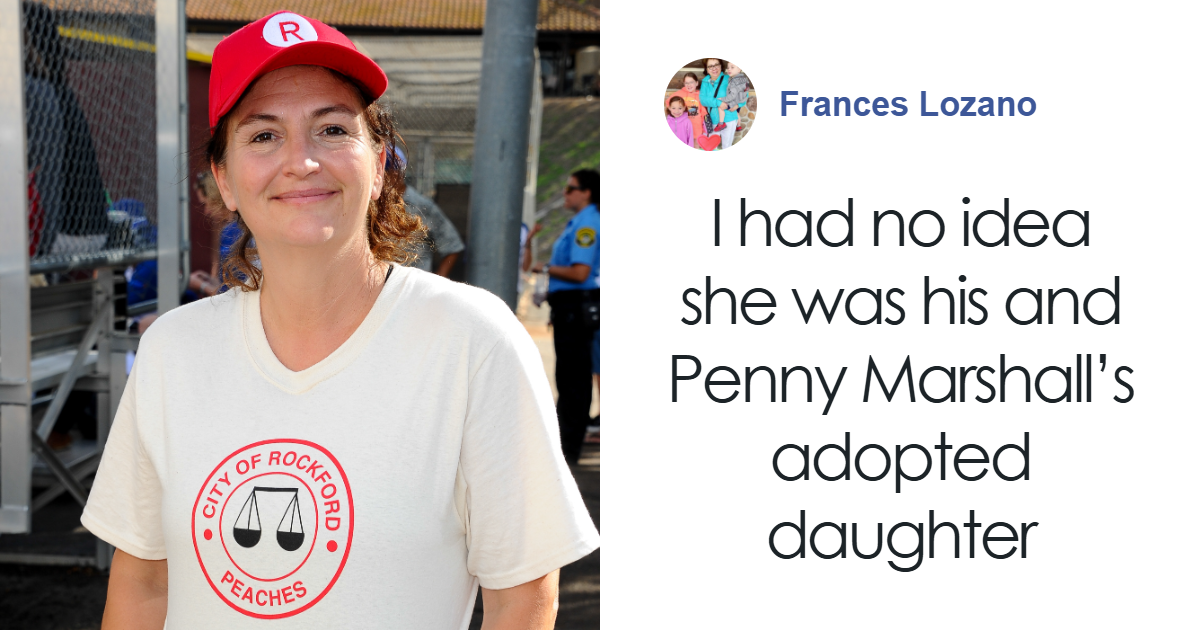
Tracy Reiner is Rob Reiner’s eldest child and the biological daughter of the late actor and filmmaker Penny Marshall. Rob adopted Tracy during his marriage to Marshall, and she continued using the Reiner family name throughout her acting career.
She appeared in several well-known movies, including A League of Their Own, which was directed by her mother, as well as Apollo 13 and When Harry Met Sally…. The last of those films was directed by Rob and became one of the defining romantic comedies of its era.
Tracy therefore grew up inside one of Hollywood’s most influential creative families. Her maternal uncle was filmmaker Garry Marshall, while her adoptive grandfather was comedy legend Carl Reiner. Family dinners in that household probably contained enough entertainment history to make a film-studies professor quietly reach for a notebook.
Yet Tracy’s statement focused not on awards, famous relatives, or movie credits. She remembered the family itself. Her description of having come from “the greatest family” revealed how she understood Rob’s role in her life: not merely as an acclaimed director or adoptive parent, but as part of the emotional foundation of her upbringing.
The Tragedy That Shook the Reiner Family
Rob Reiner and Michele Singer Reiner were found dead at their home in the Brentwood neighborhood of Los Angeles on December 14, 2025. Authorities determined that both had died from multiple sharp-force injuries and classified the deaths as homicides.
Rob was 78. Michele was 70. They had been married since 1989 after meeting while When Harry Met Sally… was being made. Michele was working as a still photographer, and Rob later said that falling in love with her influenced his decision to give the movie its hopeful ending.
The couple shared three children: Jake, Nick, and Romy. Rob was also the father of Tracy through adoption. In the days following the deaths, Nick Reiner was arrested and charged with two counts of first-degree murder. Prosecutors also filed a special circumstance involving multiple murders and alleged that a knife was used.
Nick entered a not-guilty plea on February 23, 2026. He remains in custody without bail. Court proceedings have moved slowly while attorneys review evidence and await additional records, with another hearing scheduled for September 2026.
Those procedural details are essential. The phrase “charged with murder” does not mean “convicted of murder.” Prosecutors must prove their allegations in court, while the defense is entitled to challenge the evidence and present its case. Public suspicion, no matter how widespread, is not a substitute for a verdict.
Jake and Romy Reiner Also Addressed the Loss
Tracy was not the only family member to speak publicly. Jake and Romy Reiner later released a joint statement describing the loss of their parents as horrific and devastating. They said Rob and Michele were not simply their parents but also their best friends.
The siblings asked the public to respect their privacy, avoid reckless speculation, and remember Rob and Michele for the lives they lived and the love they gave. Their request was especially significant because the case immediately became a collision of celebrity news, criminal reporting, family grief, and online detective work.
Internet audiences are rarely famous for patience. When a major story breaks, social media can assemble a full jury, produce three documentaries, and choose the actor for the streaming adaptation before investigators have finished their first week of work.
The family’s statements pushed in the opposite direction. They asked for humanity, caution, and room to mourn.
Why the Phrase “Heated Statement” Is Misleading
Emotion Is Not the Same as Anger
A statement can be emotionally powerful without being confrontational. Tracy’s words communicated love, bewilderment, and distress. Describing them as “heated” risks suggesting that she attacked Nick, blamed another relative, or challenged investigators. The available reporting does not show that.
A more accurate description would be “emotional,” “heartbroken,” or “stunned.” Those words may sound less explosive, but they better reflect what she actually expressed.
“Breaks Her Silence” Is Often a Media Formula
The expression “breaks her silence” has become a standard celebrity-news phrase. It can refer to anything from a lengthy exclusive interview to a three-sentence comment delivered while a reporter is asking questions.
In this case, Tracy did not launch a media campaign. She gave a short response during the earliest stage of an unfolding tragedy. The phrase makes the moment sound strategic, while her words suggest the opposite: she was still struggling to comprehend what had happened.
A Family Statement Is Not Evidence
Readers should also resist treating emotional reactions as clues in the criminal case. Tracy’s grief does not prove who committed the killings. Jake and Romy’s request for privacy does not reveal a hidden legal position. A family member’s tone, facial expression, or choice of words should not be converted into amateur forensic evidence.
Families experiencing traumatic loss may respond in entirely different ways. One person may speak immediately. Another may disappear from public view. Someone else may focus on practical matters because emotional numbness has temporarily taken over. None of those reactions reliably determines what a person knows or believes.
Rob Reiner’s Legacy Extends Far Beyond One Headline
Rob Reiner first became widely known as Michael “Meathead” Stivic on the groundbreaking television comedy All in the Family. He later became one of Hollywood’s most versatile directors, moving across genres with unusual confidence.
His directing credits included the mockumentary This Is Spinal Tap, the coming-of-age drama Stand by Me, the fantasy adventure The Princess Bride, the romantic comedy When Harry Met Sally…, the psychological thriller Misery, and the courtroom drama A Few Good Men.
That list looks less like one filmmaker’s résumé and more like six directors accidentally sharing the same business card. Reiner’s gift was his ability to adapt his style to the story rather than forcing every project into one recognizable formula.
He was also politically active and supported causes involving early-childhood development, marriage equality, voting rights, and democratic institutions. Michele worked beside him on many cultural and advocacy projects. She produced documentaries and films while also earning respect for her photography and social-justice work.
Remembering their professional and civic contributions does not diminish the importance of the criminal investigation. It prevents the circumstances of their deaths from consuming the entirety of their lives.
The Complicated Context of Being Charlie
Public interest in the case has also revived discussion of Being Charlie, a 2015 film directed by Rob and co-written by Nick Reiner and Matt Elisofon. The movie followed a young man struggling with substance use, treatment programs, and a difficult relationship with his father.
Rob and Nick discussed how elements of their family experiences influenced the screenplay. The project was presented as an attempt to transform painful experiences into art and improve communication between father and son.
However, the film should not be treated as a confession, prophecy, or map of the current criminal case. Art inspired by real life still contains invention, compression, and dramatic structure. Using an old movie to declare someone guilty would be both legally irresponsible and intellectually lazy.
It is equally important not to imply that addiction or mental-health challenges automatically lead to violence. Millions of people experience such conditions without harming anyone. Criminal responsibility must be evaluated through evidence, expert testimony, and lawnot stigma.
How Responsible Coverage Should Handle the Case
Responsible reporting should separate confirmed facts from allegations and rumors. It should clearly identify who provided information, avoid publishing gruesome details merely for attention, and update older stories when legal developments change the picture.
It should also use accurate language. Nick Reiner is the defendant, not a convicted murderer. Tracy’s statement was emotional, not demonstrably hostile. Rob and Michele were victims with full careers, relationships, and public contributionsnot simply characters in a sensational family drama.
Search-friendly headlines matter to online publishers, but accuracy matters more. A headline may earn a click by promising rage, betrayal, or a shocking secret. If the article underneath contains only sorrow and uncertainty, readers have been sold emotional fireworks and handed a candle.
Experience and Perspective: Following a Family Tragedy in Real Time
The experience of following a breaking celebrity tragedy can be strangely disorienting. Readers know the public figure through films, interviews, photographs, and familiar stories. That sense of familiarity can create the illusion that the audience belongs inside the family’s private crisis.
Rob Reiner’s movies intensified that feeling because they became part of many viewers’ personal histories. Some people watched The Princess Bride with their children. Others connected Stand by Me with adolescence, friendship, and loss. Couples built memories around When Harry Met Sally…, while aspiring filmmakers studied the restrained tension of Misery or the courtroom energy of A Few Good Men.
When an artist associated with those memories dies violently, the reaction can feel personal even when the relationship was entirely one-sided. Fans may seek constant updates because information creates a temporary sense of control. Unfortunately, that demand can reward speculation rather than understanding.
A healthier reading experience begins by slowing down. Confirm the date of publication. Check whether an article describes an arrest, a formal charge, a plea, a hearing, or a conviction. These terms are not interchangeable. A December report written before an arraignment may no longer reflect the current legal situation.
Next, examine the headline against the actual quotation. Did the person truly issue a lengthy statement, or did a reporter capture two sentences? Was the statement angry, or did the publisher choose an energetic adjective? Headlines are invitations, not sworn testimony.
Readers should also consider what a grieving family does not owe the public. Tracy did not owe strangers a detailed account of her emotions. Jake and Romy did not owe social media a daily briefing. Silence can be a boundary, not a sign of secrecy. Speaking briefly can be an act of survival, not a media strategy.
The story also offers a reminder about ordinary families coping with extraordinary trauma. Most grieving people will never face cameras outside their homes or see strangers debate their relatives’ behavior. Yet many understand the experience of receiving life-changing news and discovering that language suddenly feels inadequate.
People often say, “I don’t know what to say,” because there genuinely is no sentence large enough for the moment. Tracy’s statement reflects that universal experience. The more public and complicated the tragedy becomes, the more meaningful her simple words appear.
There is also value in separating remembrance from investigation. Readers can celebrate Rob Reiner’s films and Michele’s creative and advocacy work while still following the legal case carefully. Respect for the victims does not require prejudging the defendant, and respect for due process does not require minimizing the deaths.
Ultimately, the most responsible experience is one built around patience. Court cases unfold through motions, evidence, testimony, and rulingsnot through viral comments. Families grieve on timelines that cannot be optimized for search engines. And emotionally charged stories deserve something the internet is not always eager to provide: restraint.
Conclusion
Rob Reiner’s eldest daughter did break her silence, but her verified statement was not a furious public attack. Tracy Reiner expressed shock, love for her family, and an inability to fully articulate what she was experiencing.
The broader tragedy remains the subject of an active criminal case. Nick Reiner has been charged with the deaths of Rob and Michele, but he has pleaded not guilty and is presumed innocent unless proven guilty. The evidence will be tested in court, not in comment sections or sensational headlines.
For readers, the clearest lesson is to look beyond emotionally loaded phrasing. Tracy’s few words did not need extra heat. The realitya daughter mourning her father and stepmother while her family faces an unresolved legal nightmarewas already powerful enough.