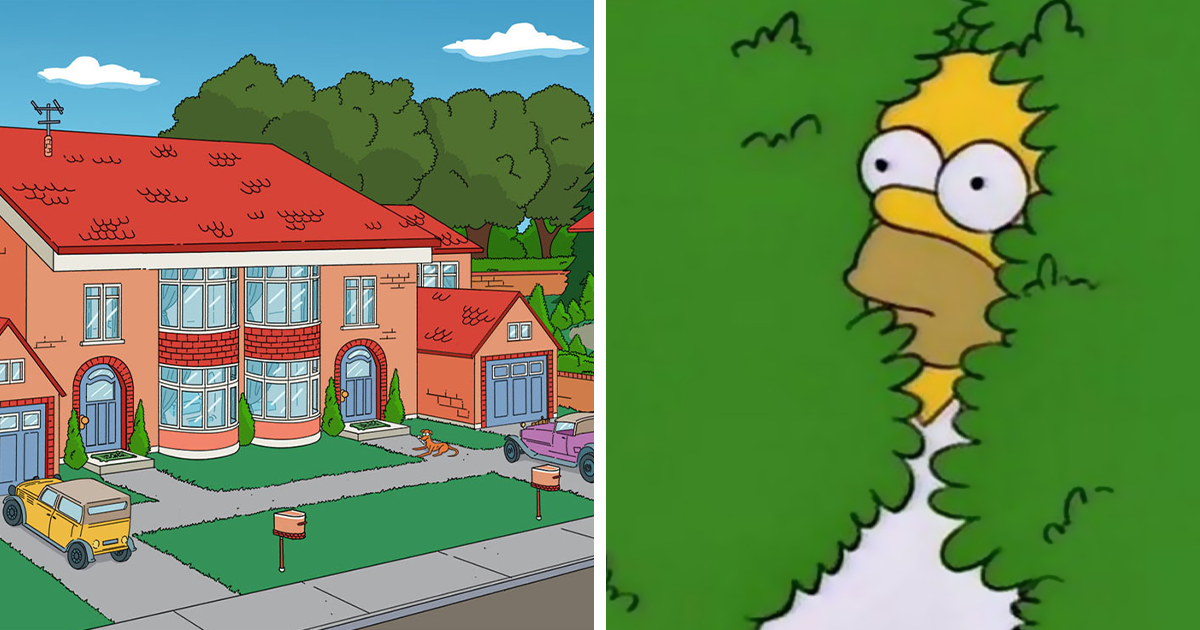
Imagine Homer Simpson trading his pinkish suburban house at 742 Evergreen Terrace for a rainy lane in Yorkshire, a narrow terrace in London, or a storybook cottage in the Cotswolds. The result would be part architecture tour, part animated culture shock, and part very loud argument about where to park the family car. The Simpsons’ home is one of television’s most recognizable houses: detached, two stories, garage attached, living room sofa ready for a couch gag, and enough backyard space for Bart’s treehouse to survive several decades of chaos.
But what if the family relocated to the UK? British homes come with their own personality: brick terraces, Georgian symmetry, Tudor beams, Edwardian stained glass, cottage gardens, bay windows, modest postwar layouts, and sleek modern eco upgrades. In other words, Britain has enough architectural flavor to make even Mr. Burns say, “Excellent,” before immediately trying to buy the village.
This article explores eight British home styles through the very serious and totally necessary question: where would Homer, Marge, Bart, Lisa, and Maggie actually live if Springfield packed its bags and moved across the Atlantic?
Why the Simpsons’ House Works So Well
Before dropping the family into British architecture, it helps to understand the original. The Simpsons’ house is a classic American suburban detached home: approachable, slightly bland, and magically elastic. It has a garage for Homer’s car, a kitchen for Marge’s heroic patience, a living room for TV marathons, bedrooms upstairs, a basement when the plot requires one, and a backyard where Bart’s treehouse operates like an unofficial neighborhood embassy.
Its design works because it is ordinary enough to feel familiar but flexible enough to host aliens, presidents, giant pigs, and at least one suspiciously emotional saxophone solo. A British relocation would need to preserve that everyday chaos while changing the architectural costume. The best fit depends on which version of the Simpsons you want: cozy, grand, urban, historic, practical, or hilariously over-ambitious.
1. The Victorian Terraced House: Bart’s Dream, Homer’s Parking Nightmare
A Victorian terraced house might be the most visually British move for the Simpsons. These homes are typically arranged in long rows, sharing walls with neighbors on both sides. Built in huge numbers during the 19th century, many feature red or yellow brick, narrow frontages, tall sash windows, decorative lintels, and small back gardens.
How It Would Change 742 Evergreen Terrace
The Simpsons’ detached home would suddenly become much narrower. The garage would likely disappear, replaced by street parking and Homer shouting, “D’oh!” while circling the block behind a delivery van. The living room would become a front sitting room facing the street, perfect for Marge’s curtains and terrible for privacy when Ned Flanders moves into the adjoining terrace.
Inside, the family would probably gain charming period details: ceiling roses, tiled fireplaces, original floorboards, and a hallway long enough for Santa’s Little Helper to slide through at dangerous speeds. The backyard would shrink, but Bart could still build a compact treehouse if he accepted British planning realities and a very judgmental neighbor.
Best Simpsons match: Bart, because terraced streets are excellent for skateboard routes, doorbell pranks, and escaping consequences through alleyways.
2. The Georgian Townhouse: Lisa Gets Culture, Homer Gets Stairs
Georgian houses are known for balance, proportion, symmetry, sash windows, elegant brickwork, and classical details. In cities like Bath, London, and Edinburgh, Georgian townhouses often form handsome terraces or crescents. They look disciplined, refined, and intellectualwhich means the Simpsons would ruin one beautifully by breakfast.
A More Refined Simpsons Home
If the Simpsons moved into a Georgian townhouse, the house would stand taller and slimmer. The front door might be painted deep blue or glossy black, framed by columns or a fanlight. The windows would line up with satisfying mathematical precision, giving Lisa something to admire before Bart tapes a “Kick Me” sign to the brass door knocker.
Georgian interiors often emphasize light, tall ceilings, and elegant rooms. Marge would adore the formal dining room. Lisa would claim a quiet top-floor bedroom for reading. Homer, meanwhile, would learn that a four-story home turns every snack run into cardio. The basement kitchen common in some historic townhouses could become the family’s new food headquarters, though Homer would probably install a pulley system for donuts.
Best Simpsons match: Lisa, because Georgian symmetry offers the intellectual calm she deservesuntil Homer drills a satellite dish into the facade.
3. The Tudor-Style Cottage: Storybook Charm Meets Springfield Chaos
Tudor and Tudor Revival homes are famous for steep roofs, exposed timber framing, white plaster infill, leaded windows, brick chimneys, and a cozy, storybook mood. In Britain, authentic Tudor buildings are historic treasures, while later Tudor-inspired homes borrow the romantic look without necessarily carrying the same age.
Could the Simpsons Survive a Cottage?
A Tudor-style cottage would be adorable, but it would also be a test of the family’s patience. Low beams plus Homer equals repeated head injuries. Uneven floors plus Maggie’s pacifier chase equals slapstick. Tiny staircases would make laundry day feel like medieval punishment.
Still, visually, the concept is irresistible. The Simpsons’ usual pastel exterior could become whitewashed walls with dark timber details. The garage would become a converted outbuilding. The backyard would turn into a cottage garden with roses, lavender, herbs, and one suspicious patch where Bart buried evidence. Marge would love the charm. Lisa would appreciate the history. Homer would ask whether the thatched roof is edible.
Best Simpsons match: Marge, because cottage life rewards patience, homemaking, and the ability to tolerate a house that creaks like Grandpa Simpson telling a story.
4. The Edwardian Semi-Detached House: The Most Realistic Fit
If the Simpsons needed a believable UK relocation, the Edwardian semi-detached house might win. These homes became popular in the early 20th century, often offering more space and light than earlier Victorian terraces. They commonly feature bay windows, decorative brickwork, stained glass, tiled paths, generous hallways, and front and rear gardens.
The British Version of 742 Evergreen Terrace
An Edwardian semi would preserve much of the Simpsons’ domestic rhythm. It would still feel like a family home, still have multiple bedrooms, still allow for a living room TV zone, and still give Bart a garden. The biggest difference is that the house would share one wall with a neighbor, which is dangerous if that neighbor is Flanders.
The bay window would be ideal for watching neighborhood drama. The hallway could hold school bags, umbrellas, and Homer’s abandoned fitness equipment. The rear garden might fit a small treehouse, a barbecue, and a washing line. Marge could keep the stained glass polished. Homer could repeatedly misunderstand the phrase “semi-detached” and ask when the other half of the house is coming loose.
Best Simpsons match: The whole family, because an Edwardian semi balances charm, practicality, and enough space for weekly disasters.
5. The Arts and Crafts Home: Handmade Beauty, Handmade Trouble
The British Arts and Crafts movement valued craftsmanship, natural materials, honest construction, and a softer relationship between house and landscape. Arts and Crafts homes often include pitched roofs, brick or stone walls, timber details, built-in furniture, fireplaces, leaded windows, and garden-focused design.
A More Thoughtful Simpsons House
In an Arts and Crafts version, the Simpsons’ home would feel warmer and more intentional. The layout might include cozy nooks, a generous hearth, handcrafted woodwork, and garden views. Lisa would approve of the anti-mass-production philosophy. Marge would love the built-ins. Homer would ask whether “craftsmanship” means someone handcrafted the beer fridge.
This style would also soften the bright cartoon shape of the original house. Instead of flat suburban surfaces, imagine textured brick, clay roof tiles, leaded windows, and a front garden that looks casually perfect but secretly requires constant work. Bart would carve his initials into the woodwork within 48 hours. Maggie would hide toys in every built-in cabinet.
Best Simpsons match: Lisa and Marge, because this style has heart, ethics, and a lot of surfaces that must be protected from Bart.
6. The 1930s Semi: Suburban Britain Meets Springfield Energy
The 1930s semi-detached house is a British suburban classic. These homes often have curved bay windows, hipped roofs, brick or rendered exteriors, front drives, side access, and decent back gardens. They were built for families who wanted more space, more air, and a break from crowded city living.
Homer Finally Gets a Driveway
This style may be the closest British cousin to the Simpsons’ American suburban house. A 1930s semi could plausibly include a driveway or garage, which immediately makes Homer happier. The front bay window gives the home a friendly face, while the back garden provides room for Bart’s treehouse, Lisa’s quiet reading corner, and Homer’s questionable grilling experiments.
Inside, the layout would feel manageable: front room, dining area, kitchen, stairs, bedrooms above. It is not as grand as Georgian, not as ornate as Victorian, and not as quaint as Tudor, but it is practical. The Simpsons are not a museum family. They need a house that can survive cereal spills, saxophone practice, prank calls, and Homer walking through a door without checking whether it is open.
Best Simpsons match: Homer, because the 1930s semi offers suburban comfort without asking him to become fancy.
7. The British Cottage: Small, Cozy, and Dangerous for Tall Hair
The British cottage is less one strict architectural style and more a beloved category: small-scale, traditional, cozy, rural, and often built with local materials such as stone, brick, flint, or timber. Some cottages have thatched roofs; others have slate or tile. Many include gardens that look effortless but are actually botanical warfare.
Marge’s Hair vs. the Ceiling
A cottage relocation would be visually delightful and functionally hilarious. The Simpsons’ wide American home would shrink into rooms with low ceilings, thick walls, and quirky corners. Marge’s hair might need its own listed-building consent. Homer would complain about the stairs. Bart would treat the village green like a skateboard park. Lisa would befriend every local historian within a five-mile radius.
The charm would be unbeatable: roses around the doorway, a kitchen with painted cabinets, a fireplace for cozy evenings, and a garden where Maggie could nap under supervision while Santa’s Little Helper terrorizes butterflies. But the family’s lifestyle would need downsizing. There may be no garage, limited storage, and fewer places to hide when Principal Skinner knocks.
Best Simpsons match: Maggie, because cottages are cute, compact, and full of tiny hiding places.
8. The Contemporary Eco Home: Lisa’s Dream, Homer’s Smart-Fridge Enemy
Modern British homes increasingly emphasize energy efficiency, insulation, sustainable materials, open-plan living, solar panels, heat pumps, and clever use of compact space. A contemporary eco home would completely transform the Simpsons’ familiar residence into something cleaner, brighter, and more responsible.
A Greener Springfield in Britain
Lisa would campaign for this house immediately. Picture timber cladding, triple-glazed windows, solar panels, a green roof, rainwater harvesting, and a kitchen that gently tracks household energy use. Marge would enjoy the easy-clean surfaces. Bart would test whether the smart doorbell can be hacked. Homer would become locked in a long-running feud with the thermostat app.
The biggest design advantage is flexibility. The home could preserve the Simpsons’ essential layout: a family living area, kitchen, bedrooms, garden, and maybe a garage-like storage zone. But it would replace the old suburban energy habits with efficient systems. Homer might resist at first, but if someone told him lower utility bills meant more snack money, he would become an environmentalist by episode two.
Best Simpsons match: Lisa, because sustainability, science, and moral pressure are basically her design language.
Which British Home Style Fits the Simpsons Best?
The funniest answer is the Georgian townhouse, because watching Homer navigate heritage rules would be priceless. The prettiest answer is the Tudor cottage, especially if the opening credits show Bart skateboarding past half-timbered walls. The most chaotic answer is the Victorian terrace, where every family argument becomes a shared neighborhood event.
But the best overall fit is probably the Edwardian or 1930s semi-detached house. Both offer the family-friendly practicality of the original Simpsons home while adding unmistakably British character. They can have bay windows, a back garden, a real front door moment, and enough domestic normality to make the absurdity pop. The Simpsons are funniest when they are almost ordinary. A semi-detached British home keeps them close to everyday lifeliterally close, because there is a neighbor on the other side of the wall.
Design Lessons from Moving the Simpsons to the UK
This imaginary relocation is silly, but it reveals a real design truth: houses are cultural storytelling machines. The American suburban home often communicates independence, space, car ownership, and family-centered comfort. British homes, especially older ones, often communicate history, density, craftsmanship, adaptation, and neighborhood closeness.
Move the Simpsons into a Victorian terrace, and the story becomes urban and neighborly. Move them into a Georgian townhouse, and the joke is about class, elegance, and the family’s spectacular inability to behave. Move them into a cottage, and the tension is between rustic charm and modern chaos. Move them into an eco home, and the conflict shifts toward technology, sustainability, and whether Homer can be trusted near a smart meter.
Great home styles do more than look good. They shape daily routines. They decide where shoes pile up, where arguments echo, where children escape, where pets nap, and where family members gather when the world gets weird. For the Simpsons, any house can become home as long as there is a couch, a TV, a kitchen, and a place for Bart to make questionable decisions.
Personal Experience: What This Topic Teaches About Homes, Humor, and Identity
Thinking about the Simpsons in British homes is more than a funny design game. It reminds us how strongly a house affects the rhythm of a family. Anyone who has moved from one type of home to another knows that architecture changes behavior. A detached house gives you breathing room. A terrace makes you aware of your neighbors. A cottage asks you to slow down and accept imperfections. A modern eco home quietly judges your energy habits while looking extremely stylish about it.
One of the most interesting experiences related to this topic is imagining how a familiar family would adapt to unfamiliar space. In the original Simpsons house, rooms feel open, practical, and cartoonishly forgiving. There is always somewhere for Homer to fall, Bart to run, Lisa to practice music, and Marge to restore order. British homes often introduce more constraints: narrower stairs, smaller rooms, shared walls, older materials, tricky renovations, and layouts shaped by centuries rather than subdivisions.
That contrast is exactly what makes the idea fun. A Victorian terrace would force the family to become more aware of sound. Homer’s midnight fridge raids would not be private. Bart’s pranks would spread through the wall before breakfast. Lisa’s saxophone might trigger a formal complaint from next door. Yet that same closeness could create warmer neighborhood stories, with more shared gardens, corner shops, and accidental encounters.
A Georgian townhouse would create a different experience. It would make the family feel temporarily elevated, as if they had wandered into a historical drama and immediately spilled cola on the rug. The beauty of such a home lies in proportion and restraint, two things the Simpsons rarely practice. That mismatch would be comic gold, but also strangely touching. Even chaotic families can appreciate beautiful rooms, tall windows, and morning light on old floorboards.
The cottage experience would be the most emotional. Small homes often make family life feel concentrated. You hear everything. You share more. You cannot hide from arguments, but you also cannot miss small moments: breakfast smells, rainy windows, a dog sleeping by the fire, a child reading in a corner. For Marge, that might feel comforting. For Bart, it might feel like imprisonment with decorative beams.
The eco home experience would point toward the future. It would ask whether a loud, imperfect, convenience-loving family can learn better habits without losing its personality. That is a question many real households face. We want comfort, but we also want lower bills, cleaner air, smarter layouts, and homes that do less harm. If Homer Simpson can learn to love insulation and solar panels, there may be hope for the rest of us.
Ultimately, the thought experiment works because homes are never just buildings. They are stages for identity. Change the house, and you change the jokes, conflicts, routines, and dreams. Whether the Simpsons live in a British terrace, cottage, semi, townhouse, or eco home, the real question is not whether the architecture suits them perfectly. It is whether the family can remain unmistakably themselves inside a new set of walls. Knowing them, the answer is yeswith at least one broken window, three neighbor complaints, and a very proud “Woo-hoo!” echoing down the street.
Conclusion
If the Simpsons relocated to the UK, their home would not simply get a new address; it would gain a new personality. A Victorian terrace would make their chaos public. A Georgian townhouse would dress them in elegance they absolutely did not ask for. A Tudor cottage would turn Springfield slapstick into countryside folklore. An Edwardian or 1930s semi would probably offer the best real-world balance, keeping the family’s suburban spirit while adding British charm.
The most entertaining choice depends on the episode. The most livable choice is the semi-detached home. The most Lisa-approved choice is the eco house. And the most Homer-approved choice is whichever one has the shortest walk from sofa to refrigerator. In the end, British home styles prove that architecture is not just about walls and roofs. It is about character, culture, comedy, and the everyday drama of family life. Or, as Homer might say while trying to assemble flat-pack furniture in a listed cottage: “D’oh, but make it historic.”
Note: This article is written in original American English and synthesizes real architectural knowledge about British home styles, adapted into a creative pop-culture format for web publishing.