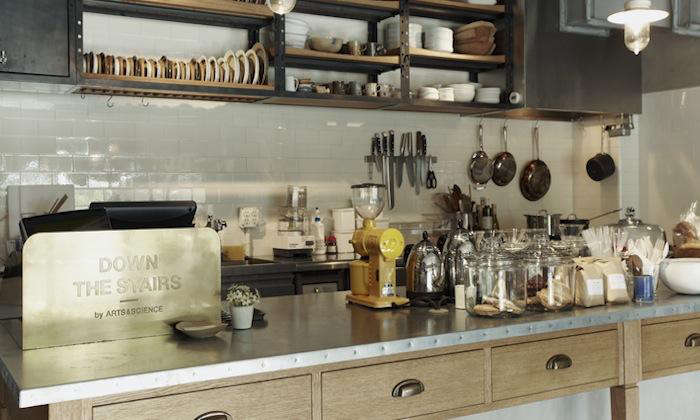
In Tokyo, some of the best places are not shouting from the street. They are tucked behind a quiet facade, hidden below a boutique, or waiting at the bottom of a staircase like a secret you were polite enough to discover slowly. Down the Stairs, the staff canteen and cafe connected to ARTS&SCIENCE in Minami Aoyama, belongs to that wonderful Tokyo category: small, thoughtful, stylish, and somehow more memorable than a room full of neon signs.
Part cafe, part kitchen shop, part neighborhood lunch room, and part design lesson, Down the Stairs is not just a place to eat. It is a glimpse into the ARTS&SCIENCE worldview, where clothes, ceramics, food, furniture, and hospitality all seem to have been edited by the same calm, sharp pencil. Nothing feels accidental. Even the quiet feels arranged.
A Cafe Hidden Beneath a Design Philosophy
Down the Stairs began as an extension of ARTS&SCIENCE, the Tokyo-based lifestyle and fashion project founded by creative director Sonya Park. ARTS&SCIENCE is known for refined utility: garments made from beautiful fabrics, home objects that reward daily use, and interiors that prefer texture over spectacle. The brand’s famous restraint is not cold minimalism. It is warmer than that, more human. Think linen, wood, stoneware, handmade glass, and a spoon that looks like it has a graduate degree in humility.
The cafe carries that same spirit into food. Instead of performing restaurant drama with smoke, foam, and a server explaining your carrot’s childhood, Down the Stairs focuses on simple cooking, seasonal ingredients, trusted producers, pastries, tea, and natural wine. The official concept frames the cafe as ARTS&SCIENCE expressed through the idea of “culinary,” and that is exactly what makes it interesting. This is not a random cafe attached to a shop. It is the shop’s values, made edible.
Why the “Staff Canteen” Idea Matters
The phrase “staff canteen” sounds modest, almost industrial. You might imagine metal trays, fluorescent lights, and soup that has seen things. But in the case of Down the Stairs, the canteen idea is elegant. It suggests a place where workers, customers, makers, and visitors can meet without the stiff choreography of luxury retail. The cafe softens the boutique experience. It says: stay a little longer, eat something good, look at the pottery, have tea, remember that design is not only for display shelves.
In a city famous for precision, Down the Stairs uses hospitality as a bridge. A customer may arrive for clothing or home goods, then discover a daily menu. A staff member may eat lunch at the same counter where a visitor is deciding whether a handmade plate has quietly changed their life. That overlap is the magic. It turns commerce into community, without turning the room into a networking event. Nobody wants to sip tea while someone says “synergy.” Not even the teacup.
Where It Is: Minami Aoyama, Near Omotesando
Down the Stairs is located in Minami Aoyama, Minato-ku, a short walk from Omotesando Station. This matters because the neighborhood is part of the experience. Aoyama and Omotesando are among Tokyo’s most polished design districts, known for fashion flagships, architecture, galleries, boutique shopping, and elegant backstreets. Tokyo can be loud, vertical, and electric, but Aoyama has a more composed rhythm. It is the kind of neighborhood where a concrete wall can look expensive and a side street can feel like an editorial spread.
Omotesando is often compared to the Champs-Elysees because of its tree-lined boulevard and luxury retail presence, but its best discoveries often happen away from the main avenue. The quieter lanes hold smaller boutiques, cafes, and design destinations. Down the Stairs fits naturally into this environment. It does not compete with the city’s visual noise. It opts out, and that is part of its appeal.
A Tokyo Cafe for People Who Notice Details
Tokyo cafe culture is famously diverse. There are old-school kissaten with dark wood and careful coffee; modern specialty coffee bars with single-origin beans and laboratory-level brewing; compact espresso counters; matcha stands; bakery cafes; and hidden restaurants where the entrance seems designed to test your commitment. Down the Stairs sits at the intersection of cafe, canteen, and design salon.
It is not trying to be the loudest or trendiest cafe in Tokyo. It is trying to be useful, beautiful, and quietly memorable. The daily menu and seasonal cooking make it feel alive, while the tableware and interior details make the meal feel considered. In American terms, it is less “grab a latte and run” and more “sit down, breathe, and discover you have opinions about glassware.”
The Menu: Seasonal, Simple, and Ingredient-Led
The most important thing to know about Down the Stairs is that the menu changes. The cafe emphasizes fresh ingredients from trusted producers, dishes prepared according to what is best in season, pastries, tea time, dinner service, and natural wines. This flexible approach keeps the space from feeling like a museum. The design may be controlled, but the kitchen responds to the calendar.
That seasonal rhythm is deeply compatible with Japanese food culture, where ingredients often lead the conversation. A dish does not need to be complicated to feel special. Bread, butter, vegetables, grains, fruit, tea, wine, and pastry can become memorable when selected carefully and served with attention. Down the Stairs understands that simplicity only works when the basics are excellent. Otherwise, “simple” is just a polite word for “forgot the flavor.”
Natural Wine and the Evening Mood
In recent years, Tokyo has become one of the world’s most exciting cities for natural wine, with small bars, bistros, and restaurants embracing low-intervention bottles alongside seasonal food. Down the Stairs includes natural wine as part of its culinary identity, and that detail shifts the atmosphere after lunch. By day, it can feel like a refined canteen or cafe. By evening, it becomes more of a relaxed dining room, the kind of place where a glass of wine makes the tableware look even more poetic.
The wine program also reinforces the ARTS&SCIENCE philosophy. Natural wine is often about farming, fermentation, imperfection, and character. It values craft over polish, but not in a sloppy way. That makes it a natural fit for a brand that appreciates materials, process, and the quiet beauty of things made with intention.
Design: The Beauty of Not Overdoing It
Down the Stairs is a lesson in restraint. The space is associated with a brand that has long been admired for its ability to make utility feel luxurious without becoming flashy. The cafe’s original coverage highlighted the mingling of staff and customers over tea served with carefully chosen ceramics and glassware. That detail is central to understanding the place. The dishes are not props. They are part of the meal’s meaning.
Many restaurants use design as decoration. Down the Stairs uses design as behavior. The counter invites observation. The table settings slow you down. The lower-level location creates a sense of retreat. The kitchen shop element reminds visitors that eating and living are connected. A plate is not just something under your lunch. It is an object you touch every day, which is either a small joy or a missed opportunity.
Why It Appeals to Design Travelers
For travelers interested in interiors, retail design, ceramics, fashion, or Japanese lifestyle culture, Down the Stairs offers more than a meal. It offers a compact case study in brand world-building. ARTS&SCIENCE is not simply selling products; it is presenting a way of choosing. The cafe expands that idea into taste, smell, conversation, and time.
This is why design-minded visitors often find Tokyo addictive. The city turns ordinary activities into highly specific experiences. Buying socks, drinking coffee, eating lunch, or choosing a notebook can become a small ceremony. Down the Stairs fits into this Tokyo tradition of exacting care. It makes lunch feel curated, but not precious. There is a difference. Precious makes you afraid to touch anything. Curated makes you want to pay attention.
How Down the Stairs Compares With Tokyo Cafe Culture
Tokyo has no shortage of destination cafes. Some are famous for coffee, some for architecture, some for desserts, and some because social media has collectively decided that waiting in line for two hours builds character. Down the Stairs takes a quieter route. Its appeal comes from context. It is connected to ARTS&SCIENCE, located in a design-rich neighborhood, and built around a canteen concept that blurs the line between staff space and public cafe.
That makes it different from a pure specialty coffee shop. Coffee may be part of the experience, but the bigger story is hospitality. It is also different from a conventional restaurant, because the cafe’s identity is tied to objects, retail, and daily use. It is a place where the menu, the plate, the room, and the brand all speak the same language.
Who Should Visit?
Down the Stairs is ideal for travelers who enjoy quiet design, seasonal meals, natural wine, and hidden Tokyo addresses. It is a strong choice for anyone exploring Omotesando, Aoyama, or Harajuku who wants a more relaxed stop between shops and galleries. It is also appealing for people who love Japanese homeware, thoughtful retail, and cafes that feel personal rather than mass-produced.
It may not be the best choice for someone seeking giant portions, loud nightlife, or a theme cafe where a raccoon in a bow tie brings your pancakes. Tokyo can provide those adventures elsewhere. Down the Stairs is more subtle. It rewards patience, attention, and a fondness for spaces where the napkin might be better dressed than you are.
Practical Visiting Tips
Because Down the Stairs operates with lunch, tea, and dinner periods, visitors should check current hours before going. Small Tokyo cafes and restaurants may adjust schedules for events, holidays, private dinners, or seasonal changes. The cafe is located near Omotesando Station, making it easy to combine with a design walk through Aoyama, Omotesando, and nearby Harajuku.
A smart itinerary might start with architecture along Omotesando, continue through the backstreets of Aoyama, stop at ARTS&SCIENCE, and then descend for lunch or tea. If dinner is the goal, a reservation may be useful, especially when special events or wine-focused evenings are scheduled. Tokyo rewards planning, but it also rewards wandering. The trick is to plan just enough that your wandering does not end with convenience-store rice balls eaten dramatically on a curb.
What to Notice While You Are There
Pay attention to the entrance, the descent, the counter, the ceramics, the glassware, the menu language, and the way staff move through the room. Notice how the cafe feels connected to the store without becoming a showroom. Watch how the food is presented. Look at the proportion of the plates. Consider how the lighting changes the mood. These details are not side notes. They are the experience.
And yes, take photos if appropriate, but do not let your phone eat lunch before you do. Some places are better understood through touch, taste, and time than through twenty-seven nearly identical images of a cup. Your camera roll does not need a tasting menu.
Experiences Related to Down the Stairs: What the Visit Feels Like
Imagine arriving in Aoyama after a morning of Tokyo walking. You have passed glassy flagships, concrete walls, small galleries, bicycles parked with impossible neatness, and shop windows where a single jacket is given the emotional importance of a national monument. The city is busy, but this neighborhood carries its busyness with good posture. Then you find the entrance and go down the stairs. Immediately, the pace changes.
That descent is part of the charm. Going downstairs in Tokyo often feels like entering a second city, one hidden below the obvious one. Above ground, there are taxis, shoppers, delivery trucks, and the usual urban choreography. Below, there is a room that seems to ask you to lower your voice without ever posting a sign. The air feels calmer. The light is softer. The objects begin to matter.
A staff canteen might sound casual, and it is, but not careless. The experience is casual in the way a well-made linen shirt is casual: relaxed, but clearly considered. You sit down and notice the tableware before you even think to notice it. A plate has weight. A glass has clarity. A spoon lands with a small, satisfying sound. These are tiny things, but Tokyo is a master class in tiny things becoming the whole point.
The meal itself may be simple, and that is where the confidence shows. A seasonal lunch does not need fireworks. It needs balance. It needs a vegetable that tastes like someone respected it. It needs bread that earns its butter. It needs a pastry that does not collapse into sugar theater. When the ingredients are good and the cooking knows when to stop, the result feels generous without being loud.
Tea time has a different rhythm. It is slower, more reflective, and perhaps the best moment for visitors who want to absorb the room. This is when Down the Stairs feels most like a conversation between cafe and shop. You can imagine staff taking a pause, regulars dropping in, travelers discovering the space by happy accident, and design lovers silently calculating whether their suitcase can accommodate ceramics. The answer is usually no. The emotional answer is always yes.
Dinner brings another layer. Natural wine changes the room’s temperature, not physically but socially. Conversations lengthen. Plates are shared. The canteen becomes more intimate, and the lower-level location feels less like a hiding place and more like a small club for people who appreciate good ingredients and good chairs. Nothing about it needs to announce itself. That is the point.
The best experience related to Down the Stairs is not simply eating there. It is understanding how a cafe can express a complete philosophy. The food, the objects, the location, the staircase, the neighborhood, and the brand all work together. You leave with the feeling that daily life can be edited more carefully. Lunch can be better. Tea can be slower. A plate can matter. A staircase can become a transition from shopping to savoring, from city speed to human pace.
That is why Down the Stairs stays in the mind. It is not trying to become Tokyo’s loudest recommendation. It is trying to be useful, warm, and beautiful in a way that lasts longer than a trend. In a city filled with spectacular experiences, it makes a persuasive argument for the quiet one.
Conclusion: Why Down the Stairs Is Worth Remembering
Down the Stairs is one of those Tokyo places that proves a cafe does not need to be huge, famous, or theatrical to be meaningful. Its strength lies in coherence. The ARTS&SCIENCE philosophy of material honesty, restraint, craft, and daily beauty translates naturally into a canteen and cafe where seasonal food, pastries, natural wine, tableware, and atmosphere all feel connected.
For travelers, it offers a memorable stop in Minami Aoyama near Omotesando. For design lovers, it offers a living example of how retail and hospitality can overlap gracefully. For food lovers, it offers a seasonal, ingredient-led approach that respects simplicity. And for anyone tired of cafes designed only for photos, it offers something better: a room designed for attention.
In the end, Down the Stairs is not just a direction. It is an invitation. Go below the surface, slow down, sit at the table, and notice how good ordinary life can become when every detail is treated with care.