Online dating already feels like a talent show where everyone is performing the same three acts: holding a fish, standing in front of Machu Picchu, or pretending they “love spontaneous adventures” when they mostly mean “going to Target without a list.” So when one guy started creating dozens of custom Tinder profiles that treated the app like a comedy sketch stage, the internet did what the internet does best: laughed, screenshotted, shared, and then asked, “Wait, how did he not get banned sooner?”
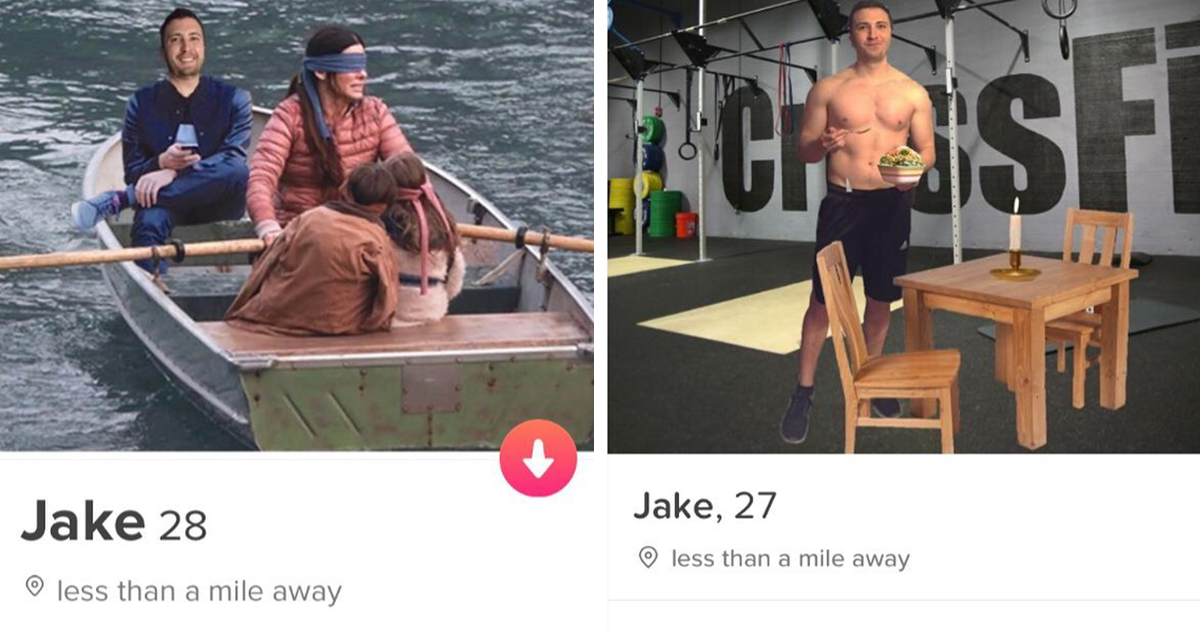
The viral story, often shared under the headline “After Creating Over 30 Custom Profiles, Tinder Banned This Guy”, centers on a creator named Jake, whose fake Tinder profiles became popular because they were not lazy catfish attempts. They were tiny character studies. Each profile had the energy of a person who opened Tinder, saw everyone trying to look attractive, mysterious, and emotionally available, and decided: “What if I became a walking punchline instead?”
That is the charm. These funny Tinder profiles were not about romance in the traditional sense. They were about parodying the strange theater of dating apps: the bio clichés, the over-edited photos, the desperate need to stand out, and the impossible task of summarizing your entire personality in six pictures and two sentences. Still, there is an important catch: Tinder’s official rules are clear that users should be real, use their own identity, avoid fake accounts, and not create multiple accounts. Comedy may win the internet, but terms of service usually win the final round.
Why These Custom Tinder Profiles Went Viral
The funniest part of the story is not simply that someone made a bunch of fake profiles. The internet has seen plenty of fake profiles, and most of them are about as funny as a microwave manual. What made these profiles spread was the amount of effort behind them. They were custom-built jokes with concepts, characters, photos, and punchlines. Instead of uploading one blurry selfie and writing “just ask,” Jake treated each profile like a tiny comedy poster.
On Tinder, users are usually trying to look desirable. These profiles flipped the script. Some leaned into absurd confidence. Others made ordinary details sound dramatic. A few worked because they looked like the beginning of a normal dating profile, then swerved into something completely ridiculous. That contrast is where the comedy lives. A serious-looking profile that suddenly reveals a bizarre fictional backstory is funnier than a profile that screams “I am joking” from the first second.
In a crowded dating-app feed, originality is oxygen. Pew Research Center has reported that online dating is common in the United States, with Tinder among the most widely used platforms. That means users are not just competing against a handful of local singles; they are competing against an entire scrollable universe of gym mirrors, brunch photos, wedding guest pictures, and “my dog is my personality” bios. In that environment, a profile that feels like a comedy sketch can instantly become memorable.
The Funniest Types of Profiles From the Viral Concept
Because the original viral post circulated mostly through images, the humor was visual as much as written. Instead of copying those profiles word for word, the better way to understand the joke is to break down the comedy styles that made them work. These are the profile types that helped the series become so shareable.
1. The Overly Dramatic Regular Guy
One of the funniest dating-profile formulas is taking a completely normal person and describing him like the final boss in an action movie. Imagine a profile photo of a regular guy in a hoodie, paired with a bio that sounds like he was forged in a volcano, raised by wolves, and once parallel parked during a thunderstorm. The gap between the ordinary photo and the mythological self-description is the joke.
This style works because so many real dating profiles already contain accidental overconfidence. People say they are “fluent in sarcasm,” “CEO of good vibes,” or “looking for someone who can keep up,” as if dating were an Olympic sport sponsored by iced coffee. Jake’s custom profiles exaggerated that energy until it became impossible not to laugh.
2. The Hyper-Specific Personality
Another winning formula is the profile that is weirdly specific. Not “I like music,” but “I am emotionally attached to the last fry in the bag.” Not “I enjoy travel,” but “I once got lost in a grocery store and came back different.” Hyper-specific humor feels fresh because it dodges the generic dating-app language that makes everyone sound like they were assembled from the same personality starter kit.
These profiles likely resonated because they used detail as comedy. A strange detail makes a fake profile feel strangely real. That is why one absurd sentence can be funnier than ten obvious jokes. The brain sees specificity and thinks, “No one would invent that,” which is exactly why it works.
3. The Fake Professional With Too Much Confidence
Some of the funniest custom profile ideas play with fake jobs or exaggerated life achievements. The humor comes from treating something silly as if it deserves a LinkedIn endorsement. A person might describe himself as a “freelance sandwich consultant,” “regional nap champion,” or “former assistant manager of emotional damage.” The more seriously the profile presents nonsense, the better the joke lands.
This is classic deadpan humor. The profile does not wink too hard. It simply stands there, wearing a confident smile, asking the reader to accept that “part-time cereal sommelier” is a valid lifestyle. In the context of Tinder, where people often polish their job titles and accomplishments, that kind of fake professionalism becomes a sharp little parody.
4. The Profile That Treats Dating Like a Product Review
Dating apps already encourage people to package themselves. A profile is basically personal branding with flirting attached. So one of the funniest angles is treating the person like a product listing: “lightly used,” “some emotional assembly required,” “ships poorly under pressure,” or “five stars from one aunt.”
This works because it says the quiet part out loud. Online dating can feel like shopping, except the product texts back and may have unresolved issues from 2017. By turning a dating profile into a mock advertisement, the joke exposes the strange consumer logic behind swiping. It is funny because it is only slightly exaggerated.
5. The Character Who Should Not Be on Tinder
Some custom profiles are funny because the fictional person clearly does not belong on a dating app. Think of a profile written from the perspective of someone who misunderstood the entire platform: a medieval knight seeking “a maiden with strong Wi-Fi,” a haunted Victorian gentleman looking for “someone to share soup and secrets,” or a suspiciously enthusiastic raccoon who values “night walks and unsecured trash lids.”
The joke is not about fooling anyone. It is about watching a character collide with modern dating culture. Tinder’s format is so familiar that placing the wrong personality inside it creates instant comedy. It is like seeing a pirate write a résumé or a vampire leave a Yelp review for a dentist.
Why Dating Apps Are Such Good Comedy Material
Tinder profiles are short, visual, and judgment-heavy. That makes them perfect for jokes. A comedian does not need a five-minute setup; the setup is already there. Everyone knows the basic structure: photo, name, age, bio, swipe. A custom profile can break that structure in a single line.
Dating apps also create a strange tension between authenticity and performance. Users are told to “be yourself,” but also to choose the most flattering photos, write a clever bio, avoid sounding too eager, and somehow appear interesting without trying too hard. That impossible balancing act is comedy gold. The moment someone abandons the performance and goes fully absurd, it feels refreshing.
There is also the fatigue factor. Many people using dating apps report feeling overwhelmed, ignored, bored, or suspicious. A funny profile interrupts the pattern. Even if the viewer would never swipe right, they might still screenshot it and send it to a friend with the sacred internet phrase: “I cannot explain this, but you need to see it.”
The Ban: Funny Story, Serious Platform Rules
Here is where the laughter meets the policy wall. Tinder’s Community Guidelines say users should not create fake accounts, pretend to be someone they are not, create mass accounts, or misrepresent themselves. The app is also for adults only, and each person is supposed to have one account. From a platform perspective, dozens of custom profiles can look less like harmless comedy and more like spam, impersonation, manipulation, or bot-like behavior.
That is why the ban is not surprising. Even if the intention was humor, a dating app has to think about user safety at scale. Fake profiles are not always jokes. Some are scams. The Federal Trade Commission has long warned that romance scammers create fake profiles on dating apps and social platforms to build trust and eventually ask for money. Tinder and its parent company, Match Group, have also invested in verification tools to fight fake profiles, duplicate accounts, bots, and impersonation.
In other words, Jake’s profiles may have been funnier than the average fake account, but the system is not built to grade comedy. Moderation tools do not sit there thinking, “This one violates the rules, but the punchline is strong.” If a profile looks fake, repeated, misleading, or suspicious, it can trigger reports or enforcement.
What Makes a Funny Dating Profile Different From a Fake One?
This is the useful distinction. A funny dating profile can be real. A fake dating profile usually hides or misrepresents the person behind it. You can write a hilarious bio without pretending to be a pirate, a refrigerator, or a divorced wizard with excellent credit. Humor is not the problem. Misrepresentation is.
A good real profile might say, “I make excellent pancakes and terrible decisions in bookstores.” That is playful, memorable, and still honest. A risky fake profile might invent a completely different identity, use images that are not yours, or create multiple accounts for attention. The first is personality. The second is a platform violation.
For writers, marketers, and social media observers, the viral Tinder story is a perfect case study in digital creativity. For actual dating-app users, it is also a reminder: be funny, but be yourself. The goal is not to trick people into matching with a fictional character. The goal is to let your real personality show up before the awkward small talk begins.
Lessons Marketers Can Learn From These Viral Profiles
Oddly enough, this story is not just about dating. It is also about content marketing. Jake’s custom Tinder profiles went viral because they followed several rules that brands often forget.
First, the concept was simple. “Guy creates many ridiculous Tinder profiles” is easy to understand in one sentence. Second, the format was repeatable. Once people understood the joke, they wanted to see the next version. Third, each profile had a visual hook. The internet rewards content that can be understood quickly and shared without a lecture.
Fourth, the profiles had personality. They did not sound like committee-approved content. They sounded like someone had a strange idea and committed to it completely. That commitment is often what separates forgettable content from viral content. Half-hearted weirdness is cringe. Fully committed weirdness can be art.
How To Be Funny on a Real Dating Profile Without Getting Banned
The safest takeaway is not “create 30 fake accounts.” Please do not make the moderation team work overtime. The better takeaway is that humor wins when it is specific, honest, and surprising.
Use one or two details that sound like you. Instead of “I love food,” try something more personal, such as “I believe fries taste better when stolen from someone else’s plate.” Instead of “I like movies,” say, “I judge horror characters for making bad decisions while making the same decisions in real life.” The joke should reveal something true, even if it is exaggerated.
Avoid jokes that depend on insulting other users, mocking someone’s body, pressuring people, or pretending to be a different person. The best dating-profile humor feels like an invitation, not a trap. It makes someone think, “This person seems fun,” not “Should I report this?”
Why the Internet Still Loves This Story
The story has staying power because it captures a familiar feeling: dating apps are weird. They ask people to compress charm, trustworthiness, ambition, humor, and good lighting into a few seconds of attention. That pressure creates clichés. Clichés create boredom. Boredom creates the perfect opening for one person to show up with a fake dramatic universe and make everyone laugh.
It is also a rare internet story where the ban almost becomes part of the punchline. The profiles were created to disrupt the standard Tinder experience, and eventually the app disrupted the disruption. There is something almost poetic about a guy making dozens of absurd dating profiles and then being told, digitally, “Sir, this is a serious swiping establishment.”
Extra Experiences and Reflections: What This Story Says About Modern Online Dating
Anyone who has watched friends use dating apps knows that the funniest moments often happen before the date. The profile is where people try to be charming, but it is also where they accidentally reveal their entire relationship with grammar, mirrors, dogs, and emotional availability. A single bio can say, “I am confident,” “I am exhausted,” or “I downloaded this app at 1:17 a.m. after a breakup and have not updated my profile since.”
The custom profile story feels relatable because it exaggerates what users already see every day. Real dating profiles often become little performances. People choose photos that tell a story: hiking means adventurous, cooking means domestic, travel means cultured, gym mirror means either discipline or a cry for help depending on the lighting. Then the bio tries to add personality without sounding desperate. That is a hard job for two sentences and an emoji.
What Jake did, intentionally or not, was turn the dating profile into a comedy format. Instead of asking, “Will someone date this person?” the profiles asked, “How far can this format bend before it breaks?” That is why the idea is funny even to people who do not use Tinder. Everyone understands the social pressure to present a polished version of yourself online. The custom profiles took that pressure and replaced polish with chaos.
There is also a deeper lesson about attention. On the internet, being “good enough” is often invisible. A normal profile may be perfectly fine and still disappear into the scroll. A weird profile may not produce romance, but it produces memory. That does not mean everyone should become a character. It does mean people respond to originality, especially when it feels human. The funniest profiles are not random nonsense; they are structured nonsense. They have timing, contrast, and a recognizable target.
For anyone writing about dating apps, this story is a reminder that humor works best when it tells the truth sideways. The truth is that online dating can be awkward, repetitive, and oddly commercial. The truth is that everyone is trying to stand out while pretending not to try. The truth is that a profile can be both a personal introduction and a tiny advertisement. Jake’s custom profiles made those truths visible by making them ridiculous.
Still, the safety side matters. Dating apps are not just meme machines. They are places where real adults meet real strangers, and trust is fragile. Platforms crack down on fake accounts because fake accounts can cause real harm, from impersonation to scams. That is why the best modern dating humor should be transparent. Make jokes as yourself. Be strange as yourself. Be memorable as yourself. You do not need 30 fake identities when one honest, funny identity is already rare enough.
In the end, the viral banned Tinder guy became funny because he understood the format better than most serious users did. He saw the profile as a stage, the bio as a punchline, and the swipe as an audience reaction. But the reason the story still works years later is simple: dating apps may change their features, add verification tools, and update their rules, but people will always be hilarious when asked to summarize their entire romantic potential in a rectangle.
Conclusion
“After Creating Over 30 Custom Profiles, Tinder Banned This Guy” is more than a funny internet headline. It is a snapshot of dating-app culture at its most absurd: creative, competitive, self-aware, and slightly unhinged in the way only the internet can be. The funniest custom profiles worked because they exaggerated real dating-app habits, from overconfident bios to strange self-branding. They were jokes about the platform, the users, and the pressure to become instantly interesting.
But the ban also makes sense. Tinder’s rules are built around authenticity, safety, and one real person per account. Fake profiles may be funny in a viral gallery, but on real dating platforms they can blur into spam, impersonation, and scam behavior. The best lesson is not to copy the stunt. It is to borrow the creativity: be specific, be surprising, be funny, but stay real.
Note: This article is a fully rewritten commentary based on publicly reported online-dating profile humor, official Tinder policy themes, and broader online-dating safety research. It does not encourage creating fake accounts, impersonation, ban evasion, or violating any dating-app rules.