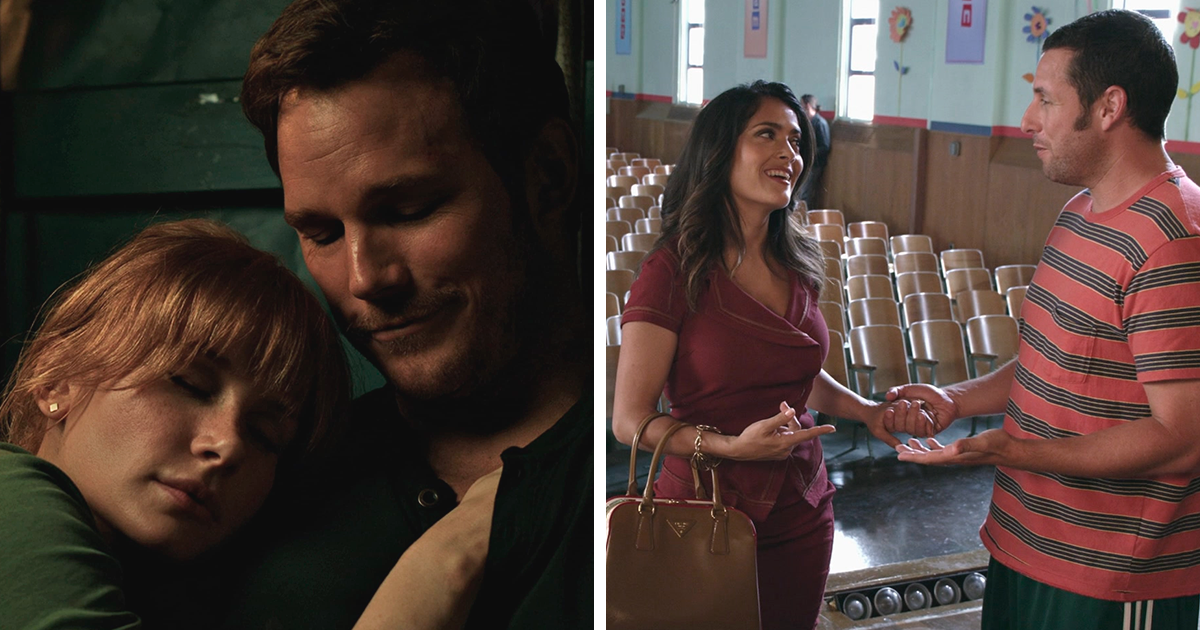
Some screen couples can make a shared glance feel like a thunderstorm. Others look like two coworkers trapped in a mandatory team-building exercise near a fog machine. Welcome to the fascinating, funny, occasionally painful world of TV show and movie couples with no chemistry to be found.
On-screen chemistry is not just about attractive actors standing close together. It is rhythm, tension, timing, emotional logic, writing, direction, and that mysterious little spark that cannot be purchased with a blockbuster budget. When it works, fans rewind scenes. When it fails, viewers start checking the runtime and wondering whether the dog in the background has a stronger romantic arc.
This list is not a personal attack on the actors. Many of the performers below are talented, charismatic, and beloved. The issue is the pairing: awkward scripts, rushed romances, strange plot choices, mismatched energy, or couples that simply never convinced audiences they belonged together. Below are 50 TV and movie couples often discussed by fans and critics as examples of screen romance that needed more heat, more buildup, or at least a working match.
Why Some On-Screen Couples Have Zero Chemistry
Great fictional romance usually has three ingredients: believable attraction, emotional stakes, and character compatibility. Remove one, and the couple may still survive. Remove all three, and suddenly the “big kiss” feels like two people sealing a business contract.
Sometimes the actors are doing their best, but the writing gives them nothing except dramatic pauses and lines that sound like they were assembled from leftover fortune cookies. Other times, the story tells us two characters are soulmates without showing us why. The audience does not want a press release; it wants proof.
That is why “no chemistry” couples are so memorable. They become unintentional comedy. They give fans something to debate. They remind writers, directors, and casting teams that romance cannot be forced just because two beautiful people are standing under flattering lighting.
50 TV Show And Movie Couples With No Chemistry To Be Found
1. Anakin Skywalker and Padmé Amidala Star Wars Prequels
The tragedy of Anakin and Padmé should feel operatic. Instead, much of their romance is remembered for stiff dialogue, uncomfortable flirting, and scenes that make viewers want to hide behind a Jedi robe. The story needs their love to change the galaxy, but the relationship often feels more assigned than inevitable.
2. Johnny Depp and Angelina Jolie The Tourist
On paper, this pairing had movie-star glamour for days. On screen, the energy felt strangely sleepy. The film offered Venetian scenery, expensive clothes, and two very famous faces, yet the romantic spark seemed to miss its flight.
3. Chris Evans and Ana de Armas Ghosted
Both actors have charm individually, but this action-romance struggled to make their banter feel spontaneous. Their characters were written as an opposites-attract duo, but the flirtation often felt more like two attractive people waiting for the next stunt sequence.
4. Harry Potter and Ginny Weasley Harry Potter Films
Book fans understood the appeal better, but the movie version gave Harry and Ginny too little development. Their romantic moments arrived with the emotional force of someone quietly passing a napkin across a table.
5. Bella Swan and Jacob Black Twilight Saga
The love triangle had passion in theory, but Bella and Jacob often felt like a plot obstacle rather than a genuine alternative. Jacob’s intensity could not compensate for the fact that Bella’s emotional GPS was usually locked on Edward.
6. Bella Swan and Edward Cullen Twilight Saga
Yes, the franchise became a phenomenon. Still, critics and viewers have long debated whether the central romance read as epic love or two pale teenagers communicating mostly through staring, breathing, and life-threatening decision-making.
7. Rachel Green and Joey Tribbiani Friends
Rachel and Joey were great as friends. As a romantic couple, they felt like the writers shook the cast list in a hat and pulled out two names. The sweetness was there, but the heat never arrived.
8. Jackie Burkhart and Fez That ’70s Show
This late-series pairing surprised many fans, and not in the “what a brilliant twist” way. After years of different romantic dynamics, Jackie and Fez felt less like destiny and more like the show had run out of chairs during musical couples.
9. Ted Mosby and Robin Scherbatsky How I Met Your Mother
Ted and Robin had early sparks, but the show spent years proving why they did not work. By the finale, their reunion felt less like romantic closure and more like an argument the series refused to stop having.
10. Robin Scherbatsky and Barney Stinson How I Met Your Mother
This one is divisive. Some fans loved their chaotic chemistry; others felt the relationship turned two funny, independent characters into a compatibility experiment with a questionable warranty.
11. Leonard Hofstadter and Penny The Big Bang Theory
Leonard and Penny became a central sitcom couple, but the mismatch was part of the joke for so long that their marriage sometimes felt like the punchline accidentally became canon.
12. Ross Geller and Rachel Green Friends
Iconic? Absolutely. Healthy and consistently believable? That is where the debate begins. Their chemistry was often strongest when they were not together, which is a dangerous sign for a supposed endgame romance.
13. Andy Bernard and Erin Hannon The Office
Andy and Erin had moments of sweetness, but the relationship often felt juvenile and uneven. Instead of romantic tension, their scenes sometimes carried the energy of a school play where both leads forgot which genre they were in.
14. Jon Snow and Daenerys Targaryen Game of Thrones
The idea was enormous: ice, fire, power, prophecy, dragons, destiny. The result? Many viewers found the romance rushed and emotionally undercooked, especially compared with Jon’s earlier relationship with Ygritte.
15. Sansa Stark and Ramsay Bolton Game of Thrones
This was not meant to be romantic, but it remains one of television’s most uncomfortable arranged pairings. It had no chemistry because it was built entirely on cruelty, control, and narrative misery.
16. Piper Chapman and Alex Vause Orange Is the New Black
Their relationship had history and volatility, but chemistry often got buried beneath manipulation and repetition. At a certain point, sparks and smoke damage become hard to tell apart.
17. Carrie Bradshaw and Aleksandr Petrovsky Sex and the City
A glamorous artist sweeping Carrie off to Paris sounded romantic. In practice, the relationship felt chilly, lopsided, and oddly joyless, like a very expensive hotel room with no Wi-Fi.
18. Carrie Bradshaw and Berger Sex and the City
Berger gave us the infamous breakup note, and honestly, that note had more staying power than the relationship. Their dynamic was brittle from the start.
19. Carrie Bradshaw and Big Sex and the City
Big and Carrie had chemistry, but not always the comforting kind. Their connection often felt addictive rather than romantic, which is why viewers still argue whether they were soulmates or simply each other’s favorite bad habit.
20. Dawson Leery and Joey Potter Dawson’s Creek
The show told audiences Dawson and Joey were meant to be, but many fans felt Joey’s chemistry with Pacey completely changed the emotional math. Sometimes the backup plan walks in and steals the entire series.
21. Joey Potter and Eddie Doling Dawson’s Creek
Eddie had brooding energy, but the relationship often felt like a detour. Joey had already developed deeper, more memorable dynamics elsewhere.
22. Clark Kent and Lana Lang Smallville
Clark and Lana had plenty of longing, but the endless push-pull eventually drained the spark. After enough secrets and sad hallway conversations, even super-romance needs a recharge.
23. Clark Kent and Lois Lane Man of Steel
Henry Cavill and Amy Adams are strong performers, but some viewers felt the film moved too quickly from discovery to devotion. The romance served the myth, but not everyone felt the emotional heat.
24. Bruce Wayne and Rachel Dawes The Dark Knight Trilogy
Bruce’s longing for Rachel is important to the story, but the relationship often functions more as a symbol than a living romance. She represents the normal life he cannot have, which is dramatically useful but not always sizzling.
25. Peter Parker and Mary Jane Watson Spider-Man 3
The earlier films had longing and charm. By the third movie, jealousy, miscommunication, and strange choices turned the romance into emotional traffic.
26. Peter Parker and Gwen Stacy The Amazing Spider-Man Films
This is a reverse example for contrast: Andrew Garfield and Emma Stone had strong chemistry, which made many other superhero couples look even flatter by comparison. Their spark exposed how hard chemistry is to fake.
27. Thor and Jane Foster Marvel Cinematic Universe
The actors are talented, and Jane is a smart character, but the early Thor films sometimes treated the romance like a required checkbox between cosmic battles.
28. Bruce Banner and Natasha Romanoff Avengers: Age of Ultron
This pairing confused many fans because it arrived with limited buildup. The actors did what they could, but the relationship felt like a subplot searching for a reason to exist.
29. Rey and Kylo Ren Star Wars Sequel Trilogy
Their connection had intensity, but whether it was romantic chemistry or high-stakes Force trauma remains hotly debated. The final kiss left some viewers cheering and others blinking at the screen like their remote had betrayed them.
30. Finn and Rose Star Wars: The Last Jedi
The characters had a shared mission, but the romantic turn felt abrupt to many viewers. Friendship, admiration, and teamwork were clear; romantic sparks were less convincing.
31. Owen Grady and Claire Dearing Jurassic World
Chris Pratt and Bryce Dallas Howard led a huge franchise, but their romantic banter sometimes felt manufactured. The dinosaurs, frankly, had more immediate dramatic urgency.
32. Alan Grant and Ellie Sattler Jurassic Park
They work well as colleagues and former partners, but the original film wisely does not lean too hard into romance. Their chemistry is affectionate, not especially fiery.
33. Katniss Everdeen and Gale Hawthorne The Hunger Games
Gale represents Katniss’s old life, but their romantic connection often feels overshadowed by shared trauma and political anger. Peeta’s emotional patience made Gale seem more like a storm cloud with cheekbones.
34. Katniss Everdeen and Peeta Mellark The Hunger Games
Many fans love them, but the romance is intentionally complicated by survival, performance, and manipulation. That makes the chemistry unusual: slow, guarded, and not always traditionally romantic.
35. Tris Prior and Four Divergent
The actors look good together, but the relationship often feels like standard young-adult dystopian assembly: training scene, tension scene, emotional reveal, repeat.
36. Clary Fray and Jace Wayland The Mortal Instruments: City of Bones
The fantasy setup promised forbidden passion, but the movie struggled to make the central romance feel fresh. The mythology worked harder than the flirtation.
37. Christian Grey and Anastasia Steele Fifty Shades of Grey
The franchise sold tickets, books, and many opinions. Still, viewers and critics debated whether the leads had enough chemistry to support a story built almost entirely on desire.
38. Bridget Jones and Jack Qwant Bridget Jones’s Baby
Patrick Dempsey brought charm, but Jack often felt like a polished obstacle standing between Bridget and the messier, more familiar pull of Mark Darcy.
39. Bridget Jones and Mark Darcy Bridget Jones Sequels
The first film made awkwardness adorable. Later entries sometimes stretched the dynamic so thin that the romantic tension started to resemble administrative paperwork.
40. Jane and Kevin 27 Dresses
The movie is charming in parts, but the romance depends heavily on rom-com machinery. The couple’s chemistry is pleasant, though not exactly lightning in a bottle.
41. Margaret Tate and Andrew Paxton The Proposal
Sandra Bullock and Ryan Reynolds are both funny, and the film works because of comic timing. The romance itself, however, sometimes feels more like a workplace hostage situation that discovered feelings halfway through.
42. Lucy Kelson and George Wade Two Weeks Notice
Hugh Grant and Sandra Bullock are individually delightful, but the pairing has a breezy, low-temperature quality. It is cute, not combustible.
43. Alex Fletcher and Sophie Fisher Music and Lyrics
Hugh Grant and Drew Barrymore create warmth, but the relationship is more cozy than electric. The songs often carry more sparkle than the romance.
44. Mary Fiore and Steve Edison The Wedding Planner
Jennifer Lopez and Matthew McConaughey are charismatic stars, but the script asks audiences to root for a romance built on questionable timing and thin emotional grounding.
45. Andie Anderson and Ben Barry How to Lose a Guy in 10 Days
This couple has fans, but the romance is built on deception from both sides. The comedy works; the emotional sincerity occasionally has to sprint to catch up.
46. Allie and Noah The Notebook
This one may cause yelling. Their chemistry is famous, but their relationship is also chaotic, loud, and emotionally exhausting. For some viewers, passion reads as romance; for others, it reads as a weather emergency.
47. Maverick and Charlie Top Gun
The original Top Gun has style, music, and aerial thrills, but Maverick and Charlie’s romance can feel more like a required 1980s subplot than the film’s strongest engine.
48. Maverick and Penny Top Gun: Maverick
This pairing is warmer and more mature, yet still deliberately understated. The movie’s true chemistry is arguably between Maverick, the jets, and unresolved guilt.
49. Jack Dawson and Rose DeWitt Bukater Titanic
Another controversial inclusion. Many viewers adore Jack and Rose, but skeptics argue their romance is so compressed and mythic that it functions more like a dream than a fully developed relationship. Beautiful? Yes. Realistic? Let’s not ask the floating door.
50. Alice and Jack Alice & Jack
A series built around a sweeping love story needs extraordinary chemistry. When viewers do not buy the central connection, every longing stare becomes heavy lifting. Alice and Jack became a modern example of how even prestige drama cannot survive on mood alone.
What These No-Chemistry Couples Teach Us About Screen Romance
The most interesting thing about no-chemistry couples is that they often fail for different reasons. Some have no buildup. Some have too much melodrama. Some are buried under bad dialogue. Some are paired because the plot demands it, not because the characters naturally pull toward each other.
Romance on screen needs friction, but not just conflict. It needs curiosity. The characters should seem changed by each other’s presence. When two people are in love, the audience should feel a shift in the air when they share a room. If nothing changes, the romance becomes decoration.
That is why fans can forgive ridiculous plots when the chemistry works. A vampire, a pirate, a time traveler, or a superhero can sell a love story if the emotional exchange feels alive. Meanwhile, two realistic adults in a normal apartment can feel unbelievable if their scenes have the romantic energy of a software update.
Experience-Based Reflection: Watching No-Chemistry Couples as a Viewer
Anyone who watches enough TV and movies eventually develops a personal chemistry detector. It is not scientific, but it is powerful. You can feel when two characters click before the script announces anything. They interrupt each other naturally. Their silences have texture. Their arguments reveal attraction, history, or vulnerability. Even when they are not touching, the scene seems aware of them.
Then there are couples where the opposite happens. The music swells, the camera moves closer, the lighting becomes soft, and still the audience feels nothing. It is like watching someone plug in a lamp that is not connected to an outlet. The production is trying very hard to tell us, “This is romantic.” The viewer’s heart replies, “Interesting theory.”
One common viewing experience is the sudden realization that a couple has better chemistry with side characters than with each other. A hero may have more spark with a rival, a best friend, or even a villain than with the official love interest. This is not always the actors’ fault. Sometimes the “wrong” pairing gets better writing because the scenes are less burdened by destiny. They can be playful, surprising, and alive, while the official romance is stuck carrying the emotional furniture.
Another familiar experience is the rushed romance. A show introduces two characters, gives them three meaningful looks, and expects the audience to start ordering wedding invitations. But viewers need time. We need small choices, private jokes, tested loyalty, and scenes that show why these people see each other differently from everyone else. Without that, the kiss lands like a calendar notification.
No-chemistry couples can also reveal how important editing and direction are. A scene might be written as flirtation, but if the pacing is off, it becomes awkward. Hold a stare too long, and romance turns into a hostage negotiation. Cut away too quickly, and tension disappears. Chemistry is partly performance, but it is also rhythm. The camera has to know when to breathe.
As viewers, we often enjoy complaining about bad couples because it feels communal. Everyone has that one pairing they cannot accept. Maybe it ruined a favorite show. Maybe it interrupted a better romance. Maybe it made a blockbuster feel strangely hollow. These debates become part of fandom culture because romance invites emotional investment. When a couple works, fans protect it. When it fails, fans bring receipts, screenshots, and the energy of a courtroom attorney in a season finale.
Still, there is something useful about bad screen chemistry. It helps us appreciate the rare magic of couples who truly work. It reminds us that casting is an art, not just a beauty contest. It proves that romance needs more than two attractive faces and a dramatic soundtrack. The best screen couples make us believe in the invisible. The worst ones make us aware of the script.
And honestly, that is part of the fun. Not every fictional couple can be legendary. Some are there to teach us what not to do. Some give us memes. Some make us yell at the TV. Some become famous precisely because they failed so spectacularly. In the grand museum of pop culture romance, no-chemistry couples deserve their own wing: dimly lit, awkwardly posed, and absolutely unforgettable.
Conclusion
TV show and movie couples with no chemistry prove that romance is one of the hardest things to fake on screen. Big budgets, famous actors, beautiful costumes, and dramatic music can help, but they cannot manufacture a spark where none exists. The audience can always tell when a relationship feels organic and when it feels stapled to the plot.
The 50 couples above are memorable not because every one of them is universally hated, but because each has sparked debate. Some failed because the writing rushed them. Some were mismatched from the beginning. Some had individual charisma but no shared rhythm. And a few remain controversial because one viewer’s epic romance is another viewer’s two-hour cringe workout.
In the end, chemistry is the secret ingredient that turns fictional romance into pop culture history. Without it, even the most glamorous pairing can feel like two strangers waiting for separate Ubers.
SEO Tags
Note: This article is written as entertainment commentary and pop-culture analysis. It critiques fictional pairings, writing choices, and on-screen dynamics, not the personal lives or talent of the actors involved.