Note: This article is based on recent U.S. household wealth data and reputable financial research. It is written for educational publishing purposes and is not personal investment advice.
Household wealth can feel like one of those topics that arrives wearing a gray suit, carrying a spreadsheet, and asking everyone to stop having fun. But behind the charts and economic jargon, there is a surprisingly human story: how families save, invest, buy homes, manage debt, and try to turn today’s paycheck into tomorrow’s breathing room.
In recent years, the conversation about American household wealth has often sounded gloomyand not without reason. Home prices are high. Mortgage rates have made many would-be buyers feel like they need a treasure map, a second job, and possibly a friendly dragon. Inflation has squeezed budgets. Debt remains a concern for many families. And wealth inequality is still a major challenge in the United States.
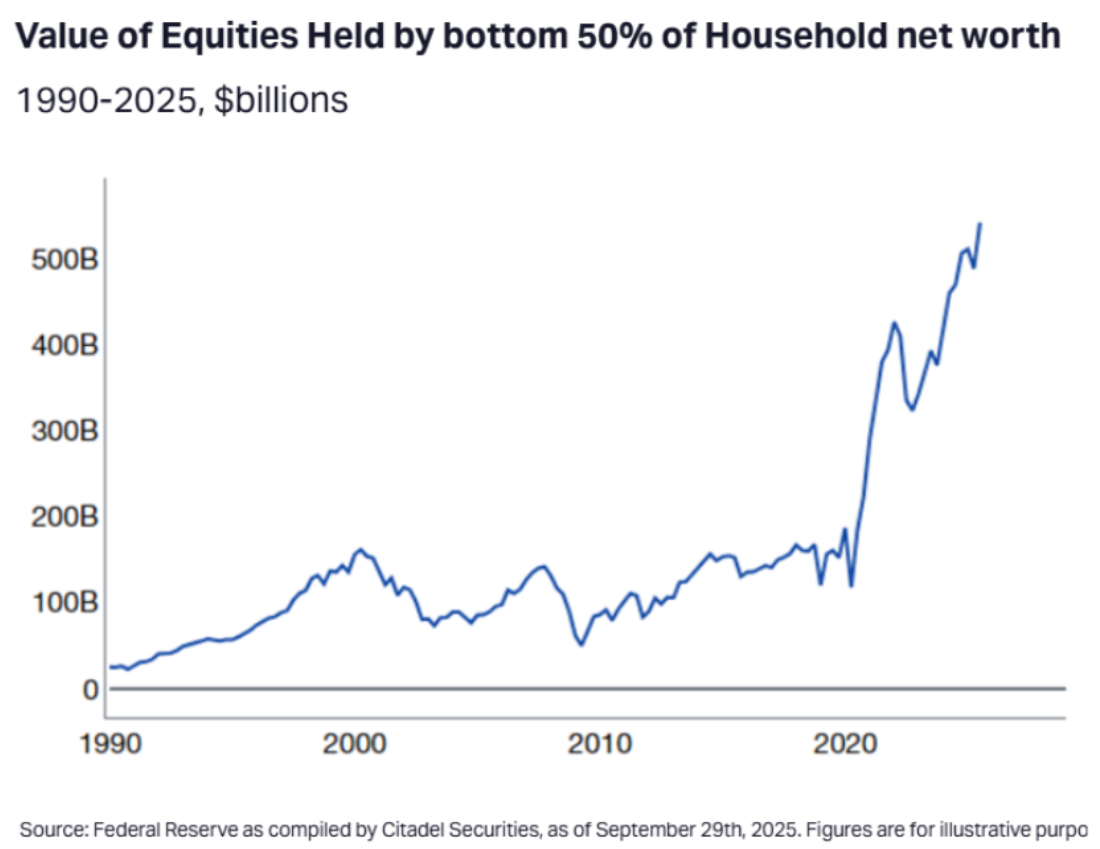
Yet the picture is not all storm clouds and broken calculators. Two positive trends deserve more attention. First, more lower- and middle-income households are participating in the stock market than in previous decades. Second, younger adults are beginning to invest earlier, often using financial assets as an alternative path to wealth while homeownership remains difficult.
These changes do not magically solve inequality. They do not make groceries cheaper or starter homes suddenly affordable. But they do suggest that wealth-building tools once associated mostly with higher-income households are becoming more accessible. That matters because access is often the first step toward progress.
Why Household Wealth Matters
Household wealth is different from income. Income is what comes in: wages, salaries, business earnings, interest, dividends, and other cash flow. Wealth is what remains after subtracting debts from assets. In plain English, household wealth is the financial cushion that helps families handle emergencies, retire with dignity, pay for education, move for opportunity, or simply sleep better at night.
A household with a strong net worth has options. It may be able to weather a job loss, avoid high-interest debt, help a child through college, or retire without turning every grocery receipt into a suspense novel. A household with little or no wealth may be working hard but still living close to the edge.
Recent Federal Reserve data shows that total household and nonprofit net worth in the United States reached historic levels in late 2025. Much of that wealth is tied to financial assets, retirement accounts, real estate, and business ownership. But the important question is not only “How much wealth exists?” It is also “Who owns it?”
For decades, the answer has been uncomfortable: wealth is heavily concentrated near the top. The richest households own a large share of stocks, business equity, and other appreciating assets. Meanwhile, many families depend mainly on wages, home equity, or small savings balances. That imbalance is why even positive economic news can feel uneven. When the stock market rises, the benefits are largest for people who already own the most stock.
Still, the two trends below show that participation is broadening. And when more households gain access to assets that can compound over time, the long-term wealth story can improve.
Positive Trend #1: More Everyday Households Are Investing
The first encouraging trend is the growing number of lower- and middle-income Americans who are investing in taxable brokerage accounts, retirement plans, mutual funds, exchange-traded funds, and other market-based assets.
Stock ownership in the United States has rebounded from the lower levels seen after the Great Recession. Gallup reported that about 62% of Americans owned stock in 2025, including ownership through retirement accounts such as 401(k)s and IRAs. That is an important milestone because it means a majority of households have some direct or indirect connection to the long-term growth of corporate America.
Investing Is No Longer Only a Country Club Conversation
For much of modern financial history, investing was surrounded by barriers. Brokerage commissions were higher. Financial advice was often expensive. Buying a single share of a high-priced company could be out of reach. Many people believed investing was only for people who wore cufflinks, read annual reports for fun, and used words like “alpha” at dinner parties.
That has changed. Commission-free trading, fractional shares, low-cost index funds, mobile investing apps, workplace retirement plans, robo-advisors, and better financial education have made investing easier to start. A person no longer needs thousands of dollars to open the door. In many cases, they can begin with small recurring contributions.
This does not mean every new investor is making perfect decisions. Some people trade too often. Some chase hot stocks. Some confuse investing with gambling wearing a nicer jacket. But broader participation is still meaningful. The first brokerage account or first 401(k) contribution can become the beginning of a lifelong habit.
Why Small Investors Matter
Small investors are sometimes dismissed because their accounts may begin with modest balances. That misses the point. Wealth-building is rarely dramatic at first. It is usually boring, repetitive, and wildly underappreciatedkind of like flossing, but with compounding.
Consider a household that invests $100 a month into a diversified fund. At first, the balance may not look impressive. But over years and decades, contributions plus market growth can create meaningful financial assets. Increase that habit as income rises, add employer retirement matches, avoid panic selling, and the effect can become powerful.
The stock market is volatile in the short term, but historically it has been one of the strongest long-term wealth-building engines available to households. Broad participation allows more families to benefit from productivity, innovation, dividends, and business growth. That is why the rise in investing among ordinary households is positive news.
Positive Trend #2: Younger Adults Are Starting Earlier
The second positive trend is that younger adults are entering the investing world earlier than previous generations. Research from JPMorgan Chase Institute found a major increase in investment account use among 25-year-olds between 2015 and 2024. In simple terms, young adults are not waiting until middle age to think about portfolios. They are starting while their furniture may still involve assembly instructions and one heroic Allen wrench.
This shift is important because time is the most valuable ingredient in compounding. Money invested at age 25 has decades to grow. Money invested at age 55 has less time to recover from mistakes, market downturns, or late starts. Starting early does not guarantee wealth, but it gives households a major advantage.
Housing Is Harder, So Young People Are Adapting
One reason younger adults are investing earlier is not exactly cheerful: homeownership has become harder. The National Association of Realtors reported that the share of first-time home buyers fell to a historic low in 2025, while the typical age of first-time buyers climbed to 40. High prices, elevated mortgage rates, limited inventory, and large down payment requirements have pushed many young adults out of the housing market, at least temporarily.
But here is the positive twist: some younger households are redirecting savings into financial assets instead of letting money sit idle while they wait for housing affordability to improve. They may rent longer, but they are not necessarily doing nothing. They are investing in stocks, ETFs, retirement accounts, and diversified portfolios.
That is not a perfect substitute for homeownership. Homes can provide stability, forced savings, and long-term equity. But investing can provide flexibility, liquidity, diversification, and easier entry. For a young renter who cannot yet buy a home, investing may be the bridge between feeling stuck and building a future balance sheet.
The New Wealth-Building Mindset
For earlier generations, the basic wealth formula was often simple: get a steady job, buy a house, pay the mortgage, and retire with home equity plus Social Security. That model still works for many households, but it is less universal than it once was.
Younger adults are creating a more flexible model. They may rent in expensive cities, work remotely, change jobs more often, invest through apps, use retirement accounts, and build wealth through portfolios before they ever buy property. In some cases, they may decide that owning a home is not the only acceptable finish line.
This change is not about declaring homes “bad” and stocks “good.” That would be too simple, and economics rarely enjoys being simple. The better takeaway is that households now have more than one path. Home equity remains valuable, but financial assets are becoming a larger part of how younger Americans think about security.
The Role of Technology in Household Wealth
Technology has played a major role in both trends. A modern investor can open an account, buy a diversified fund, automate contributions, track performance, and learn basic financial concepts from a phone. Twenty years ago, that process was slower, more expensive, and more intimidating.
Fractional shares are especially important. If a stock or ETF trades at a high price, fractional investing allows someone to buy a small slice. This is a quiet revolution for people who want to invest $10, $25, or $50 at a time. Small amounts may seem unimpressive, but they lower the psychological barrier. Once people begin, they are more likely to keep learning.
Low-cost index funds and ETFs also help. Instead of trying to pick the next superstar company, households can buy broad exposure to the market. This reduces the risk of betting everything on one company because someone on the internet used too many rocket emojis.
The Reality Check: Positive Does Not Mean Perfect
These trends are worth celebrating, but they should not be oversold. The United States still has deep wealth inequality. The top of the wealth distribution owns a disproportionate share of stocks, business assets, and total net worth. Many households still have little emergency savings. Credit card balances, auto loans, student loans, medical bills, and housing costs create real pressure.
Market participation also comes with risk. Stocks can fall sharply. New investors may panic during downturns. Some may treat investing like a casino instead of a long-term plan. Others may overconcentrate in trendy sectors or speculative assets.
That is why financial education matters. Access alone is not enough. Households need practical knowledge: how to diversify, how to avoid high fees, how to rebalance, how to understand risk, how to use retirement accounts, and how to stay invested through normal market turbulence.
In other words, the goal is not just more investors. The goal is more successful long-term investors.
How Households Can Use These Trends Wisely
Start With a Financial Safety Net
Before investing aggressively, households should build an emergency fund. Even a small cushion can prevent a surprise expense from becoming high-interest debt. A portfolio is wonderful, but it is not ideal to sell investments during a market downturn just to cover a car repair.
Automate Contributions
Automatic investing turns good intentions into action. When contributions happen every payday or every month, households do not have to rely on motivation. This is helpful because motivation is unreliable. It disappears the moment pizza, streaming subscriptions, or “limited-time” sales enter the room.
Use Retirement Accounts
Employer-sponsored retirement plans, especially those with matching contributions, can be powerful wealth-building tools. A company match is essentially extra compensation. Ignoring it is like refusing free money because the envelope looks boring.
Diversify
A diversified portfolio helps reduce the risk of relying too much on one company, sector, or asset class. For many households, broad index funds or target-date funds can provide a simple starting point. The best portfolio is not always the fanciest one. Often, it is the one a person can stick with.
Keep Housing in Perspective
Homeownership can build wealth, but it is not automatically better than renting in every situation. A home comes with taxes, insurance, maintenance, repairs, transaction costs, and the occasional mysterious noise from the basement. Renting while investing can be a rational choice, especially in expensive markets.
The key is intentionality. Renting and investing can build wealth. Renting and spending every extra dollar may not. Owning a home can build wealth. Buying too much house can create stress. The right choice depends on income, location, family needs, job stability, interest rates, and personal goals.
Examples of Positive Household Wealth Behavior
Imagine a 28-year-old renter who cannot afford a down payment in a high-cost city. Instead of waiting helplessly, she contributes to a 401(k), opens a Roth IRA, and invests monthly in a diversified ETF. Five years later, she still may not own a home, but she has built financial assets, learned market discipline, and created options.
Now imagine a family earning a moderate income. They start with small contributions to a workplace retirement plan, increase contributions after raises, pay down high-interest debt, and keep a basic emergency fund. Their progress may not look dramatic on social media, but it is real. Household wealth is often built quietly, without applause, hashtags, or a luxury car parked in the driveway.
Another example is a homeowner who already has equity but decides not to rely only on the house. Instead, the household also invests in retirement accounts and taxable funds. That creates a more balanced wealth picture. Home equity is useful, but it is not as liquid as a diversified investment account.
Experience Section: What These Trends Feel Like in Real Life
On paper, “household wealth” sounds like a national statistic. In real life, it feels like a kitchen-table conversation. It is the couple deciding whether to increase retirement contributions or replace the aging washing machine that currently sounds like a helicopter landing. It is the young professional wondering whether renting is a failure or simply a flexible step. It is the parent teaching a teenager that investing is not a magic trick, but a habit.
One practical experience many households share is the emotional shift that happens after opening the first investment account. At first, it can feel intimidating. The screen shows unfamiliar terms: index fund, dividend, expense ratio, unrealized gain. It may feel like walking into a gym where every machine looks designed by NASA. But after a few months of small automatic contributions, the fear usually fades. The account becomes less mysterious. The investor begins to understand that wealth is not built by one heroic move, but by repeated sensible choices.
Another common experience is learning to separate volatility from failure. A new investor may see the account fall during a market downturn and think, “Well, that was a terrible idea.” But experienced investors know downturns are part of the journey. The market does not move in a straight line. It climbs stairs, falls down stairs, trips over a rug, then somehow keeps going over long periods. Households that learn this early often develop stronger financial confidence.
For younger adults, the experience can be especially complicated. Many feel frustrated by housing costs. They may have good jobs and still find that a starter home is out of reach. That frustration is real. But investing gives them a way to keep moving. Instead of letting the housing market decide their entire financial future, they can build liquid assets while renting. This does not erase the desire for a home, but it reduces the feeling of being financially frozen.
Families also discover that wealth-building works best when it becomes part of normal life. A household budget does not need to be perfect. It simply needs to create room for saving and investing. Some families start with a tiny amount and increase it each year. Others use tax refunds, bonuses, or side income to fund accounts. The exact method matters less than consistency.
There is also a social experience involved. Money used to be a taboo topic in many families. Today, more people openly discuss investing, retirement accounts, debt payoff, and financial independence. That transparency can be healthy when it encourages learning instead of comparison. The goal is not to copy someone else’s portfolio or panic because a friend bought a house first. The goal is to build a plan that fits your own household.
The most encouraging part of these trends is psychological. When people see investing as accessible, they are more likely to believe they can participate in wealth-building. That belief matters. A household that invests $50 a month may not feel wealthy right away, but it has crossed an important line: from watching the financial system from the outside to owning a small piece of it.
Over time, that ownership can change behavior. People who invest often become more interested in saving, taxes, retirement planning, and career growth. They begin asking better questions. They understand that wealth is not only about income; it is about assets, habits, patience, and resilience. That shift may be one of the most positive household wealth trends of all.
Conclusion
The two positive trends in household wealth are clear: more everyday Americans are investing, and younger adults are starting earlier. These changes do not eliminate the serious problems of housing affordability, debt stress, or wealth inequality. But they do show progress in access, behavior, and mindset.
More households are gaining exposure to financial assets that can compound over time. More young adults are learning that wealth-building can begin before homeownership. More families are discovering that small, consistent contributions can become meaningful over decades.
The future of household wealth will not be shaped by one trend alone. It will depend on wages, housing supply, education, taxes, debt, market returns, public policy, and personal behavior. But broader investing participation is a good sign. Earlier investing is a good sign. And in a world full of economic anxiety, a good sign is worth noticing.