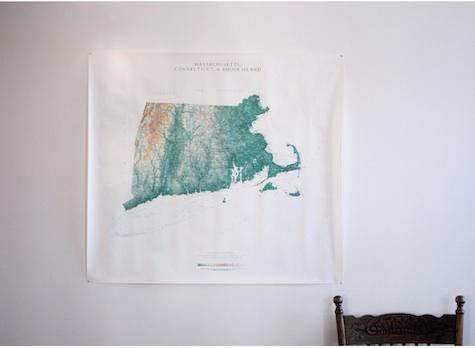
Some accessories whisper. Some accessories politely match the sofa. And then there are Raven Maps: large, luminous wall maps that stroll into a room, roll out the mountains, point dramatically toward the rivers, and say, “Congratulations, this wall has a personality now.”
Founded in Medford, Oregon, Raven Maps & Images built its reputation on a beautifully stubborn idea: maps should be accurate, yes, but they should also be worth staring at long after you have figured out where Idaho ends. These are not flimsy gas-station maps with fold lines in places no fold line should ever go. They are decorative, educational, and deeply satisfying pieces of cartographic artaccessories for people who like their walls to do more than hold paint.
Whether displayed in a home office, classroom, hallway, library, cabin, studio, or living room, Raven Maps offer a rare combination of function and feeling. They help you understand terrain, distance, elevation, rivers, roads, and regions while also giving a space a grounded, thoughtful look. In other words: they are wall decor with a compass, a brain, and very good color judgment.
What Makes Raven Maps Special?
Raven Maps became known for turning topographic information into wall-worthy artwork. The company’s classic style uses shaded relief and elevation tints, meaning the landscape is not presented as a flat diagram but as a visual experience. Lowlands, valleys, mountain ranges, plateaus, rivers, and coastlines appear with a depth that feels almost three-dimensional.
The most recognizable Raven Maps palette often moves through greens, yellows, browns, grays, and whites to suggest changes in elevation. The result is intuitive: even before you read a label, you can feel where the land rises and falls. A mountain range does not merely exist on the map; it flexes a little. A river basin does not just sit there; it invites your eyes to follow it downstream.
Medford, Oregon: A Fitting Birthplace for Beautiful Maps
Medford sits in Southern Oregon’s Rogue Valley, a region where geography is not exactly shy. Mountains, valleys, forests, volcanic landscapes, rivers, and the Pacific Northwest’s dramatic terrain are all part of the larger setting. It makes sense that a company devoted to landforms and visual geography would have roots in a place where the landscape already behaves like it wants to be mapped.
Raven Maps began in the 1980s through the collaboration of cartographer Stuart Allan and marketer Michael Beard. Their idea was simple but ambitious: create maps that people would not hide in drawers. Instead, these maps would hang proudly in homes, offices, schools, and public spaces. That vision helped Raven Maps stand apart in a world where maps were often treated as disposable tools rather than lasting objects.
Why Raven Maps Work So Well as Accessories
Calling a Raven Map an “accessory” may sound modest, like calling a grand piano a “piece of furniture.” Still, in interior design terms, these maps do exactly what great accessories should do: they add character, texture, color, conversation, and meaning.
They Add Visual Warmth
Many wall maps rely on hard political borders, bright primary colors, or overly busy labels. Raven Maps tend to feel softer and more organic. Their earth-toned palettes can fit naturally into modern, rustic, academic, minimalist, or traditional interiors. A Raven map can look at home above a desk, behind a reading chair, in a hallway gallery, or over a dining room sideboard.
They Start Conversations
Hang a large Raven map in a room and people will walk toward it. They will point at where they grew up, where they got lost once, where they want to hike, where their cousin moved, and where they swear the best tacos in the state are hiding. A good map turns guests into storytellers. It is basically social media for people who still enjoy standing up.
They Make a Room Smarter
A Raven Map is not just pretty. It teaches. It shows how mountains shape travel, how rivers organize settlement, how borders overlay natural features, and how distance looks when you stop reducing the world to dots on a phone screen. For students, travelers, designers, writers, and geography lovers, that daily visual exposure matters.
Popular Raven Map Styles
Raven Maps has offered a range of map types, each with its own visual personality. Choosing the right one depends on whether you want drama, data, elegance, or “I want my office to look like a thoughtful explorer lives here.”
Elevation Tints
Elevation Tint maps are the classic Raven look. They combine shaded relief with carefully selected colors to show terrain. Mountains, basins, plains, and valleys become immediately readable. This style is especially useful for U.S. state maps, regional maps, and national maps because it makes physical geography feel clear without requiring a geology degree or a heroic amount of coffee.
Land Cover Maps
Land Cover maps focus on what is on the ground: forests, wetlands, farmland, urban areas, grasslands, and other surface patterns. These maps are excellent for anyone interested in ecology, regional planning, environmental design, agriculture, or the satisfying realization that “green” on a map can mean several different things.
Landforms and Rivers
This style strips away clutter and emphasizes major geological structures and drainage systems. It is a strong choice for minimalist interiors because it has a quieter, more sculptural feel. The landforms become the hero; the rivers become the elegant supporting cast.
Night Views
Night Views maps show built-up areas as patterns of light against darker relief. They reveal settlement density and urban form in a dramatic way. These maps are especially appealing for people who like city geography, population patterns, and the look of Earth after someone dimmed the lights for atmosphere.
Where Raven Maps Fit Best in the Home
Raven Maps are flexible design pieces because they balance detail with elegance. They can be large enough to anchor a wall but refined enough not to overpower the room.
Home Office
A Raven Map in a home office adds intelligence without looking stiff. It works behind a desk, beside bookshelves, or on a wall used for video calls. Unlike generic motivational posters, a map does not shout “dream big.” It quietly says, “There is a whole continent out there, and your spreadsheet is not the boss of you.”
Living Room
In a living room, a Raven Map can replace a conventional print or painting. A U.S. map, Oregon map, North America map, or world map can bring structure and movement to the space. Pair it with wood frames, linen upholstery, leather seating, plants, and warm lighting for a relaxed, collected look.
Children’s Room or Study Area
Maps encourage curiosity. In a child’s room or study space, a Raven Map becomes both decoration and learning tool. It can support geography, history, science, reading, and spatial thinking. It also gives kids a chance to ask excellent questions like, “Why is Nevada shaped like that?” Adults may then pretend they know immediately.
Cabin, Guesthouse, or Vacation Home
Maps are natural companions for cabins and travel-oriented spaces. A regional Raven Map can connect a room to nearby mountains, rivers, parks, or highways. It gives visitors context and adds a sense of adventure even before anyone finds the trail mix.
How to Choose the Right Raven Map
The best Raven Map for your space depends on scale, subject, finish, and emotional connection. Yes, emotional connection. We are talking about maps, but people get attached to places. A map of Oregon means one thing to a cartographer, another to a hiker, another to a family that takes the same road trip every summer, and another to someone who once got spectacularly lost near Crater Lake and has chosen to call it “character building.”
Pick a Place That Matters
Start with geography that means something to you. Choose your home state, a favorite national park, a dream destination, a region you study, or a place tied to family history. A map becomes more powerful when it carries memory.
Match the Map to the Room
A large, colorful physical map can anchor a living room or office. A quieter landforms map may suit a bedroom or reading nook. A night-view map can look striking in a modern workspace. For classrooms, libraries, and studios, detail is an advantage; for minimalist homes, restraint may be the better route.
Think About Framing
Framing changes everything. A simple black frame creates a clean modern look. Natural wood makes the map warmer and more organic. Metal frames can feel professional or gallery-like. For a vintage academic mood, use a wood frame with a slightly wider profile. The map will instantly look like it knows where the secret archive is.
Consider Paper or Lamination
Paper prints often feel more refined and art-like, especially when framed behind glass or acrylic. Laminated maps are practical for classrooms, offices, and hands-on spaces where people may point, mark, or clean the surface. Fine art prints, depending on the edition, may be designed for long-lasting display and should be handled more like artwork than a bulletin-board poster.
Raven Maps for Education and Everyday Learning
Digital maps are convenient, but they often reduce geography to directions: turn left, turn right, complain about traffic, repeat. A wall map invites broader thinking. You see relationships all at once. You notice how mountain ranges shape weather, how rivers connect regions, and how cities cluster around transportation corridors and natural resources.
For students, Raven Maps can support spatial thinking, map reading, earth science, history, environmental studies, and travel planning. For adults, they keep geography visible in daily life. They remind us that places are connected, terrain matters, and the world is not just a search bar with restaurants near you.
Why Designers Still Love Physical Maps
Interior designers often look for pieces that bring authenticity into a space. Raven Maps do that naturally. They are not trendy in the shallow sense. They do not rely on slogans, novelty graphics, or colors chosen because an algorithm decided “mushroom beige” was having a moment. Their beauty comes from real geography translated through careful cartographic design.
That makes them unusually durable as decor. A well-chosen map can stay relevant for years because landforms do not go out of style. Mountains rarely announce a rebrand. Rivers do not suddenly pivot to short-form video. A map’s appeal is steady because it is rooted in something real.
Raven Maps and the Art of Slow Looking
One of the best things about Raven Maps is that they reward attention. At first glance, you see color and shape. Step closer, and details emerge: rivers, towns, coastlines, ridges, basins, roads, boundaries, and labels. The map changes as you look at it. That quality makes it different from decor that gives everything away in five seconds.
In a world of fast scrolling, a Raven Map encourages slow looking. It invites you to pause, trace a route, compare regions, and notice patterns. It turns a wall into a small daily expedition. No hiking boots required, though a cup of coffee helps.
Specific Examples: How to Style Raven Maps
The Pacific Northwest Reading Corner
Frame an Oregon or Pacific Northwest Raven Map in medium-toned wood. Place it above a leather chair, add a wool throw, a small side table, and a warm floor lamp. The result feels cozy, regional, and quietly adventurous. Bonus points if the chair is near a window and the book stack looks intentionally charming rather than structurally concerning.
The Modern Office Wall
Use a large U.S. or world map in a thin black frame. Keep surrounding decor minimal: one shelf, one plant, one lamp, and no motivational quote involving eagles. The map provides enough visual interest on its own.
The Family Travel Hallway
Hang a Raven Map near framed travel photos. Add small labels or pins if the finish allows it, or keep the map untouched and let the surrounding photos tell the story. This creates a personal gallery that is more meaningful than a random collection of beach prints purchased in a moment of decorative panic.
The Classroom Geography Wall
Choose a laminated Raven Map for durability. Use it for lessons on elevation, watersheds, regions, climate, settlement, and transportation. Students can compare physical geography with political boundaries and begin to understand that maps are not just picturesthey are arguments, explanations, and invitations to ask better questions.
Buying Tips for Raven Map Accessories
Before buying, measure your wall. Large-format maps need breathing room. A map that looks impressive online may dominate a narrow hallway unless it is framed and placed carefully. Check dimensions, finish, paper type, and whether the map is best suited for framing, mounting, or classroom use.
Also think about lighting. Avoid direct sunlight, especially for paper and fine art prints, because fading is the enemy of beautiful color. Use indirect natural light or warm artificial lighting. If framing behind glass, consider glare reduction so the map does not become a mirror that shows you squinting at Montana.
Experience Section: Living With Raven Maps in Everyday Spaces
The experience of owning a Raven Map is different from owning ordinary wall decor. A print of a landscape may create mood, but a Raven Map creates interaction. You do not simply pass it in the hallway; you stop. You notice something. You find a mountain range you have crossed, a river you have followed, a state border that suddenly seems more arbitrary than it did in school. The map becomes part of your daily rhythm.
In a home office, the map can serve as a mental reset. When the inbox gets dramatic and the calendar looks like it was designed by raccoons with Wi-Fi, looking at a physical map offers perspective. The Rogue Valley, the Cascades, the Rockies, the Great Basin, the Mississippi River systemthese things are bigger than your unread messages. A Raven Map quietly reminds you that the world has contours beyond deadlines.
For families, the experience can be surprisingly social. A large map invites people to gather around it. Parents can show children where relatives live, where road trips happened, where national parks are located, or why driving “just a little farther” across the West can mean another six hours and a gas station burrito of uncertain origin. Kids often engage with maps naturally because maps combine color, mystery, and the irresistible urge to point.
Travelers may find Raven Maps especially satisfying. Planning a trip with a wall map feels different from zooming in and out on a phone. You see the big picture first. You understand why one route crosses mountains while another follows a valley. You notice nearby towns, rivers, parks, and regions that might be invisible in turn-by-turn navigation. The map becomes a planning companion, not just a backdrop.
Design lovers get another kind of reward: atmosphere. A Raven Map can make a room feel collected rather than decorated. It suggests curiosity, memory, and taste without trying too hard. It pairs well with books, ceramics, vintage furniture, modern desks, plants, natural textiles, and simple frames. It can look scholarly in a library, adventurous in a cabin, polished in an office, or playful in a child’s room.
There is also pleasure in the tactile reality of a map. Even when framed, it has presence. It occupies space. It offers scale. Unlike a digital map, it does not disappear when the battery dies or when a notification barges in wearing tap shoes. It stays on the wall, patiently showing the shape of the land.
Raven Maps from Medford, Oregon, carry a particular charm because they come from a tradition of treating cartography as both science and art. They are precise enough to inform and beautiful enough to keep. That combination is why they remain relevant as accessories: they do not merely fill empty wall space; they expand it.
Conclusion
Raven Maps prove that useful objects can also be beautiful. Born from a Medford, Oregon, vision of cartography as fine art, these maps turn terrain, elevation, rivers, and regions into decor with depth and intelligence. They work in homes, classrooms, offices, cabins, libraries, and creative studios because they offer more than style. They offer curiosity.
As accessories, Raven Maps are rare: practical, educational, attractive, and personal. They help us see the land more clearly and our own stories more geographically. Hang one on a wall and the room changes. Suddenly, the space has direction, altitude, and maybe even a little wanderlust. Not bad for something that does not require assembly, batteries, or an app update.
Note: This article is written in original standard American English and synthesized from real public information about Raven Maps, cartographic wall art, map education, and decorative map use.