Note: HTML body only, in English, ready for web publishing and copying.
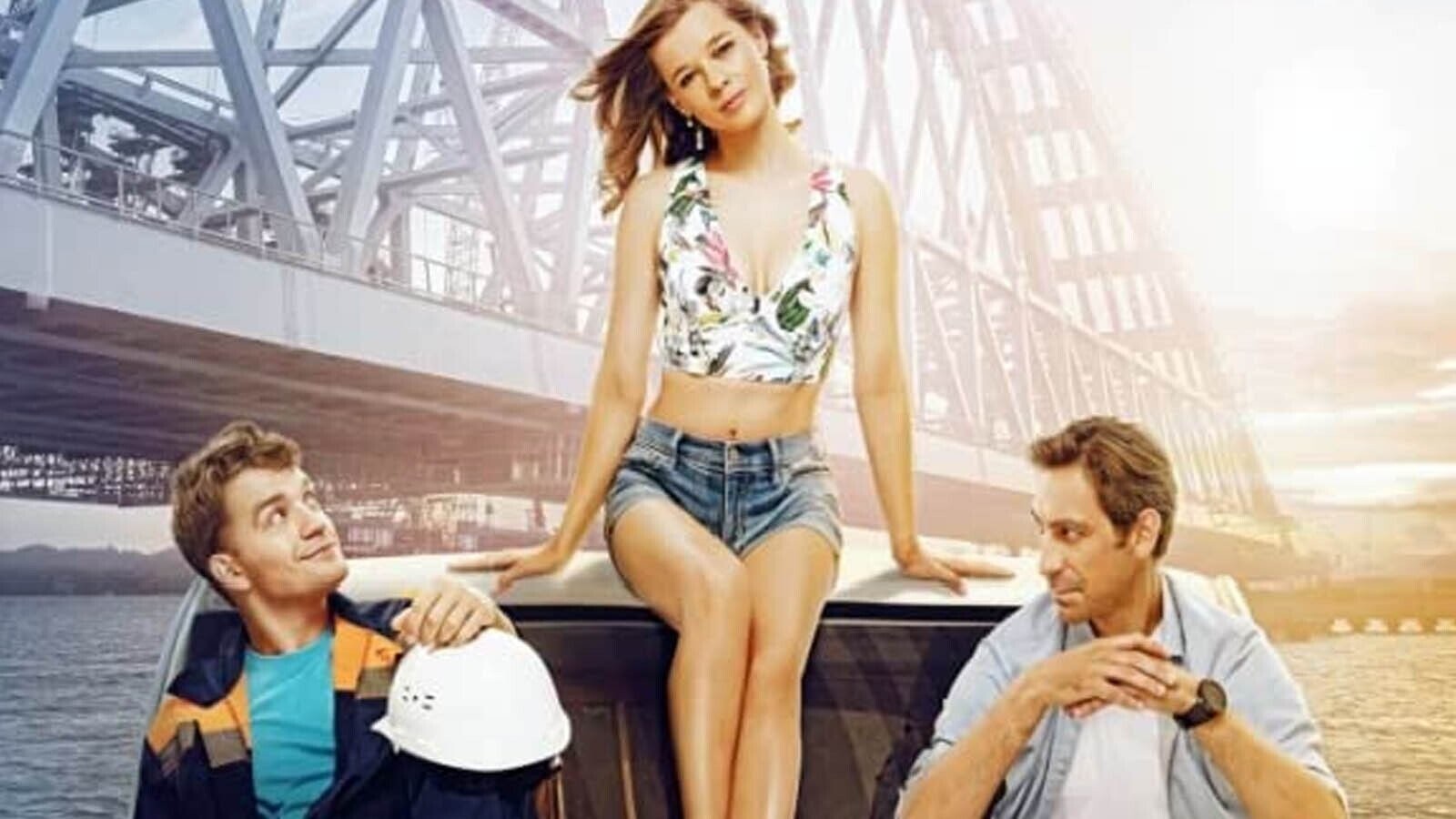
Every so often, reality produces a movie pitch so strange that even Hollywood would ask everyone in the room to please sit down and explain themselves. A giant politically charged bridge. A state-friendly screenplay. A romantic comedy wrapper. Sun-drenched flirting on a construction site. If that combination sounds like someone accidentally shuffled a geopolitics textbook, a tourism brochure, and a discount DVD bin, welcome to The Crimean Bridge. Made with Love! the Russian rom-com that may be one of the most bizarre pieces of infrastructure cinema ever made.
And yes, that sentence is real. There really was a glossy romantic comedy built around the Crimean Bridge, the huge span over the Kerch Strait linking Russia to Crimea. On paper, it sounds like parody. On screen, it plays like propaganda trying very hard to wear a floral shirt and pretend it is just here for the vibes.
This is why people keep calling it cursed. Not cursed in the supernatural sense, although a haunted screenplay might honestly explain a few creative decisions. Cursed in the internet-age way: unnerving, awkward, overengineered, too sincere to be camp, too absurd to be serious, and impossible to look away from once you learn it exists.
For anyone interested in propaganda, pop culture, Russian media, or just the outer limits of what counts as a rom-com, this film is a fascinating case study. It is not simply a movie set near an important landmark. The landmark is the point. The bridge is the star. The romance is the decorative parsley.
What Exactly Is This Movie?
The Crimean Bridge. Made with Love! is a 2018 Russian romantic comedy set during construction of the bridge. The story follows young workers, a love triangle, and a collection of breezy, lightly comic adventures staged against cranes, concrete, sunshine, and patriotic symbolism. That description makes it sound harmlessly goofy, like a Hallmark movie for civil engineers. But the context changes everything.
The film arrived after Russia’s 2014 annexation of Crimea, and the bridge itself was one of the Kremlin’s biggest symbolic and logistical projects. It was more than a transport link. It was sold as proof, spectacle, and statement all at once. So when a movie appeared that wrapped this bridge in flirtation, jokes, and postcard scenery, many observers did not read it as simple entertainment. They read it as a charm offensive with attractive lighting.
That is what makes the film so strange. Most propaganda films want to look muscular, historic, or heroic. This one wanted to be cute. It wanted to wink. It wanted to smell faintly of sunscreen and destiny. Instead of tanks and speeches, it offered chemistry and construction helmets. Instead of solemn messaging, it chose rom-com sparkle. The result was not subtle. It was just unusual enough to become unforgettable.
Why The “Cursed” Label Fits So Well
1. The premise sounds made up
Tell someone there is a romantic comedy about a heavily politicized megaproject tied to contested territory, and they will assume you are describing a satirical sketch, not a real release. The very existence of the film creates cognitive whiplash. Bridges are usually backdrops. Here, the bridge is practically the emotional support lead.
2. The tone and the subject do not naturally belong together
Rom-coms thrive on intimacy, misunderstanding, timing, and charm. Geopolitical symbolism tends to thrive on mythmaking, legitimacy, and narratives of state power. Fusing the two is like putting whipped cream on a press conference. The ingredients do not exactly blend. They merely agree to occupy the same plate.
3. It feels designed to normalize through pleasantness
One of the smartest things soft propaganda can do is lower the volume. Instead of shouting, it smiles. Instead of arguing, it lets the scenery do the work. In that sense, the movie is fascinating. It treats the bridge not as a controversy but as a cheerful fact of life, the kind of thing around which attractive people can banter while destiny hums in the background.
4. The reception made the whole project even stranger
The film did not become a beloved crowd favorite that swept everyone into a haze of patriotic adoration. Quite the opposite. It drew scathing reviews and became notorious less as a triumphant cultural event than as an example of how forced messaging can become artistically awkward. That flop factor is part of what gives it the “cursed” aura today. It aimed for soft-focus legitimacy and landed closer to meme history.
The Bridge Was Never Just A Bridge
To understand the movie, you have to understand why the bridge mattered so much. Massive infrastructure projects are often sold as practical achievements, but they also carry emotional and political weight. They announce permanence. They say, “This is real now. This is settled. Look at the steel.”
That was especially true here. The Crimean Bridge was presented as a feat of engineering, a tourist artery, and a symbol of control. It was useful in literal terms, but it also functioned as a giant concrete-and-steel argument. When a state ties prestige to a structure, culture often follows. Documentaries arrive. Television segments multiply. Public messaging blooms. And, apparently, someone eventually says, “You know what this bridge needs? A love triangle.”
That impulse is what makes the film valuable as a cultural artifact. It reveals how power sometimes prefers seduction over sermonizing. Instead of giving viewers a lecture, it gives them a date movie. Instead of insisting, it invites. The emotional logic is simple: if the setting feels normal, maybe the politics can feel normal too.
Rom-Com Mechanics Meet State Mythmaking
There is something almost academically interesting about using rom-com mechanics for political image management. Romantic comedies are built around comfort. Even when chaos erupts, viewers trust that the tone will stay warm and the mess will resolve. They are the cinematic equivalent of a couch blanket and an overconfident best friend.
Now place that emotional architecture around a contested national symbol. Suddenly, genre becomes strategy.
In a typical rom-com, the setting helps sell fantasy: New York at Christmas, a beach town in summer, a charming bookstore nobody can afford. In this film, the setting helps sell legitimacy. The bridge is not just where the characters work. It is the fantasy object. It glitters with inevitability. The characters orbit it as if history itself had hired a cinematographer.
That is why the movie remains such a weirdly important example of soft-focus propaganda. It does not merely praise a project. It aestheticizes it. It tries to make infrastructure feel romantic, even lovable. It attempts the rare feat of turning a politically charged megastructure into the equivalent of a handsome co-star leaning against a convertible at golden hour.
Why It Did Not Quite Work
Propaganda can be effective, but it still has to function as storytelling. Audiences can forgive ideology faster than they forgive boredom, awkward pacing, flat jokes, or characters who seem less like human beings and more like interns hired by a slogan. That is part of what doomed the film’s reputation.
The project was too loaded to be carefree, yet too airy to wrestle seriously with its own implications. It wanted the emotional benefits of innocence without the burden of context. That left it suspended in a strange zone between postcard fantasy and state-approved messaging, where viewers could feel the machinery under the confetti.
And once audiences sense machinery in a romantic comedy, the magic gets harder to maintain. Flirtation starts to feel assigned. Sunshine starts to feel strategic. The soundtrack starts to sound like it was assembled by a committee that asked whether a song could be “15 percent more reassuring.”
That tension is what makes the movie unforgettable in the least glamorous way possible. It was trying to be a breeze, but people could hear the gears turning.
The Movie’s Accidental Legacy
Today, the film survives less as cinema and more as an anecdote that keeps getting rediscovered online. It belongs to that special class of cultural object that makes people stop scrolling and say, “Wait, there was what?” It has become shorthand for a broader truth about political media: when propaganda tries too hard to seem adorable, it can circle back around into unintentional comedy.
That does not mean the movie is trivial. In fact, its absurdity is what makes it revealing. It shows how modern messaging does not always come wrapped in thunderous speeches or patriotic choirs. Sometimes it arrives in beach light, with quips, longing glances, and a suspiciously photogenic construction zone.
It also shows the limits of manufactured feeling. You can fund the project, stage the mood, and build the symbolism into every shot, but audiences still notice when a story is trying to charm them into accepting something bigger than the plot. Viewers may not use academic language for that reaction. They may just say the movie feels off. Online, they are more likely to say it is cursed. Honestly, that is not bad criticism. It captures the vibe perfectly.
What This Says About Culture And Power
The strangest propaganda is often the most educational because it reveals what power wants from art. Not just praise. Not just loyalty. Warmth. Familiarity. Ease. The dream is not merely to convince people that a political reality exists. It is to make that reality feel ordinary, cozy, and camera-ready.
The Crimean Bridge. Made with Love! aimed for exactly that effect. It tried to turn a loaded geopolitical symbol into background ambiance for a romantic fantasy. In doing so, it exposed the ambition behind the project more clearly than a blunt speech ever could. The message was not simply “admire this bridge.” It was “live inside this image until it stops feeling strange.”
But it kept feeling strange. That is the whole story. The movie could not outrun its own premise. It could not smooth away the tension between sugary genre conventions and the hard reality beneath them. So instead of becoming a timeless romance, it became a cultural curiosity part propaganda artifact, part cinematic oddity, part internet fossil of a very specific political mood.
Final Thoughts
There are bad rom-coms, forgettable rom-coms, charming rom-coms, and then there is the extremely niche category of rom-coms built around politically symbolic megainfrastructure. The Crimean Bridge. Made with Love! sits in that category all by itself, wearing sunglasses and pretending this is normal.
That lonely uniqueness is exactly why people still talk about it. The film is weird, revealing, tonally bizarre, and culturally useful. It is what happens when image management borrows the language of romance and assumes viewers will not notice the blueprint under the bouquet. They noticed.
So yes, there really is a cursed Russian rom-com about the Crimea Bridge. It is real. It is odd. It is historically revealing. And it may be the clearest reminder that when politics tries to become cute, the results are often not persuasive just unforgettable for all the wrong reasons.
Experiences Related To “There Is A Cursed Russian Rom-Com About The Crimea Bridge”
Watching a film like this, or even just learning that it exists, creates a very particular kind of experience. First comes disbelief. Your brain rejects the premise on contact. A rom-com about a politically explosive bridge sounds like the sort of fake movie title people invent on social media for laughs. Then comes the second wave: curiosity. Because once the shock wears off, you start wondering how anyone possibly thought this could work. That curiosity is powerful. It is the same urge that makes people watch notorious flops, read infamous speeches, or click on articles with headlines that sound like they were assembled by a malfunctioning algorithm.
There is also the experience of tonal whiplash. One minute you are dealing with the soft, familiar grammar of romantic comedy pretty locations, teasing dialogue, attractive people making emotionally messy decisions and the next minute you remember that the scenery is not neutral. It is loaded. It carries political meaning that cannot be shrugged off with a soundtrack cue. That emotional mismatch is what makes the viewing experience so uncanny. You are being invited to relax inside a story built on a foundation that resists relaxation.
Another experience tied to this topic is the strange modern habit of discovering history through cultural debris. Many people first hear about certain political events through memes, side notes, documentaries, or bizarre entertainment products rather than textbooks. A movie like this becomes a portal. Someone laughs at how absurd it sounds, then starts reading about the bridge, the annexation of Crimea, Russian media strategy, and the role of culture in shaping public narratives. In that sense, the cursed quality of the film gives it an afterlife beyond its box office or reviews. It becomes an accidental syllabus.
There is also the experience of realizing how often propaganda no longer looks like propaganda in the old, obvious sense. It may not arrive with stern narration and heroic statues. It may arrive dressed as leisure, nostalgia, romance, or lifestyle content. That recognition can be unsettling because it forces viewers to think harder about entertainment itself. What is this story asking me to feel? What has been made to seem ordinary? Why does this backdrop matter? Those questions do not ruin movies. They make people sharper.
Finally, there is the very internet-era experience of sharing the discovery with other people. Few topics unite a group chat faster than a sentence like, “Guys, there is apparently a Russian rom-com about the Crimea Bridge.” It sounds too weird not to pass along. Everyone reacts the same way: laughter, disbelief, one person immediately opening six tabs, and somebody else declaring that cinema has officially gone off the rails and into the Kerch Strait. That communal reaction is part of the story now. The film may not have become a classic romance, but it did become something else: a legendary example of how culture, politics, and absurdity can collide so hard that the collision itself becomes the main event.