“`
Work is a very strange arrangement when you think about it for longer than the average coffee break. You wake up, put on clothes that say “responsible adult,” commute or log in, answer messages with the emotional range of a printer, and then pretend that a meeting about another meeting is a normal use of human life. No wonder people take breaks at work to tweet the whole truth about having to work. Sometimes the only thing standing between a worker and a dramatic resignation letter is a funny post, a stale office donut, and the tiny thrill of whispering, “This is ridiculous,” into the internet.
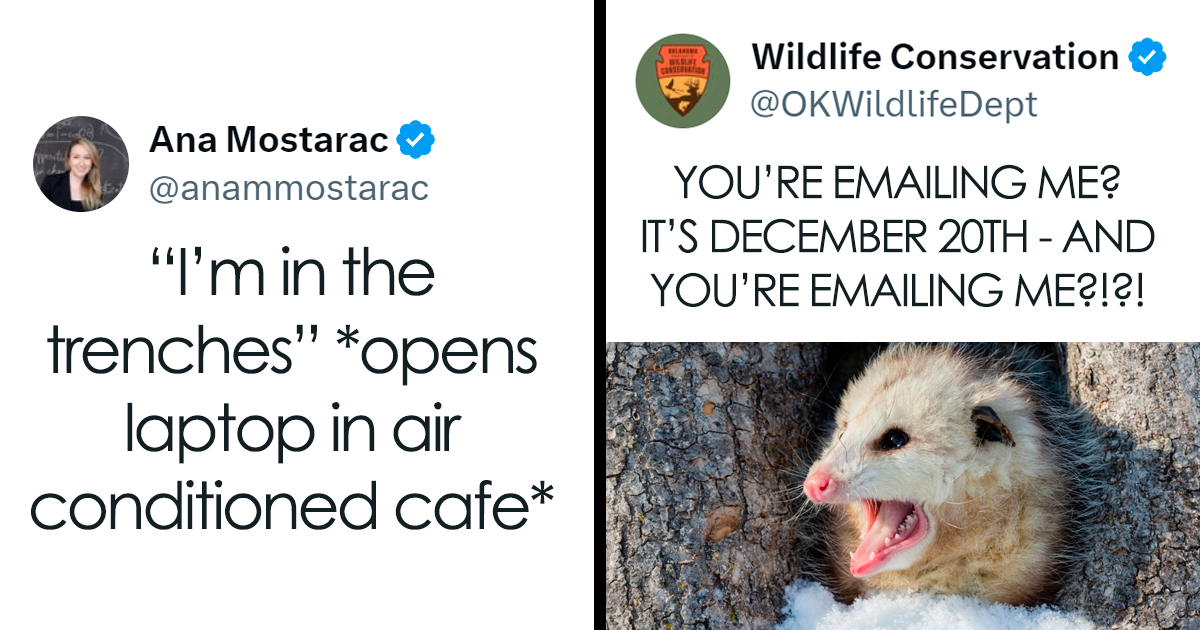
The title “30 Times People Took A Break At Work To Tweet The Whole Truth About Having To Work” captures a familiar online ritual: workers turning everyday job frustration into comedy. The jokes may be short, but the feelings behind them are not. They point to burnout, low pay, endless notifications, awkward office culture, confusing job descriptions, remote work debates, and the universal shock of realizing that “entry-level” often means “please arrive with five years of experience and the emotional stamina of a lighthouse.”
This article does not copy viral tweets. Instead, it explores the deeper truth behind workplace humor and why funny work tweets resonate so strongly. Think of it as a tour through the modern job experience, guided by memes, coffee, and the deep spiritual knowledge that every employee has considered becoming a mysterious person who lives in the woods.
Why Work Tweets Hit So Hard
Funny work tweets succeed because they say what many employees are thinking but cannot put in a Slack channel called “leadership-updates.” A good workplace joke is usually built on recognition. Someone complains about pretending to be busy while waiting for approval. Someone jokes that their “quick question” has become a six-week project. Someone describes the emotional devastation of receiving “per my last email.” Suddenly, thousands of people feel personally seen.
The humor works because modern work often asks people to be productive, positive, flexible, collaborative, available, self-motivated, growth-minded, and calm before 9:15 a.m. That is a lot to request from a person whose breakfast was one banana and three anxious sips of coffee. Tweets compress that pressure into one perfect punchline.
The Real Workplace Truth Behind the Jokes
Work jokes are not only about laziness or complaining. In many cases, they are tiny safety valves. People joke about work because they are trying to survive its contradictions. Companies say they value innovation, then require three approvals to change a font. Job posts say “fast-paced environment,” which is often corporate poetry for “everyone is behind and the printer has chosen violence.” Managers encourage work-life balance, then schedule a 4:55 p.m. meeting with the confidence of a villain in a cape.
Workplace research supports what many employees feel in their bones. Burnout, stress, disengagement, and lack of flexibility remain major concerns in the American workplace. Many workers are satisfied with parts of their jobs, especially coworkers and managers, but pay, promotions, flexibility, workload, and mental well-being still create tension. Humor becomes a way to talk about these issues without turning every conversation into a quarterly report on despair.
30 Workplace Truths People Keep Tweeting About
The following examples are original, paraphrased themes inspired by common workplace humor. They capture the kinds of truths workers often share online when the spreadsheet freezes, the inbox multiplies, and lunch is eaten with one hand over the keyboard.
1. “I Do Not Dream of Labor” Is the Modern Office Anthem
People are not necessarily against working. They are against work swallowing the entire identity buffet. Many employees want meaningful jobs, fair pay, and enough energy left over to cook dinner without staring into a pan like it owes them money.
2. The “Quick Meeting” Is Rarely Quick
If a meeting invitation says “quick sync,” experienced workers know to bring water, snacks, and possibly a will. Meetings often expand to fill whatever time the calendar allows, like a corporate gas.
3. Email Has Become Emotional Theater
“Just following up” can mean anything from “friendly reminder” to “I have waited three business days and now my soul is leaving my body.” Workplace tweets thrive on decoding these polite little daggers.
4. Nobody Knows What “Circle Back” Really Means
It sounds productive, but often it means “we are not solving this today.” Employees hear “circle back” and mentally place the topic in a haunted filing cabinet labeled “future problems.”
5. The Lunch Break Is Sacred, Even When It Is Sad
A lunch break can be glamorous, healthy, and refreshing. It can also be seven minutes in a parked car eating fries with the intensity of a raccoon. Either way, it belongs to the worker.
6. Remote Work Changed the Meaning of Office Pants
For remote employees, “business casual” may now mean a respectable shirt and pajama pants that have seen history. The camera sees confidence. The chair knows the truth.
7. Hybrid Work Created a New Kind of Confusion
Workers now ask questions that previous generations never imagined: “Is this meeting worth commuting for?” “Can I take this call from the train?” “Why did I come to the office to sit on Zoom?”
8. The Printer Is Still Everyone’s Enemy
No matter how advanced technology becomes, the office printer remains a haunted object with strong opinions. It jams when rushed, obeys no human law, and can sense fear.
9. “Other Duties as Assigned” Is a Portal
Those four words in a job description can turn a marketing assistant into an event planner, tech support specialist, therapist, furniture mover, and emergency balloon wrangler by Thursday.
10. Work Besties Make Everything Bearable
One good coworker can save a job from feeling like a beige cave. The work bestie is the person who understands your eye contact during a meeting and replies with a single, devastating emoji.
11. The Sunday Scaries Are Too Real
Sunday evening has a special flavor: laundry, regret, and the distant thunder of Monday’s inbox. Workers tweet about it because pretending Monday is “a fresh start” only works in motivational posters.
12. PTO Should Not Require a Court Defense
Taking paid time off should be simple. Yet some employees feel compelled to provide a documentary-length explanation. “I will be away” should be enough. Nobody needs a vacation dissertation.
13. The Calendar Is a Battlefield
Between recurring meetings, urgent calls, and “optional” events that are spiritually mandatory, calendars can become abstract art. A blank hour feels like finding a twenty-dollar bill in an old coat.
14. Workplace Snacks Have Political Power
A surprise box of donuts can temporarily heal morale. A pizza party instead of a raise, however, may cause employees to stare at the pepperoni like it personally betrayed them.
15. “We’re Like a Family” Can Be a Warning Label
Sometimes it means supportive culture. Sometimes it means boundaries will be treated like suspicious behavior. Workers have learned to listen carefully when a company describes itself as a family.
16. Job Titles Are Getting Weird
Coordinator, specialist, strategist, ninja, rockstar, evangelistmodern job titles can sound less like employment and more like a video game character selection screen.
17. Nobody Reads the Whole Thread
Many workplace problems begin when someone replies to an email without reading the previous six messages. The result is confusion, repetition, and one employee quietly aging at their desk.
18. The Open Office Is Not Always Open to Focus
Open offices were designed for collaboration, but they can also produce the soundscape of keyboard clacks, snack bags, chair wheels, side conversations, and one person coughing like a Victorian ghost.
19. Performance Reviews Are Awkward Theater
Workers prepare to discuss growth opportunities while secretly hoping no one mentions that one project from March. Managers try to be encouraging. Everyone uses the phrase “moving forward” like a life raft.
20. The Inbox Never Sleeps
Email behaves like laundry. You can clear it, admire the empty space, and then somehow there are 19 new items, two urgent requests, and one newsletter you never signed up for.
21. The Commute Changes a Person
A long commute can turn a cheerful adult into a philosopher of traffic lights. By the time some workers arrive, they have already lived a full emotional trilogy.
22. “Can You See My Screen?” Is Our Shared National Poem
Video meetings have given workers a new set of rituals: asking about screens, apologizing for background noise, freezing mid-sentence, and pretending not to notice someone’s pet stealing the show.
23. The Group Chat Knows the Real Story
Every workplace has an official version and a group-chat version. The official version says, “Great discussion.” The group-chat version says, “What just happened?”
24. Training Videos Test the Human Spirit
Mandatory training often includes stock photos of people smiling at laptops with an enthusiasm rarely seen in nature. Workers click through, absorb the key points, and try not to narrate the quiz aloud.
25. Multitasking Is Mostly Task Juggling With Better Branding
Many employees are not multitasking because they love it. They are multitasking because seven people need answers, three systems are down, and a spreadsheet has developed a personality.
26. The First Coffee Is Not a Beverage; It Is a System Update
Before coffee, many workers are technically present but not fully installed. After coffee, they can answer messages, form opinions, and recognize the difference between Tuesday and Wednesday.
27. Corporate Buzzwords Need a Translator
“Leverage synergies” usually means “work together.” “Optimize workflow” may mean “do more with less.” “Exciting challenge” often means “nobody knows how to fix this yet.”
28. Being Busy Is Not the Same as Being Productive
Modern workers can spend an entire day responding, attending, updating, checking, replying, and still wonder what they actually completed. Busyness can wear a productivity costume.
29. Good Managers Are Remembered Forever
A manager who protects focus time, explains priorities, gives credit, and treats employees like humans is not just appreciated. They become workplace folklore.
30. Everyone Wants Work to Make Sense
The funniest work tweets usually hide a serious wish: make the job reasonable. Pay people fairly. Respect their time. Explain priorities. Let them rest. Stop making the printer a team member.
What These Funny Work Tweets Reveal About Burnout
Burnout is often discussed as if it is a personal weakness, but workplace experts increasingly frame it as an organizational issue. Employees may try meditation apps, better calendars, and walks around the block, but those tools cannot fully solve unclear expectations, unmanageable workloads, unfair treatment, or cultures where being constantly available is treated as a personality trait.
This is why workplace jokes feel sharper now. They are not simply jokes about hating Mondays. They are jokes about systems that reward urgency over clarity, meetings over focus, and availability over actual results. A worker tweeting about answering emails at night may be making people laugh, but the punchline points to a bigger problem: work has leaked into spaces that used to belong to rest.
The Rise of the Infinite Workday
The modern workday no longer has clean edges. Remote and hybrid work gave many employees freedom, but it also made it easier for work to follow them into the kitchen, bedroom, school pickup line, vacation, and allegedly relaxing evening. Notifications arrive before breakfast and after dinner. A “small thing” becomes an after-hours task. The laptop is always nearby, glowing like a tiny rectangular boss.
Technology helps people collaborate, but it also creates interruption overload. Chats, emails, calendar pings, document comments, and urgent updates can make deep work feel like trying to read a novel inside a marching band. It is no surprise that employees joke about being exhausted by communication tools that were supposed to make work easier.
Why Humor Is a Coping Tool at Work
Humor helps workers create distance from stress. A joke can turn frustration into something shareable. It says, “I am not the only one dealing with this nonsense.” That matters. When people laugh together about a common problem, they build connection. Work can feel isolating, especially in remote environments or high-pressure roles. A funny post can become a small moment of community.
However, humor should not be used by leaders as a substitute for solving problems. Employees laughing about burnout are still burned out. Workers joking about low pay still need fair compensation. A meme about endless meetings may be funny, but the better solution is fewer unnecessary meetings. Comedy can reveal the bruise, but it cannot be the entire treatment plan.
What Employers Can Learn From Work Tweets
Leaders should pay attention to workplace humor because it often identifies problems faster than formal surveys. If employees constantly joke about meetings, there may be too many meetings. If they joke about unclear priorities, communication may be broken. If they joke about being rewarded with pizza instead of raises, compensation and recognition may need serious attention.
Companies that want healthier cultures should start with the basics: clear roles, reasonable workloads, psychological safety, growth opportunities, flexibility, and managers who are trained to support people rather than simply track output. Workers do not expect every day to feel like a spa retreat. They do expect work to be organized enough that survival humor is not the main employee benefit.
How Employees Can Protect Their Sanity Without Quitting on the Spot
Not everyone can resign dramatically, move to a cabin, and become a person who sells jam at farmers markets. Most people need practical ways to cope while improving their work life. Start by protecting small boundaries: take real breaks when possible, clarify priorities in writing, block focus time, and avoid treating every message as an emergency. Emergencies exist, but not every email wearing a red exclamation point deserves a siren.
It also helps to build honest relationships with coworkers. A supportive colleague can make a difficult workplace feel less lonely. When appropriate, talk to a manager about workload, expectations, and deadlines. The goal is not to complain for sport; it is to make the invisible visible. A workload that exists only in your head is easier for others to ignore. A written list of competing priorities is harder to dismiss.
Experiences Related to the Topic: The Break Room Confessional
Nearly every worker has a story that belongs in the imaginary museum of workplace absurdity. There is the employee who joined a meeting about reducing meetings, only to watch it become a weekly recurring meeting. There is the person who spent an hour creating a report no one opened, then received a message asking for “a quick summary” of the report. There is the remote worker who carefully dressed for a video call, only to realize their camera was off the entire time. In that moment, the blazer became a private costume.
One common experience is the strange power of the midday break. A person can be completely overwhelmed at 11:47 a.m., convinced that their inbox is a living organism, and then step outside for ten minutes and remember that clouds exist. That small pause can change the whole day. It does not solve the workload, but it restores enough perspective to continue without sending an email that begins, “As I have explained in multiple formats.”
Another relatable experience is the quiet performance of looking calm while mentally juggling too much. Many workers have sat in meetings nodding politely while thinking about deadlines, errands, family responsibilities, bills, and whether they forgot to move laundry from the washer. Work tweets capture that split-screen reality beautifully. On the outside: “Absolutely, I can take that on.” On the inside: a raccoon knocking over trash cans.
There is also the experience of finding comfort in shared frustration. A worker sees a post joking about the pain of returning from vacation to 846 unread emails, and suddenly their own dread feels less personal. Someone else understands. Someone else has opened an inbox and considered changing their identity. That recognition is powerful because modern work often makes people feel they are failing individually when the real problem is structural overload.
The funniest workplace moments often come from the gap between corporate language and human reality. A manager says, “Let’s ideate around efficiencies,” and an employee hears, “Please do the impossible by Friday.” A company announces a wellness initiative, then schedules it during lunch. An organization praises flexibility, then measures commitment by who replies fastest after hours. Employees tweet because the contrast is too perfect not to document.
Breaks at work are more than moments of escape. They are moments when workers briefly return to themselves. They stretch, joke, text a friend, scroll through posts, or stare into the distance like a ship captain making peace with the sea. In those tiny pauses, they process the day’s absurdities and often transform irritation into humor. That is why the theme of people taking a break at work to tweet the truth about work remains so popular. It captures the secret life of employees: the jokes they cannot put in the meeting notes, the truths hidden under polite professionalism, and the universal desire for work that pays the bills without eating the entire soul.
Conclusion
“30 Times People Took A Break At Work To Tweet The Whole Truth About Having To Work” is more than a funny title. It is a snapshot of modern work culture, where employees use humor to describe stress, boredom, burnout, office politics, remote work confusion, and the beautiful chaos of earning a living. The best work tweets are funny because they are honest. They remind us that workers are not machines, meetings are not always progress, and a lunch break should never feel like a heist.
For employees, workplace humor offers relief and connection. For employers, it offers feedback in disguise. When enough people are making the same joke, the joke may be pointing to a problem worth fixing. A healthier workplace is not one where nobody complains. It is one where people have fewer reasons to turn exhaustion into punchlines.