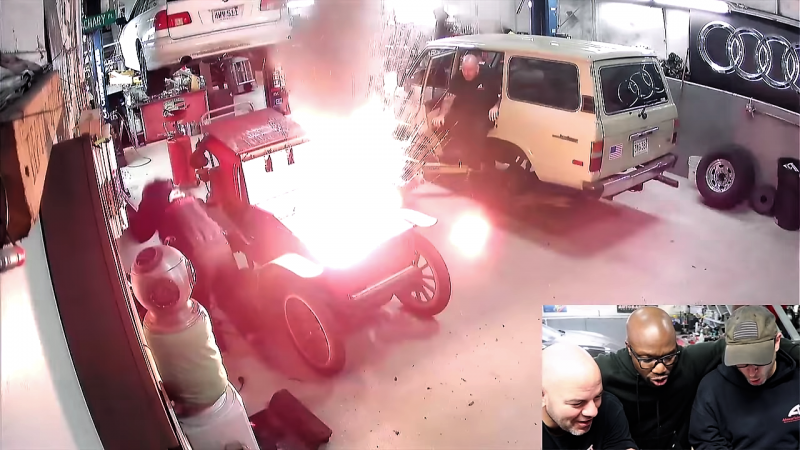
Electric vehicles are brilliant machines. They are quiet, quick, efficient, and capable of making a stoplight launch feel like a theme-park ride with cup holders. But like every great technology, EVs come with a learning curveand sometimes that curve is shaped like a smoking extension cord, a stranded driver at 2% battery, or a garage project that should have remained a garage thought.
The phrase “how not to electric vehicle” sounds funny because it is funnyuntil it is expensive, dangerous, or both. EV ownership is not rocket science, but it is also not exactly the same as owning a gas car. You do not just replace a fuel tank with a giant phone battery and call it Tuesday. You are dealing with high-voltage systems, lithium-ion battery packs, charging infrastructure, software, thermal management, range planning, and a whole new category of “oops.”
This guide breaks down the most common electric vehicle mistakes, from unsafe charging habits to range anxiety panic, DIY battery disasters, tire neglect, bad road-trip planning, and the myth that EVs are maintenance-free magic carpets. Think of it as a friendly warning sign with fewer skull icons and more practical advice.
What “How Not To Electric Vehicle” Really Means
To “electric vehicle” properly, you need to understand two things at the same time: EVs are easier than many people think, and they are less forgiving than people assume when basic safety rules are ignored. A gasoline car punishes bad decisions with engine noise, fluid leaks, and the occasional dashboard light that looks like a submarine. An EV may punish bad decisions with reduced range, slow charging, damaged battery health, overheated wiring, or a repair bill that arrives wearing a tuxedo.
Modern electric cars are designed with layers of protection. Battery management systems control charging, cooling, and power output. High-voltage systems are isolated and shielded. Chargers communicate with vehicles to regulate current. But those protections are not an invitation to improvise. The biggest EV failures usually happen when people try to outsmart the system: using the wrong charger, modifying battery modules, ignoring recalls, pushing the battery to zero, or treating a public fast charger like a gas pump that happens to have a screen.
Fail #1: Treating High Voltage Like a YouTube Experiment
The most dramatic EV fails often begin with the phrase, “I saw a video where someone did this.” That sentence should automatically trigger a small siren in your brain.
Electric vehicles use high-voltage battery packs that can store serious energy. Even individual battery modules can be dangerous when handled incorrectly. Damage, short circuits, improper wiring, or careless disassembly can lead to electric shock, thermal runaway, fire, toxic gases, or delayed ignition. In plain English: the battery can bite now, later, or when you least expect it.
This is especially important for DIY builders and salvage hunters. Tesla modules, Nissan Leaf packs, Chevy Bolt batteries, and other EV components have become popular in home energy projects, conversions, and experiments. The problem is that EV battery modules are not oversized AA batteries. They need proper fusing, battery management, temperature monitoring, enclosure design, and emergency planning. A battery pack without a battery management system is not “minimalist.” It is a very expensive dare.
What to do instead
Do not open, modify, puncture, bypass, or rewire EV battery systems unless you are trained and equipped to work with high-voltage energy storage. For owners, the safe move is simple: if the vehicle has been in a crash, flood, fire, or major electrical fault, keep your distance and contact emergency services, the manufacturer, or a qualified repair facility. For hobbyists, use certified components, proper enclosures, contactors, fuses, insulation, and a real battery management system. “It worked once on the bench” is not a safety certification.
Fail #2: Charging Through an Extension Cord
Nothing says “future of transportation” like running a bright orange extension cord across the driveway, under a wet doormat, and into an outlet last upgraded during the disco era. Unfortunately, this is one of the classic ways to not electric vehicle.
EV charging is a continuous electrical load. That means the circuit may be working hard for hours. A cheap or undersized extension cord can overheat, create voltage drop, damage equipment, or start a fire. The same goes for worn outlets, loose plugs, questionable adapters, and mystery-market chargers with fake-looking safety marks. Your EV is not a toaster. It should not be charged through whatever cable was closest to the lawn mower.
Level 1 charging uses a standard 120-volt outlet and can add only a few miles of range per hour. Level 2 charging uses 240 volts and is far better for daily use, often restoring a practical amount of range overnight. DC fast charging is designed for public stations and road trips, not normal garage installation. Each level has its place, but none of them benefits from electrical improvisation.
What to do instead
Use the charging equipment recommended by the vehicle manufacturer. Buy safety-certified equipment, preferably from reputable brands. If you install a Level 2 home charger, hire a qualified electrician to inspect your panel, circuit capacity, wiring, breaker, grounding, and outlet or hardwired connection. The best home charging setup is boring, code-compliant, and totally uninterested in becoming a local news story.
Fail #3: Thinking 100% Battery Is Always Best
Gas-car thinking says “full tank good.” EV thinking says “it depends.” For daily driving, many electric vehicles are happiest when charged to around 70% to 80%, depending on the manufacturer’s recommendation and battery chemistry. Charging to 100% is useful before a long trip, but leaving the battery sitting full for long periods may add stress to the pack, especially in hot weather.
Another mistake is driving the battery down to nearly zero on purpose. EVs have protective buffers, but deep discharges are still not a lifestyle goal. If your dashboard says 3%, your car is not challenging you to be brave. It is asking whether you enjoy tow trucks.
Fast charging also deserves perspective. DC fast charging is incredibly helpful on road trips, but it is not always the cheapest or gentlest everyday option. Many EVs charge fastest up to around 80%, after which the charging curve slows dramatically to protect the battery. Waiting at a fast charger for the last 20% can feel like watching a printer finish a legal document in 1998.
What to do instead
Set a daily charge limit that matches your driving needs and your owner’s manual. Use 100% when you need the range, preferably timed close to departure. Avoid parking for long periods at very high or very low states of charge. On road trips, plan shorter fast-charging stops between roughly 10% and 80% when practical. You will often arrive sooner than the driver who insists on topping off every session like they are filling a swimming pool with a teaspoon.
Fail #4: Forgetting That Weather Has Opinions
Cold weather can reduce EV range, especially when cabin heating is working hard. Hot weather can also affect battery temperature, charging speed, and long-term battery comfort. EVs are not fragile snowflakes, but temperature matters because batteries are chemical systems. Chemistry, like your uncle at Thanksgiving, behaves differently when heated or cooled.
Winter range loss catches new owners by surprise. The car may use energy to warm the battery and cabin, while cold air, winter tires, snow, and higher rolling resistance add more demand. A trip that feels easy in May may need extra planning in January. Summer brings its own issues: cabin cooling, battery cooling, hot pavement, tire pressure changes, and packed vacation charging stops.
What to do instead
Precondition the cabin while the vehicle is still plugged in. Use seat and steering-wheel heaters when available because they warm people more efficiently than blasting cabin heat. Plan extra charging margin in extreme weather. In hot climates, park in shade when possible and avoid unnecessary high-speed fast charging immediately after heavy driving unless the vehicle manages battery temperature well. Let the car’s thermal system do its job; your job is to stop pretending physics takes holidays.
Fail #5: Assuming Public Chargers Always Work Like Gas Pumps
Public EV charging is improving, but it is still not always seamless. Drivers may face broken stalls, payment glitches, short cables, blocked spaces, slow speeds, app problems, or stations that technically exist but spiritually left the chat. A public charger shown on a map is not always a guaranteed plug in the real world.
This is where new EV drivers sometimes overtrust the dashboard. They plan to arrive at a single charger with 2% remaining, only to find all stalls occupied or one charger displaying the most dreaded sentence in modern travel: “Unable to initiate session.” That is not a travel plan. That is a suspense film.
What to do instead
Use multiple charging apps or in-car navigation to check charger availability, plug type, speed, and recent user reports. Build backup options into road trips. Prefer charging stops with several stalls rather than one lonely unit behind a shopping center. Start charging before panic mode. If you are new to EVs, practice public charging locally before your first long trip. It is much better to learn charger etiquette near home than at midnight in a thunderstorm with a hungry family and a car full of judgment.
Fail #6: Ignoring Tires Because “EVs Have Fewer Parts”
Electric vehicles usually have fewer moving parts than gasoline cars, but they still have tires. In fact, EV tires work hard. Battery packs add weight, and electric motors deliver instant torque. That combination can be wonderful for acceleration and rude to rubber. Add aggressive driving, low tire pressure, poor alignment, and missed rotations, and your tires may disappear faster than snacks at a road trip rest stop.
Regenerative braking can reduce wear on brake pads, but it does not magically protect tires. EV owners who enjoy silent launches at every green light may discover that tire replacement is the new oil changeonly rounder and more expensive.
What to do instead
Check tire pressure regularly using the recommended pressure on the door placard or owner’s manual. Rotate tires on schedule. Choose replacement tires designed for the vehicle’s weight, torque, load rating, noise comfort, and efficiency needs. Drive smoothly. Your EV may be capable of launching like a spaceship, but your tires are still four circles of compromise trying to pay rent.
Fail #7: Believing EVs Require No Maintenance
EVs do not need oil changes, spark plugs, timing belts, or exhaust systems. That is good news. But “less maintenance” does not mean “no maintenance.” Electric vehicles still need brake fluid service, cabin air filters, coolant checks, wiper blades, suspension inspections, tire service, software updates, 12-volt battery attention, and occasional brake cleaning or lubricationespecially where salt, moisture, or infrequent brake use can cause corrosion.
Many EVs use regenerative braking so effectively that friction brakes see less daily action. That can extend brake-pad life, but neglected brakes can still develop rust, sticking, or uneven wear. The quietness of an EV can also hide noises that would be obvious in a louder gas vehicle. If something clunks, hums, grinds, or smells wrong, do not assume silence equals health.
What to do instead
Follow the maintenance schedule. Install software updates from trusted sources. Keep the 12-volt battery in mind because many EV problems begin with that small auxiliary battery, not the giant traction pack. Inspect brakes even if you rarely use them hard. Treat the vehicle like a machine, not a magic appliance with wheels.
Fail #8: Buying the Wrong EV for Your Real Life
A common EV fail happens before the first charge: buying the wrong vehicle. Some shoppers focus only on maximum range, 0-to-60 times, or giant screens, then discover the vehicle does not match their parking situation, commute, climate, towing needs, budget, or charging access. A 320-mile EV is wonderfulunless you live in an apartment with no reliable charging and drive across rural areas where fast chargers are sparse.
Others buy more battery than they need. Bigger packs cost more, weigh more, and may not add much value if your daily drive is short and home charging is easy. The best EV is not always the one with the biggest battery. It is the one that fits your charging routine, driving pattern, cargo needs, and patience level.
What to do instead
Before buying, answer practical questions. Can you charge at home, work, or nearby? How many miles do you drive on a normal day? How often do you take long trips? Do you tow? Do you live where winters are harsh? Are nearby fast chargers reliable? What plug standard does the car use? What does insurance cost? What does tire replacement cost? EV ownership is fantastic when the vehicle fits the life. When it does not, every errand becomes a math quiz.
Fail #9: Misunderstanding EV Fires
EV fires are not everyday events, but when high-voltage lithium-ion batteries are involved, they require special handling. Damaged cells can enter thermal runaway, and fires can be difficult to extinguish. In some cases, damaged batteries may reignite after the initial fire appears controlled. The correct response is not to grab a garden hose and become a driveway hero.
The bigger lesson is not that EVs are unsafe. Gasoline is also flammable, and conventional vehicles have their own fire risks. The lesson is that EV fire behavior is different. Emergency responders need vehicle-specific guidance, and owners need to know when to step away.
What to do instead
If an EV is smoking, burning, hissing, sparking, or damaged after a crash or flood, move away and call 911. Do not touch high-voltage components, orange cables, damaged battery areas, or exposed wiring. After a collision, follow manufacturer guidance and have the vehicle inspected. If the car has been submerged in floodwater, do not assume it is safe because it looks normal. Water and high-voltage systems are not best friends; they are awkward coworkers at best.
Fail #10: Turning Charging Etiquette Into Combat Sports
EV charging etiquette matters because public chargers are shared resources. Parking in a charging spot without charging is rude. Leaving a vehicle plugged in long after it is done charging can block others. Unplugging someone else’s car without permission can create conflict. Using a fast charger to slowly crawl from 92% to 100% while other drivers wait is technically legal in many places, but socially it has the aroma of microwaving fish in an office kitchen.
Charging stations work best when drivers behave like neighbors instead of rival kingdoms. That means moving when finished, keeping cables tidy, respecting accessible spaces, reporting broken chargers, and using the right charger for the situation.
What to do instead
Charge only as much as you need when others are waiting. Move your vehicle when the session ends. Do not block chargers with trailers unless the site is designed for it. Be patient with new drivers. Everyone had a first charging session, and almost everyone has stared at a charger screen wondering which app password they forgot.
How To Electric Vehicle the Right Way
The correct way to own an EV is refreshingly simple: build a routine. A safe home charging setup solves most daily needs. A realistic charge limit protects battery health. Regular tire checks prevent expensive surprises. Smart route planning reduces road-trip stress. Maintenance keeps the vehicle happy. Respect for high-voltage safety keeps everyone breathing normally.
The best EV owners are not necessarily the most technical. They are the ones who learn the basics and stop improvising where safety matters. They know that Level 2 home charging is usually the daily workhorse, DC fast charging is for travel, and extension cords belong far away from EV charging. They understand that “range” is not a fixed promise but a moving estimate shaped by speed, weather, elevation, tires, cargo, and driving style.
Most of all, they do not treat the EV like a gasoline car wearing a futuristic costume. They let the technology be different. Once that mindset clicks, EV ownership becomes easy, quiet, and surprisingly satisfying.
Experience Notes: Real-World Lessons From the “How Not To EV” Zone
The funniest EV mistakes are often not wild engineering disasters. They are small misunderstandings that snowball. Picture a new EV owner who proudly brings home a sleek electric crossover and immediately plugs it into a tired garage outlet through an extension cord because the proper outlet is “just a few feet too far.” The car charges slowly. The cord gets warm. The outlet smells suspicious. Suddenly, the owner learns that saving money on installation can be like saving money on parachute packing: technically possible, emotionally unwise.
Another classic experience is the first road trip planned like a gas-car trip. The driver leaves with 100%, ignores the first charger because the battery still looks “pretty good,” ignores the second because lunch is not due yet, and reaches the third with single-digit battery hope. Then the charger is occupied, broken, or slower than expected. The entire family becomes quiet in the way families become quiet right before forming lifelong memories. The lesson is simple: EV trips are easier when you stop before you are desperate. A 15-minute charging stop with 25% remaining feels responsible. A 40-minute emergency stop at 4% feels like negotiating with a vending machine during an earthquake.
Then there is the tire surprise. Many drivers buy an EV for lower maintenance costs and forget that tires are still part of the deal. Instant torque is addictive. Silent acceleration makes speed feel smoother than it is. A few months later, the front tires look like they have been personally insulted by physics. The solution is not to drive like a nervous librarian, but to rotate tires, check pressure, avoid unnecessary hard launches, and buy tires matched to the vehicle. EV tires are not glamorous, but neither is standing at a tire shop pretending you are not shocked by the invoice.
Public charging also teaches humility. Every network has its own app, payment method, plug behavior, and personality. Some chargers start instantly. Some want an account, a tap, a scan, a blood oath, and a firmware update from 2017. Experienced EV drivers carry backup plans: multiple apps, a payment card, an adapter when appropriate, and enough battery margin to leave if the station refuses to cooperate. The goal is not paranoia. The goal is calm flexibility.
Perhaps the biggest lesson is that EV ownership rewards preparation more than panic. Once home charging is sorted, most drivers wake up with enough range every morning. Once road-trip charging becomes familiar, the anxiety fades. Once you stop charging to 100% every night “just because,” battery care becomes automatic. Once you learn that cold weather reduces range, winter driving becomes planning instead of surprise. The EV lifestyle is not hard. It is just different enough to embarrass anyone who refuses to read the manual.
So the real “fail of the week” is not buying an electric vehicle. It is buying one and refusing to learn how it works. EVs are powerful, efficient, and increasingly practical, but they are not immune to human creativitythe dangerous kind. Respect the voltage, charge safely, plan intelligently, maintain the boring parts, and your electric vehicle will reward you with quiet miles instead of dramatic stories that begin with, “You are not going to believe what happened.”
Conclusion
Electric vehicles are not complicated monsters, but they do demand a different kind of common sense. The biggest EV mistakes usually come from treating high-voltage systems casually, charging unsafely, ignoring battery health, forgetting weather impacts, trusting public chargers without backup plans, and assuming fewer moving parts means zero maintenance. Do the basics well and the EV experience becomes smooth, clean, and almost boringin the best possible way.
The future of driving does not require every owner to become an electrical engineer. It simply requires respect for the technology. Use proper charging equipment. Follow manufacturer guidance. Plan long trips with margin. Maintain tires and brakes. Keep your battery comfortable. And above all, never let “I think this extension cord will be fine” become the opening line of your personal fail-of-the-week episode.
Note: This article is based on current U.S. electric vehicle safety, charging, battery-care, maintenance, and public-charging guidance, written for general educational and editorial use.