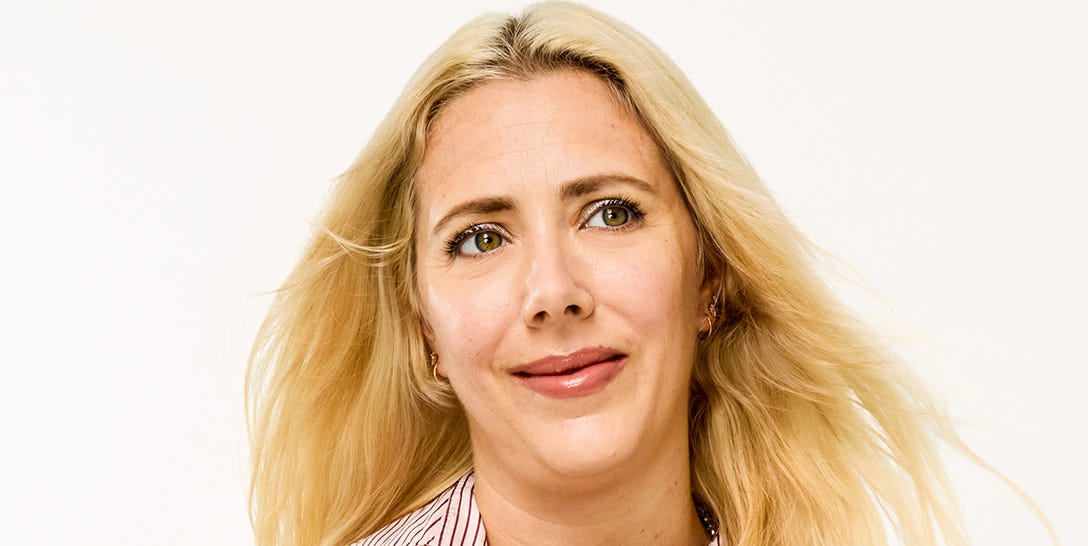
Some editors hide behind the masthead. Elspeth Velten is not really giving that energy.
As the editor-in-chief of Good Housekeeping, Velten now leads one of the most recognizable lifestyle brands in American media, a title that has spent generations helping readers figure out what to cook, what to buy, how to clean, what works, what does not and, just as importantly, what is probably a waste of money dressed up in fancy packaging. That is no small assignment. Running Good Housekeeping is a bit like being handed the keys to a beloved family kitchen, a product-testing lab and a very opinionated group chat all at once.
Velten stepped into the role in August 2025, arriving with nearly 15 years of experience across travel, food, beauty, family and lifestyle media. That résumé matters because Good Housekeeping is not a one-note publication. It lives in the messy, useful, highly specific corners of everyday life: the air fryer that actually deserves your counter space, the skincare product that does not just make promises in pastel packaging, the parenting advice that respects reality and the cleaning tip that works when your child, dog or dinner has launched chaos into the living room.
In other words, this is a brand built for real life, and Velten’s career looks unusually well matched to that mission.
Who Is Elspeth Velten?
Elspeth Velten is a media leader and longtime lifestyle journalist whose background cuts across several of the exact categories Good Housekeeping readers care about most. Before taking the top job at Good Housekeeping, she held leadership roles connected to brands such as Travel + Leisure, Parents, Serious Eats and Byrdie. That kind of editorial range is not just impressive on paper. It suggests she understands how audiences behave when they are planning a trip, feeding a family, shopping for beauty products or simply trying to make better decisions without opening 47 browser tabs and losing the will to live.
Her career path also has a practical, boots-on-the-ground quality to it. Velten’s bio trail shows early experience at All You magazine, time as a founding editor at TripSavvy and editorial work linked to travel and lifestyle coverage in both the United States and abroad. Her writing has appeared in major outlets, including The New York Times, Architectural Digest and Vogue. She also graduated from Fordham University with a communications and journalism background, which gives her story an added layer of old-fashioned reporting credibility. In an era when many media bios sound like they were assembled by a corporate smoothie blender, hers still reads like an editor grew up by actually doing the work.
That matters. Editors-in-chief do not just approve headlines and pose for the masthead page. The best ones shape the tone of a brand, decide how rigorously it reports, set the standard for what gets published and determine whether “helpful” content is genuinely useful or just dressed-up internet filler. Velten’s career suggests she has worked on both audience growth and editorial quality, which is exactly the combination a modern legacy brand needs.
Why Her Appointment Matters to Good Housekeeping
Good Housekeeping is not merely a magazine title with a familiar name. It is a consumer-trust brand with serious cultural mileage. For more than a century, it has occupied a distinct lane in American media by blending journalism, product testing, expert evaluation and practical advice. Its history includes the Good Housekeeping Institute, the famous Good Housekeeping Seal and a long-running commitment to testing products rather than simply repeating marketing claims with better punctuation.
That legacy is both a gift and a challenge for any incoming editor-in-chief. On one hand, the trust is already there. On the other, readers expect the brand to keep earning it. The person running Good Housekeeping cannot coast on nostalgia and a nice logo. She has to protect the standards while making the brand feel relevant to people who may discover it on search, social, newsletters, shopping guides, product roundups or celebrity interviews.
Velten seems to understand that tension. By her own description on Good Housekeeping, she works closely with both the editorial team and the Good Housekeeping Institute to ensure the brand’s recommendations and advice genuinely improve readers’ lives. That may sound simple, but it is actually the entire ballgame. In lifestyle media, the difference between “content” and “service journalism” is whether the reader finishes an article feeling informed, supported and slightly smarter instead of vaguely marketed to.
Her appointment also signals something broader about where legacy lifestyle brands are headed. The next generation of top editors needs to think across platforms and across categories. A modern editor-in-chief must understand commerce, audience behavior, newsletters, social voice, expert authority and search visibility, all while keeping the editorial soul intact. Velten’s background across food, travel, beauty and family media makes her look less like a narrow category editor and more like a cross-functional strategist who can connect the dots.
Good Housekeeping Is Bigger Than a Magazine
To understand Velten’s role, it helps to understand the scale and shape of the brand she now leads.
Good Housekeeping has evolved into a multi-platform lifestyle authority that reaches tens of millions of readers across print, digital and social channels. Its strength comes not just from familiarity but from infrastructure. The Good Housekeeping Institute remains a core differentiator, giving the brand scientific and consumer-testing muscle that many lifestyle publishers simply do not have. While plenty of sites can tell you a vacuum is “game-changing,” Good Housekeeping can test whether it actually picks up pet hair, survives repeated use and deserves a recommendation beyond a slick product page.
That testing-first identity is central to the brand. The Good Housekeeping Seal has long stood as one of the publication’s most recognizable trust signals, and the associated warranty has helped make the brand feel less like a spectator and more like an advocate. Add to that the publication’s category-specific labs, product review processes, health standards and editorial review systems, and you get a publication built to answer a deceptively hard question: what can readers actually trust?
This is where Velten’s role becomes especially interesting. She is not just overseeing articles. She is stewarding a brand promise. In practical terms, that means leading a publication that covers home, kitchen, cleaning, health, beauty, family life, entertainment and shopping while maintaining the trust that comes from deeply tested, thoroughly edited service journalism.
Why Her Background Fits the Brand So Well
1. She understands lifestyle media beyond one niche
Some editors come up through one narrow vertical and stay there. Velten’s experience is much broader. Travel, family, beauty and food are not random stops; they are categories that teach an editor how readers make emotional and practical decisions. Travel coverage teaches aspiration and logistics. Food teaches utility, habit and taste. Beauty teaches discernment in a category crowded with hype. Parenting teaches empathy, stakes and reality checks. Put all of that together and you get a leader who is likely well-equipped to run a brand that sits at the crossroads of aspiration and daily life.
2. She knows how to balance expertise with approachability
Good Housekeeping works best when it sounds smart but never smug. Readers want authority, but they do not want to feel like they have been scolded by a lab coat or trapped in a sales funnel disguised as a recommendation list. Velten’s editorial history suggests comfort in translating expert information into usable storytelling. That tone is gold in service journalism. Nobody wants a stain-removal article that reads like a chemistry dissertation unless the couch is truly beyond hope.
3. She appears comfortable in public-facing brand leadership
Since taking the role, Velten has shown up not just on the masthead but in visible brand moments, including interviews and panel moderation tied to the Hearst ecosystem. That matters because top editors today are also ambassadors. They help define the voice of a publication publicly, not just internally. The modern editor-in-chief has to be part newsroom leader, part standards keeper, part strategist and, occasionally, part ringmaster.
What Kind of Editor-in-Chief Might She Be?
It is always tempting to reduce editors to a style label: digital-first, audience-savvy, commerce-minded, old-school magazine purist, data obsessive, narrative maximalist. Real leaders are usually more mixed than that, and Velten seems likely to be a hybrid.
On one side, her background suggests comfort with digital growth, editorial operations and brand expansion. On the other, her current role at Good Housekeeping connects her directly to an institution known for standards, testing and consumer trust. The likely result is an editorial approach that values usefulness over fluff, but without becoming dry or clinical.
That is good news for readers. Lifestyle media often falls into one of two traps. It either becomes too soft, where everything is “must-have” and nothing is examined seriously, or it becomes so technical that it forgets the human being reading on a lunch break while deciding whether to replace a blender. Good Housekeeping has historically tried to avoid both extremes, and Velten appears positioned to continue that balancing act.
There are also small clues that she is thinking about team-building and future growth. Public hiring activity tied to her leadership points to investment in editorial, newsletters, social and commerce-adjacent functions. That does not just mean expanding headcount. It suggests a strategy for meeting readers where they actually are in 2026: inboxes, search results, mobile screens, social feeds and commerce discovery paths.
What Readers Can Expect Under Elspeth Velten’s Leadership
If Velten’s tenure follows the logic of her background and the brand’s mission, readers can expect a version of Good Housekeeping that continues leaning into rigorous recommendations while staying nimble about how people consume information today.
That could look like:
- more sharply edited product recommendations that connect testing with real-world use;
- lifestyle coverage that respects both aspiration and budget reality;
- service-driven features that make the brand useful in everyday decision-making;
- a stronger bridge between traditional magazine authority and modern digital discoverability;
- and editorial packages that understand readers are not living in neat content buckets called “home,” “beauty” and “food.” They are living one gloriously chaotic life.
That last point may be the most important. Readers do not experience their lives by vertical. They experience them as overlap. The person searching for the best nonstick pan may also be planning a family trip, comparing vitamin brands, cleaning up after a dog and looking for a weeknight dinner idea. Velten’s category-spanning background makes her well suited to lead a brand that serves that exact kind of reader.
The Real Magic of the Job
Being editor-in-chief of Good Housekeeping is not glamorous in the usual movie-trailer sense. There are probably fewer dramatic monologues and more spreadsheets. Less “Stop the presses!” and more “Can we verify that claim, refine the testing notes and make this headline less weird?” But that is exactly why the role matters.
The publication sits at the practical center of domestic and lifestyle decision-making for a huge audience. When it recommends something, readers often act on it. When it explains a health or home topic clearly, people remember it. When it tests a product category well, it can save readers money, frustration and regret. In a media environment crowded with hot takes and low-stakes fluff, that kind of usefulness is not quaint. It is powerful.
Velten now oversees that machinery of trust. She is not just editing a magazine; she is shaping a daily relationship between a legacy brand and readers who want life to run a little more smoothly. That is both a creative job and a responsibility-heavy one. And frankly, it is refreshing to see a leadership profile built around exactly the things readers still care about: credibility, clarity, usefulness and a sense of humanity.
Experience, Trust and the Very Human Side of the Role
Here is the thing about a title like “editor-in-chief of Good Housekeeping”: it sounds polished, but the work behind it is deeply human. This is not just a role about assigning stories from a pristine office while sipping photogenic coffee. It is a role rooted in everyday experience, because the publication itself lives in everyday experience. Readers come to Good Housekeeping when they are trying to solve annoyingly real problems. Their towels smell weird. Their moisturizer cost too much and did too little. Their weeknight dinner ideas have run out of gas. Their family calendar looks like an administrative prank. They want help, not theater.
That is why Velten’s background feels relevant beyond the résumé bullets. A leader who has worked across travel, beauty, food and family media has likely spent years thinking about how people actually live, shop and decide. Travel teaches you that readers want big dreams but also exact details. Food teaches you that utility wins, because nobody wants a recipe that requires emotional closure and 19 specialty ingredients. Beauty teaches you how quickly categories can become flooded with claims, trends and expensive nonsense wearing minimalist packaging. Family media teaches empathy, because advice lands differently when sleep is scarce and patience is on backorder.
All of those experiences map neatly onto what Good Housekeeping does best. The publication has always been strongest when it respects the reader’s time and intelligence. It works when it says, “We tested this, we checked this, we talked to experts, and here is what is worth knowing.” That tone creates a kind of editorial companionship. Not fake best-friend energy. Not luxury-distance perfection. Something better: capable help.
Under Velten, that sense of capable help may become even more important. Modern readers are overwhelmed. They are buried under product recommendations, social media hacks, suspicious wellness claims, sponsored enthusiasm and search results that all swear something is “life-changing.” At this point, even a laundry basket could probably get rebranded as a “game-changing organization solution.” So the role of a trusted editor becomes less about adding noise and more about clearing it.
That is also where the emotional side of the job comes in. A brand like Good Housekeeping is built on credibility, but it is sustained by recognition. Readers want to feel seen in the problems they are trying to solve. They want to know the editor behind the publication understands that a recommendation is not just a recommendation. It is often a shortcut, a reassurance, a money-saving choice or a tiny quality-of-life upgrade in a very busy week.
That makes Velten’s appointment interesting not just as a media move but as a reader-facing one. She represents a style of leadership that seems grounded in range, usefulness and editorial trust. And for a brand whose whole reputation rests on helping people live a little smarter, a little easier and with fewer regrettable purchases, that is exactly the kind of experience that counts.
Final Take
Elspeth Velten arrives at Good Housekeeping with something every legacy media brand wants and not every one of them gets: a background that matches the mission. Her experience across major lifestyle categories, her blend of editorial and business leadership and her alignment with Good Housekeeping’s service-first identity make her a notable fit for one of the most trusted names in consumer media.
For readers, that means the future of Good Housekeeping looks less like a reinvention stunt and more like a thoughtful continuation of what the brand does best, updated for how people live now. It still aims to be useful. It still cares about testing. It still wants to help people make smarter choices. And with Velten at the helm, it has a leader whose career suggests she knows that good lifestyle journalism is never just about style. It is about substance, trust and meeting readers where life is actually happening.