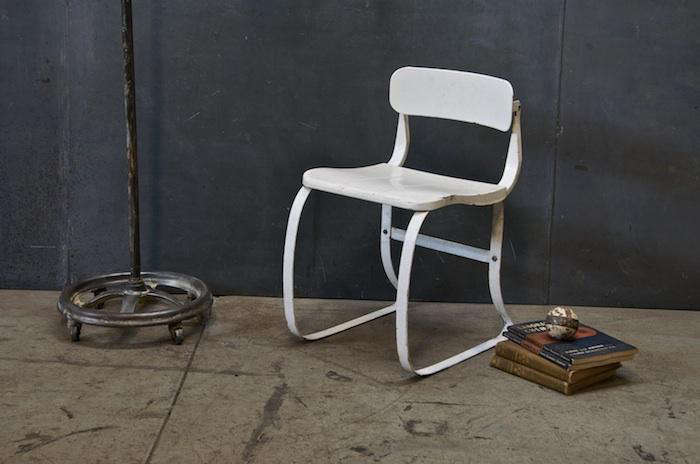
Some furniture enters the world wearing a tuxedo. Other furniture shows up in work boots, smelling faintly of machine oil, and somehow ends up in a glossy design magazine thirty years later. That is the strange, wonderful story behind the factory chair turned collector’s item: a humble piece of industrial seating built for workrooms, ships, laboratories, offices, drafting tables, cafeterias, and government buildings, only to become a prized object for designers, collectors, restaurant owners, and homeowners who like their décor with a little backbone.
The rise of the industrial chair is not just a tale of nostalgia. It is a story about durability, material honesty, American manufacturing, wartime problem-solving, and the modern collector’s love for objects that look as if they have actually lived a life. The best factory chairs were not designed to impress a dinner guest. They were designed not to collapse under a tired worker, not to rust in harsh environments, not to waste materials, and not to require replacement every time fashion sneezed. Ironically, that practical attitude is exactly what made them beautiful.
From Workroom Utility to Design Icon
When people talk about a factory chair turned collector’s item, they are often talking about a category rather than one single chair. Still, several famous examples define the movement. The Emeco 1006 Navy Chair is one of the clearest American success stories. Introduced in 1944 for the U.S. Navy, it was engineered to survive punishing conditions: salt air, water, fire, corrosion, daily abuse, and the rough life of military use. Built from aluminum and refined through a labor-intensive manufacturing process, the chair became known for being light, strong, and almost comically hard to destroy.
Then there is the Toledo factory chair and drafting stool, associated with Toledo Metal Furniture Co. and Uhl Art Steel. These adjustable metal-and-wood chairs were made for practical environments such as factories, offices, studios, schools, and workshops. Their swivel seats, bent wood backs, steel frames, and height-adjustable bases were not created for Instagram. They were created so real people could work. Today, that same design language reads as authentic, sculptural, and satisfyingly mechanical.
Other industrial seating icons followed similar paths. The Tolix-style metal chair, originally rooted in French café and industrial culture, became a favorite in American kitchens and restaurants. Midcentury school chairs, lab stools, machinist stools, and office task chairs also found new life in loft apartments and boutique hotels. Once upon a time, these chairs were tools. Now they are conversation starters. Not bad for something that may have started life next to a drill press.
Why Factory Chairs Became Collectible
1. They Were Built to Last
The first reason factory chairs became collectible is simple: many of them survived. A chair made for a ship, factory, classroom, or government office had to handle more abuse than a polite parlor chair. It had to be moved, stacked, bumped, cleaned, dragged, and sat on for hours. That meant strong joints, honest materials, and practical engineering.
Collectors love survival. A factory chair with original paint, a worn maple seat, or a brushed aluminum frame carries proof that it did its job. Unlike fragile decorative pieces, industrial chairs often grow more interesting with age. Scratches become evidence. Dings become biography. Patina becomes the furniture equivalent of a good storyteller with excellent posture.
2. They Represent Honest Materials
Industrial chairs rarely pretend to be something they are not. Aluminum looks like aluminum. Steel looks like steel. Bent plywood shows its grain. Rivets, welds, screws, and brackets are not hidden like embarrassing family secrets. They are part of the visual appeal.
This honesty fits beautifully with modern interior design. In a room full of soft fabrics and smooth walls, an industrial chair adds contrast. It brings texture, history, and a little grit. It says, “I have been useful,” which is a surprisingly stylish thing for a chair to say.
3. They Fit Modern Spaces
The factory chair collector market grew alongside the popularity of loft living, adaptive reuse buildings, open kitchens, and restaurant interiors that mix old and new. A vintage Toledo chair looks natural beside a reclaimed wood table. An Emeco Navy Chair can sit in a minimalist dining room without looking like it wandered into the wrong party. A Tolix-style metal chair can move from patio to breakfast nook with the casual confidence of someone who owns exactly one very good jacket.
These chairs work because they are visually strong but not fussy. They can be paired with brick walls, concrete floors, marble counters, farmhouse tables, or modern lighting. They are not delicate antiques that require a velvet rope. They are collectible, yes, but they still want to be used.
The Emeco 1006 Navy Chair: A Wartime Workhorse With Celebrity Status
The Emeco 1006 Navy Chair may be the ultimate example of a practical chair that climbed into the collector spotlight. Its origin story sounds like something from a design-school campfire: a chair commissioned for wartime use, built to withstand brutal shipboard conditions, then rediscovered by architects, hoteliers, restaurateurs, and design collectors.
Its appeal comes from the combination of restraint and strength. The silhouette is simple: rounded back, vertical supports, clean aluminum body, and a lightweight profile. But the simplicity is deceptive. The chair is the result of serious material knowledge and careful production. It is not merely a shiny metal seat. It is an object refined until nearly everything unnecessary disappeared.
Part of the magic is that the Emeco Navy Chair never needed to shout. It did not rely on ornament, trend colors, or dramatic curves. It earned attention by performing. Over time, that performance became its luxury. In a market crowded with disposable furniture, a chair designed to last for generations feels almost rebellious. Imagine a chair looking at fast furniture and saying, “Cute. Call me in 150 years.”
The Toledo Chair: Factory Function With Machine-Age Charm
If the Emeco Navy Chair is the polished military veteran, the Toledo chair is the shop-floor philosopher. Toledo and Uhl-style industrial chairs often feature adjustable steel bases, bent wood seats, backrests, and a rugged, mechanical personality. They were made for work, especially environments where height adjustment and durability mattered.
Collectors value Toledo chairs for their unmistakable industrial character. The metal bases often have strong geometric forms, and the wood seats show natural wear from decades of use. A well-aged Toledo drafting stool can look at home in an artist’s studio, kitchen island, office corner, or retail display. It has the rare ability to look both serious and charming, like a machinist who secretly writes poetry.
Original examples can vary widely in price depending on condition, rarity, finish, and provenance. Sets are especially desirable because matching industrial chairs are harder to find than single pieces. Collectors often look for original labels, maker marks, untouched patina, sturdy adjustment mechanisms, and signs that the chair has not been aggressively over-restored.
What Makes an Industrial Chair Valuable?
Originality
Original finish matters. A factory chair with authentic wear often attracts more interest than one polished into historical amnesia. Collectors usually prefer honest aging: worn paint, softened edges, aged wood, and visible but stable use marks. A chair can be cleaned and stabilized without being stripped of its soul.
Maker and Model
Known makers such as Emeco, Toledo Metal Furniture Co., Uhl Art Steel, GoodForm, and other recognized industrial furniture companies tend to attract more attention. A chair with documented manufacturer details is easier to research, value, and resell.
Condition
Condition is important, but perfection is not always the goal. A few scratches may add charm. Structural damage is another story. Collectors should inspect welds, legs, seats, backs, screws, and adjustment mechanisms. A beautiful chair that wobbles like a nervous flamingo may need professional attention.
Rarity and Completeness
Unusual models, early production examples, rare finishes, matching sets, and chairs with original parts can command higher prices. Missing foot caps, replaced hardware, or mismatched components may reduce value, though they do not always ruin desirability if the chair remains visually strong.
Usability
The best factory chairs still function as chairs. This matters. A collector’s item that can also hold a human being during breakfast has a special advantage. Industrial seating is attractive because it bridges display and daily life. It belongs in the home, not only in a climate-controlled room where nobody is allowed to sneeze.
How to Style a Factory Chair at Home
Industrial chairs are versatile, but they work best when balanced with warmer elements. Pair a metal chair with a wood table to soften the look. Use a Toledo drafting stool at a kitchen counter, but let nearby textiles, plants, or warm lighting keep the space from feeling like a 1940s repair shop. Unless that is your dream, in which case: congratulations, you have a very specific and extremely cool dream.
An Emeco-style aluminum chair can work beautifully in a modern dining room because it reflects light and keeps the space airy. A darker factory stool can ground a home office. A set of mismatched vintage industrial chairs can make a dining area feel collected rather than decorated in one frantic weekend.
The key is restraint. One or two industrial chairs can add character. Twelve rusty stools, three metal lockers, a factory cart, and a giant wall clock may make guests wonder whether dinner comes with a time card. Let the chair be the hero, not the entire factory.
Buying Tips for Collectors
Before buying a vintage factory chair, study the silhouette, materials, and construction. Compare details with trusted references and current market listings. Look at the underside of the seat, the back support, the base, and any maker marks. Ask sellers for clear photos in natural light. If a listing says “rare” seventeen times but provides one blurry image, proceed with the caution of a cat approaching bathwater.
Check whether the chair has been repainted, rewelded, or heavily modified. Restoration is not automatically bad, but it should be disclosed. For some buyers, a refinished chair is perfect because they want a clean, usable piece. For serious collectors, untouched original condition may matter more.
Also consider comfort. Some industrial chairs were built for task work, not leisurely three-hour dinners. If you plan to use them daily, seat height, back angle, weight, and stability matter. A chair can be historically important and still make your lower back file a complaint.
Why the Trend Still Feels Fresh
The factory chair remains relevant because it answers modern concerns in a surprisingly direct way. People are tired of disposable products. They want pieces with stories, longevity, and material integrity. Industrial chairs offer all three. They also fit the growing interest in sustainability because the greenest chair is often the one that already exists and refuses to quit.
There is also emotional appeal. A factory chair carries traces of labor and usefulness. It reminds us that design is not only about luxury. Sometimes the most enduring objects are born from constraints: limited materials, demanding environments, tight budgets, and practical needs. The result can be more elegant than something designed only to look expensive.
Experience Section: Living With a Factory Chair Turned Collector’s Item
Owning a factory chair is different from owning a typical decorative chair. A decorative chair often asks to be admired. A factory chair asks where the workbench is. That attitude changes the way you experience it in a room. The first thing you notice is weight, texture, and presence. Even a lightweight aluminum chair has a kind of visual strength. It does not disappear. It stands there calmly, as if it has already survived worse than your dinner party.
One of the most enjoyable experiences is discovering how adaptable these chairs are. A vintage drafting stool can serve as a desk chair in the morning, a plant stand in the afternoon, and emergency extra seating when guests arrive. An aluminum Navy-style chair can work indoors or outdoors, depending on finish and care. A wood-and-steel factory chair can make a modern apartment feel less predictable. It adds history without turning the space into a museum.
There is also a tactile pleasure that new furniture often lacks. The coolness of metal, the smoothness of worn wood, the small resistance of a swivel mechanism, the tiny imperfections in old paintthese details make the chair feel real. You do not just look at it. You interact with it. Every scratch becomes part of the relationship. That may sound dramatic for a chair, but collectors understand: objects with history invite attention.
Another experience is the hunt. Finding the right factory chair can be half the fun. You may spot one at an estate sale, architectural salvage shop, flea market, online marketplace, or vintage dealer. The search teaches you to recognize shapes, bases, backrests, maker marks, and finishes. Over time, your eye gets sharper. Suddenly, you can identify an adjustable industrial stool from across a room, which is either a design skill or a very niche party trick.
Maintenance is usually straightforward, but it rewards patience. Dust regularly, avoid harsh chemicals, protect wood from excessive moisture, and treat rust carefully rather than attacking it like a medieval knight. If the chair has moving parts, check that they work safely. If it is structurally compromised, consult a professional restorer. The goal is not to erase age. The goal is to preserve function and character.
The biggest surprise is how often guests notice the chair. People may ignore a generic new dining chair, but they ask about a factory chair. Where did it come from? How old is it? Does it still adjust? Was it really used in a workshop? That curiosity is the true sign of a collectible object. It creates a story before anyone even sits down.
In the end, living with a factory chair turned collector’s item is about appreciating design that did not begin as decoration. It began as a solution. It solved problems of strength, cost, durability, weight, and use. Decades later, those same qualities make it desirable. The chair did not chase fashion. Fashion eventually caught up with the chair, slightly out of breath and pretending it had planned the whole thing.
Conclusion
A factory chair turned collector’s item proves that good design does not always arrive with glamour. Sometimes it begins in a shipyard, a machine shop, a drafting room, a school, or a government office. The Emeco Navy Chair, Toledo industrial chairs, and other workhorse designs became collectible because they were honest, durable, useful, and visually unforgettable. Their beauty comes from purpose, not decoration.
For collectors, these chairs offer more than style. They offer history you can sit on. They bring together American manufacturing, industrial ingenuity, sustainable reuse, and the charm of objects built before planned obsolescence became a business model. Whether placed in a modern dining room, a home office, a café, or a creative studio, a factory chair adds character that new furniture often struggles to imitate.