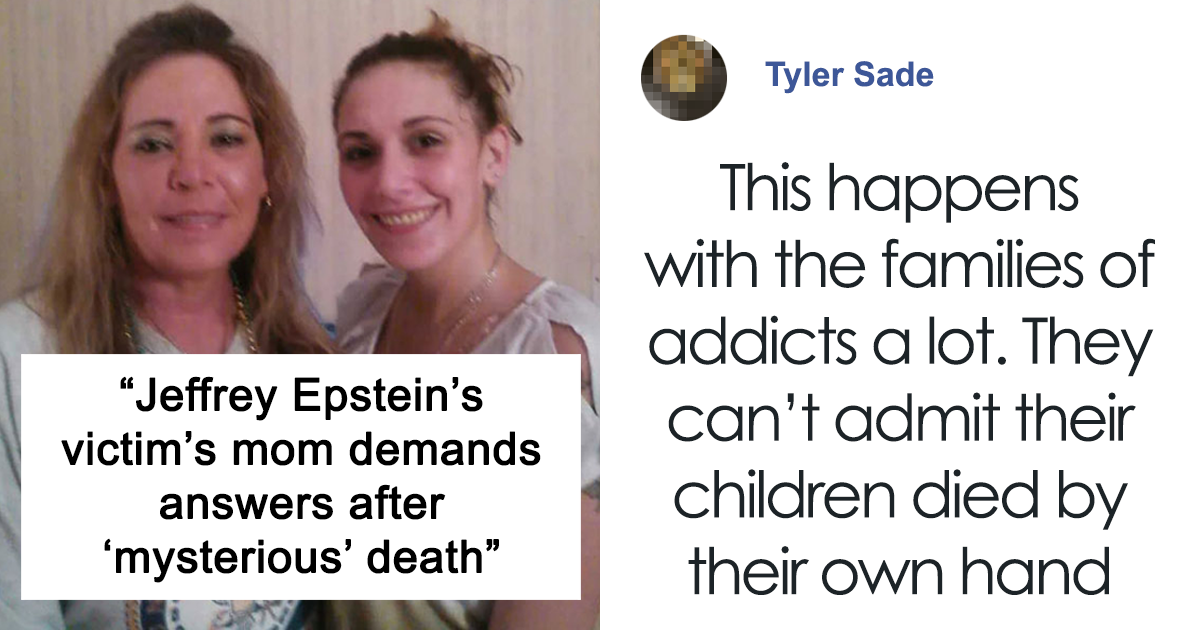
Note: This article is based on public reporting, court records, and official statements. It discusses sexual exploitation, trauma, and death in a respectful, non-graphic way. It does not claim foul play was proven; it examines why Carolyn Andriano’s mother continues to ask questions.
When a survivor of one of America’s most infamous sex-trafficking scandals dies just as she appears to be turning a corner, grief does not arrive quietly. It kicks down the door, shakes the furniture, and asks questions no parent should ever have to ask. That is the painful center of the story of Carolyn Andriano, a Jeffrey Epstein victim and key witness in the criminal trial of Ghislaine Maxwell, whose death at age 36 left her family devastated and her mother, Dorothy Groenert, deeply suspicious.
Public reports said Andriano was found dead in a Florida hotel room in May 2023 and that authorities treated her death as an accidental overdose. But Groenert has said the official explanation does not sit right with her. In interviews, she described her daughter as “ecstatic” about a new chapter: a new home, a new lifestyle, and a chance to move forward after years of trauma linked to Epstein’s abuse network.
This is not a story that can be reduced to a headline, even a headline as emotionally loaded as this one. It is about a woman who survived exploitation as a teenager, testified in a major federal trial, struggled with the long shadow of trauma, and died before she could fully step into the future her mother says she was excited to begin. It is also about a justice system that delivered one major conviction, yet left many survivors and families feeling as if the full truth remained locked behind expensive doors.
Who Was Carolyn Andriano?
Carolyn Andriano was one of the women whose testimony helped prosecutors explain how Jeffrey Epstein and Ghislaine Maxwell operated around vulnerable teenage girls. At Maxwell’s 2021 trial in New York, Andriano testified under her first name and described being drawn into Epstein’s world when she was a young teen in Palm Beach, Florida. Her testimony was emotional, difficult, and important.
Maxwell, Epstein’s longtime associate, was convicted in December 2021 on multiple federal charges connected to the sexual exploitation of minors. In June 2022, she was sentenced to 20 years in prison. For many survivors, that conviction was more than a legal outcome. It was public confirmation that the abuse network was not gossip, not conspiracy chatter, not an exaggeration whispered across tabloid pages. It was real enough to be proved in federal court.
Andriano’s role mattered because she gave the jury a human story behind the charges. Court cases often sound sterile from a distance: dates, charges, exhibits, objections. But testimony from survivors brings back the truth that every legal file represents a life. Andriano was not simply “a witness.” She was a mother, a daughter, a person who carried memories she never asked for, and someone who tried to keep living despite the weight of what happened to her.
The Death That Left a Mother Demanding Answers
According to public reporting, Andriano was found dead in a Palm Beach County hotel room on May 23, 2023. Authorities described the death as an accidental overdose. Her mother, Dorothy Groenert, did not accept that explanation easily. She told reporters that her daughter had recently been focused on changing her life, including moving into a new home in North Carolina with a different future ahead of her.
That detail is what makes the story so haunting. Groenert said Andriano was excited, even “ecstatic,” about what was coming next. In the cruel math of grief, a person’s hope can make their death feel even harder to understand. When someone appears to be planning, rebuilding, and imagining a better tomorrow, a sudden death can feel like a sentence with the last page ripped out.
Still, suspicion and proof are not the same thing. A grieving mother’s questions deserve compassion, but responsible reporting must also be careful. Publicly available information has not established that Andriano was killed or that foul play occurred. What has been reported is that police handled the case as an accidental overdose and that Groenert believed more questions should have been answered before the matter was closed.
Why This Case Feels Different to the Public
Any unexpected death can produce doubt, but the Epstein case carries a special kind of public distrust. Epstein had money, access, powerful acquaintances, private homes, private planes, and a long history of escaping full accountability until very late in the story. His 2008 Florida plea deal was widely criticized for its leniency. His later federal indictment reopened questions many survivors had been asking for years. Then Epstein died in custody in 2019 before he could stand trial on federal sex-trafficking charges.
That background matters because it explains why the public often reacts strongly when someone connected to the case dies. People do not view these deaths in isolation. They view them through a fog of sealed documents, delayed disclosures, powerful names, and the feeling that survivors had to fight unusually hard just to be believed. The result is a case where even official explanations may struggle to calm suspicion.
But there is a danger here, too. Turning every tragedy into a mystery can unintentionally erase the real, documented harm survivors endured. Andriano’s death does not need to be turned into a movie plot to be devastating. The known facts are already painful enough: she survived abuse, testified in a major case, carried trauma into adulthood, and died far too young.
The Long Shadow of Trauma After Abuse
One of the most important lessons in Andriano’s story is that survival is not a clean finish line. The public often imagines justice as a courtroom scene: a verdict, a sentence, a dramatic closing argument, maybe a stern judge. Then the credits roll. Real life is not that tidy. Survivors still wake up the next morning with their memories, their nervous systems, their relationships, their bills, their parenting responsibilities, and the exhausting work of staying steady.
Trauma can change how a person feels safe in the world. It can affect trust, sleep, mood, relationships, and the ability to plan for the future. Some survivors cope by avoiding reminders. Some throw themselves into advocacy. Some struggle with substances, isolation, or shame. None of those responses make the survivor weak. They are signs of an injury that may not be visible but can still shape a life for years.
Andriano had spoken in court about substance use in her past. Public reports after her death discussed an accidental overdose. That connection should be handled carefully, because it is not an invitation to judge her. It is a reminder that trauma and recovery are often complicated. People can be hopeful and still vulnerable. They can be excited about a new home and still carry old wounds. They can love their children deeply and still have days when the past feels unbearably loud.
Why Her Mother’s Suspicion Resonates
Dorothy Groenert’s suspicion resonates because it comes from a place many parents understand instinctively: the refusal to let a child’s story be summarized too quickly. To the outside world, a police conclusion may look like closure. To a mother, closure may feel impossible when the daughter she knew was making plans, sending hopeful messages, and imagining a fresh start.
Groenert’s grief also reflects a larger frustration among families of survivors. Many feel the legal system asks survivors to relive the worst parts of their lives in public, then offers little support afterward. The trial ends, reporters move on, and the survivor is left to rebuild in private. It is a terrible bargain: speak the truth, help convict the powerful, and then try to heal while the world debates your credibility, your history, and your pain.
For families, the aftermath can feel like watching someone come home from a war that nobody else can see. There may be good days, even joyful days. There may also be setbacks. Hope and suffering can exist in the same room. That is why Andriano being “ecstatic” about a new chapter does not automatically disprove the official account of her death, but it does explain why her mother wants more clarity.
The Role Carolyn Andriano Played in the Maxwell Trial
At Maxwell’s trial, prosecutors presented testimony from multiple women who described being exploited as minors. Andriano’s testimony helped connect Maxwell to the pattern prosecutors said was central to the case: gaining access to vulnerable girls, normalizing inappropriate behavior, and making abuse seem like an arrangement that could be scheduled, repeated, and hidden.
That testimony helped jurors understand the machinery of the operation. Epstein may have been the central figure, but Maxwell was convicted for her role in recruiting, grooming, and facilitating the exploitation of girls. The court’s sentence made clear that Maxwell was not merely being punished because Epstein was dead. She was punished for what the jury found she did.
For Andriano, testifying meant placing her memories under a microscope. Defense attorneys cross-examine. Reporters summarize. Strangers form opinions. The internet does what the internet does best and worst: it amplifies, speculates, and sometimes forgets that real people are attached to every paragraph. That kind of exposure can be both empowering and painful.
Why Responsible Reporting Matters
Stories like this require a careful balance. Readers deserve facts, context, and accountability. Survivors and families deserve dignity. What nobody needs is careless speculation dressed up as certainty. Saying Groenert is suspicious is accurate. Saying the death has been proven suspicious would go beyond what public reporting supports.
Responsible reporting should also avoid reducing Andriano to the circumstances of her death. Her life included motherhood, testimony, survival, fear, hope, and the desire for a new beginning. The final chapter should not be the only chapter people read.
It is also important to avoid sensational language that treats trauma like entertainment. The Epstein case already attracts conspiracy theories, celebrity obsession, and endless arguments about who knew what. But the moral center of the story is not famous men, luxury homes, or sealed files. The moral center is the people who were harmed and the systems that failed them.
What Accountability Could Look Like Now
Accountability in Andriano’s case does not have to mean assuming a hidden crime. It can mean taking her mother’s questions seriously. It can mean explaining investigative decisions clearly to the family. It can mean making sure survivors who testify in major abuse cases receive long-term support, not just courtroom preparation. It can mean remembering that a conviction does not magically repair a life.
Accountability can also mean asking why so many survivors of powerful abusers are left to manage the aftermath on their own. Legal systems are designed to prove crimes, not necessarily to heal people. That gap matters. Survivors may need therapy, community, financial stability, safe housing, medical care, and patient relationships long after a verdict is announced.
Andriano’s death should push the conversation beyond curiosity. The question is not only, “What happened in that hotel room?” It is also, “What happens to survivors after the courtroom lights turn off?” That second question may be less dramatic, but it is just as urgent.
Experience-Based Reflections: What This Story Teaches Readers
For many readers, following a story like Carolyn Andriano’s can feel emotionally confusing. There is anger at Epstein and Maxwell. There is sorrow for Andriano’s children and mother. There is suspicion because the Epstein case has trained the public to expect missing pieces. And there is discomfort, because the story forces people to confront how long trauma can last after the original harm is over.
One experience many families recognize is the difference between how someone looks from the outside and what they are carrying inside. A person can buy a house, make plans, laugh at dinner, and talk about a better future while still battling old pain. Hope is real, but so is vulnerability. That does not make someone dishonest or unstable. It makes them human.
Another lesson is that support cannot be a one-time event. Survivors often hear encouragement when they first speak out, especially if their story becomes public. But healing is rarely a straight road. A supportive friend or family member may need to keep checking in months or years later, even when the survivor seems “fine.” Sometimes the most powerful sentence is not a grand speech. It is simply, “I’m still here.” Not flashy. Not award-winning. But very useful, like a good umbrella in a bad storm.
This story also shows why society should stop treating survivors as symbols instead of people. When a survivor helps convict a powerful offender, the public may call them brave. That is true, but bravery does not cancel pain. A person can be courageous and exhausted. A witness can help secure justice and still need help rebuilding a private life afterward. We should not ask survivors to become superheroes just because ordinary institutions failed them.
For parents, Groenert’s response may be painfully familiar. When a child dies, especially under confusing circumstances, the mind searches every conversation for clues. Was there a sign? Was something missed? Did someone fail them? That search can be part grief, part love, part refusal to let the world close the file too quickly. Even when official answers exist, emotional answers may remain unfinished.
For journalists and content creators, Andriano’s story is a reminder to write with restraint. Clicks are easy. Care is harder. The headline may bring readers in, but the article should give them context, not just shock. It should distinguish between fact, allegation, official conclusion, and family suspicion. It should avoid graphic details and avoid turning a mother’s grief into a carnival ride.
For the public, the best response is not wild certainty. It is informed compassion. Ask for transparency. Respect the known record. Listen to survivors. Remember the children and family left behind. And do not let the spectacle of the Epstein case swallow the human beings at its center.
Conclusion
Carolyn Andriano’s death remains a tragedy with layers: a survivor gone too soon, a mother searching for answers, children left without their mother, and a public still struggling to understand the full cost of the Epstein scandal. Authorities described her death as an accidental overdose, while Dorothy Groenert has questioned whether enough was done to investigate. Both facts can be stated without exaggeration.
The deepest truth may be this: justice is not complete when a prison sentence is handed down. Justice also means caring about what happens to survivors afterward. It means refusing to let their stories be reduced to courtroom exhibits, headlines, or internet theories. Carolyn Andriano helped expose a powerful abuse network. Her life deserves to be remembered with honesty, caution, and compassion.